You want to know how to create backlinks that actually work, not another list of tricks that stopped working years ago.
So let’s keep this simple. A backlink is just one site telling the world your page is worth trusting. That’s it. In 2026, you don’t need hundreds of them.
You need a few good ones from people who mean it. Start by claiming credit for mentions you already earned online.
Fix the little broken links quietly hurting your site. Then build one thing so useful that people link to it without being asked.
That’s how real backlinks happen. No begging. No shortcuts. Just steady trust, one honest connection at a time.
Search engines changed. AI tools changed too. But the goal never did. Earn attention. Earn trust. The links will follow, and so will the traffic you’ve been chasing all along.
A Snapshot of How to Create Backlinks
Every method out there promises fast backlinks, but not all of them earn you real trust. Some take days. Some take months.
Some barely move the needle at all. Before you spend another hour guessing, look at what actually delivers results in 2026.
This isn’t a wish list. It’s a map built from what works right now, so you can pick your starting point and move with purpose instead of noise.
One more thing before we move on:
| Method | Difficulty | Time to Results | Link Quality |
| Guest posting | Medium | 2-4 weeks | High |
| Digital PR / journalist outreach | Medium | 1-3 weeks | Very High |
| Broken link building | Easy | 1-2 weeks | Medium-High |
| Resource page links | Easy | 2-3 weeks | High |
| Unlinked mention reclaim | Very Easy | Days | High |
| Original research/data studies | Hard | 2-6 months | Very High |
| Skyscraper content | Medium | 1-3 months | High |
This table gives you a map. Now let’s build the full plan.
Do Backlinks Still Carry Weight With Google
Yes. But not the way they did five years ago.
Google’s spam policy pages once called links “an important factor” in rankings. That wording changed.
The current version says links are just “a factor.” That small edit tells you a lot. Google’s Gary Illyes confirmed at a search conference that Google needs very few links to rank pages.
He added that Google has made links less important over the years. John Mueller has made a similar point in public office-hours sessions.
He said link weighting keeps dropping as Google’s ranking systems get smarter.
That sounds like backlinks lost their power. They didn’t.
Every major ranking study still shows a strong link between referring domains and search position.
Pages with zero backlinks rarely rank for competitive terms. Pages with a handful of strong links often beat pages with hundreds of weak ones.
Here’s the takeaway. Quality replaced quantity. One link from a trusted, relevant site now beats fifty links from random blogs.
Google’s updated spam policy wording now refers to links as “a factor” rather than “an important factor.” That shift confirms the trend.
So when you ask how to create backlinks, start with a mindset shift. Stop chasing numbers. Start chasing relevance.
Step 1: Audit Your Current Backlink Profile
You can’t fix what you haven’t checked. Start here before you build anything new.
- Pull your full backlink list using a crawler tool.
- Sort links by domain authority.
- Flag links from spammy or unrelated sites.
- Check for broken backlinks pointing to dead pages on your site.
- Note which pages already attract links without any outreach.
This step tells you where you stand. It also shows you what content already earns links. That’s often your best clue for what to create next.
My experience
I once ran an audit on a small client site. I found forty links from gambling and pharma domains.
Neither of us had built them. Someone had used the site in a negative SEO attack. We disavowed those links within a week.
Rankings recovered fast. Skipping this step could have cost that client months of visibility.
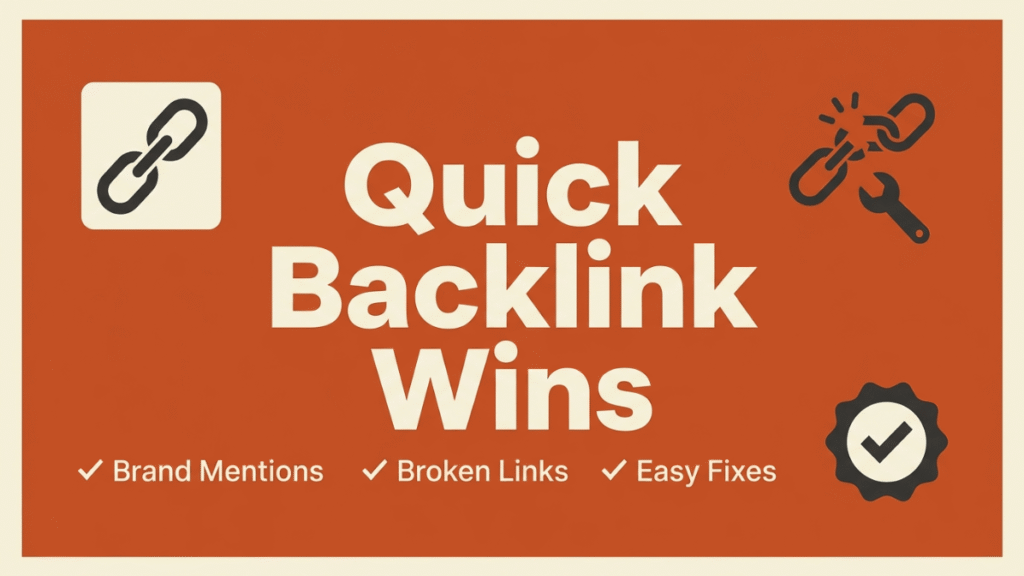
Step 2: Fix Quick Wins Before Building New Links
Some backlink opportunities sit right in front of you. You just need to grab them.
Reclaim Unlinked Mentions
Brands get mentioned online without a link all the time. A blogger writes about your product but forgets the URL. A news site quotes your founder but skips the link.
Search your brand nameacross the web. Find these mentions. Email the site owner and ask for a link.
Most say yes. You’re not asking for a favor. You’re asking them to fix an oversight.
This tactic often works within days. It’s one of the fastest ways to create backlinks without writing new content.
Fix Broken Backlinks
Sites change URLs. Pages get deleted. When that happens, old backlinks pointing to your site break.
- Find broken links pointing to your domain.
- Redirect the old URL to a live, relevant page.
- You keep the link value instead of losing it.
Broken Link Building on Other Sites
This tactic flips the process. You find broken links on other websites, then offer your own content as the replacement.
- Find resource pages in your niche.
- Check each outbound link for dead pages.
- Create content that matches what the dead page covered.
- Email the site owner. Point out the broken link. Suggest your page as the fix.
Site owners want their pages clean. You’re doing them a favour while creating backlinks for yourself.
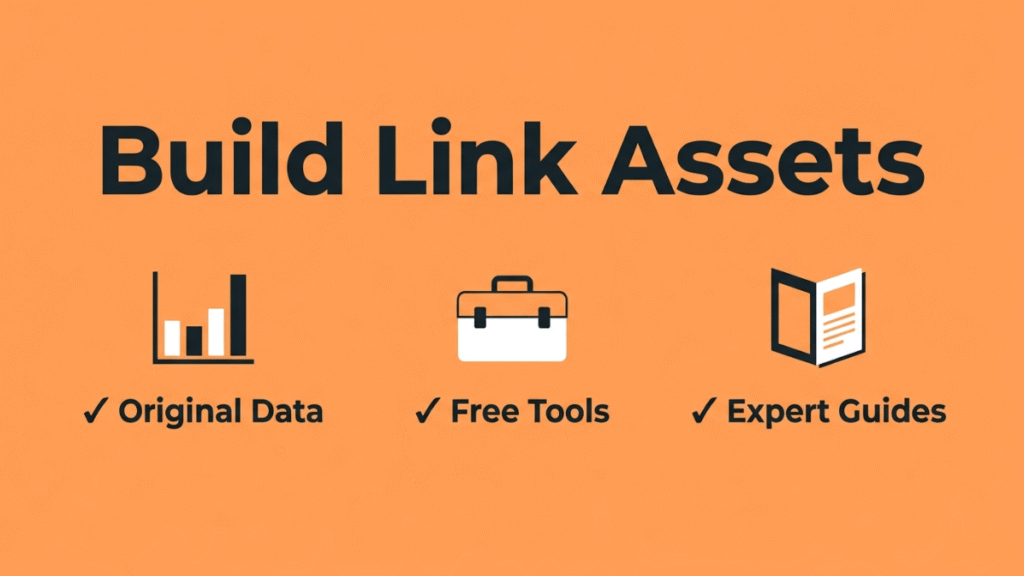
Step 3: Build Linkable Assets
This is the core of any serious backlink plan. If your content isn’t worth linking to, no outreach email will save you.
Original Data and Surveys
Journalists and bloggers need numbers to back their claims. Run a survey or collect original data. You become the source they quote.
A format that works:
- Survey 200+ people in your niche.
- Publish clear findings with charts.
- Give each stat a clean, quotable line.
- Promote the study to journalists and bloggers.
Sites that publish original research earn far more citations than sites that only summarize other people’s work.
Comprehensive Guides
Long, detailed guides that solve one problem fully tend to earn links over time. Not because they’re long for the sake of length. They earn links because they save readers from checking five other sites.
Free Tools and Calculators
A simple tool that solves one specific problem often becomes the highest-converting link asset a site can build.
People bookmark tools. They share tools. They link to tools inside their own articles. Free tools are one of the most reliable ways to create backlinks on autopilot, once the tool is live.
We built a free readability calculator for a client’s blog three years ago. That tool still pulls in new backlinks every month with zero outreach. One tool did more for our link profile than a dozen guest posts combined.
Step 4: Guest Posting the Right Way
Guest posting still works in 2026. Sloppy guest posting gets penalized fast.
Follow this checklist:
- Pick sites in your niche with real traffic, not just high authority scores.
- Read five of their recent posts before you pitch.
- Suggest a topic their audience actually wants.
- Write the post yourself. Don’t outsource it to someone who doesn’t know your brand.
- Keep your link natural. One link inside relevant context beats three links stuffed into a bio.
Avoid mass guest post networks. Google’s spam detection flags patterns like identical author bios across dozens of unrelated sites. That pattern gets domains penalized, not ranked.
Step 5: Use Digital PR and Journalist Platforms
Digital PR now drives some of the strongest backlinks available. Sites running steady digital PR campaigns earn three to five times more high-authority links than sites relying on outreach alone.
Here’s how to use this channel:
- Sign up for journalist request platforms like Qwoted and similar tools.
- Check requests daily. Journalists often choose sources within hours.
- Respond fast with a clear quote, not a long pitch.
- Lead with your best insight in the first sentence.
- Add a specific number or example. Vague opinions get skipped.
HARO shut down permanently in December 2024 after years under Cision. It came back under new ownership in 2025.
But the space now spreads across several platforms. No single platform covers every opportunity.
A BuzzStream study found that the average overlap between any two journalist request platforms sits at just seventeen percent. Check only one tool, and you miss most of the opportunities out there.
I once landed a link from a mid-size finance publication just by answering a journalist request within twenty minutes of it going live. My reply was three sentences long. Speed beat polish that day.
Step 6: Study Competitor Backlinks
Your competitors already did research you can use for free.
- Pull the backlink list for two or three top competitors.
- Filter for links from sites that make sense for your niche too.
- Check what content earned those links.
- Reach out to the same sites with a stronger version of that content.
This method removes guesswork. You’re not hoping a topic earns links. You already know it worked once.
Step 7: Build Local and Niche Citations
If your business serves a local audience, directory and citation links still carry weight.
- List your business on trusted local directories.
- Keep your name, address, and phone number identical across every listing.
- Join niche industry directories relevant to your field.
- Skip low-quality directories that accept any listing without review.
Local citations won’t carry your whole strategy. But they round out a natural-looking backlink profile.
What the Experts Say About Backlinks Right Now
Three voices worth watching in 2026:
Gary Illyes from Google’s Search Relations team said, “We need very few links to rank pages… Over the years we’ve made links less important.”
He made this comment at the SERP Conf event, and later confirmed on social media that he did say it. That line changed how many marketers think about link volume.
John Mueller has said publicly that domain age and raw link counts matter less each year. He pushes marketers toward relevance and content quality instead.
Alex Lindley, a managing editor who focuses on AI-aware content systems, points out that beginners get the best results by picking one method first. Test it with five to ten attempts. Then refine before you scale further.
The pattern across all three views is the same. Fewer, better links beat large volumes of weak ones.
How AEO and GEO Change Backlink Strategy
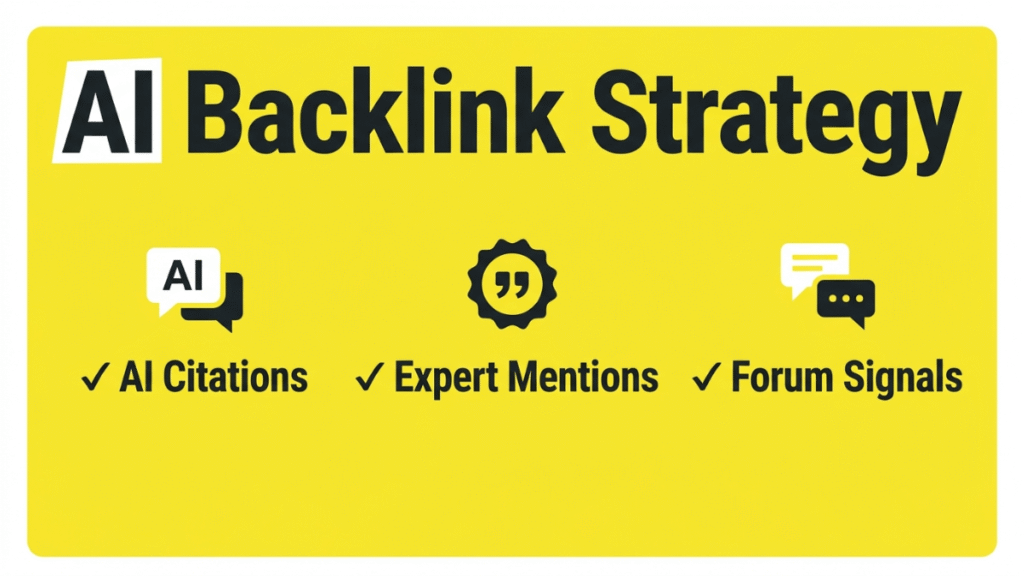
Search doesn’t stop at Google anymore. AI tools and Google’s AI Overviews now pull answers from across the web. That includes forums, expert quotes, and structured content.
This shift changes what “how to create backlinks” means in practice.
- Forum mentions now carry SEO weight. Reddit and niche forum threads show up inside AI answers often. A mention there can drive traffic even without a traditional dofollow link.
- Expert quotes get cited by AI systems. Your name or brand shows up as a quoted source across the web. AI models start referencing you as an authority.
- Structured, clear content earns more citations. Short, direct answers formatted in lists and tables get pulled into AI summaries far more than long, dense paragraphs.
- Comprehensive visibility beats pure link count. Your goal now spans traditional backlinks, forum presence, and expert citations that AI tools reference directly.
Answer Engine Optimization treats every mention as a signal, not just a clickable link.
Learning how to create backlinks in 2026 means thinking past Google’s blue links. It means thinking about how AI tools pull and cite content across the open web.
How to Track AI Citations, Not Just Links
Traditional backlink tools show you who links to your site. They don’t show you when an AI tool quotes your brand without a link. You need a second tracking habit for that.
- Ask ChatGPT, Claude, Perplexity, Gemini, Copilot, Meta AI, and Google AI Overviews your target questions directly. Note if your brand shows up in the answer, and which tools mention you and which don’t.
- Set a Google Alert for your brand name and founder name. AI-driven articles still cite sources by name even without a link.
- Check your site’s referral traffic from AI platforms inside Google Analytics. Traffic from chat tools now shows up as its own channel.
- Track branded search volume over time. A rise often means AI tools are mentioning you, even without a click-through.
Backlinks and AI citations are two separate signals now. Track them separately, and you get the full picture of your visibility.
How to Disavow Bad Backlinks, Step by Step
Not every backlink helps you. Spammy or unnatural links can drag your rankings down. Here’s how to clean them up.
- Export your full backlink list from a crawler tool.
- Sort by domain authority and relevance. Flag anything from gambling, pharma, or unrelated foreign-language sites you didn’t build yourself.
- Try to remove the link first. Email the site owner and ask them to take it down.
- If the site owner doesn’t respond, add the domain to a disavow file. Google built its disavow tool for site owners who have done as much as they can to remove problem links and still have some left over.
- Upload the disavow file through Google Search Console.
- Recheck your backlink profile every quarter. New spam links can appear at any time, especially after a negative SEO attack.
Recovery isn’t instant. Give it four to eight weeks after disavowing before you judge the results.
Common Mistakes That Kill Your Backlink Profile
Avoid these before they cost you rankings.
- Buying links in bulk. Google’s spam detection system flags unnatural link patterns fast. A drop in rankings often follows within weeks.
- Using the same anchor text everywhere. Vary your anchor text naturally. Repeating exact-match keywords looks manipulative to search engines.
- Ignoring nofollow tags. Not every link needs to be dofollow. A mix of nofollow, sponsored, and UGC tags looks more natural to Google.
- Chasing high authority scores over relevance. A link from a mid-size site in your exact niche often beats a link from a huge, unrelated site.
- Publishing thin guest posts just for the link. Google’s systems weigh a linking page’s word count and depth. A 2,000-word page passes more value than a 100-word filler post.
Tools That Help You Create Backlinks Faster
The list below covers the essentials, from tracking your own links to finding journalists ready to quote you. Start here.
| Tool | Best For | Free Option |
| Google Search Console | Tracking your own referring domains | Yes |
| Qwoted | Journalist requests and digital PR | Yes |
| Featured.com | Expert quote placements | Yes |
| BuzzStream | Outreach and relationship tracking | No |
| Ahrefs or similar crawlers | Competitor backlink research | Limited |
Pick two or three tools and use them well. Switching between ten tools wastes more time than it saves.
A Simple 30-Day Plan to Start Building Backlinks
Here’s a sequence you can follow starting today.
Week 1
- Run a full backlink audit.
- Reclaim five unlinked brand mentions.
- Fix any broken backlinks pointing to your site.
Week 2
- Find ten resource pages in your niche.
- Send five broken link building outreach emails.
- Sign up for two journalist request platforms.
Week 3
- Pitch three guest posts to relevant sites.
- Respond to at least fifteen journalist queries.
- Draft one piece of original data or research.
Week 4
- Publish your data study or in-depth guide.
- Promote it directly to five bloggers who cover your topic.
- Review results. Double down on what worked.
This plan turns “how to create backlinks” from a vague goal into a checklist you can finish in a month.
Final Thoughts
Backlinks changed shape, not importance. The sites winning now don’t chase link count.
They earn mentions through content worth citing, quotes worth quoting, and outreach that respects the person on the other end.
If you want to know how to create backlinks that hold up, start small. Fix what’s broken. Build one strong asset. Reach out to five people this week instead of a hundred random ones.
That’s how backlinks compound into lasting traffic, not just a short-term bump.
FAQ
Do internal links count as backlinks?
No. Internal links connect pages within your own site. Backlinks come from a different domain linking to yours.
Can I create backlinks without spending money?
Yes. Reclaiming mentions, fixing broken links, and outreach cost time, not money. Paid tools speed things up but aren’t required to start.
How do I know if a backlink is high quality?
Check if the linking site covers your niche, gets real traffic, and links to you in relevant content, not a random footer or sidebar.
Should I ask for backlinks directly, or earn them through content?
Both work. Direct asks work best for mentions you already earned. Content-led links grow on their own once people find your resource useful.
Do backlinks from social media platforms help SEO?
They’re mostly nofollow, so they don’t pass direct ranking value. They still drive traffic and can lead to real, dofollow links from people who find you there.
How many outreach emails should I send per week to see steady growth?
Ten to fifteen focused emails a week beats a hundred generic ones. Quality outreach gets more replies than mass blasts.
Can a single bad backlink hurt my whole site?
Rarely on its own. A pattern of spammy links across many pages is what triggers penalties, not one isolated link.
Do backlinks matter more for new websites or established ones?
They matter more for new sites still building trust. Established sites with strong content can rank with fewer new links.
What’s the difference between link building and digital PR?
Link building targets links directly. Digital PR builds media coverage and brand mentions, which often produce links as a side effect.
How often should I check my backlink profile?
Once a month for most sites. Check weekly if you’re running active outreach or recovering from a penalty.

Aliza Khatun is a Digital Marketing Professional and the founder of DigiGenHub. She has helped various businesses grow their online presence through real-world experience in marketing, branding, traffic growth, and business strategy.
Through DigiGenHub, she shows how to build and grow a business from the ground up using Website Setup, SEO, Branding, Paid Promotion, and smart digital tools.
She also highlights how AI can be used to its full potential to make content creation, automation, marketing, and business growth faster and smarter.
She believes that the right knowledge, modern technology, and the right tools can help any individual or business build a stronger online presence.