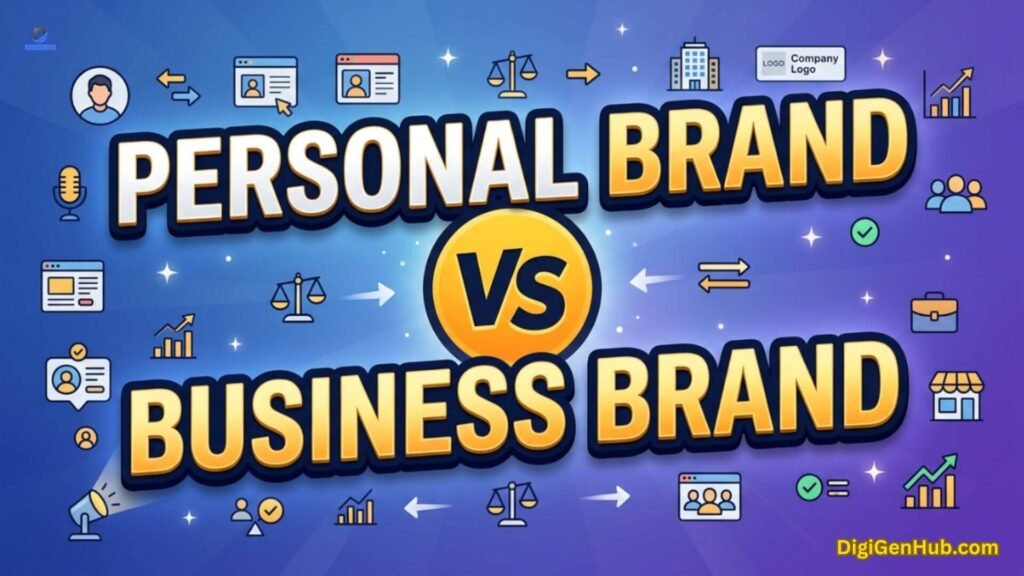
Personal brand vs business brand is not a fight to win. It is a system to build. So, stop debating. Start deciding.
Your personal brand makes people trust you before they ever visit your website.
Your business brand makes them confident enough to pay you. One attracts. One converts. You need both working together.
Now, AI search engines like ChatGPT, Perplexity, Google AI Overviews, Gemini, or Claude decide who gets discovered first. If your name and your company are invisible to those systems, your best customers are finding your competitors right now.
Lead with your personal brand if you sell a service. Lead with your business brand if you sell a product. Then connect them so each one feeds the other.
Your audience is searching for someone they can trust. Show up as that person. Build the company that delivers it.
The Real Definitions (Not Textbook Versions)
People read definitions and still feel confused. Here is why:
A personal brand is not your headshot and a LinkedIn bio. It is the sum of everything people believe about you before they speak with you. It is your reputation, compressed into a signal that travels without you.
A business brand is not your logo and color palette. It is the institutional identity your company holds in the market, separate from any single person, capable of surviving team changes, founder burnout, or a bad press cycle.
The confusion comes because most people build one while accidentally neglecting the other. Let’s notice the comparison table:
Personal Brand vs Business Brand Across Every Key Factor
| Factor | Personal Brand | Business Brand |
| Trust speed | Fast — people connect with people | Slower — requires consistent proof |
| Organic reach | High — personal profiles reach 561% more | Low — company pages need paid amplification |
| Scalability | Limited by your time and attention | Scales with team, systems, and budget |
| Exit / sellability | Very hard — brand tied to you personally | Built to sell as a standalone asset |
| Resilience | Vulnerable to burnout, controversy, algorithm change | Survives team changes and personal controversy |
| Content format | Your voice, opinions, stories | SEO content, case studies, product pages |
| Best-fit industries | Consulting, coaching, advisory, creative, freelance | SaaS, e-commerce, consumer goods, regulated sectors |
| AI visibility | Depends on your personal entity signals | Depends on company entity signals and citations |
| Revenue stage | Drives growth from $0–$500K most efficiently | Drives conversion and scale above $2M |
| Pricing power | Higher — people pay premium for a known individual | Depends on category positioning and market share |
92% of people trust recommendations from individuals over companies. That fact makes personal brand sound like the obvious winner. But it is only half the story.
Personal branding opens the door. Corporate branding closes the deal. You need both.
This dynamic one brand attracting, another converting is the central truth of the entire personal brand vs business brand conversation. Everything else flows from here.
What Each Brand Does in the Sales Journey
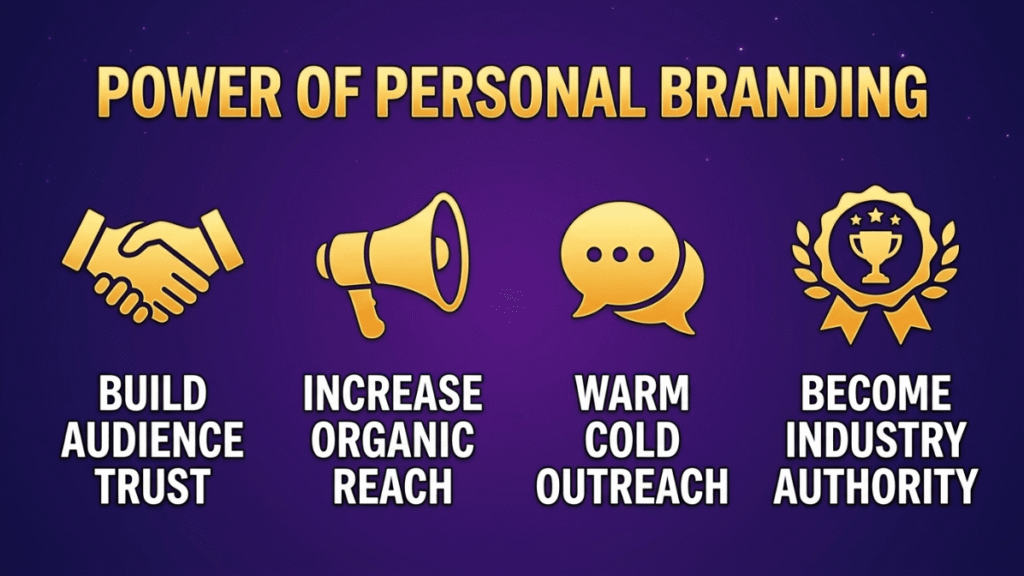
Most people think about branding in terms of awareness. That is too shallow. Each type of brand does a specific job at a specific moment.
Personal brand does this:
- Gets you noticed before the company is known
- Creates emotional resonance through your story and opinions
- Generates organic reach without paid ads
- Makes cold outreach feel warm because people recognize you first
- Positions you as a category authority, not just a vendor
Business brand does this:
- Converts interest into purchase confidence
- Holds credibility when you are not in the room
- Creates transferable equity that can survive a founder exit
- Handles enterprise procurement reviews and committee buying
- Protects the company during personal controversies
Personal profiles get 8x more LinkedIn engagement than company pages. But company brands provide the credibility infrastructure that closes deals.
Notice: not either-or. Each one handles a different part of the same buyer journey.
Yet, let’s share personal experiences that show the cost of getting this wrong
The founder who had all the followers and nothing else
A SaaS founder I observed built 80,000 LinkedIn followers over three years. Revenue followed his posts.
When burnout forced him offline for eight weeks, revenue dropped nearly 60%. No website ranked, no email list with momentum, and no company brand the market recognized.
Eight weeks of silence cost him more than a year’s worth of brand-building effort. There was no corporate brand to fall back on.
No website that ranked. No email list. No brand equity outside of one person’s feed. That is the risk nobody talks about when they tell you to build your personal brand.
The agency owner who named his business after himself and paid for it at exit
A digital marketing agency owner spent six years building his personal brand as the face of his firm.
By year six, he was ready to sell. Two buyers passed because they could not see how the agency would perform without him.
He spent fourteen months rebranding before finding a buyer who would pay a fair price. The personal brand had done its job for revenue. It became a ceiling when exit was the goal.
The consultant who went quiet for three months
A consultant I followed closely had a strong personal brand. She took a career break after having a child.
During those three months, inbound leads dropped to almost nothing. She had built her audience on social posts, not on content that aged well.
Her business brand had no SEO-ranked articles, no case study library, no email sequence running. When she returned, she spent six months rebuilding.
Her lesson: personal brand without a content infrastructure behind it has no staying power.
The startup that led with company brand and nearly failed
A B2B tech startup spent twelve months building only their company brand. Beautiful website, polished logo, clear messaging.
Nobody knew who ran it. Cold outreach bounced. Ads underperformed. The CEO eventually started posting on LinkedIn as himself. No polish, just his honest observations about the industry.
Within sixty days, their pipeline grew. A beautifully branded company that nobody has heard of is still invisible.
The Trust Problem Each Brand Solves Differently
Here is what most guides skip entirely.
People do not buy for one reason. They buy because multiple trust signals line up at the right moment.
Personal brand and business brand each trigger different parts of this trust sequence.
Research shows that 80% of people trust the brands they currently use more than they trust the government or the media.
Trust is now earned through personal experience and micro-interactions rather than grand institutional endorsements.
Personal brand accelerates trust through familiarity. When someone has followed you for three months, seen your face, read your opinions, and watched how you respond to criticism, they feel like they know you. That emotional head start converts faster than any ad.
Business brand builds a different kind of trust. It signals that you have systems, processes, and accountability beyond one person.
B2B consumers are 2 times more likely to buy from a brand that shows personal values rather than business ones. But they still want to see institutional credibility before signing a contract. WiserReview
This is why the hybrid is not optional. It is the logical response to how buyers actually make decisions.
Who Should Build Personal Brand First
You belong in the personal brand lane first if:
- You sell a service that requires personal trust, consulting, coaching, advisory, legal, financial planning, creative work
- You are at the pre-revenue or early-revenue stage where speed to trust matters more than infrastructure
- Your name and story are your differentiation, not the product
- You want to build inbound authority without paying for every lead
- You are willing to show up consistently and say things worth saying
People are moving toward niche authority because it works. Personal brands built around a clear speciality or unique point of view get far higher engagement and trust.
Thought leadership is becoming a key filter; most decision-makers search the expert before they search the company. Wave Connect
The mistake most people make here
They try to cover everything. They post about business, life, travel, opinions, culture.
Their audience cannot tell what they actually do. Niche specificity is what makes a personal brand work. One clear topic. One clear person. One clear outcome you help people reach.
Who Should Build Business Brand First
You belong in the business brand lane first if:
- You sell a product: SaaS, consumer goods, e-commerce, physical products
- You are seeking venture investment or planning an exit within five years
- You operate in regulated industries where institutional trust outweighs personal charisma
- Multiple people represent your company in sales conversations
- You are expanding to markets where your personal reputation has no recognition
VCs and acquirers want company brand equity that exists independently of the founder.
Procurement teams evaluate the company, not the founder’s Instagram following. Bearmybrand
The mistake most people make here
They go invisible as individuals. The business brand gets all the attention. No one on the team posts.
No founder shows up in the conversation. The company looks polished but lifeless. Buyers start to wonder who is actually behind it.
The Hybrid Model: Why Most Founders Need Both Running at the Same Time
Stop treating this as a decision between two things. It is a design problem, not a choice problem.
Your personal brand is the top-of-the-funnel awareness, connection, and credibility.
Your company brand is the bottom-of-the-funnel conversion, confidence, and scale. They do not compete. They complete each other.
Let’s learn how the hybrid system actually works in practice:
Stage 1: You attract
Your personal brand posts, speaks, publishes, and shows up in search results and AI answers. People encounter you before they encounter your company.
Stage 2: You warm the lead
Your audience follows you, reads your content, and starts to trust your perspective. They associate your credibility with your company by extension.
Stage 3:Your company converts
When they are ready to buy, they visit your company website. They see case studies, reviews, clear pricing, and professional positioning. The company brand closes what your personal brand opened.
Stage 4: Your company retains
The business brand runs loyalty programs, email sequences, upsells, and support experiences that no personal brand can sustain alone.
In 2026, B2B companies that invest in both generate more pipeline than those that invest in either alone.
Revenue Stage Decision Framework
This clears up the most common confusion about timing:
| Revenue Stage | Priority | Reasoning |
| $0 – $500K | Personal brand first | Speed to trust beats institutional polish at this stage |
| $500K – $2M | Build both in parallel | You need personal trust AND company systems |
| $2M – $10M | Equal investment in both | Personal brand opens doors; company brand holds enterprise deals |
| $10M+ | Company brand leads | Scalability and exit planning require independence from founder |
A strong founder’s personal brand signals category leadership, which directly impacts how buyers value the business.
Companies with recognized founders command premium valuations because the founders’ influence extends beyond the product.
What AI Search Does to Both Brands in 2026
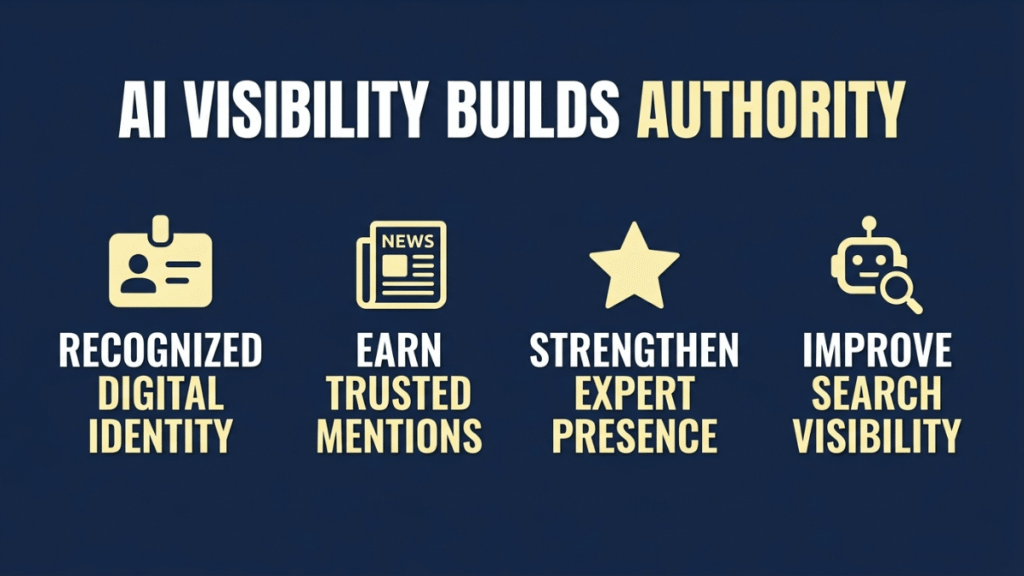
According to a SparkToro study, 60% of Google searches now end without a click. People get answers directly from AI, skipping websites entirely. Mint Studios
This creates a new visibility problem for both personal and business brands.
For personal brands:
- Your name must appear as a recognized entity across multiple platforms
- Your opinions must be cited in trusted publications that AI systems scrape
- Your LinkedIn content, podcast appearances, and bylined articles must consistently reinforce one clear area of expertise
- Ask ChatGPT or Perplexity right now: “Who is [your name]?” If there is no clear answer, you have a visibility gap that costs you opportunities
For business brands:
- Your company must have consistent entity signals across your website, Google Business Profile, Wikipedia if applicable, and third-party review platforms
- Your content must answer the specific questions your buyers ask, structured clearly enough for AI to extract and cite
- Brands must maintain consistent descriptions across platforms, use structured data such as Organization, Product, or Person schema, and publish content that clearly connects the brand with the topics it wants to be known for. Lumar
Visibility in 2026 is measured by who AI trusts, not just who ranks. The better question for brands is not “how do we rank higher on Google?”
But “when someone asks an AI about our category, are we part of the answer?” Wildcoffeemarketing
The Exact Content Strategy for Each Brand Type
Most people post without a system. Let’s learn what builds both brands:
Personal Brand Content System
| Content Type | Frequency | Purpose |
| LinkedIn opinion posts | 3x per week | Build niche authority and organic reach |
| Long-form articles / Substack | 1x per week | Create AI-citable, indexed expertise |
| Podcast appearances | 2-4x per month | Build entity recognition across platforms |
| Short video commentary | 2x per week | Build familiarity and trust through face time |
| Email newsletter | 1x per week | Own your audience outside platform algorithms |
Critical rule: Every piece of content must reinforce the same topic area. If someone reads your last ten posts, they should be able to say in one sentence what you are known for. If they cannot, your content strategy is scattered.
Business Brand Content System
| Content Type | Frequency | Purpose |
| SEO blog articles | 2-4x per month | Rank for buyer-intent keywords and earn AI citations |
| Case studies | Monthly | Build social proof for decision-stage buyers |
| Landing pages with structured data | Ongoing | Signal entity clarity to AI search systems |
| Email sequences | Automated | Convert warm leads without constant personal input |
| Review generation | Ongoing | Build AI trust signals from third-party sources |
The Pricing Power Difference Nobody Talks About
This point separates average results from transformational ones.
Personal brands charge more. Not because of ego. Because of perceived rarity.
When someone follows you for three months and sees you as the definitive voice on a topic, price sensitivity drops.
They are not comparing you to five alternatives. They have already decided they want specifically you.
Those in the highest visible expertise category command 13x more pay than experts without visibility. 74% of Americans are more likely to trust someone with an established personal brand. DSMN8
Business brands charge more at scale. When your company is recognized, reviewed, and cited across the web, you become the default choice in your category. Default choices command pricing power because switching feels risky.
Both paths lead to higher prices. They get there through different mechanisms.
The Biggest Risk That Kills Both Brands
Two separate failure modes destroy all the work you put in.
Personal brand failure mode:
You build everything on social media platforms you do not own. Algorithm changes, account suspensions, or platform decline wipe out years of work overnight.
The fix: treat social as a distribution channel, not a home. Own your email list. Own your published content on your own site. Use social to drive people there, not to host your entire brand.
Business brand failure mode:
You build a polished company identity with no human voice behind it. 7 in 10 consumers say they want human interaction for resolving service issues. Consistency is outperforming cleverness.
Trust is still built the old-fashioned way. A company that feels automated and faceless struggles to earn the emotional trust that converts strangers into buyers. Avaans Media
Step-by-Step: How to Build Both Brands Without Spreading Thin
Most people fail here because they try to do everything at once and do nothing well. Here is the sequence that works:
Months 1 to 3: Build your personal brand foundation
- Choose one platform where your audience already spends time. For B2B, this is almost always LinkedIn.
- Define one clear area of expertise. Not two. Not five. One.
- Post three times per week using your own voice, your own experiences, and your own opinions on your topic.
- Do not worry about your company’s content yet. Focus entirely on what you know and have lived through.
- Set up a simple personal website with your bio, your focus area, and links to your published work.
Months 3 to 6: Build the business brand infrastructure
- Launch or update your company website with clear messaging about who you serve, what you do, and what results you deliver.
- Start publishing one SEO article per month that answers specific questions your buyers search for.
- Collect your first five client testimonials. Get them on video if possible.
- Set up structured data on your website so AI search engines can correctly identify your company as an entity.
Months 6 to 12: Connect both brands into one system
- Every personal brand post links back to your company website, case studies, or newsletter.
- Your company website features you: your face, your story, your perspective, not just the product.
- Your email list grows from both your personal brand and your company brand.
- You test which content from personal brand drives the most company inquiries. Double down on those topics.
Final Word
Personal brand vs business brand is a design decision. You need to know which one does which job, at which stage, for which outcome.
Personal brand earns trust fast. Business brand converts and scales. Together, they make you both visible and credible. To humans and to the AI systems that now decide who gets found.
Now, the people losing are those who built only one. The people winning built both, connected them deliberately, and made sure AI search could find and cite them across the entire system.
Start with where your audience lives. Build the other side before you need it. And never let your entire revenue depend on a platform you do not own.
FAQ
Can I run a personal brand and a business brand at the same time without it looking messy?
Yes. Keep them distinct but connected. Your personal brand is your voice. Your business brand is your offer. They share a topic area but serve different functions.
Think of your personal brand as the conversation that gets people interested, and your business brand as the destination they arrive at when they are ready to buy.
What if my personal brand gets more attention than my company brand?
That is normal and good. Use your personal brand to feed your company. Every piece of personal brand content should direct people somewhere your company brand captures them.
It can be your website, your email list, your product page. The goal is conversion, not vanity.
What if I want to exit or sell my business in the next five years?
Start reducing personal brand dependency now. A strong brand can improve exit valuation by demonstrating durable demand and efficient growth.
Brand equity that exists independently of the founder makes a company far more attractive to acquirers. Build content, systems, and case studies under the company name.
Use your personal brand to attract attention, but make sure the company captures and owns the relationship. Influencers Time
What if I am not comfortable being visible on social media?
Personal branding does not require performing or oversharing. It requires demonstrating competence and building trust in ways that feel authentic.
Some of the most effective founders build strong personal brands through writing rather than video.
Start with one short article per week. That is enough to build an AI-visible, searchable presence over six months.

Aliza Khatun is a Digital Marketing Professional and the founder of DigiGenHub. She has helped various businesses grow their online presence through real-world experience in marketing, branding, traffic growth, and business strategy.
Through DigiGenHub, she shows how to build and grow a business from the ground up using Website Setup, SEO, Branding, Paid Promotion, and smart digital tools.
She also highlights how AI can be used to its full potential to make content creation, automation, marketing, and business growth faster and smarter.
She believes that the right knowledge, modern technology, and the right tools can help any individual or business build a stronger online presence.