Paid ads keep getting more expensive. Organic reach keeps falling. Yet, some businesses grow fast with almost zero ad spend.
The secret is not complicated. They run the right referral program ideas at the right time.
Still, your happiest customers already love your product. They just need a small push to share it.
Reward both sides. The referrer gets credit. The new buyer gets a discount. Nobody feels awkward. Everyone wins.
Time it right. Send the invite within 30 minutes of purchase. That is when excitement peaks. That is when people share.
Keep sharing one click. Every extra step kills participation.
Pick the reward your audience values. Store credit for shoppers. Cash for B2B clients, free products for loyal fans.
Put the program where people can see it. Post-purchase page. Email footer. Packaging. Everywhere.
A Quick Story Before We Start
Now, buyers trust people, not ads. Personal recommendations from friends and family remain the single most trusted form of advertising above every other channel, including TV and search.
That one fact changes everything about how you should acquire customers. (Nielsen Trust in Advertising Study).
Start with one referral program idea this week. A simple program running today beats a perfect one planned for next month.
A client hired me from LinkedIn. He runs a small e-commerce store for infant educational toys in New Jersey.
He spent over $4,000 per month on Facebook ads with very thin margins. He asked me to look at his numbers. His existing customers loved the products. They just never shared them.
We set up a simple double-sided referral program. We gave $12 store credit to both the referrer and the new buyer.
Within 90 days, 18% of his new orders came through referrals. His ad budget dropped by 40%. The product did not change. Only the referral structure did.
Why Referral Programs Win in 2026
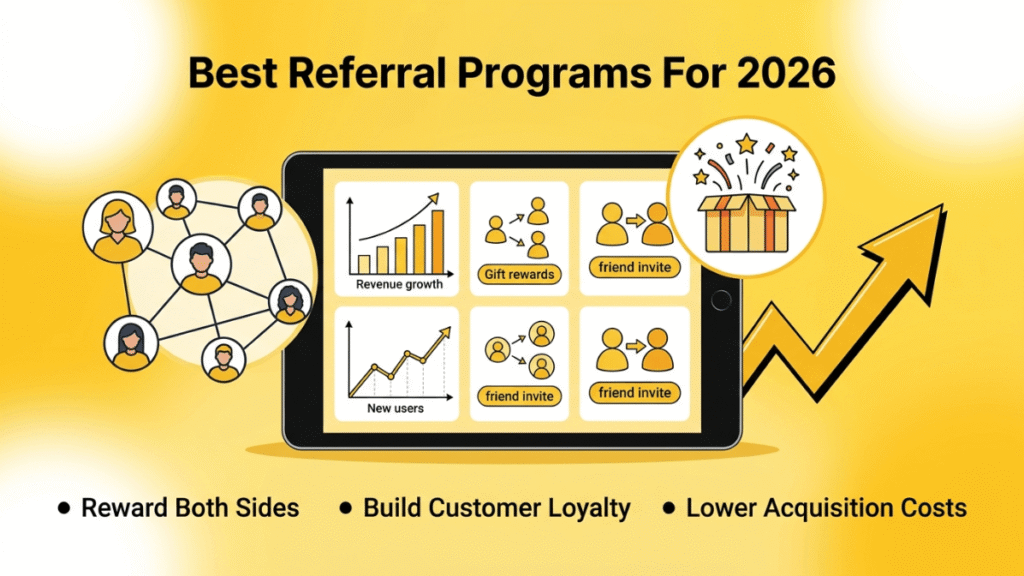
Ad costs on Google and Meta keep rising. Customer acquisition cost (CAC) hit an all-time high for most e-commerce categories in 2025.
Referral marketing solves this in a way no paid channel can match.
| Metric | 2026 Benchmark |
| Conversion rate vs paid traffic | 4x higher |
| Retention rate vs non-referred buyers | 37% better |
| Lifetime value (LTV) difference | 16% higher |
| Satisfied customers willing to refer | 83% |
| Customers who actually refer (gap) | Only 29% |
The big problem? Only 29% of those willing customers ever refer anyone. That gap is where most businesses lose money. The right referral program idea closes that gap.
Three reasons most referral programs fail before they start:
- The reward feels too small or unclear
- The sharing process has too many steps
- The program is hidden and customers never see it
The 8 Best Referral Program Ideas for 2026
Not every referral program works the same way. Different businesses need different structures.
Some reward both sides. Some build loyalty through tiers. Some turn sharing into a game.
The eight ideas below cover every model worth using in 2026. Each one is proven. Each one is built around one goal: getting more customers without spending more on ads.
Pick the one that fits your business. Set it up this week. Then watch your acquisition cost drop.
1. Double-Sided Cash or Credit Reward
Both the referrer and the new buyer get a reward. This removes the awkward feeling of selling to a friend.
Dual-sided reward programs increase participation by 29% versus single-sided setups.
Example structure: Give $10 credit to the referrer. Give $10 off to the new buyer. Simple. Clear. It works.
A Shopify clothing store I helped in 2025 switched from a single-sided 10% discount to a double-sided $8 store credit program. Referral participation went up 34% in the first month. The owner said it felt like turning on a switch.
2. Tiered Referral Program
Customers earn more as they refer more. Tier 1 might give $5 credit. Tier 3 might give a free product.
Tiered structures generate 27% more referrals than flat reward programs. This works because it turns top customers into active brand advocates.
Simple tier structure:
- 1 referral → $5 store credit
- 3 referrals → $20 gift card
- 5 referrals → Free product or premium item
3. Subscription-Based Referral Reward
For subscription businesses, link the reward to how long the referred person stays.
The referrer earns as long as their friend subscribes. This aligns your incentive with customer lifetime value, not just one-time signups.
4. Milestone Referral Program
Harry’s razor brand used this idea before launch. They collected 100,000 emails in one week.
You set specific referral counts as unlock goals. Five referrals might unlock free shipping for life. Ten referrals might unlock a VIP product pack.
I helped a subscription snack box brand set up a milestone program before their relaunch.
They offered a free month of snacks at 5 referrals. 600 customers signed up in two weeks. The cost was far less than any paid ad campaign would have matched.
5. Gamified Referral Program
Add a leaderboard, progress bars, or spin-to-win reward wheels. Gamified referral programs see 33% higher engagement. People enjoy the process when it feels like a game, not a transaction.
6. Charity or Cause-Based Referral
Instead of a cash reward, let customers donate their referral bonus to a cause they care about.
This works especially well for eco-friendly, wellness, and mission-driven brands.
Sustainability-focused incentives are growing fast because buyers want their purchases to mean something.
7. Influencer and Affiliate Hybrid
Give top-referring customers affiliate-style tracking links. Treat them like micro-partners. They get a percentage of every sale they drive.
This is different from a standard affiliate program because it starts from your happy existing customers, not cold influencer outreach.
8. Post-Purchase Email Referral Trigger
Send a referral invite within 24 hours of a confirmed purchase. This is the exact moment satisfaction is highest.
Referral emails get 48% open rates and click-through rates 3x higher than standard promotions. The timing alone doubles the chance someone shares.
Which Reward Type Converts Best?
Choosing the wrong reward kills participation fast.
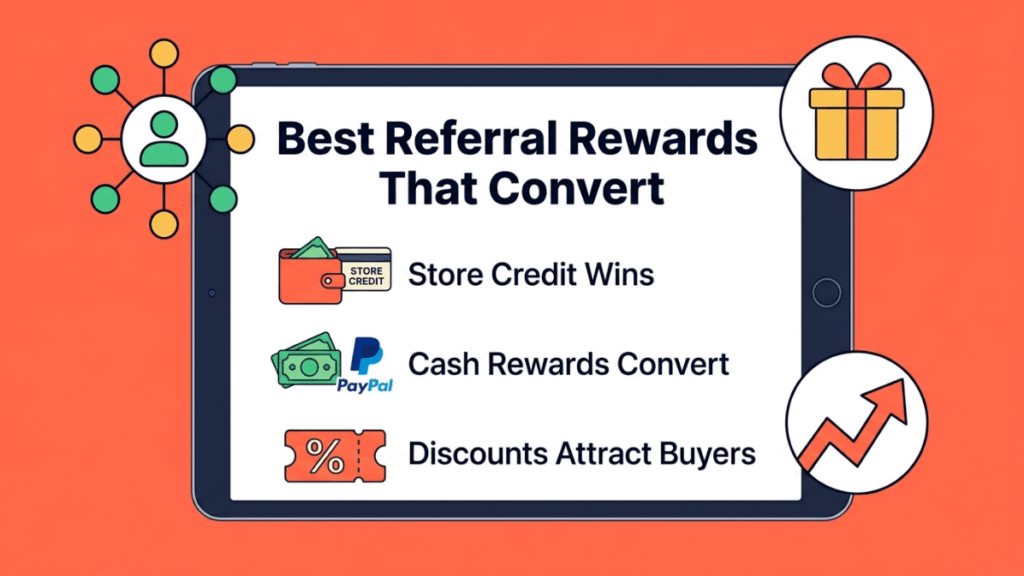
A $5 discount means nothing to a loyal customer. A $5 credit toward their next order feels different. The format matters as much as the amount.
Some rewards pull repeat buyers back. Others attract first-timers. A few work better for B2B clients than shoppers.
The table below shows which reward type performs best and where to use it.
| Reward Type | Effectiveness | Best Used For |
| Store Credit | 88% | E-commerce repeat buyers |
| Cash / PayPal | 82% | B2B and SaaS referrals |
| Percentage Discount | 74% | First-time buyer incentives |
| Free Product | 70% | Brand loyalty programs |
| Gift Cards | 65% | Broad audience programs |
| Cause Donation | 52% | Mission-driven brands |
Store credit wins because it keeps the customer spending in your store. Cash appeals more to B2B and SaaS audiences. For e-commerce, always start with store credit or a double-sided discount.
Top Referral Program Tools
Picking the right tool removes 80% of setup friction.
| Tool | Best For | Starting Price | Key Strength |
| ReferralCandy | E-commerce brands | ~$59/mo | Automated post-purchase flow |
| Referral Rock | B2B, SaaS, Services | $74/mo | CRM integrations, multi-step logic |
| GrowSurf | SaaS startups | $175/mo | In-app widgets, webhooks |
| Nector | DTC & subscription brands | $49/mo | Loyalty + referral in one dashboard |
| Extole | Enterprise brands | Custom pricing | Omnichannel tracking at scale |
Tip: If you sell on Shopify, start with a Shopify-native tool. It reduces setup from days to hours. For B2B or SaaS, pick a CRM-connected platform so referrals flow directly into your sales pipeline.
How to Set Up Your First Referral Program (Step by Step)
Most businesses overcomplicate this. Here is the exact order that works.
Step 1
Define your goal first. More new customers? Higher LTV? Pick one goal. Build around it.
Step 2
Choose your reward type. Start with double-sided store credit or cash. Keep the amount between 10–25% of average order value.
Step 3
Pick a tool that fits your platform. Do not build a custom system until you have proof it works.
Step 4
Set the trigger timing. Send the referral invite 15–30 minutes after a successful purchase or service delivery.
Step 5
Make sharing one click. Include a pre-filled share message and unique link. Every extra click drops participation by roughly 20%.
Step 6
Put the program everywhere visible. Footer, post-purchase page, email footer, packaging insert, and a dedicated landing page.
Step 7
Track weekly. A healthy referral rate is above 2.35%. Top programs hit 5% or higher.
Step 8
Send a reminder at 30 days. Referral email reminders increase participation by 42%.
Why Most Referral Program Ideas Fail
Understanding what breaks referral programs saves you months of trial and error.
| Mistake | Why It Fails | Fix |
| Reward is too small | No motivation to share | Set reward at 10–25% of your average order value |
| Program is hidden | Customers never see it | Add it to 4+ touchpoints: site, email, packaging, post-checkout |
| Too many steps to share | People give up | One unique link, one click to share via mobile |
| Only one-sided reward | Feels like selling | Reward both parties to remove social friction |
| Wrong timing for invite | Customer already moved on | Send within 30 minutes of purchase |
| No tracking | No idea what works | Track referral rate, conversion rate, and CAC weekly |
A digital marketing agency owner I work with ran a referral program for 6 months with zero results.
The reward was a 5% discount. We changed it to $25 cash paid via PayPal for B2B service referrals.
Participation went from near zero to 11 referrals in 30 days. The reward has to match what your audience values.
Where to Promote Your Referral Program in 2026
74% of referrals now happen through digital channels. 65% of all referral links get shared via mobile messaging apps. That means WhatsApp, iMessage, and Instagram DMs are your top referral channels — not just email.
Channels ranked by referral conversion rate:
- WhatsApp shared links — 15% conversion (personal and trusted)
- Facebook referrals — 12% conversion (highest for social)
- Email — 48% open rate, 3x higher CTR than standard promo emails
- TikTok referral links — 24% more clicks than Facebook links for Gen Z buyers
- Post-purchase page pop-up — highest intent moment, often underused
Add your referral link to the post-purchase confirmation page AND the confirmation email subject line. These two changes alone can increase referral share rate by 26–30%.
How to Write a Referral Message That People Actually Share
Most referral messages are boring. People do not share boring things.
Write the pre-filled message like a friend texted it. Keep it under 20 words. Make it sound personal. Give the friend a clear benefit in the first line.
Weak message: “I’d like to refer you to [brand]. Use my link for a discount.”
Strong message: “Just got my order from [brand] — love it. Here’s 10% off your first one: [link]”
The second message feels natural. The first feels like an ad. Your referral link gets shared when the message sounds human.
Referral Program Ideas for B2B vs B2C: Differences
| Factor | B2C Referral Programs | B2B Referral Programs |
| Best reward type | Store credit, discount, free product | Cash, gift cards, service upgrades |
| Typical conversion rate | 13.8% for e-commerce referrals | 10.6% (vs 1.7% outbound) |
| Sales cycle length | Minutes to days | Days to months |
| Primary share channel | WhatsApp, Instagram, Email | LinkedIn, Email, Direct |
| Reward amount | $5–$50 | $50–$500+ per closed deal |
| Best tool type | Shopify-native app | CRM-integrated platform |
B2B referral leads close 50% faster and have 25% shorter sales cycles. 86% of B2B companies with structured referral programs report revenue growth. Yet 51% of B2B companies still do not actively track referrals.
How Seasonal Trends Affect Your Referral Program
Holiday seasons change everything. November and December produce 2–3x more referral activity than off-peak months.
People recommend products naturally while gift shopping. That window is huge. Brands that refresh their referral program in October catch this wave early.
Adding a limited-time bonus reward during peak seasons pulls in advocates who normally stay passive.
A simple “Double rewards this week only” message is enough. Scarcity and urgency work even for referrals.
Metrics You Must Track for Any Referral Program
You cannot fix what you do not measure. Here are the four numbers that tell you if your program is working.
| Metric | What It Means | 2026 Benchmark |
| Referral Rate | % of customers who make at least one referral | Global average: 2.35% |
| Conversion Rate | % of referred leads who buy | 30% higher than other channels |
| CAC via Referral | Cost to acquire each referred customer | 60–70% lower than paid ads |
| Referral LTV | Total revenue from referred customers over time | 16% higher than non-referred |
How to Stop Referral Fraud Before It Starts
Yes, fraud happens. The most common type is self-referral. One person creates multiple accounts to claim both sides of a double-sided reward.
Stop it with these steps:
- Require a minimum purchase before any reward is released
- Verify unique email and shipping addresses
- Set a short waiting period before rewards pay out
- Flag accounts with identical device fingerprints
- Do a manual spot-check every month
Most paid referral tools include basic fraud detection. Use it. Check results manually anyway. Fraud eats your margins fast if you ignore it.
The FTC Business Guidance also has useful standards on how referral disclosures should work to keep your program legally clean.
3 Quick Referral Program Ideas You Can Start This Week
You do not need a complex tool to test referral program ideas. These three require minimal setup.
1. Email signature referral
Add “Refer a friend and get $X off” with a link in every customer-facing email. Zero extra software needed.
2. Post-purchase thank you page
Add a “Share with a friend” button directly on the order confirmation page. Pre-fill a message like “I just ordered from [brand] — here’s 10% off for you.”
3. Manual outreach to happy customers
Pull your top 20 repeat buyers. Send them a personal email offering a $25 credit for each successful referral. No app required. Just a spreadsheet and follow-up.
A simple referral program running today beats a perfect one still in planning next month. Start simple. Optimize after you see data.
What the Data Says About Referral Marketing ROI
Referral marketing costs less, converts better, and builds more loyal customers than any paid channel.
According to the Harvard Business Review research on customer loyalty economics, referred customers show consistently higher retention and lifetime value than customers acquired through paid channels.
The reason is trust. A referred customer comes in already believing in the product because someone they know told them about it.
The Wharton School of Business found that referred customers are worth 16–25% more in lifetime value. They also churn at a lower rate. They cost far less to acquire.
A referred customer is not just a cheaper acquisition. They are a better customer in almost every measurable way.
For small businesses especially, this matters. Paid ads stop working the moment you stop paying.
Referrals keep generating customers from the trust you have already built. That is a very different kind of asset.
The Right Time to Launch a Referral Program
Do not launch a referral program with zero customers. A referral program needs satisfied customers to work. With no customers, there is nobody to refer.
Spend the first 60–90 days building your first 50–100 happy buyers through any channel.
Then launch the referral program. Launching too early produces zero results. Get advocates first. Then activate the program.
The Bottom Line
The businesses growing fast right now are not spending more on ads. They turn existing customers into growth engines. They use double-sided rewards. They time their invites perfectly. They make sharing take one click.
The best referral program ideas are not complicated. They are consistent, visible, and rewarding enough that people want to share.
You do not need a massive budget. You need the right structure and the right timing.
Pick one referral program idea from this page. Set it up this week. Track the referral rate after 30 days. That one step can permanently lower your acquisition cost.
FAQ
Do referral programs hurt brand perception if customers feel pushed to share?
Only when the program feels forced. Customers share when the reward feels like a bonus. Ask too often and people get annoyed.
Ask too early and it feels pushy. The fix is simple. Ask once. Ask at the right moment.
Frame it as helping a friend, not earning a reward. Brands that do this see far less negative feedback.
Can a referral program work for a brand new business with zero customers?
Not yet. Get your first 50–100 happy buyers first. Then launch the program. Launching too early produces zero results.
What happens to referral program performance when the economy slows down?
It gets stronger. During slow economies, people become more selective. They rely more on trusted recommendations before spending.
Referral trust rises even when ad performance drops. Brands that keep referral rewards active during slow periods come out with a lower CAC than competitors who cut marketing entirely.
Should the referral reward change based on the product price point?
Yes. Low-price products need percentage-based rewards to feel worthwhile. A $2 reward on a $15 product feels weak.
But 15% off feels fair. High-ticket products work better with fixed cash amounts.
A $75 cash reward on a $600 product is clear and motivating. Match the reward format to how your customer thinks about value.
Is there a risk of referral fraud and how do businesses stop it?
Yes, fraud happens. Require a minimum purchase before any reward releases. Verify unique email and shipping addresses.
Set a short waiting period. Flag accounts with identical device fingerprints. Most paid referral tools include basic fraud detection. Still run a manual spot-check every month.
How do I know if my referral rate is good?
The global average referral rate is 2.35%. If you are below that, your reward or timing needs work.
Top referral programs hit 5% or higher. Track this weekly, not monthly. Small problems compound fast when left unchecked.

Aliza Khatun is a Digital Marketing Professional and the founder of DigiGenHub. She has helped various businesses grow their online presence through real-world experience in marketing, branding, traffic growth, and business strategy.
Through DigiGenHub, she shows how to build and grow a business from the ground up using Website Setup, SEO, Branding, Paid Promotion, and smart digital tools.
She also highlights how AI can be used to its full potential to make content creation, automation, marketing, and business growth faster and smarter.
She believes that the right knowledge, modern technology, and the right tools can help any individual or business build a stronger online presence.