

In the past, I spent many years searching for my true passion: “how to find a business niche with potential profit.”
I tried various online business niches to find the right one. This includes graphic design, video editing, content writing, e-learning, pet care, e-commerce, and other niches.
I often feel lost in uncertainty. Still, each attempt was like exploring a new path in a big forest.
The best business niche isn’t always the most obvious one. It’s where your skills meet people’s needs and willingness to pay.
To find a business niche, match a specific audience problem to your skills. Then confirm active demand using free tools like Google Trends and Reddit.
After that, test profitability before you invest. The best niche sits at the cross-section of what people already pay for, what you can consistently deliver, and where competition has visible gaps.
Why Most People Pick the Wrong Niche
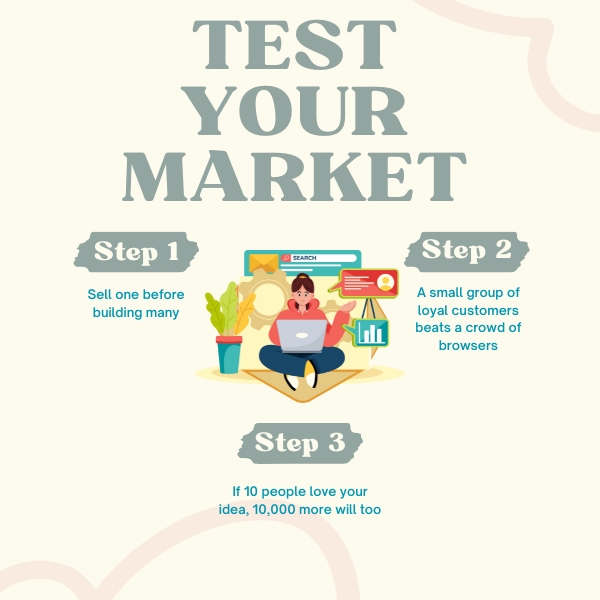
Here is the hard truth. 42% of startups fail because there was no real market need for what they built.
That single number, tracked by CB Insights and confirmed in 2026 startup failure research, explains most business failures before they even get moving.
People usually pick a niche for the wrong reasons:
- They follow a trend they saw on social media without checking if it lasts.
- They copy a competitor without confirming the audience actually pays.
- They pick something they enjoy without asking if others will pay for it.
- They go too broad and end up serving nobody specifically.
A major 2026 data point highlights the risk. According to the Bureau of Labor Statistics, 20.4% of new US businesses fail in their first year. By year five, that number rises to 49.4%.
The two biggest reasons are clear. About 42% fail because there is no real market need. Another 29% run out of cash.
Both problems often start with choosing the wrong niche.
You can review the full 2026 small business failure breakdown to see where businesses struggle at each stage.
The solution is not complex. Follow a clear process. Take it one step at a time. That is exactly what the next steps will show you.
Personal Experience
I once helped a friend launch a general fitness coaching service. He had three certifications, great energy, and zero clients after four months.
When we narrowed his focus to weight loss specifically for night-shift nurses, he signed his first two paying clients in 11 days.
The work was nearly identical. The message was specific. That one change made all the difference.
8-Step Process: How to Find a Business Niche That Works
Start with what you already know. You have a passion and it is demanding now. List your skills and past results. Then look for real problems people talk about on Reddit, Google, and Amazon.
Check Google Trends to make sure interest is growing or staying steady. Verify that people already spend money on solutions.
Look for gaps that competitors are missing. Focus on one specific person with one clear problem.
Test your idea before building anything. Finally, make sure the niche has ongoing demand, an active community, and more than one way to make money. Let’s explain each process step by step more elaborately:
Step 1: List Your Genuine Strengths and Past Results
Start with what you have already done well, not what you hope to eventually do. Your niche should reflect real results you have achieved, not just topics you find interesting.
Ask yourself these four questions:
- What have people actually paid me to do, teach, or fix?
- What problems do friends or colleagues bring to me first?
- Where have I produced a result that someone else noticed and valued?
- What do I know from personal experience that most people still struggle with?
The answers show you where to start. They point to your strongest niche.
Take a former HR manager. She spent years writing job descriptions. The right candidates kept applying.
That is a real skill. She does not need to build a big HR consulting business.
She can write targeted job posts for early-stage tech startups. That is her service. She knows the buyer. She knows the outcome. She can set her price on day one.
Think about a nurse. She spent years recommending compression products to patients. She knows the exact pain.
She knows what works. She speaks the language healthcare workers use. She does not need to sell general medical supplies.
She can open an online store. It sells compression wear for nurses and techs who stand 12-hour shifts. She lived that life. She can own that niche.
Now picture a carpenter. He built custom storage for small apartments. He does not need to compete with IKEA.
He can start an Etsy shop. He sells space-saving kitchen organizers for studio apartment renters.
These buyers cannot find what they need in big stores. They are already searching for exactly what he makes.
Step 2: Find Real Problems People Are Already Searching For
Go to Google. Type a broad topic. Watch the autocomplete suggestions drop down. Then scroll to the “People Also Ask” section. Check the “Related Searches” at the very bottom.
Every suggestion you see is real. Real people typed those words. This is not guesswork. This is live search behavior happening right now.
Try it. Type “meal prep for” into Google. It immediately shows phrases like “meal prep for weight loss on a budget,” “meal prep for shift workers,” and “meal prep for people who hate cooking.”
Each phrase is a potential niche. Each one has real, measurable demand behind it.
Now go to Reddit. Find communities in your broad topic area. Reddit is one of the most honest research tools you can use.
People speak without filters there. Look for threads with hundreds of comments. Read the complaints. Read the frustrated questions. Notice what keeps coming up again and again.
Here is a real example. Browse r/freelance for a while. You will keep seeing posts from designers and writers saying the same thing. “I have no idea how to handle quarterly taxes.”
That is not a general tax problem. That is a very specific frustration. Quarterly self-employment taxes for freelance creatives. That one pain point is a content niche, a course topic, and a consulting offer all at once.
Try Amazon next. Search a broad product category. Go straight to the one-star and two-star reviews.
Read them carefully. Search for generic yoga mats and you will find dozens of plus-size users saying the same things.
Standard mats are too narrow. They slide on hardwood. They feel unstable. That is a product niche sitting right there.
Wide-format, high-grip yoga mats built for plus-size practitioners. These buyers already exist. They are already frustrated. They will pay more for something that actually works.
Do this research with one goal. Collect problems. Not ideas. Problems come first. Ideas come later.
Step 3: Check Trend Direction, Not Just Volume
A niche with growing demand beats a niche that is shrinking — even if the shrinking one has higher search volume today.
High volume in a declining market means you are entering a space that is contracting. Growing demand in a smaller market means you are catching a wave early.
Use Google Trends to check whether interest in your niche idea is rising, flat, or falling over the past 12 months.
This takes less than five minutes and gives you a clear directional signal before you invest any time or money.
Look specifically for:
- A steady upward curve that has held for at least 6 to 12 months. That is a genuinely growing market
- Consistent flat interest with predictable seasonal peaks. That is a reliable evergreen topic with recurring demand
- A recent spike that has held for several months rather than dropping off. That signals sustained new interest rather than a passing moment
Avoid any niche with a clear downward slope over 12 months or more. That market is shrinking.
You would be competing harder for less attention and less spending. That is not a good place to start.
Look for the opposite. Look for upward trends that have held their direction over time.
Right now Google Trends shows “AI tools for small business” rising sharply. It has held that direction through May 2026.
That is over 18 months of consistent growth. This is not a spike. It is a real expanding market.
Anyone building content, courses, or consulting services around helping non-technical small business owners use AI practically is entering a growing space.
Physical products show the same kind of signal. “Mushroom coffee” has trended upward for two full years.
Brands selling functional mushroom supplement blends are seeing strong repeat purchase rates.
These products target people who want focus and energy without caffeine crashes. The demand is real. It is not a viral moment that faded. It has stayed and grown.
Find trends like these. Steady. Directional. Holding over time. That is the kind of market worth entering.
Step 4: Check If People Already Pay for Solutions in This Niche
Demand without spending behavior is not a viable business niche. It is just an interesting topic.
You need to confirm that people in this space are already pulling out their wallets; not because you hope they will, but because evidence shows they already do.
Check these five fast signals:
- Are there paid courses on Udemy or Skillshare covering this topic with real enrollment numbers?
- Are there books on Amazon about it with a bestseller rank under 100,000? That rank means consistent real sales, not just a burst at launch.
- Do paid ads appear when you search this topic on Google? Advertisers only keep running ads when those ads convert to sales.
- Are there Facebook Groups or online forums where members ask for paid service recommendations or post “looking to hire” requests?
- Are there subscription boxes, membership communities, or recurring product orders already operating in this space?
If money is already changing hands, you are in a real market. Your job is not to create demand from scratch. Your job is to find the gap in how that demand is currently being served.
Look at Udemy. Search “bookkeeping for freelancers.” You will find multiple courses with thousands of paying students.
Price points run from $20 to $80. That enrollment volume tells you something important.
Freelancers actively pay to solve their bookkeeping confusion. A new focused course, a weekly newsletter, or a one-on-one setup service in this niche has a proven paying audience already waiting.
Now go to Amazon. Search “weighted blanket for adults with anxiety.” You will find products with 8,000 to 15,000 reviews selling consistently at $40 to $80.
That is a real, active buying market. The proof is right there in the review count and the price.
Now look for the gap. A brand entering with a more specific angle can win a loyal sub-segment inside that proven market.
Weighted blankets designed specifically for hot sleepers. Or for college students managing exam stress.
These are smaller slices. But they are underserved slices inside a market that already buys.
That is the move. Find where money is already moving. Then find who is being left out.
Step 5: Analyze the Competition Honestly
Competition confirms demand. When multiple businesses are serving a market, it means real people are paying real money there.
The goal of competitive analysis is not to find a market with no competition; that usually means no demand.
The goal is to find where existing competitors are weak, lazy, or ignoring a specific slice of their audience.
Look at the top five search results for your niche keyword. Ask these questions honestly:
- Are these sites updated regularly, or is the content two to four years old?
- Do they speak to a broad general audience or a specific person with a specific problem?
- What do the one-star and two-star product or course reviews in this space say repeatedly?
- What questions appear in Google’s “People Also Ask” that none of the top results actually answer well?
- Are their formats matching what the audience prefers short guides, video, audio, quick checklists?
The gaps in those answers are your entry points.
Search “social media marketing for dentists.” Look at what comes up. You will find mostly generic agency pages.
They mention dentists as one line inside a broad healthcare marketing article. Nobody is creating deep, specific, actionable content built entirely around dental practice marketing.
That content gap is an open door. Dentists have marketing budgets. They have a clear problem. And nobody is speaking directly to them.
The same pattern shows up with physical products. Search “gym bag for women.” Hundreds of generic options flood the results.
Now get specific. Search “gym bag for women who commute to the office after the gym.” The results thin out dramatically. Suddenly there is almost nothing.
Think about that buyer. She needs a bag that holds a laptop and gym clothes. She needs a separate ventilated compartment for her shoes.
She needs odor control built in. That specific combination does not exist in any meaningful way on the market.
She is already searching. She is already frustrated. She is not finding what she wants.
That is your opening. Not a crowded market you have to fight your way into. A specific buyer with a specific problem and nowhere to go yet.
Step 6: Define Your Audience With Precision
Stop thinking about your niche as a topic. Think about it as a specific person. With a specific problem. On a specific timeline.
Here is the difference.
Weak: “People who want to get fit.” Strong: “Busy dads over 35 who want to lose 20 pounds without giving up their weekend BBQs or family time.”
Weak: “People who sell things online.” Strong: “Stay-at-home moms reselling thrifted kids clothing on Poshmark who want to hit $2,000 per month consistently.”
Weak: “People interested in personal finance.” Strong: “Recent college graduates earning their first real salary who feel broke despite making decent money and have no idea where it goes.”
See the difference? The precise version tells you everything. What content to write. What product to build.
What outcome to promise. What price to charge. It also makes your marketing feel personal.
It speaks directly to one person. That is exactly why niche audiences convert at significantly higher rates than broad ones.
This same exercise works for physical products too. “Pet owners” is a market. “First-time cat owners living in studio apartments who need space-efficient litter solutions that do not smell” is a buyer.
One is too vague to market to. The other practically writes its own product description and ad copy.
Keep narrowing. Picture one specific person sitting across from you. Describe their daily frustration in their own words. Not your words. Theirs.
When you can do that, you have found your niche audience.
Step 7: Test Your Niche Before You Build Anything
Do not build a full website. Do not order inventory. Do not record a full course. Not yet.
Test the idea first. Use minimal effort. This one habit separates businesses that launch with momentum from businesses that launch into silence.
Here are three fast tests you can run this week. None of them cost a dollar.
Community Post Test: Results in 48 Hours
Post in an active Facebook Group or a relevant subreddit. Describe the exact problem your niche solves. Ask if people relate to it. Count the responses, comments, and private messages within 48 hours.
Here is an example. Post in a nurses’ Facebook group: “Anyone else struggling to eat healthy during rotating night shifts?
Thinking about creating a simple weekly meal plan specifically for night shift healthcare workers. Would that actually help you?”
If 40 people comment yes and 10 ask you to send it when it is ready, you have your answer. The problem is confirmed. The audience is engaged.
Simple Landing Page Test: Results in 3 to 5 Days
Write one paragraph describing your solution and the outcome it delivers. Post it as a simple page or a social media post with a sign-up link. Drive 50 to 100 people from a relevant community to it. Count how many give you their email or message asking for more.
Try something like this: “Canva templates built specifically for Etsy sellers who want a consistent shop brand without hiring a designer. 50 ready-to-use templates for $27.”
That one post tells you quickly and cheaply whether Etsy sellers will pay for that specific thing. Before you spend 20 hours building it.
Free Pilot Offer: Results in 1 to 2 Weeks
Offer to solve the problem for one or two people at no charge. Run your full process from start to finish. Document what worked. Note what took longer than expected. Then ask them directly. Would you have paid for this? What would you have paid?
Here is a working example. Offer to fully set up a Google Business Profile for one local chiropractor for free. Track the time it takes. Note the questions that come up. Ask the chiropractor if they would have hired someone for this. If the answer is yes, you have a repeatable, billable service niche. Confirmed. No risk taken.
Personal Experience
Before launching a newsletter in the remote work productivity space, I ran a simple poll in three LinkedIn groups.
Combined membership was 40,000 people. I asked one question: “What is your single biggest challenge working from home?”
Over 280 people responded within 48 hours. The top answer was staying focused when family members are home.
That answer became my exact content angle and newsletter positioning. That poll cost nothing. It saved months of building in the wrong direction.
Step 8: Confirm Long-Term Sustainability
A niche worth building around has four specific properties. Check all four before you commit.
Recurring Need
People in this niche face the same problem repeatedly. It does not disappear after one purchase or one solution.
Freelancers face tax confusion every single quarter. Parents of young children need new developmental toys every few months as their child grows. Healthcare workers wear out their compression products and reorder regularly.
Recurring need means recurring revenue. That is what makes a niche sustainable.
Active Community
Your audience should already gather somewhere. Forums. Subreddits. Facebook Groups. LinkedIn communities. In-person events.
If you cannot find where they congregate, reaching them will be slow and expensive. If they already gather in tight communities, you can reach your first 100 customers without spending a cent on ads.
Check active discussions on Quora’s topic pages and niche subreddits. This is one of the fastest ways to confirm a community exists before you invest in building for it.
Multiple Ways to Earn
A strong niche supports more than one income path.
Take gut health for women over 40. That one niche can generate income through a blog with affiliate links, a digital cookbook, a paid email newsletter, one-on-one coaching, and sponsored partnerships with supplement brands. All serving the same audience.
A physical product niche around ergonomic home office accessories can expand into bundles, subscription restocking, and complementary products over time.
Multiple income paths mean the business is not fragile.
Manageable Competition
Look at who is currently winning in your niche. They should not have unlimited budgets, decade-long domain authority, and hundreds of employees. You need room to build a foothold.
If the top three results for your niche keyword are WebMD, Forbes, and Amazon, that phrase is too broad. Step back.
Find the long-tail version of that topic. It almost always has accessible competition you can realistically outrank and outsell with focused, specific, high-quality content and products.
You do not need to beat everyone. You just need enough room to get started.
How to Validate Demand Before You Commit
Validation is the step most people skip. It is also the reason no market need causes 42% of all business failures.
According to 2026 business survival data, this cause is entirely preventable with proper upfront research.
Run at least four of these methods before committing serious time or money:
| Validation Method | What It Confirms | Time Needed |
| Google Trends check | Demand is rising or stable | 5 minutes |
| Reddit and forum scan | Real people actively have this problem | 20 minutes |
| Amazon product or book search | People are already paying for solutions | 10 minutes |
| Google Ads check | Commercial intent confirmed by advertisers | 10 minutes |
| Community post or poll | Your specific angle resonates with real people | 48 hours |
| Simple landing page test | Real conversion interest before you build | 2 to 3 days |
| Free pilot offer | You can deliver results and someone values them | 1 to 2 weeks |
Revenue is the strongest validation signal available. Even small early amounts count.
As startup validation research from 2026 consistently confirms: niche wins. And actual revenue proves the niche is worth building around.
Stop waiting for perfect certainty. Go get your first paying customer. That one transaction tells you more than months of planning ever could.
How to Find Business Niche Using Tools
You do not need expensive software to find a strong niche. The right free tools at the right stage save weeks of wasted effort.
| Tool | Best For | Cost | Skill Level | Top Strength |
| Google Trends | Trend direction over time | Free | Beginner | Real-time regional interest data |
| Google Search autocomplete | Finding real search queries | Free | Beginner | Shows exactly what people type now |
| Reddit search | Uncovering raw pain points | Free | Beginner | Unfiltered language from real people |
| Answer The Public | Question-based keyword ideas | Free limited | Beginner | Visualizes who, what, why questions |
| Exploding Topics | Early trend spotting | Free and Paid | Intermediate | Finds niches before mainstream surge |
| Ubersuggest | Keyword volume and difficulty | Free and Paid | Intermediate | Solid data at low cost |
| SEMrush | Full SEO and competitor research | Paid from $140/mo | Advanced | Deep backlink and keyword suite |
| Amazon Best Sellers | Physical product demand signals | Free | Beginner | Real sales data by sub-category |
| Etsy search | Digital and handmade product demand | Free | Beginner | Shows what niche buyers actually buy |
| Facebook Groups search | Audience language and pain points | Free | Beginner | Direct access to niche community talk |
Common Mistakes That Kill Niche Businesses
Business Failure Causes: CB Insights 2026 Data
| Cause | Rate |
| No Market Need | 42% |
| Ran Out of Cash | 29% |
| Wrong Team | 23% |
| Out-competed | 19% |
| Pricing Problems | 18% |
| Poor Marketing | 14% |
Source: CB Insights via makerstations.io, 2026
Mistake 1: Picking a Niche You Like But Nobody Pays For
Passion without a paying audience is a hobby with extra steps.
The question is never “Do I enjoy this?” The only question that matters is “Will a specific person pull out their card to solve this problem today?”
A person who loves vintage fashion and starts a general vintage clothing blog will spend months creating content for an audience too broad to convert.
But a person who launches a curated resale store on Depop selling Y2K fashion specifically for plus-size women in sizes 16 to 24 is solving a specific, pressing problem.
That buyer cannot easily find what she wants anywhere else. Same passion. Completely different commercial result.
Mistake 2: Going Too Broad Too Early
“Marketing help for businesses” competes with every marketing agency, every marketing blog, and every marketing course on the internet.
“Pinterest marketing for handmade Etsy sellers who want passive traffic without running ads” speaks to one specific person. One specific problem. One specific desired outcome.
That level of specificity wins faster. It charges more. It builds word-of-mouth referrals because the audience feels genuinely understood.
Start narrow. Earn trust and authority in one specific space. Then expand naturally once your audience shows you what else they need from you.
Mistake 3: Skipping Validation and Going Straight to Building
Building a full product, website, or inventory before confirming demand is the single most expensive mistake in niche business.
Two weeks of free validation tests always costs less than six months of building something nobody buys.
A simple waitlist landing page or a community poll tells you more truth than any amount of private planning.
Mistake 4: Ignoring What Customers Say After Launch
Businesses that stop listening once they launch drift quickly away from what the market needs.
Your first 10 customers are telling you exactly what to fix, what to add, and what they would pay more for.
Those signals are worth more than any market research report. Missing them is one of the top preventable causes of niche business failure in 2026.
High-Demand Niche Areas Worth Watching in 2026
Three major forces are reshaping which niches grow right now. AI adoption is changing how small businesses operate daily.
Sustainability pressure is shifting consumer buying decisions in measurable ways.
Hyper-personalised health is replacing generic wellness advice as people demand solutions built around their specific body, lifestyle, and diagnosis.
According to emerging business niche analysis for 2026, the agentic AI market alone is projected to reach $10.86 billion.
On top of that, 93% of IT leaders are planning autonomous AI agent adoption.
That single shift is creating demand for consultants, educators, and tool builders. They can translate AI capability into practical daily use for non-technical business owners.
This niche barely existed 18 months ago. Now it is actively searched and paid for.
Beyond AI, the gut and metabolic health space is expanding fast. Chronic illness rates are rising.
Consumers are moving away from generic supplement advice. They want condition-specific, lifestyle-specific guidance.
A content creator or product brand serving one specific audience inside this space has far more traction than anyone trying to serve “people interested in health.”
Take metabolic health for perimenopausal women who still want to eat normal food. That is a focused, growing, underserved audience.
The remote work tools space still has wide open sub-niches. Most remote work content targets general knowledge workers.
But customer support agents working night shifts from home have specific problems. So do teachers delivering hybrid classes.
So do healthcare administrators doing remote administrative work. Generic productivity content never addresses any of these groups.
Each one is a distinct niche with an audience gathering in specific online communities and searching for specific answers.
Physical product niches connected to home office setup, ergonomic health, and sleep quality are seeing consistent year-over-year growth.
Hybrid work is now permanent. Its physical toll is becoming visible. Products designed for a specific body type, a specific work role, or a specific health condition consistently outperform generic versions. Buyers trust that the product was built with their exact situation in mind.
The common thread across every growing niche in 2026 is specificity. The more precisely a product or service matches one person’s exact problem, the less it has to compete on price and the more it earns on trust.
The Niche Sweet Spot: Where All Three Things Meet
Every strong niche passes a simple three-part test.
First, you can deliver results. Your skills, lived experience, or genuine access to the audience make that possible.
Second, the audience already has the problem. Active searches, community discussions, and existing spending confirm this independently of your opinion.
Third, the problem is not perfectly solved yet. There is a visible gap in quality, price, audience specificity, or content format that existing players are missing.
When all three are true, you have a niche with serious traction potential. When only two are true, you have a gap to close before launching. When only one is true, keep researching.
The One Thing That Makes Niche Research Easier in 2026
AI tools have made it faster to scan discussions, analyse patterns, and surface keyword data.
But they have not changed the core principle. The best niche is found by deeply listening to a specific group of people. Not by analysing spreadsheets in isolation.
Talk to 10 people in your target audience. Listen to their exact words. Write those words down.
Use them directly in your content, your product descriptions, and your positioning.
That process has worked in every decade. It works even better now when most competitors are rushing to publish AI-generated content without doing this basic human step.
Action step for today
Pick one broad market you already know something about. Spend 30 minutes reading Reddit threads in that space.
Write down the three most-repeated complaints. Those three complaints are three potential niches.
Check each one in Google Trends. The one with stable or rising interest and a specific, underserved audience is where you start.
Conclusion
Finding a business niche does not require a business degree, a big budget, or a brand-new idea.
It requires honest self-assessment, focused research, and the discipline to test before you build. Every step in this guide can be completed free of charge in under two weeks.
The businesses winning in 2026 are not the biggest ones. They are the most specific ones.
The brands that chose one clear audience, solved one pressing problem better than anyone else, and showed up consistently for that audience until trust became revenue.
FAQ
What is the fastest way to find a business niche?
Type your broad topic into Google and study the autocomplete and “People Also Ask” results. Then check Reddit for recurring complaints. In one hour, you can surface 10 to 20 niches with active demand.
What are good niche business ideas for beginners with no money?
Service-based digital niches require zero startup cost. Strong beginner options include Pinterest management for Etsy sellers, resume writing for career changers, bookkeeping setup for new freelancers, social media content writing for local restaurants, and virtual assistance for solopreneurs. Each requires only a skill you already have and a free tool to deliver the work.
Is it better to choose a niche I love or one that makes money?
Neither alone is enough. Pick a niche where your skills or lived experience overlap with a problem people already pay to solve.
Passion keeps you consistent. Market demand makes you profitable. You need both working together.
How do I know if a niche is too competitive?
Check the top 10 Google results for your main keyword. If every result is a large brand with 10 or more years of content, that phrase is saturated.
Look instead at specific long-tail questions and sub-audience angles. Those gaps are usually wide open and still well-searched.
Can I run a niche business part-time?
Yes. Most successful niche businesses start that way. Service niches like freelance writing, virtual assistance, and social media management are naturally part-time friendly.
Digital product niches like templates, printables, and mini-courses generate income without requiring daily active work once set up.
Can I change my niche later?
Absolutely. Start specific. Build an audience. Collect data. Then expand naturally based on what your existing customers ask for next.
Most successful niche brands started very narrow and widened deliberately only after confirming trust and demand.

Aliza Khatun is a Digital Marketing Professional and the founder of DigiGenHub. She has helped various businesses grow their online presence through real-world experience in marketing, branding, traffic growth, and business strategy.
Through DigiGenHub, she shows how to build and grow a business from the ground up using Website Setup, SEO, Branding, Paid Promotion, and smart digital tools.
She also highlights how AI can be used to its full potential to make content creation, automation, marketing, and business growth faster and smarter.
She believes that the right knowledge, modern technology, and the right tools can help any individual or business build a stronger online presence.