

TL;DR
Nine apps. One pipeline.
- Find fresh prospects fast with a contact database and an area scraper
- Grab visitor info the moment someone lands on your site
- Scrub your list clean before you hit send. Dead emails hurt your name
- Stay in touch through text and inbox. Most buyers reply within the hour
- Let people pick their own time slot, no more phone tag
- Write smarter outreach with a little help from AI, not a blank page
- Speed wins deals. Reply first, win first
- Referrals and expired listings beat cold clicks, every time
- Small, steady spend builds a bigger pipeline than one big ad buy
- These are the Lead Generation Tools for Real Estate pros trust to turn quiet weeks into full calendars
Pick two tools. Start today. Momentum builds from there.
Every agent hits the same wall. Open houses slow down. Referrals dry up. The phone stops ringing. You need new leads now, not next quarter.
Lead Generation Tools for Real Estate find, capture, and follow up with buyers and sellers fast.
The best stack pulls leads, checks contact data, then sends automatic texts or emails. Speed wins deals. Agents who reply within five minutes close far more often.
Lead Generation Tools for Real Estate

Finding lead generation tools for real estate feels puzzling. Dozens of apps promise the same thing. Most cost too much or do too little.
You need a stack that finds leads, captures them, checks them, and follows up before they go cold.
So, let’s see nine tools that do exactly that. Each one solves one piece of the lead puzzle.
Best Lead Generation Tools for Real Estate in 2026
| Tool | Main Job | Best For | Starting Price |
| LeadRocks | B2B contact database | Building prospect lists (FSBO, investors, local business owners) | $79 one-time |
| Local Scraper | Local business and contact scraping | Farming a neighborhood or ZIP code | Check current AppSumo listing |
| FormDesigner | Drag-and-drop form builder | Home valuation forms, open house sign-ups | Check current AppSumo listing |
| Hey Oliver | Website visitor tracking | Turning site traffic into leads | Check current AppSumo listing |
| Writecream | AI cold outreach writer | Personalized first-touch emails | Check current AppSumo listing |
| TidyCal | Scheduling and booking | Booking showings and consults | Check current AppSumo listing |
| SendFox | Email marketing | Nurturing cold and warm leads | Check current AppSumo listing |
| Easy Text Marketing Platform | SMS marketing | Fast follow-up on hot leads | Check current AppSumo listing |
| Reoon Email Verifier | Email list cleaning | Protecting sender reputation before sends | Check current AppSumo listing |
Pricing on lifetime deal platforms shifts often. Check the current listing before you buy.
Why Real Estate Lead Generation Needs a Stack, Not One App
No single app finds a lead, checks it, nurtures it, and books it. Real estate is a long sales cycle.
A lead might sit warm for six months before they buy or sell. You need tools that talk to each other.
Think of it as five steps:
- Find the lead (LeadRocks, Local Scraper)
- Capture the lead (FormDesigner, Hey Oliver)
- Verify the lead’s contact info (Reoon Email Verifier)
- Nurture the lead (SendFox, Writecream, Easy Text Marketing Platform)
- Convert the lead into a booked call (TidyCal)
Now let’s break down each tool.
LeadRocks: Build Your Own Prospect Database

Overview
LeadRocks is a contact database with over 100 million verified emails, phone numbers, and LinkedIn profiles. You search by job title, company, or location, then export clean contact data.
For agents, this means pulling contact info for property owners, local business decision-makers, and out-of-area investors who might sell or buy.
It started as a B2B sales tool. So it does not have a “real estate” filter built in. You build your own list using location and keyword search instead.
Benefits
- Search by city or state to build a local prospect list
- Chrome extension pulls contact data straight from LinkedIn profiles
- Built-in email checker cuts down on bounced emails
- One-time payment beats a monthly data subscription
How to Apply It
- Log in and set your location filter to your farm area or target city
- Search job titles like “property manager,” “business owner,” or “landlord”
- Export the list to CSV
- Run the list through an email verifier before any outreach
- Load clean contacts into your CRM or email tool
Real-World Use Case
An agent working absentee owner leads uses LeadRocks to pull contact info for out-of-state property owners in their farm area.
They export 200 contacts, verify the emails, then load them into a drip campaign asking if they want a free property valuation.
Get LeadRocks now. Start building your list today.
Local Scraper: Pull Local Leads by Area
Overview
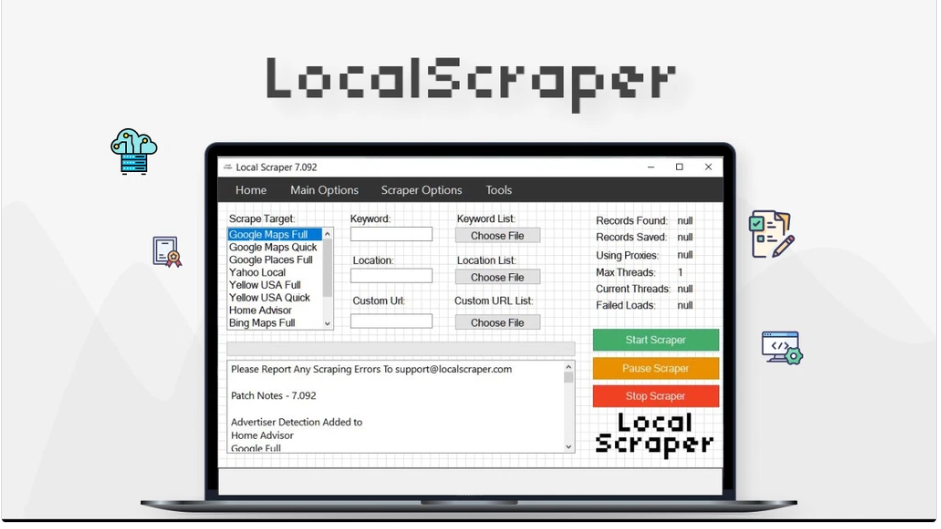
Local Scraper collects business and contact data by location. Instead of searching one company at a time, you pull dozens or hundreds of local contacts in one pass.
This works well for agents who want to build lists of local business owners, property managers, or service providers to partner with for referrals.
Benefits
- Scrapes contact data by city, ZIP code, or business category
- Saves hours versus manual search
- Good for building referral partner lists, not just buyer/seller leads
- Exports clean, usable spreadsheets
How to Apply It
- Set your search area to your farm ZIP codes
- Pick a business category (property management, moving companies, home inspectors)
- Run the scrape and export the results
- Segment the list by category
- Reach out with a partnership pitch, not a cold sales pitch
Real-World Use Case
A broker wants referral partners in a new suburb. They scrape local moving companies and home inspectors.
Then send a short intro email proposing a referral split. Three partnerships come out of one afternoon of scraping.
Grab Local Scraper today. Start pulling leads this week.
FormDesigner: Capture Leads Straight From Your Website
Overview
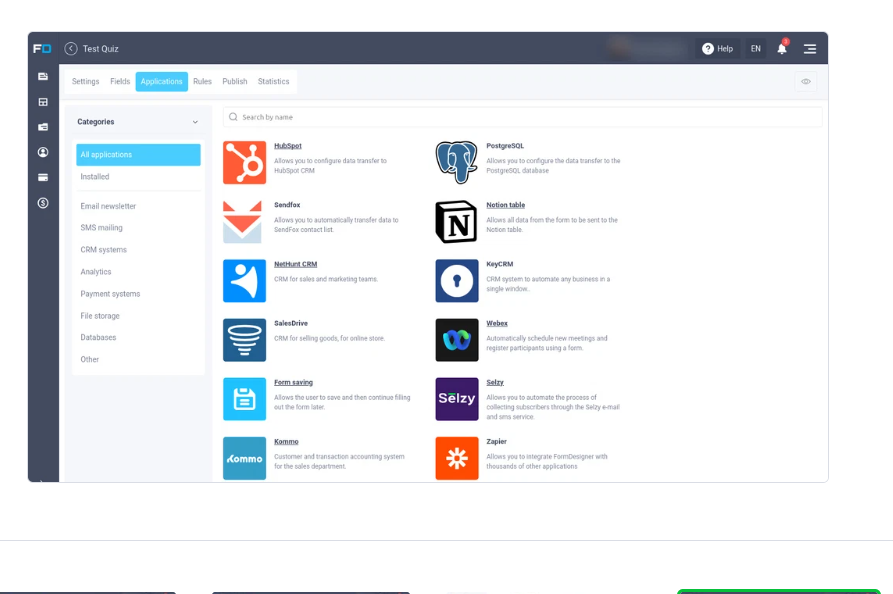
FormDesigner is a drag-and-drop form builder. No code needed. It supports over 40 field types, so you can build home valuation forms, open house RSVP forms, and buyer questionnaires that match your brand.
Benefits
- Drag-and-drop editor, live in minutes
- Conditional logic shows only relevant questions based on prior answers
- Mobile-responsive by default
- Welcome pages set expectations before the form starts
How to Apply It
- Pick a template or start blank
- Add fields: name, phone, property address, timeline to sell or buy
- Turn on conditional logic (skip mortgage questions if the visitor is a buyer, not a seller)
- Embed the form on your listing pages and homepage
- Connect form submissions to your email tool or CRM
Real-World Use Case
An agent adds a “What’s My Home Worth” form to their site homepage. Visitors enter their address and timeline. Every submission drops straight into a follow-up sequence within minutes.
Get FormDesigner now. Add your first form today.
Hey Oliver: Turn Website Visitors Into Leads
Overview
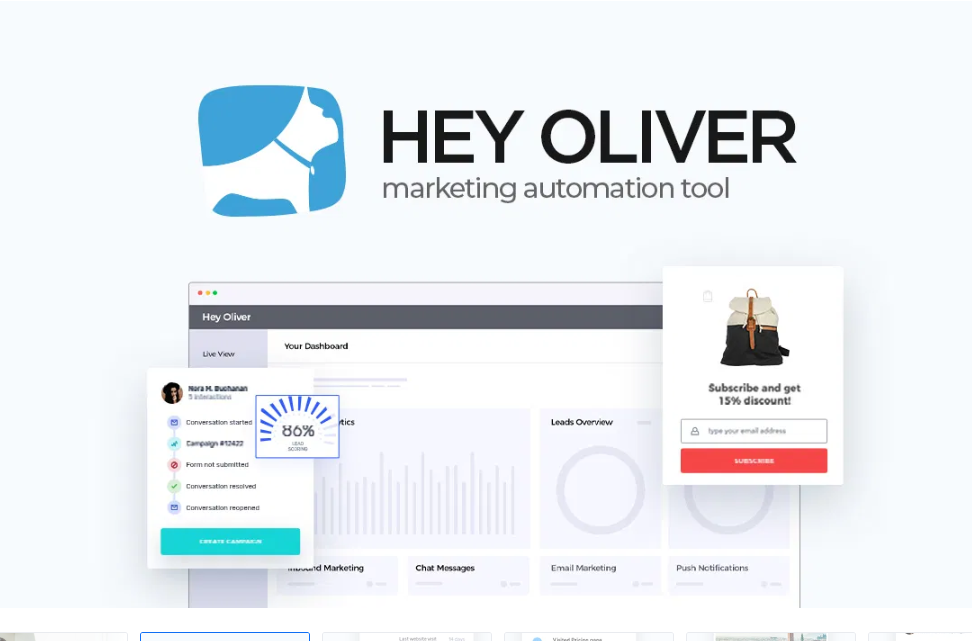
Hey Oliver tracks every visitor on your website in real time. It logs page views, clicks, and time on site, then scores each visitor based on behavior.
It builds a detailed profile of every visitor and lets you create audience groups like “hot leads” for automated campaigns.</cite> When someone tries to leave your site, it can trigger a pop-up offer to keep them from bouncing.
Benefits
- Tracks visitors even before they fill out a form
- Scores leads automatically, so you know who to call first
- Exit-intent pop-ups catch visitors before they leave
- Live chat widget lets you answer questions in real time
One limit worth knowing: automated email follow-up inside the tool is limited, so pairing it with SendFox or a CRM for the actual nurture sequence works better than relying on Hey Oliver alone.
How to Apply It
- Install the tracking pixel on your site
- Set up audience segments (new visitors, repeat visitors, high-scoring leads)
- Build an exit-intent pop-up offering a free home valuation or buyer’s guide
- Check your dashboard daily for hot leads
- Export hot leads to your CRM or email tool for follow-up
Real-World Use Case
A visitor browses five listings on an agent’s site over two visits. Hey Oliver flags them as a hot lead.
The agent sees the alert and calls that afternoon, before the lead reaches out to anyone else.
Get Hey Oliver today. Start catching leads now.
Writecream: Write Cold Outreach That Gets Replies

Overview
Writecream uses AI to write personalized opening lines for cold emails and outreach messages. Instead of a generic “Hi, I’m your local agent” line, it pulls details from a prospect’s LinkedIn or website to craft something that reads like it was written by hand.
Benefits
- Personalized icebreakers boost open and reply rates
- Cuts outreach writing time from hours to minutes
- Works well paired with lists from LeadRocks or Local Scraper
- Supports bulk personalization for larger lists
How to Apply It
- Upload your prospect list (name, company, LinkedIn URL)
- Generate personalized opening lines for each contact
- Drop the lines into your email template
- Send through your outreach or email tool
- Track replies and adjust your template based on what gets responses
Real-World Use Case
An agent targeting out-of-state investors uses Writecream to generate a custom opening line for each prospect based on their recent LinkedIn activity. Reply rates on cold outreach nearly double compared to a generic template.
Try Writecream now. Send smarter outreach today.
TidyCal: Book Showings and Calls Without the Back-and-Forth
Overview
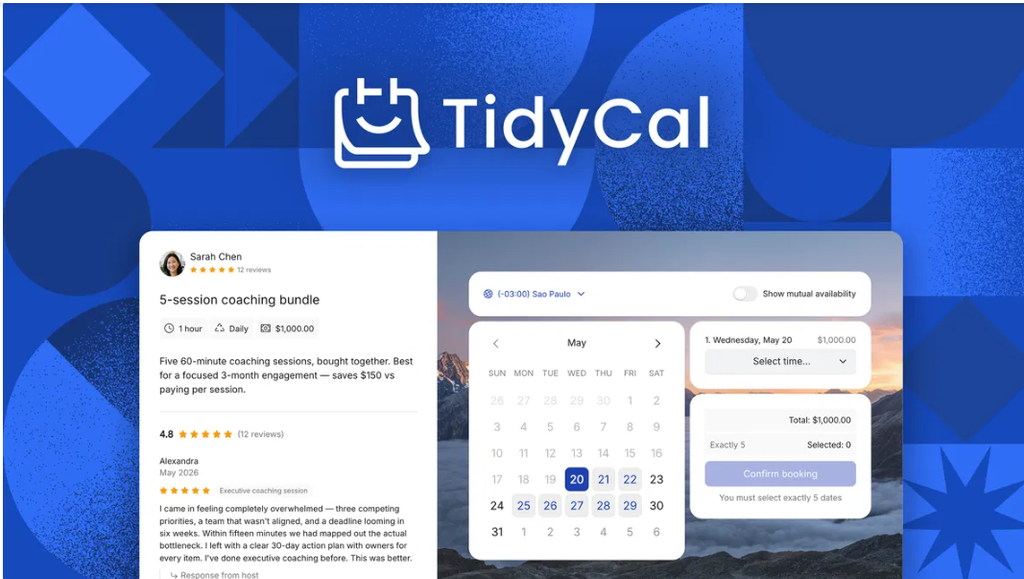
TidyCal is a scheduling tool. Leads pick a time straight from your calendar link. No more email chains trying to find a time that works.
Benefits
- One link handles all booking, no back-and-forth emails
- Syncs with Google Calendar and Outlook automatically
- Supports multiple event types (buyer consult, listing appointment, phone call)
- Sends automatic reminders to cut no-shows
How to Apply It
- Connect your calendar
- Create event types for each appointment kind you offer
- Set buffer time between showings
- Add your booking link to email signatures, text follow-ups, and your website
- Turn on reminder emails and texts to reduce no-shows
Real-World Use Case
A lead fills out a home valuation form at 9 PM. The confirmation email includes a TidyCal link.
They book a consultation for Thursday morning without a single phone call or email exchange.
Get TidyCal now. Start booking leads today.
SendFox: Nurture Leads Until They’re Ready to Move

Overview
SendFox is an email marketing tool built for creators and small teams who want simple automation without a steep learning curve.
For real estate, it handles drip campaigns that keep your name in front of leads who are not ready to buy or sell yet.
Benefits
- Drag-and-drop email builder, no design skill needed
- Automation sequences trigger based on subscriber actions
- Flat pricing with no per-contact fee increases
- Landing pages built in, so you don’t need a separate tool
How to Apply It
- Import your verified contact list
- Build a welcome sequence (who you are, what you offer, social proof)
- Set up a monthly market update automation
- Segment leads by buyer, seller, or investor
- Track opens and clicks to spot who’s warming up
Real-World Use Case
A lead downloads a buyer’s guide but doesn’t respond to the first email. SendFox keeps them in a monthly market update sequence. Four months later, they reply asking to schedule a showing.
Get SendFox today. Launch your first campaign now.
Easy Text Marketing Platform: Reach Leads Where They Actually Respond

Overview
Text messages get read fast, often within minutes. Easy Text Marketing Platform lets you send SMS campaigns and automated follow-up texts to leads who gave you their number.
Benefits
- Texts get opened faster than email, almost every time
- Automated follow-up texts fire the moment a lead fills out a form
- Two-way texting lets leads reply and ask questions directly
- Works well for time-sensitive offers like open house reminders
How to Apply It
- Get opt-in consent on every form (required by law)
- Build a short welcome text sequence
- Set up automated texts triggered by form fills or calendar bookings
- Send open house reminders the morning of the event
- Reply personally once a lead engages
Real-World Use Case
A buyer signs up for alerts on new listings. The moment a matching property hits the market, an automated text goes out. They reply within the hour asking for a showing.
Get Easy Text Marketing Platform now. Start texting leads today.
Reoon Email Verifier: Protect Your Sender Reputation
Overview
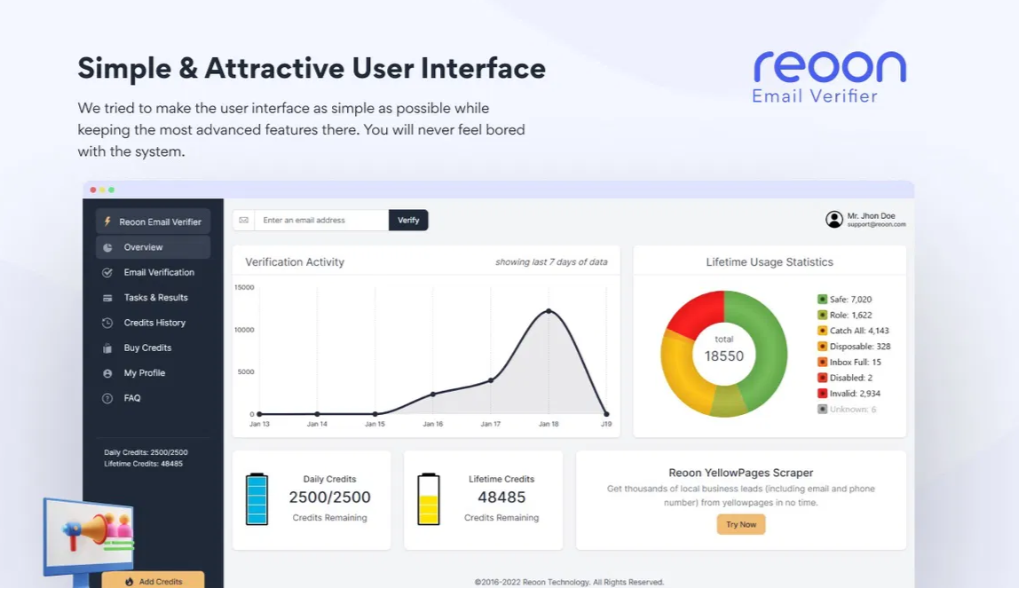
Reoon Email Verifier checks a list of email addresses and flags which ones are valid, risky, or dead before you send anything.
Sending to a dirty list hurts deliverability. Your emails start landing in spam, even for leads who wanted to hear from you.
Benefits
- Catches typos, dead inboxes, and spam traps before you send
- Protects your sender score and inbox placement
- Bulk verification handles large scraped lists fast
- Cheap insurance against wasted sends and blocked domains
How to Apply It
- Export your list from LeadRocks or Local Scraper
- Upload the CSV to Reoon
- Run the bulk verification scan
- Remove or quarantine risky and invalid addresses
- Load the clean list into SendFox or your text platform
Real-World Use Case
An agent scrapes 500 local business contacts. Before sending a single email, they run the list through Reoon.
Sixty addresses come back invalid. Removing them keeps the campaign out of spam folders.
Get Reoon now. Clean your list before your next send.
Buyer’s Guide: What to Look for in Lead Generation Tools for Real Estate
Not every tool on the market fits real estate. Before you buy anything, check these five things.
1. Does It Fit a Long Sales Cycle?
Real estate leads take months to convert, sometimes over a year. Pick tools with automation that keeps running without daily manual work.
A tool that only handles one-time outreach won’t carry a lead through a six-month decision.
2. Can It Segment by Buyer, Seller, or Investor?
Generic marketing tools treat every contact the same. Look for segmentation features so a buyer gets buyer content and a seller gets seller content.
3. Does It Protect Deliverability?
Sending to unverified lists gets your domain flagged. Any lead generation tools for real estate you pick should either include verification or pair cleanly with a verifier like Reoon.
4. Is Pricing Predictable?
Per-contact pricing gets expensive fast once your list grows. Flat-rate or one-time-payment tools protect your budget as your pipeline scales.
5. Does It Integrate With What You Already Use?
Check for Zapier support or direct integrations with your CRM. A tool that can’t pass data to your other systems creates manual work and dropped leads.
What the Data Says About Real Estate Lead Generation in 2026
These numbers come from NAR, MIT, REDX, and Inman. They show why the right tool stack matters.
| Stat | Number | Source |
| Odds of qualifying a lead, contacted within 5 min vs. 30 min | 21x higher | MIT lead study |
| Odds of making contact at all, within 5 min vs. 30 min | 100x higher | InsideSales.com research |
| Buyers who go with the first agent to respond | 78% | NAR 2025 report |
| Average time an agent takes to respond to a new lead | 917 minutes (over 15 hrs) | Inman tech survey |
| Average cost per real estate lead | $416 to $503 | NAR cost survey |
| Blended lead-to-close conversion rate, all sources | 2% to 5% | NAR benchmark data |
| Portal leads (Zillow, Realtor.com) conversion rate | 0.4% to 1.2% | NAR internet leads |
| Referral / sphere of influence conversion rate | 15% to 25%+ | REDX benchmarks |
| Expired listing conversion rate (list rate) | 44% | REDX 2.7M leads |
| FSBO conversion rate (list rate) | 27.8% | REDX FSBO data |
| Sellers who found their agent through referral | 65% to 66% | NAR seller data |
| Homebuyers who use online tools during their search | 96% | NAR digital report |
| SMS open rate vs. email open rate | 98% vs. 20% | Mobile Marketing Watch |
| CRM users’ lift in conversion rate over non-users | 29% to 41% | Deal Machine data |
What this means for your stack
Speed wins over volume. List quality wins too. Hey Oliver and Easy Text Marketing Platform hit that 21x qualification window fast.
TidyCal and Reoon cut the friction behind that 15-hour lag. Referrals and expired listings close far more often than cold portal leads. Point LeadRocks and Local Scraper at those niches first.
Final Recommendation
If you’re starting from zero, build your stack in this order: LeadRocks or Local Scraper to find leads. FormDesigner and Hey Oliver to capture them from your site.
Reoon to keep your list clean, then SendFox and Easy Text Marketing Platform to nurture until they’re ready to book through TidyCal.
Start with the capture and nurture layer first. FormDesigner and Hey Oliver plug straight into a website you likely already have, and SendFox gets a drip campaign running the same day.
That combination alone turns a quiet website into a lead source. Add the prospecting tools once your capture system is catching everything that comes through your door.
This post may contain partner links. Product details and pricing change often on deal platforms, so confirm current terms before you buy.
FAQs
How much does lead generation software cost for real estate agents?
Most tools range from a one-time fee near $50 to $80. Some charge monthly, from $10 to $100. Lifetime deals cut long-term costs.
Can I use free tools for real estate lead generation?
Yes. Many tools offer free trials or free tiers. Free plans often cap contacts or sends. They work fine to test a workflow first.
Do I need a real estate license to use these tools?
No. These are marketing and data tools. They work for agents, brokers, wholesalers, and investors alike.
How many leads should a new agent target per month?
Aim for 20 to 50 quality leads monthly. Focus on referrals and expired listings first. They convert far better than cold leads.
Is cold outreach still effective in real estate?
Yes, if done right. Personalized messages beat generic templates. Pair outreach with a clean, verified contact list.
What’s the difference between a lead capture tool and a CRM?
A capture tool collects new contact info. A CRM stores and tracks that contact over time. Most agents need both.
How fast should I follow up with a new lead?
Within 5 minutes if possible. Speed beats almost every other factor. Automated texts or emails help close that gap.
Can I text leads without breaking any laws?
Yes, but only with consent. Get opt-in on every form first. This keeps your campaigns compliant and safe.
Do I need separate tools for buyers and sellers?
Not always. One tool can handle both if it supports segmentation. Split your lists by buyer and seller intent instead.
How do I know if a lead list is worth buying?
Check the source and update frequency first. Run it through a verifier before any send. A clean, current list beats a big, stale one.

Aliza Khatun is a Digital Marketing Professional and the founder of DigiGenHub. She has helped various businesses grow their online presence through real-world experience in marketing, branding, traffic growth, and business strategy.
Through DigiGenHub, she shows how to build and grow a business from the ground up using Website Setup, SEO, Branding, Paid Promotion, and smart digital tools.
She also highlights how AI can be used to its full potential to make content creation, automation, marketing, and business growth faster and smarter.
She believes that the right knowledge, modern technology, and the right tools can help any individual or business build a stronger online presence.