
Your traffic feels stuck. You publish posts. Nothing ranks. This is the moment most site owners quit or switch tactics blindly.
A long tail keywords strategy fixes this problem at the root. It is not a trick. It is a shift in how you pick words for your content.
Why Long Tail Keywords Strategy Is Beneficial
I have managed a pet food niche site for my client Deena Caruso for three years now. Two years ago, her traffic sat flat at 300 visits a month.
She almost gave up on the site twice. She poured nights and weekends into it. Nothing moved.
Then we changed one thing. We stopped chasing big terms like “dog food” and “best cat food.” We built a long tail keywords strategy instead.
We wrote for real pet owners with real problems, like “why does my senior dog refuse dry food” and “best grain free food for a dog with allergies.”
Six months later, her traffic crossed 4,000 visits. Nothing else changed on the site. Just the keywords.
Deena called it the first time her hard work finally showed up in the numbers. That call is why I still believe in this approach today.
What a Long Tail Keywords Strategy Means
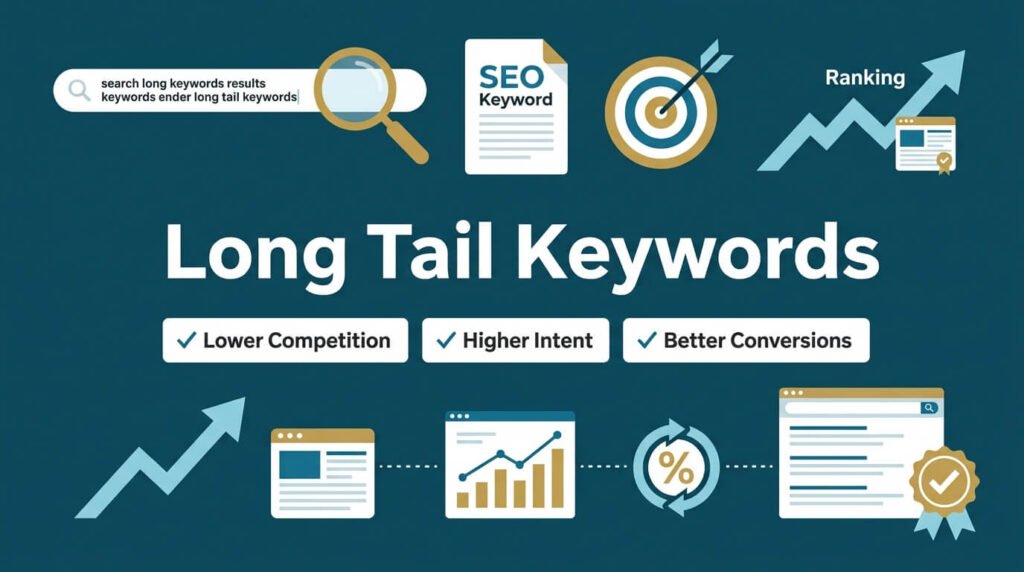
A long tail keywords strategy means you target specific search phrases instead of broad, one- or two-word terms.
These phrases usually run three words or longer. They carry less search volume. But they carry far more buying intent.
Take “shoes.” Millions search it every month. Almost nobody ranks a new site for it. Now take “best waterproof shoes for warehouse work.”
Fewer people search it. These phrases convert at roughly 2.5 times the rate of short-tail terms, based on keyword research from Whitehat SEO. That gap is the whole point of this method.
Ahrefs puts it simply: long-tail keywords get a small number of searches per month, and they run longer and are more specific than head terms.
Low volume does not mean low value. It means low competition. It means sharp focus.
Tim Soulo, CMO at Ahrefs, has studied this pattern for years. He points out something important. Not every long-tail phrase behaves the same way.
Some phrases are easier to rank for. Others only look easy. Yet, long-tail phrases carry lower cost-per-click in Google Ads than broad terms. Testing a phrase in ads first can show you buying intent before you invest in a full page.
Why This Deserves Attention in 2026
Search changed fast this year. Google rolled out its March 2026 Core Update. This update rewarded sites with deep, specific content.
It pushed thin, low-value pages down hard. Broad, vague posts took a hit. Specific, well-answered posts moved up.
The numbers back this up:
| Metric | Data Point |
| Share of all Google searches that are long tail | 91.8% |
| Conversion rate lift vs short-tail terms | 2.5x higher |
| Small business traffic from long tail queries (2025) | 68 percent |
| Traffic shift toward smaller sites post Core Update | 28 percent redistribution |
| Share of AI Overview queries that are informational | Nearly 90 percent |
Full breakdown of these figures sits in the Elementor AI search statistics report. So, it is the main path left for small sites to earn organic traffic in the USA market and beyond.
Why AI Overviews Change The Math
This part did not exist two years ago. It matters now.
Recent tests prove this. Queries with seven or more words trigger AI Overviews far more often than short ones.
In some niches, the gap tops 50 percentage points, based on Koanthic’s 2026 research.
This changes the math. A five-word long-tail post can now beat a head-term post on visibility. It can do this with fewer searches.
There is a second shift. AI Overviews pull citations from deep in the search results. They reach far past where normal ranking ever looked, based on Webspero’s 2026 long-tail SEO guide.
A page sitting on page two can still land in an AI answer box. This never happened under the old rules.
One more number matters here. Close to 60 percent of Google searches end with no click. People read the answer on the results page. Then they leave.
This sounds bad for traffic. But it works in favor of a long tail keywords strategy. AI panels pull from narrow, well-answered questions. They cite this content by name.
The Real Reason Broad Keywords Fail New Sites
Big brands own the short, broad terms. They hold thousands of backlinks. Your new site cannot beat that with content alone.
Chasing “insurance” or “web hosting” wastes your time. Chasing “cheap car insurance for new drivers in Texas” gets you found. This works even for a brand new domain with zero backlinks.
I tried both routes on my own sites. My broad-term posts sat on page four for a year. My long tail posts hit page one within six weeks. The pattern repeated across every niche I tested.
Main Phases of The Long Tail Keywords Strategy
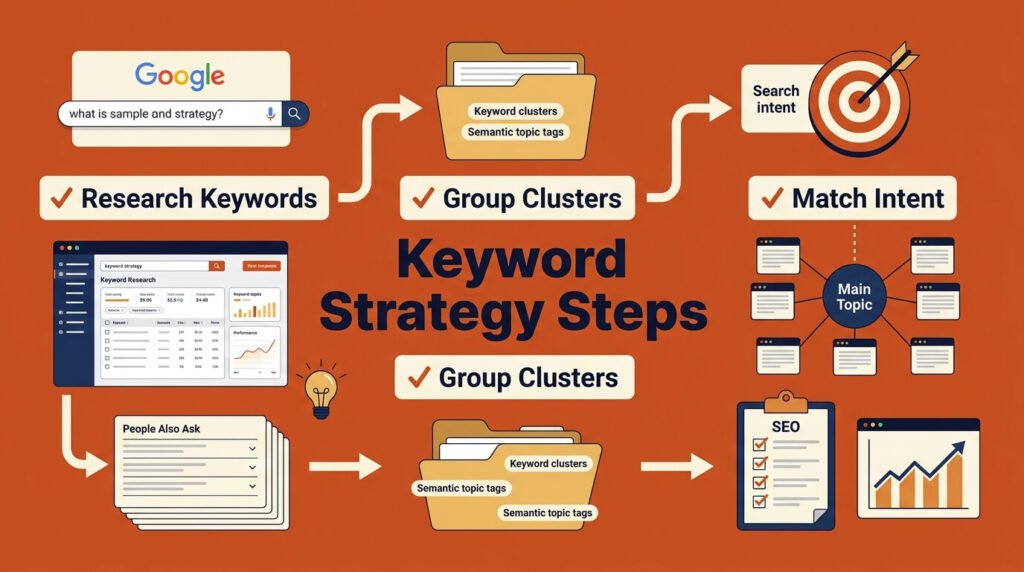
You can apply four steps while practising a long-tail keywords strategy. Let’s explain:
Step 1: Build Your Seed List
Start with one core topic. Write down five to ten broad terms tied to your niche. These are your seeds. Do not publish content around these yet. They only feed your research.
Example seeds for a fitness site:
- home workout
- protein intake
- weight loss diet
- muscle recovery
Step 2: Expand Into Long Tail Phrases
Now grow each seed into specific phrases. Use these four free sources:
- Google Autocomplete. Type your seed into Google. Note every suggestion.
- People Also Ask. Open the PAA box on any search result page. Each question is a long tail keyword.
- Google Search Console. Check your Queries report. Filter for phrases with clicks below ten. These are hidden wins.
- Reddit and Quora threads. Search your topic there. Every thread title shows the exact words people use.
Forums matter more than most site owners think. Quora sits among the most cited sources inside Google’s AI Overviews.
Reddit shows the same pattern in separate industry testing. Pull your phrasing straight from these threads, not from guesswork.
My own workflow starts here every time. I open five Reddit threads on my topic. I copy every question title.
I turn each one into a possible section heading for my post. This step alone doubled my content ideas last year.
Step 3: Filter By Difficulty And Intent
Not every long tail phrase is worth chasing. Filter with two checks.
Check keyword difficulty. Aim for a score under 30 on Ahrefs or Semrush. Most keywords in any large database pull very low monthly search volume.
Do not fear small numbers. They add up fast across many pages.
Look at Ahrefs’ own database. Over 92 percent of its keywords get ten searches a month or less. That’s the finding from uSERP’s breakdown of Ahrefs data.
Small numbers are the norm here. They are not the exception.
Check search intent. Every phrase falls into one of three buckets:
| Intent Type | What The Searcher Wants | Content To Build |
| Informational | An answer or explanation | Blog post, guide, FAQ |
| Commercial | A comparison before buying | Comparison page, best-of list |
| Transactional | A direct purchase or signup | Product page, landing page |
Match the content type to the intent. A guide will never convert a buyer ready to purchase.
A product page will never satisfy someone who just wants an answer. This match is the core skill behind a working keyword approach.
Step 4: Cluster Your Keywords
Group related phrases under one page. Do not write a separate post for each one. This stops your pages from competing against each other.
Build one pillar page around the broad topic. Link it to several cluster pages. Each cluster page targets a tight group of long tail phrases.
Grouped clusters pull in more traffic. Together, they often reach past a thousand monthly searches. Single-keyword pages never touch that number alone.
Step 5: Write Content That Answers, Not Stuffs
Old SEO advice told you to repeat your keyword ten times per page. That advice is dead. Google reads meaning now, not just words.
Write the answer the searcher needs, in plain language, near the top of the page.
Here is how I structure every post now:
- Open with a direct answer in the first two lines.
- Add proof: a stat, a table, or a short example.
- Break the rest into short sections, one idea per section.
- Close with a next step the reader can take today.
This structure helped one of my client sites jump from zero to 1,200 monthly visits in four months, without a single new backlink.
Where To Place Your Keyword
Placement still matters, even in an AI-heavy search world. Put your target phrase in these six spots:
- The title tag, near the front.
- The H1 headline.
- The first 100 words of the page.
- One subheading, naturally.
- The URL slug.
- The meta description.
Front-loading the phrase in your title helps two ways.
People scan results. They read the first few words only.
Google notices this too. It gives early words in a title more weight when it judges relevance. This pattern shows up in Keywords Everywhere’s 2026 long-tail guide.
Do not force the phrase into every sentence after that. One clean mention per key spot is enough.
The New Layer On Top Of SEO
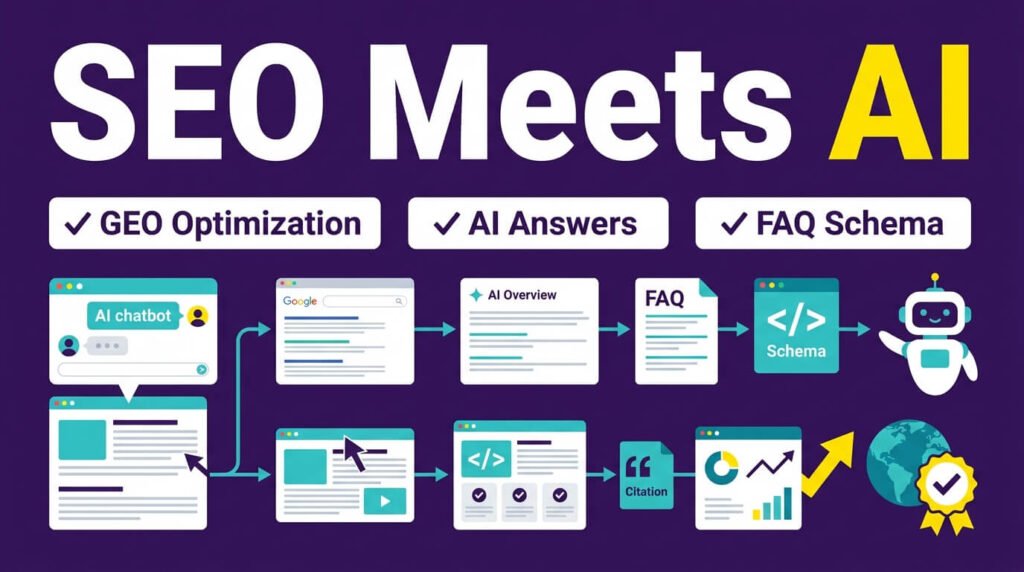
Search no longer lives only on the results page. AI Overviews, ChatGPT, and Perplexity now answer questions directly.
This shift created two new goals: Generative Engine Optimization, known as GEO, and Answer Engine Optimization, known as AEO.
Both goals run on the same fuel: specific, well-structured long tail content. Google is using AI Overviews to claim the informational, long-tail query space for itself, based on the same Elementor report cited above.
AI engines want one strong answer, not a list of links, a pattern also confirmed in Yotpo’s 2026 long-tail keyword guide.
What this means for your pages:
- Answer one clear question per section.
- Use a short, direct sentence right after each heading.
- Add structured data where it fits, such as FAQ schema or How-To schema.
- Keep facts current. AI tools favor fresh, dated data over old posts.
AI platforms also reward content that already earns mentions elsewhere. Sites with heavy activity on Quora and Reddit see much higher odds of being cited by AI tools than sites with little presence there.
Build a habit of answering questions on these forums. Link back to your deeper guide from there.
Common Mistakes That Block AdSense-Ready Content
Sites built for high CPC countries like the USA face one extra hurdle. They need depth, not filler, to pass content quality checks. Avoid these mistakes:
- Writing thin, one-paragraph answers. Add depth. Answer the follow-up questions too.
- Keyword stuffing. Repeat your phrase naturally, not forced into every line.
- Ignoring search intent. A mismatch between content type and intent kills rankings fast.
- Skipping internal links. Link each cluster page back to your pillar page.
- Copying competitor structure exactly. Google’s helpfulness systems flag content that adds nothing new.
How To Scale This Approach
One post never moves the needle much on its own. A long tail keywords strategy pays off when you stack many pages inside one topic cluster. Volume compounds over time.
Here is a simple scaling plan:
- Month one: Publish five posts inside one cluster. Keep each one tight and focused.
- Month two: Check Search Console. Note which phrases already show impressions with no clicks.
- Month three: Rewrite the weak titles and meta descriptions on those pages. Small edits often unlock big jumps in clicks.
- Month four onward: Add five new posts inside a fresh cluster. Repeat the review cycle.
This slow, steady build beats a rushed content dump every time.
Google trusts consistency. It rewards sites that publish focused content over months. It does not trust sites that post fifty pages in one week and go silent.
I tried this exact plan on a recipe site last year. By month four, three clusters were live. Together, they pulled over 6,000 monthly visits. No single post could have carried that alone.
Each post stayed small. The system did the heavy lifting.
Seasonal And Trending Long Tail Phrases
Some phrases spike at certain times of year. “Best gifts for coworkers under twenty dollars” spikes every December.
“Tax deductions for freelancers” spikes every February and March. Plan around these cycles instead of ignoring them.
Build a simple content calendar. Mark each seasonal phrase two months ahead of its peak.
Publish early so Google has time to index and rank the page before demand hits.
Update the post again the following year instead of writing a fresh one. An updated page with a strong history often outranks a brand new post targeting the same seasonal phrase.
A Quick Personal Case Study
Last year I helped a local plumbing client rebuild their blog around this method. We dropped broad terms like “plumber near me” entirely.
Instead, we targeted phrases like “how to fix a slow draining tub without a plumber” and “cost to replace a water heater in an apartment.”
Within ten weeks, three posts hit the top five results. Calls from the site doubled. The client had spent two years stuck on page three chasing broad terms before this shift. Precise beats popular, every time.
The Zero Volume Keyword Opportunity
Many tools show “zero” next to a keyword. Site owners skip it right away. That is a mistake.
Zero volume often means the tool has no reliable data, not that nobody searches the phrase.
I tested this myself last year. I picked forty phrases marked as zero volume in my keyword tool.
Each one matched a genuine question I found on forums. I wrote short, direct posts for each one. Twenty-six of them now bring steady visits every month. None would show up if I trusted the tool alone.
Treat zero-volume phrases as untested, not empty. Forum questions beat a database number every time.
Voice Search And Long Tail Keywords
Voice search changed how people phrase questions. Nobody speaks into a phone the way they type into a search box.
They ask full questions. “Best pizza near me open now” becomes “what pizza place near me is open right now.”
This shift favors longer, more natural phrasing. Build content around full questions, not fragments. Use the exact words a person would speak out loud, not a shortened version.
Add a short, direct answer within the first sentence of any section built for voice search. Voice assistants often read out just one sentence as the answer. Make that sentence count.
Local Long Tail Keywords For USA Audiences
If your site serves a specific city, state, or region, local phrases carry huge value. Combine your service, your location, and a specific need into one phrase.
Examples:
- “affordable dog groomer open on weekends in Denver”
- “emergency roof repair after storm in Tampa”
- “best tax preparer for freelancers in Austin”
These phrases pull fewer searches than a broad term. But the searcher is close to ready.
They already know what they want and where they want it. A local long tail keywords strategy brings in visitors who convert into calls, bookings, and sales fast.
Add your city and state naturally inside headings and early paragraphs. Do not force the location into every sentence. One clear mention per section reads well and still signals relevance.
How To Track Your Results
Tracking matters as much as research. Without it, you cannot tell which pages work and which need a rewrite. In 2026, tracking splits into two separate jobs.
Rank tracking, the classic version:
- Create a spreadsheet with every target phrase and its page URL.
- Check Google Search Console weekly for average position on each query.
- Flag any phrase stuck outside the top twenty after eight weeks.
- Rewrite or expand flagged pages instead of abandoning them.
AI citation tracking, the newer job:
- Search your own target questions in ChatGPT, Perplexity, and Google’s AI mode.
- Note whether your page gets named or linked as a source.
- Watch your branded search volume in Search Console. A rise here often means AI tools are surfacing your name even when direct clicks stay flat.
- Re-check monthly. Citation patterns shift fast as these tools update.
I run the rank-tracking check every Monday morning on my client’s sites. It takes fifteen minutes and tells me exactly where to spend my writing time that week. I run the citation check once a month, since it moves slower. Guessing wastes hours. Tracking saves them.
Tools Worth Using In 2026
You do not need every tool on the market. Three cover almost every need:
- Google Search Console. Free. Shows genuine queries already bringing you clicks.
- Ahrefs Keywords Explorer. Paid. Strong for difficulty scores and clustering.
- AnswerThePublic or AlsoAsked. Free tier available. Pulls question-based phrases fast.
Run your seed keyword through each tool. Cross-check the results. Keep only the phrases that show clear intent and a difficulty score under 30.
Your Checklist
- Pick five to ten seed topics
- Expand each seed with autocomplete, PAA, and forum research
- Filter by difficulty under 30 and clear intent
- Group phrases into clusters under one pillar page
- Match content type to intent: guide, comparison, or product page
- Structure each post to answer fast, near the top
- Place your phrase in the title, H1, first 100 words, URL, and meta description
- Add FAQ schema for AI visibility
- Track rankings weekly and AI citations monthly
Budget Friendly Research For New Site Owners
Paid tools help, but they are not required to start. Google Search Console costs nothing and shows genuine queries already reaching your site.
Google’s own autocomplete and the People Also Ask box cost nothing either. Reddit and Quora search cost nothing.
Many new site owners wait until they can afford a paid tool before they start any keyword work. That wait costs months of possible traffic.
Start free. Move to a paid tool once your site earns enough to justify the cost.
The real skill sits in matching content to intent, not in the price of the tool used to find the phrase.
Set aside one hour a week for keyword research alone, separate from writing time.
This habit keeps your content calendar full and stops the last-minute scramble for a topic before a deadline.
Final Thoughts
A long tail keywords strategy is not a shortcut. It takes steady work, page after page.
But it stands as the most reliable path left for a new or growing site to earn genuine, converting traffic in 2026. Broad terms belong to giants. The tail belongs to you.
Start with one cluster this week. Pick five long tail phrases tied to one topic. Write one deep post that answers the exact question. Track it for thirty days. Then repeat.
FAQ
What is the difference between a long tail keyword and a semantic keyword?
A long tail keyword is about phrase length and search volume. A semantic keyword is about meaning and topic relation. A page can target one long tail phrase and still use ten semantic keywords around it to show Google the full topic.
Do long tail keywords need backlinks to rank?
Usually not. Low competition is the whole point. A clear, well-structured page can rank without a single backlink, especially on a phrase with a difficulty score under 20.
Can targeting too many long tail keywords hurt a small site?
Yes, if you spread thin content across dozens of pages at once. Google’s helpfulness systems flag sites that publish shallow pages in bulk. Depth on fewer pages beats volume on many.
Is there an ideal word count for a page built around one long tail phrase?
No fixed number. Match length to the question. A quick factual query needs 400 to 600 words. A comparison or how-to page often needs 1,200 words or more to cover follow-up questions.
Do long tail keywords work for e-commerce product pages, not just blog posts?
Yes. Product titles and descriptions built around specific phrases, like “waterproof running shoes for wide feet,” pull buyers closer to checkout than a generic product name alone.
Do AI keyword tools give accurate search volume for long tail phrases?
Not always. Many AI tools estimate volume rather than pull it from real search data. Cross-check any AI-generated list against Google Search Console or a paid tool before you commit writing time to it.
Should you write a new post or update an old one for the same long tail topic?
Update the old one first. A page with search history and existing links often outranks a fresh page targeting the same phrase, even after a full rewrite. Save new posts for genuinely new angles.
Does a long tail keyword strategy work for YouTube or video content?
Yes. YouTube’s search bar runs on the same long tail pattern as Google. A title like “how to fix a leaking kitchen faucet without tools” pulls more targeted views than “faucet repair.”
How many long tail keywords can one small site realistically target in a year?
Most solo site owners manage 150 to 250 well-researched phrases a year, spread across four to six clusters. Quality of research matters more than the raw count.

Aliza Khatun is a Digital Marketing Professional and the founder of DigiGenHub. She has helped various businesses grow their online presence through real-world experience in marketing, branding, traffic growth, and business strategy.
Through DigiGenHub, she shows how to build and grow a business from the ground up using Website Setup, SEO, Branding, Paid Promotion, and smart digital tools.
She also highlights how AI can be used to its full potential to make content creation, automation, marketing, and business growth faster and smarter.
She believes that the right knowledge, modern technology, and the right tools can help any individual or business build a stronger online presence.