
TL;DR
- Selling stickers online in 2026 still pays off, with low startup costs and steady demand.
- Pick one niche and stick to it for your first ten designs.
- Design at 300 DPI, transparent PNG, with a small bleed.
- Start on Etsy for built in traffic, then add Shopify or TikTok Shop as you grow.
- Price with fees included, usually $3 to $6 per sticker.
- Use print on demand first, then move top sellers to bulk printing.
- Get shipping and packaging right to protect your margin.
- Stick to original art to avoid copyright issues.
- Track your income and watch your state’s sales tax rules.
- Drive traffic through Pinterest, TikTok, and Instagram Reels.
- Plan for international buyers early: separate shipping costs, customs forms, and longer delivery windows.
Why Selling Stickers Online Still Works in 2026
Selling stickers online is one of the easiest ways to build a side income in 2026. You need no big budget. You need no storage space. You need a design and a platform. That’s it.
Stickers are not a passing trend. Gen Z buys them for laptops. Small brands use them for packaging. Collectors buy them for fun.
The numbers back this up. The global stickers market sat at $4.88 billion in 2025. It should hit $5.16 billion in 2026.
Personalized stickers alone should grow from $5.12 billion in 2026 to $8.45 billion by 2035, according to Towards Packaging.
That growth means one thing. Demand for selling stickers online will not slow down soon.
| Market Segment | 2026 Value | Growth Rate |
| Sticker Printer Market | $3.74 billion | 8.3% CAGR |
| Personalized Stickers | $5.12 billion | 5.73% CAGR |
| General Stickers Market | $5.16 billion | 5.81% CAGR |
Sources: Grand View Research, Towards Packaging, Market Data Forecast
Selling stickers online takes more than a good design and a little luck. It takes a clear process you can follow in order.
The steps below cover everything. They start with picking a niche. They end with handling international orders.
Each one moves a shop from zero sales to steady income. Follow them in order the first time through. Then return to any step once your shop starts to grow.
Step 1: Pick a Sticker Niche That Sells
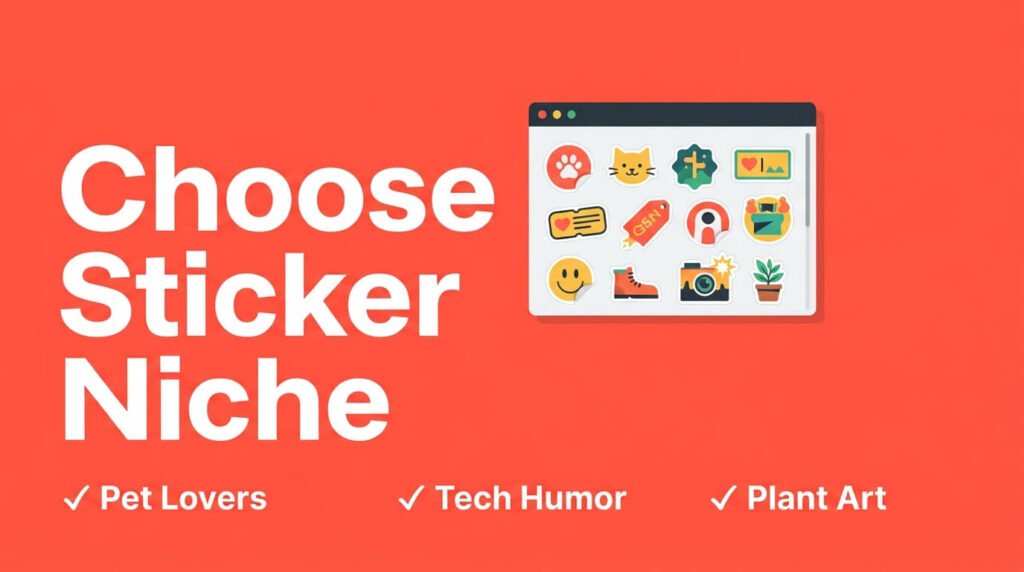
Do not design random stickers. Pick a niche first. This makes your shop easy to find.
Good niches for 2026:
- Pet lovers and pet breed art
- Plant and garden themes
- Coding and tech humor
- Mental health and self-care quotes
- College and dorm decor
- Small business packaging labels
A niche shop ranks faster on search. Buyers trust a focused shop more than a mixed one.
New sellers used to struggle with this. Now the fix is simple. Pick one lane. Stay in it for your first ten designs.
Step 2: Design Your Stickers the Right Way
You do not need a design degree. Canva works fine for most sellers. Procreate works well on iPad. Both handle sticker files with ease.
Follow these file rules:
- Use 300 DPI resolution
- Save as a PNG with a transparent background
- Add a 2mm to 3mm bleed around cut lines
- Keep text large enough to read at 2 inches wide
- Test colors on screen and on paper before you print
File errors used to cause blurry prints and wasted money. Now most platforms show a live preview before checkout. This fix alone saves new sellers hours of trial and error.
Step 3: Learn the Sticker Types Before You Print
Buyers search for specific sticker types, not just “stickers.” Know your options before you upload a single design.
- Die-cut stickers. Cut exactly along the shape of the design. No background square. These sell best for laptop and water bottle stickers.
- Kiss-cut stickers. Cut through the sticker layer only. The backing stays whole. This gives buyers a clean peel and works well for sheets.
- Sticker sheets. Several small designs on one page. Great for planner stickers, stationery fans, and gift sets.
- Vinyl stickers. Waterproof and durable. Best for water bottles, laptops, and outdoor use.
- Holographic and glitter finishes. These trend hard on TikTok right now. They cost more to produce but buyers pay a premium for the shine.
- Matte and glossy finishes. Matte gives a soft, modern look. Glossy gives bright colors and a shine that pops in photos.
Pick your finish based on your niche. A dorm decor shop might lean glossy and bright. A minimalist plant shop might lean matte.
Step 4: Choose Your Selling Platform
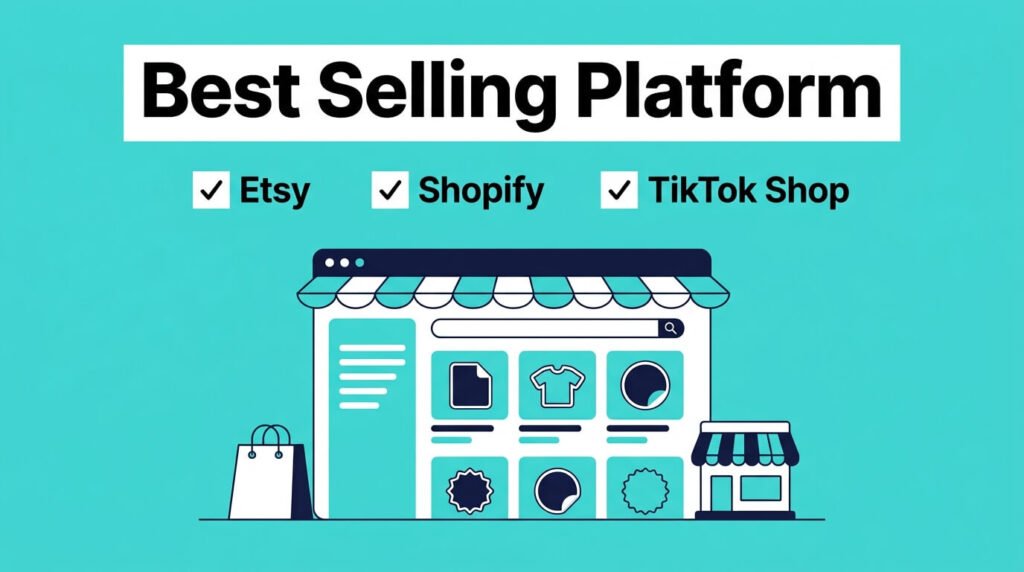
This is the biggest decision in selling stickers online. Your platform decides your traffic, your fees, and your growth speed.
| Platform | Best For | Startup Cost | Traffic |
| Etsy | Beginners, niche buyers | Low, $0.20 per listing | High, built in |
| Shopify | Brand building, control | Monthly fee | You must build it |
| Redbubble | Passive, no upload cost | Free | Medium, built in |
| Amazon Handmade | Bulk buyers, big reach | Free to apply | Very high |
| TikTok Shop | Viral growth, young buyers | Free | Depends on content |
Etsy: Best Starting Point
Etsy carries built-in buyer traffic for craft and sticker searches. Shoppers on Etsy already look for custom sticker packs. Your shop starts with an audience.
Here is the fee list straight from Etsy’s own seller page. When you make a sale, Etsy charges a 6.5% transaction fee on the sale price, including shipping.
On top of that, Etsy charges a payment processing fee. In the US, that fee runs close to 3% plus $0.25 per order.
Here is a clean fee breakdown for a $6 sticker with $3 shipping:
| Fee Type | Amount |
| Listing Fee | $0.20 |
| Transaction Fee (6.5%) | $0.59 |
| Processing Fee (3% + $0.25) | $0.52 |
| Total Fees | $1.31 |
| You Keep | $7.69 |
Etsy fees total near 12% to 15% per order once you add everything up. Price your stickers with this in mind, not after the sale lands.
Shopify: Best for Your Own Brand
Shopify gives you full control. You own your customer list. You set your own rules. You keep more profit per sale since there is no marketplace cut.
The catch is traffic. You must drive buyers yourself through ads, social posts, or search ranking. This works best once you already have followers or a budget for ads.
Redbubble and TikTok Shop: Best for Passive Growth
Redbubble handles printing, shipping, and support. You upload once and it runs. Margins run lower here, but so does your work.
TikTok Shop drives fast traffic when a design goes viral. One good sticker trend post can move hundreds of orders in days. Pair this with Instagram Reels for the best reach in 2026.
Step 5: Price Your Stickers for Profit
Do not set a price at random. Use a formula.
Price = Production Cost + Platform Fees + Your Profit
For a die-cut vinyl sticker, production often runs $0.50 to $1.50 per piece through print-on-demand partners. Add your fees, then add a profit margin of 40% to 60%.
Most sellers land between $3 and $6 per single sticker. Sticker packs of five to ten pieces sell well at $8 to $15.
Common pricing mistakes:
- Pricing too low to “compete,” which kills your margin
- Forgetting shipping costs in your math
- Ignoring the 6.5% fee on shipping charges too
- Not testing higher prices on best sellers
Step 6: Choose Print on Demand or Self Printing
This choice used to feel confusing. Now it comes down to volume.
Print on Demand (POD)
No upfront cost. No inventory risk. You upload a design and the platform prints, packs, and ships when someone orders. This fits most people starting in selling stickers online.
A few named vendors dominate this space in 2026:
- Printify runs the lowest per-sticker cost through its network of print partners. Best if you want the cheapest entry point.
- Printful charges more per sticker but delivers stronger print quality and packaging. Best if you want a premium unboxing feel.
- Sticker Mule works best as a rush or bulk order supplier. Fast turnaround and free shipping make it a strong backup to a main POD partner.
Many sellers run two vendors at once. One for daily Etsy orders. One for rush jobs or international buyers.
Self Printing
You buy a printer, vinyl sheets, and a cutting machine like a Cricut. This costs more upfront but gives higher profit per unit once you sell in bulk. Save this option for designs that already sold well through POD first.
A safe path looks like this:
- Test all designs through POD first
- Track which designs sell each month
- Move your top 20% of sellers to bulk printing
- Keep new, untested designs on POD
This method removes the guesswork. You only invest money in designs that already proved themselves.
Step 7: Get Your Shipping and Packaging Right
Shipping mistakes eat profit fast. Plan this before your first sale, not after.
- Use rigid mailers or stay flats for single stickers. They stop bends and creases in transit.
- Use small poly mailers for sticker packs. They cost less than boxes and still protect the product.
- Price shipping into your total, not as an afterthought. Remember, Etsy takes its 6.5% cut on shipping charges too.
- Buy mailers in bulk. A pack of 100 rigid mailers costs far less per unit than buying in small batches.
- Add a thank you card or a discount code inside the package. This turns a one time buyer into a repeat buyer at almost no extra cost.
Most single stickers ship for $1 to $2 in the US with a stamped envelope. Sticker packs often need a bit more padding and run closer to $3 to $4.
Step 8: Optimize Your Listings for Search
A great sticker design still needs to get found. This step decides whether your shop shows up on page one or page ten.
- Research keywords before you write a title. Tools like eRank and EverBee show what buyers actually type into Etsy search.
- Put your main keyword near the front of your title. Etsy search weighs early words more heavily.
- Fill every tag slot. Etsy gives you thirteen tags. Use all of them with different phrasing, not the same word repeated.
- Write a description that answers buyer questions. Size, material, and use cases matter more than clever wording.
- Refresh your keywords monthly. Buyer language shifts with trends, so a tag that worked in January may fade by summer.
Sellers who skip this step often blame slow sales on the design. Most of the time, the design is fine. The listing just never reaches the right search.
Step 9: Handle Copyright the Right Way
This part trips up many new sellers. You cannot print a cartoon character, a sports logo, or a song lyric without permission. This applies even if you drew it yourself.
Under US law, a copyright is a right attached to an original work of authorship fixed in a tangible form.
This means brand logos, movie characters, and song art belong to their owners, not to you, even in fan art form.
Safe design paths to follow:
- Draw fully original characters and art
- Use public domain images, which are old enough to be free
- License stock art with a clear commercial use permit
- Add your own text and quotes instead of copying song lyrics
Skipping this step can get your shop shut down fast. Treat it as a first step, not an afterthought.
Step 10: Handle the Business Side
Selling stickers online still counts as running a business, even at a small scale. A few basics protect you later.
- Track your income from the first sale. A simple spreadsheet works fine at first.
- Check your state’s sales tax rules. Most US states expect you to collect sales tax once you cross a certain revenue threshold. Etsy and Shopify both calculate this for you at checkout in most states.
- Decide on a business structure once you grow. Many sellers start as a sole proprietor and move to an LLC once sales pass a few thousand dollars a year. An LLC separates your personal savings from business debt.
- Get an EIN if you plan to open a business bank account. This is free through the IRS website and takes a few minutes.
None of this needs to happen on day one. But plan for it once your shop earns steady money.
Step 11: Sell to Small Businesses, Not Just Individual Buyers
Individual buyers are not your only market. Small businesses need stickers too, and this side of the market keeps growing.
- Custom packaging labels. Small brands use stickers to seal boxes, bags, and jars.
- Logo stickers for shipping boxes. Online sellers add a branded sticker to every package they send out.
- Bulk sticker sheets for events. Weddings, birthdays, and corporate events all buy in bulk.
This channel pays through repeat orders instead of one time sales. A single small business client might reorder every month once their stock runs low.
Step 12: Drive Traffic to Your Sticker Shop
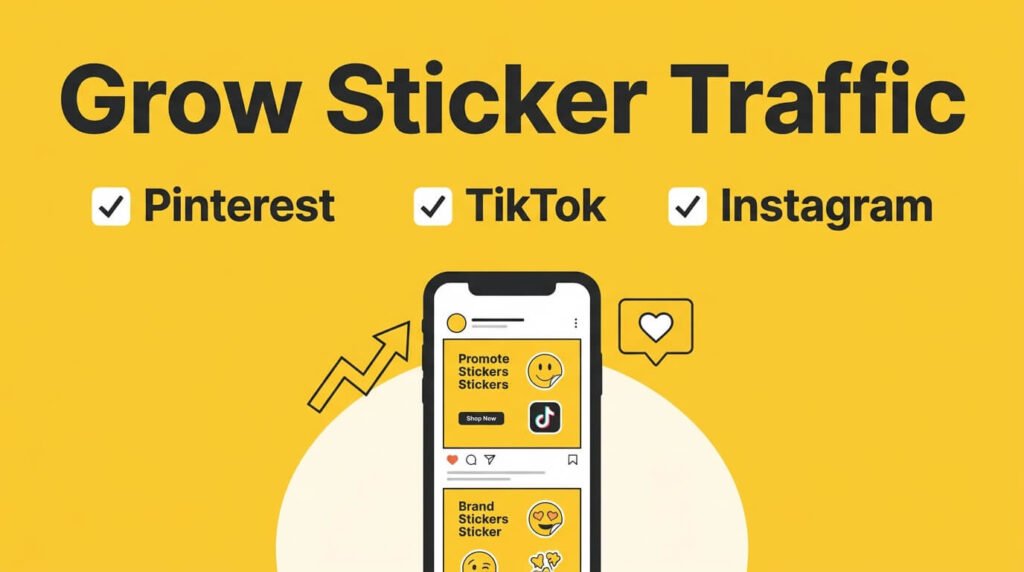
A shop with no traffic makes no sales. Traffic comes from three main places in 2026.
Pin your sticker mockups on laptops, bottles, and notebooks. Pinterest sends steady, long term traffic to Etsy and Shopify shops. Pins from six months ago still drive clicks today.
TikTok
Short videos showing your design process pull in buyers fast. Show the sticker being applied to a real item. Buyers want to see how it looks in use.
Instagram Reels
Post your new drops here first. Tag your niche hashtags. Reply to every comment in the first hour to boost reach.
Post at least three times a week across these channels. Consistency beats one viral hit that fades in a day.
Step 13: Think About International Buyers
Once your shop gains traction, orders will come from outside the US. Plan for this early so it does not slow you down later.
- Check customs rules for your top buyer countries. Etsy and Shopify both generate customs forms automatically for most orders.
- Price international shipping separately. A flat US shipping rate rarely covers costs to Europe or Australia.
- Expect longer delivery windows. Set buyer expectations in your listing so you avoid complaints over slow shipping.
- Watch currency conversion fees. List your prices in your own currency to avoid extra conversion charges on your end.
International orders often carry a smaller volume but a higher price tolerance. Buyers overseas expect to pay more for shipping and rarely push back on it.
Situations I Deal With at Work
The niche shift.
A client hired me to fix a stalled sticker shop on Etsy. Sales sat flat for six months on a mix of random designs.
I ran a niche audit, checked search demand, and proposed pet breed art as the focus. I redesigned the shop listings, rewrote the titles, and relaunched with ten new designs in that one niche.
Sales tripled within eight weeks. The client told me the shop finally felt like it had an identity, and buyers started coming back for more designs in the same style.
The pricing fix.
A client brought me in to review his Shopify store after months of steady orders but thin profit.
I built out a full fee and cost breakdown for every product he sold, including his $2 stickers.
The sheet showed he was losing money on each sale once fees and materials were counted. I recommended a new price point at $4.50 and adjusted his listings myself.
He kept the same order volume but doubled his profit. He later shared that he had never actually tracked his true cost per item before, and seeing it laid out changed how he prices everything now.
The copyright warning.
A client came to me after Etsy took down her fan art sticker listings over a copyright claim.
I reviewed her full catalog, flagged every design that used existing characters or logos, and helped her rebuild the shop around original art only.
I also set up a simple design checklist she could run through before publishing anything new.
She had no further takedowns after that, and she told me the checklist saved her from a repeat mistake twice in the months after.
Common Problems and Quick Fixes
Every new seller runs into the same handful of problems. Most of them have a quick fix once you know what to look for.
Use this table to spot your issue fast and apply the right fix before it costs you more sales.
| Problem | Fix |
| Low views on listings | Add more tags, better titles, and fresh photos |
| Blurry prints | Fix DPI to 300, check bleed lines |
| Copyright takedown | Switch to original art or public domain sources |
| Low profit per sale | Recalculate fees into your price |
| Slow first sales | Start on Etsy for built in traffic |
| No repeat buyers | Add a thank you card with a discount code |
| High shipping costs | Switch to poly mailers, buy mailers in bulk |
| Weak international sales | Price shipping separately, set delivery expectations |
Final Thoughts
Selling stickers online now comes down to a clear path. Pick a niche. Learn your sticker types. Design clean files.
Choose the right platform. Price with fees in mind. Handle shipping, taxes, and copyright the right way. Then drive traffic and keep testing.
The market keeps growing. Buyers keep searching. The tools to start cost almost nothing today. Start small, track what sells, and grow from your own data, not guesswork.
FAQ
What’s the difference between kiss-cut and die-cut stickers for a buyer?
A kiss-cut sticker sits on a square backing that the buyer peels away before use. A die-cut sticker has no extra backing shape.
It ships and displays exactly as the design looks. Buyers often pick die-cut for a cleaner look on a laptop or bottle.
How long does it take to get an Etsy shop approved and live?
Etsy shops go live almost instantly after signup. There is no manual approval wait like some marketplaces.
You can list your first product and start selling within the same day you open your shop.
Should I trademark my shop name before I start selling?
Not right away. A trademark protects your brand name from being copied, but it costs money and takes time to register. Most new sellers wait until the shop earns steady income before filing one.
What happens if a buyer disputes a sticker order or asks for a refund?
Etsy and Shopify both have a built in dispute process. Respond fast, offer a replacement or refund for damaged items, and keep order photos before shipping as proof if a dispute escalates.
Can I sell the same sticker designs on Etsy, Shopify, and TikTok Shop at the same time?
Yes. Many sellers list identical designs across platforms to widen their reach. Just keep your inventory and pricing synced so you don’t oversell a limited batch on one platform.
How do I handle a customer who received a damaged or misprinted sticker?
Ask for a photo of the issue, then send a free replacement or refund without a long back and forth. This keeps your shop rating high and often turns a complaint into a repeat buyer.
Do sticker sales count as taxable income if I only sell a few a month?
Yes. Any income from sales counts as taxable, even at a small scale. Reporting rules and thresholds vary by state and by how the platform issues tax forms, so check your local requirements.
What’s a realistic timeline before a new sticker shop sees its first sale?
Most new shops see a first sale within two to six weeks if the niche is clear and the listings are optimized. Shops with weak niches or poor photos can take months longer.
Should I offer sticker designs as digital downloads alongside physical products?
Yes. Digital downloads need no shipping and carry no production cost. Buyers can print at home or use the file for planners and journals, and this adds a second revenue stream from the same design.

Aliza Khatun is a Digital Marketing Professional and the founder of DigiGenHub. She has helped various businesses grow their online presence through real-world experience in marketing, branding, traffic growth, and business strategy.
Through DigiGenHub, she shows how to build and grow a business from the ground up using Website Setup, SEO, Branding, Paid Promotion, and smart digital tools.
She also highlights how AI can be used to its full potential to make content creation, automation, marketing, and business growth faster and smarter.
She believes that the right knowledge, modern technology, and the right tools can help any individual or business build a stronger online presence.