
Flowers sell every day of the year. Birthdays, weddings, funerals, apologies, and random Tuesdays all need blooms.
That steady demand is why so many people search for how to start a home-based floral business right now.
Still, you can start a home-based floral business with less than $3,000, or scale up to $25,000 for full delivery service.
Either way, you need three things first: a state business license, a home occupation permit, and a resale certificate. Skip these, and fines follow fast.
Next, pick your model. Dried flowers skip refrigeration costs. Fresh delivery needs a cooler between 34 and 38 degrees. Price everything at 2.5x to 3.5x your flower cost, never less.
Your first customers rarely come from ads. They come from a Google Business Profile, a clean website, and one local cafe or wedding planner who trusts your work.
The Opportunity Behind a Home-Based Floral Business
You searched how to start a home-based floral business for a reason. Maybe you love working with flowers.
Maybe you want income without a storefront lease. Either reason works, and the timing backs you up.
The US floriculture market hit $7.91 billion in 2026. It grows 5.43% every year and should reach $10.3 billion by 2031, according to a recent US floral market report.
USDA data confirms the same trend. Producers grew from 10,216 to 11,262 in a single year, based on the 2024 floriculture sales data.
More demand. More room to enter. Less risk than a retail shop, since you skip rent and lease costs entirely.
Below, you’ll find every step: your business model, legal checklist, budget, suppliers, pricing, online setup, and your first customers. Start with Step 1.
Step 1: Pick Your Home Floral Business Model
Not every home flower business looks the same. Pick a model that fits your space, your time, and your budget.
| Business Model | Startup Cost | Best For |
| Dried and preserved flowers | $500-$3,000 | No cooler needed, ships nationwide |
| Subscription bouquet service | $3,000-$8,000 | Steady repeat income |
| Wedding and event florist | $5,000-$15,000 | Higher profit per order |
| Local delivery service | $8,000-$20,000 | Daily walk-in style demand |
| B2B partnerships (cafes, offices) | $2,000-$6,000 | Predictable weekly income |
Dried flowers skip refrigeration costs entirely. That alone saves $500 to $1,500 in startup gear.
They also last six months or longer on a shelf, so nothing rots if a sale doesn’t happen fast.
Wedding work pays the most per order but needs a stronger portfolio before clients trust you.
Many home florists start with one model, then add a second once cash flow steadies. A subscription box owner might add wedding work once she builds a following.
A dried flower seller might add local delivery once demand grows. This is a normal part of learning how to start a home-based floral business the right way, one stage at a time.
Step 2: Handle The Legal Side First
This part trips up most beginners. Skip it and you risk fines, forced closure, or a shutdown notice from your city.
Here’s the checklist:
- Choose a business structure. Most home florists form an LLC. It protects personal assets if something goes wrong with a delivery or client dispute.
- Get an EIN. This free number from the IRS works like a Social Security number for your business. Apply through the free EIN application and it’s ready in minutes.
- Apply for a general business license. Costs run $50 to $400 depending on your city.
- Get a resale certificate. This lets you buy flowers from wholesalers tax-free.
- Check for a home occupation permit. Many cities require this on top of your general license, especially if customers ever visit your home.
- Confirm zoning rules. Some residential zones limit deliveries, signage, or foot traffic.
State rules differ a lot. Texas and California require a nursery or floral license just to sell live plants.
Other states skip that step entirely. Check your exact state requirements through the state license requirements tool from the Small Business Administration before you spend a dollar on inventory.
Step 3: Budget Your Startup Costs
Money questions come up first for most people asking how to start a home-based floral business. Here’s a realistic breakdown.
| Expense | Low End | High End |
| Commercial floral cooler | $1,500 | $7,000 |
| Initial flower inventory | $2,000 | $10,000 |
| Tools and supplies (vases, wire, ribbon) | $1,000 | $3,000 |
| Business licenses and permits | $50 | $400 |
| Website and online store | $100 | $500 monthly |
| Delivery vehicle setup | $500 | $3,000 |
Total startup range sits between $10,000 and $25,000 for a fully equipped home delivery business.
Dried flower sellers can start much lighter, often under $3,000, since they skip cooler costs.
A good cooler makes or breaks profit. Flowers spoil fast without proper storage. Industry spoilage runs 5-10% even with good refrigeration. So keep your cooler between 34 and 38 degrees Fahrenheit at all times.
Step 4: Set Up Your Workspace
Your home space needs three things:
- A worktable with room to move around
- Access to a water source for buckets and vases
- A cooler or cool storage spot away from direct sun
Basic tools every home florist needs:
- Sharp floral clippers
- Wire cutters
- Floral knife
- Buckets for water and stem storage
- Floral tape and wire
- Ribbon and wrapping paper
- Scissors
Keep everything clean. Bacteria in old water kills flowers fast and cuts your profit margin down to nothing.
Step 5: Find Reliable Flower Suppliers
Your flowers make or break your reputation. Poor quality stems mean unhappy customers and refund requests.
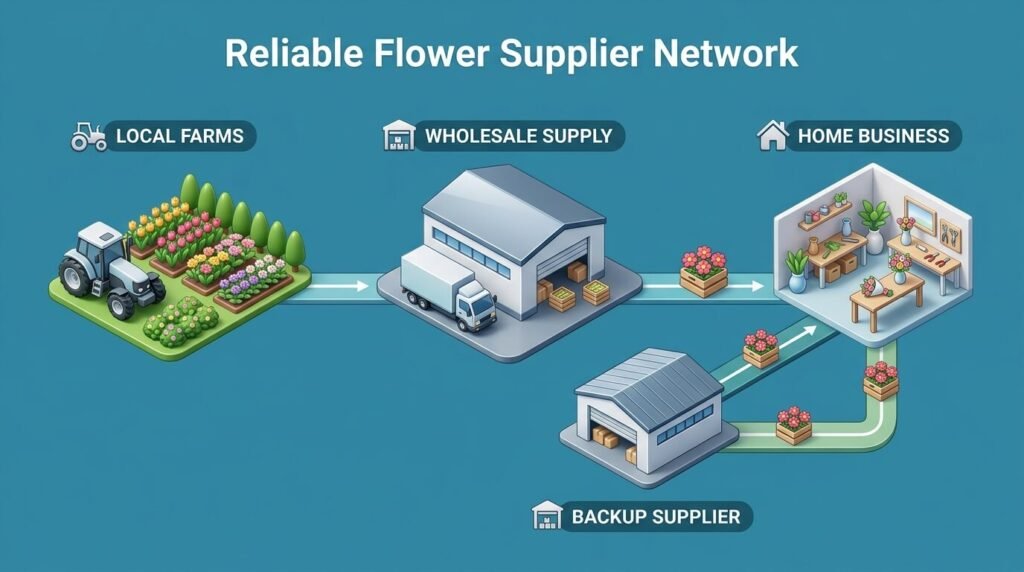
Three main sourcing paths:
- Local flower farms. Fresher stems, shorter delivery time, and support for local growers. Search farmers markets or local co-ops in your area.
- Wholesale distributors. Bulk pricing, wider variety, and consistent weekly supply.
- Grow your own. Works well for dried flower sellers and small subscription boxes.
Build a relationship with two or three suppliers instead of one. A backup supplier saves you during a busy week like Mother’s Day, when demand spikes and one grower alone can’t keep up.
One of my clients, a home florist I work with on local SEO, ran into this exact problem last year.
Her main supplier ran out of stock the week before Valentine’s Day. She had orders lined up and no flowers coming.
She called a second wholesaler that same afternoon and paid a rush fee just to save the order.
She told me about it during one of our monthly calls, and it changed how she runs her supply chain since.
She now keeps two suppliers on file at all times. One backup contact saved her from a full week of lost sales, right during her busiest period of the year.
Step 6: Price Your Arrangements The Right Way
Underpricing kills more home flower businesses than bad flowers ever will.
| Item Type | Standard Markup |
| Fresh cut flowers | 2.5x to 3.5x cost |
| Hard goods (vases, ribbon) | 2x cost |
| Custom wedding orders | 3x to 4x cost |
Say a bouquet costs you $20 in stems. At a 3x markup, you sell it for $60. That covers spoilage, labor, delivery gas, and packaging, plus leaves real profit.
Gross profit margins in this industry run between 50% and 70% on fresh arrangements. Stick to your markup formula even when a customer pushes back on price. Cheap pricing trains customers to expect cheap forever.
Step 7: Build Your Online Presence
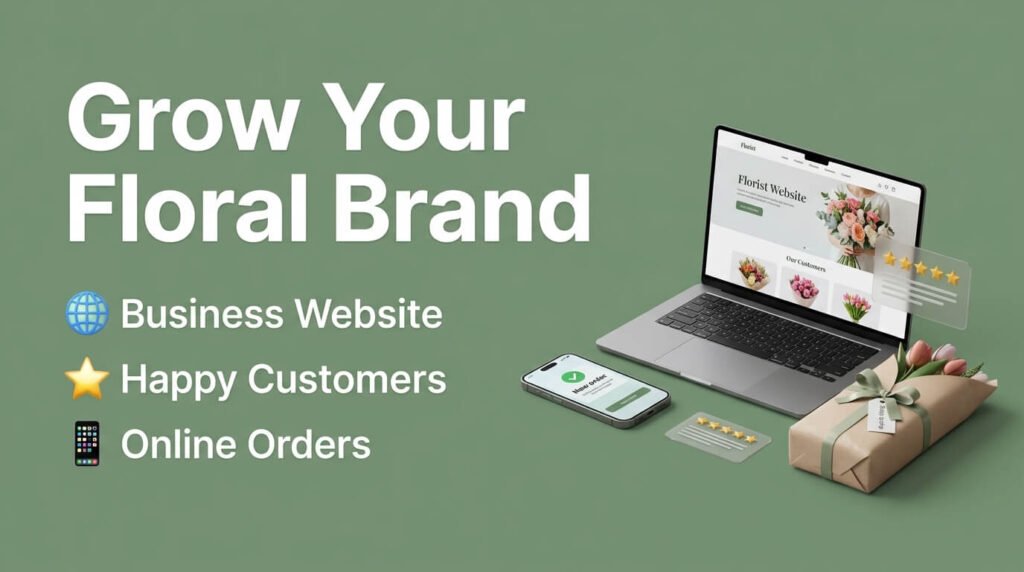
Customers search online first. They type “florist near me” or “flower delivery near me” before they call anyone. A home-based floral business without a strong web presence loses those buyers before it even starts.
Here’s how to cover every part of your online presence, piece by piece.
Set Up Your Google Business Profile
This is your most important online asset. It’s free. It puts your shop on Google Maps. It shows up when someone searches for a florist in your area.
Fill in every section:
- Business name, hours, and service area
- Phone number and website link
- Photos of your best arrangements
- A short business description with your niche (weddings, dried flowers, delivery)
Update your profile often. Add new photos each month. Post updates during busy seasons like Valentine’s Day or Mother’s Day.
Google rewards active profiles with better visibility. You can walk through the full setup process on Google’s own business profile guide.
Build A Simple, Fast Website
Your website works as your digital storefront. Keep it simple. Keep it fast. Keep it clear.
Every home-based floral business website needs:
- A homepage with your best work up front
- A services page listing what you offer
- A pricing guide or starting price range
- A contact form or order button
- Your service area and delivery radius
Skip stock photos. Buyers want to see your actual work, not a stock library image. A photo of your last bouquet builds more trust than a polished stock shot ever will.
Keep load time fast. Slow websites lose orders. Most visitors leave a page that takes more than three seconds to load. Compress your photos before you upload them.
Make sure your site works well on phones. Most searches happen on a phone screen, not a desktop.
Use Instagram And Pinterest As Your Portfolio
Both platforms sell through images. Customers buy what they see.
Post your finished arrangements every week. Show close-up shots. Show the full bouquet. Show a client holding their order, with permission.
Use location tags on every post. This helps local buyers find you through search. Add a few relevant hashtags tied to your city and your flower type, like #dallasflorist or #driedflowerarrangements.
Pinterest works differently than Instagram. Pins stay searchable for months, sometimes years. A single pin can bring steady traffic long after you post it. Wedding buyers search Pinterest often when they plan floral looks for their big day.
Post consistency matters more than post volume. One clear photo each week beats five rushed photos dumped at once.
Set Up A Simple Online Ordering System
Buyers want an easy way to order without a phone call. Add a basic order form or booking calendar to your website.
List your cut-off times clearly, since fresh flowers need lead time before delivery.
Keep the order steps short. Ask only for what you need: date, arrangement type, delivery address, and contact number. A long form loses buyers halfway through.
Collect Reviews On Every Platform
Reviews build trust fast. A shopper checks reviews before they trust a new florist with their wedding flowers or a gift order.
Ask happy customers to leave a review right after delivery, while the experience feels fresh. A short text message with a direct review link works well.
Focus on your Google profile first. A handful of five-star reviews there does more for new orders than paid ads ever will. Add reviews to your website too, next to your best photos.
Keep Everything Connected
Link your website, Google profile, and social pages together. Add your website link to your Instagram bio.
Add your Instagram handle to your Google profile. Add your Google review link to every delivery card.
This creates one clear path for buyers, no matter where they find you first.
A strong online presence turns curious visitors into paying customers. Skip any piece of this puzzle, and buyers drop off before they even reach your order page.
Step 8: Get Your First Customers
Marketing budgets stay small in a home floral business, so relationships matter more than ads.
Try these approaches:
- Local partnerships. Offer a coffee shop three months of free weekly arrangements. One home florist grew this into $75,000 to $90,000 in yearly revenue by expanding to five commercial accounts within 18 months.
- Wedding planners and venues. These contacts refer clients steadily once you prove reliable.
- Corporate offices. Businesses need recurring arrangements for lobbies and events. These contracts bring stable monthly income even during slow retail seasons.
- Word of mouth. Every order is a chance for a referral. Add a small card with your Instagram handle to every delivery.
One of my clients built her first ten steady accounts through a single office building. She dropped off a free sample arrangement at the front desk.
She left her business card too. Three offices in that building became weekly clients within two months.
She shared this story during one of our early strategy calls. That was back when we started building her local SEO presence together. No ad spend went into it. Just a knock on the door and a decent bouquet.
This is the kind of move that still beats paid ads for a home-based floral business. Local trust builds fast this way.
It’s part of why her Google Business Profile started climbing soon after. Her reviews grew. Her local citations grew too. That in-person reputation carried straight into her online presence.
Common Mistakes You Must Avoid
Avoid these before they cost you money:
- No cooler, or a weak one. Warm storage spikes your spoilage rate past 10% fast.
- Skipping permits. Fines and forced shutdowns cost more than the permit fee ever would.
- Underpricing to win customers. This shrinks profit and traps you in a cycle of overwork for underpay.
- No backup supplier. One bad week from your only supplier can wipe out your busiest sales days.
- Ignoring seasonal demand. Peak months like Valentine’s Day and Mother’s Day can bring in 60% of your yearly revenue. Plan inventory around these dates months in advance.
Final Thoughts
You now know what it takes. A permit here. A cooler there. A price that respects your work.
The market backs you up too. Over 11,000 floriculture producers run this same business nationwide, and that number grows every year.
So don’t wait for the perfect moment. Buy your first batch of flowers this week. Arrange one bouquet. Post one photo. Tell one neighbor.
That’s how every home-based floral business starts. One bouquet. One order. One customer who tells a friend. Yours starts the same way.
FAQ
Do I need floral design experience to start a home-based floral business?
No formal training is required. Many home florists start with online courses, YouTube tutorials, or a local workshop.
Skill grows fast with practice. Clients care more about your final arrangements than your background.
Can I sell flowers online without any physical storefront?
Yes. Most home-based floral businesses operate entirely online. You take orders through a website or social media, then deliver locally or ship dried arrangements nationwide.
What insurance does a home-based floral business need?
Two types matter most. General liability insurance covers injury or property damage claims.
Product liability covers issues tied to what you sell, like an allergic reaction. A commercial auto policy also matters if you deliver, since personal auto insurance won’t cover business trips.
Can I run a home-based floral business part-time alongside a full-time job?
Yes. Many home florists start part-time, taking weekend orders or evening arrangements. Subscription boxes and dried flower sales work well for this since they need less daily attention than fresh delivery work.
Do I need to collect sales tax on flower orders?
In most states, yes. Flowers count as taxable goods. Register for a state sales tax permit once you start selling, and check whether your state also taxes delivery fees separately.
Can I ship flowers to customers in other states?
Fresh flowers ship best within one to two days using next-day shipping services. Dried and preserved flowers ship anywhere without that time pressure, which is why many home businesses lean on dried arrangements for national sales.
What flowers work best for a beginner home florist?
Hardy, long-lasting stems make early work easier. Carnations, alstroemeria, and chrysanthemums hold up well and cost less than delicate blooms like peonies or ranunculus. Beginners often practice with these before moving to pricier flowers.
Is Etsy or Facebook Marketplace a good fit for a home floral business?
Both work well for dried arrangements, wreaths, and preserved bouquets. Etsy brings in buyers actively searching for handmade floral goods. Facebook Marketplace and local buy-sell groups work better for fresh, same-day local orders.
How should I price a wedding package differently from single arrangements?
Wedding orders need a deposit upfront, usually 25 to 50 percent, since flowers get ordered specifically for that date.
Price the full package with a detailed breakdown for bouquets, centerpieces, and installations, not one flat number.
What’s the difference between a hobby and a registered business for tax purposes?
The IRS treats a hobby and a business differently. A business can deduct expenses like flowers, tools, and mileage.
A hobby cannot claim those deductions the same way. Filing as a registered business also lets you claim losses in slow early months, which a hobby seller can’t do.

Aliza Khatun is a Digital Marketing Professional and the founder of DigiGenHub. She has helped various businesses grow their online presence through real-world experience in marketing, branding, traffic growth, and business strategy.
Through DigiGenHub, she shows how to build and grow a business from the ground up using Website Setup, SEO, Branding, Paid Promotion, and smart digital tools.
She also highlights how AI can be used to its full potential to make content creation, automation, marketing, and business growth faster and smarter.
She believes that the right knowledge, modern technology, and the right tools can help any individual or business build a stronger online presence.