Upselling vs cross selling isn’t a puzzle once you see the pattern. It’s timing, trust, and one small nudge at the right second.
Get that nudge right, and customers thank you for it instead of clicking away.
Ready to turn browsers into buyers who spend more, happily?
Upselling offers a better version of what someone already wants. Think bigger storage plan.
Cross-selling offers something extra that pairs with it. Think a phone case next to a new phone. Upselling grows the item. Cross-selling grows the cart. Most stores need both.
What Is Upselling
Upselling offers a better version of what a customer already wants. A customer picks a basic laptop. You show one with more storage. That’s upselling.
The goal is simple. Move the customer up. Don’t move them sideways. Upselling works because the customer already made a choice. You just make that choice bigger.
Here’s what upselling looks like:
- A software company shows a Pro plan instead of a Basic plan
- A hotel offers a room upgrade at checkout
- A phone store suggests more storage
What Is Cross-Selling
Cross-selling offers something extra. It pairs with the main purchase. A customer buys a camera. You suggest a memory card. That’s cross-selling.
The item doesn’t replace the main product. It adds to it. Cross-selling works because the customer already trusts you. One small add-on feels easy at that point.
Here’s what cross-selling looks like:
- A shoe store suggests socks at checkout
- A phone case shown next to a new phone
- A warranty plan added to an appliance purchase
Upselling vs Cross Selling: The Core Difference
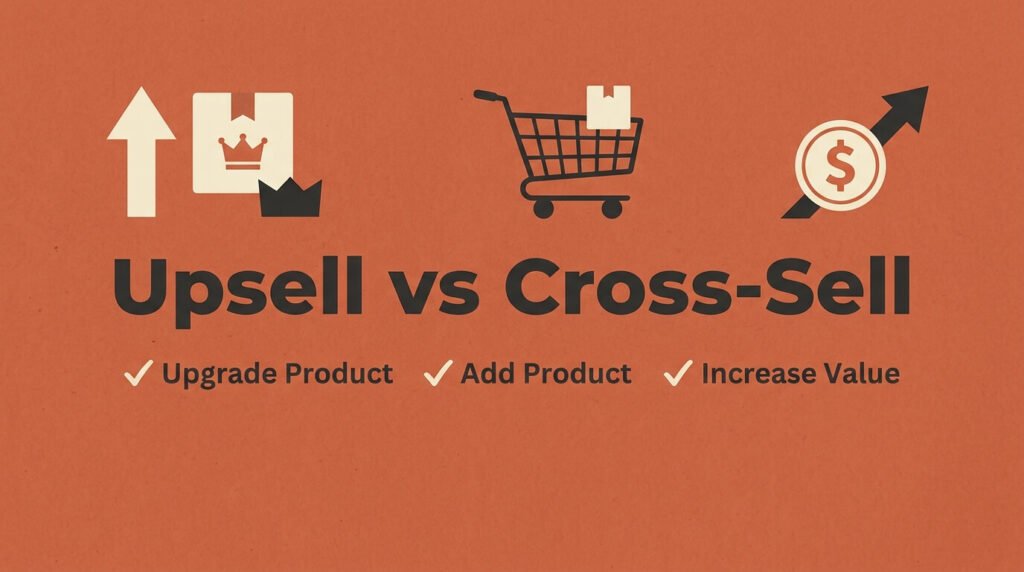
The upselling vs cross selling question comes down to one thing. Upselling upgrades. Cross-selling adds. Here’s the side-by-side view:
| Factor | Upselling | Cross-Selling |
| Goal | Move to a higher-value item | Add a related item |
| Timing | Before or during purchase | During or after purchase |
| Customer mindset | Comparing options | Already decided |
| Risk if done wrong | Feels pushy | Feels random |
| Best price gap | Within 25–30% of original | Under 25% of cart total |
| Common channel | Product page, sales call | Cart, checkout, email |
Neither one beats the other. They solve different problems. Pick the one that fits the moment. Don’t pick the one that’s easier to pitch.
Upselling vs Cross-Selling vs Bundling vs Downselling
People use these four words like they mean the same thing. They don’t.
- Upselling. A bigger version of the same item. Basic plan becomes Pro plan.
- Cross-selling. A different item that fits the first one. Camera plus memory card.
- Bundling. You lock the combo and the price before checkout. Camera, memory card, and case, sold as one item.
- Downselling. You offer a cheaper option when a customer hesitates or tries to leave. The goal isn’t to grow the sale. The goal is to save it.
Bundling borrows a bit from both upselling and cross-selling. It just removes the extra decision.
Downselling stands apart. It’s the only move on this list built to stop a sale from dying, not to grow it.
A store that skips downselling loses price-sensitive shoppers it could have kept.
Examples You See Every Week
Amazon runs both moves at once. Most shoppers don’t even notice. Open a blender page and Amazon shows a higher-end blender.
That’s an upsell. Scroll down and you’ll see blender jars and spare blades. That’s a cross-sell.
Airlines do the same thing. A seat upgrade to business class is an upsell. Extra baggage or in-flight WiFi is a cross-sell.
Once you spot this pattern, you see it everywhere. Streaming apps do it. Phone carriers do it. Even your coffee shop does it.
The Client Mistake That Taught Me Timing
One of my remote clients ran a small skincare store. Early on, she pushed premium bundles to every visitor. Cart abandonment jumped fast, and she came to me looking for a fix.
I dug into her data first. The problem showed up quickly. Her customers weren’t ready for a bigger spend.
They wanted a small add-on instead. So we switched half her offers to cross-sells. Travel-size items. Applicators. Small stuff. Conversion on those pages rose within two weeks.
That project taught me something simple. Push an upgrade too early and you lose trust. Wait too long on a cross-sell and you lose the extra sale. Timing runs this whole game.
Want me to drop this into the full guide file, replacing the current version?
When To Use Upselling vs Cross Selling
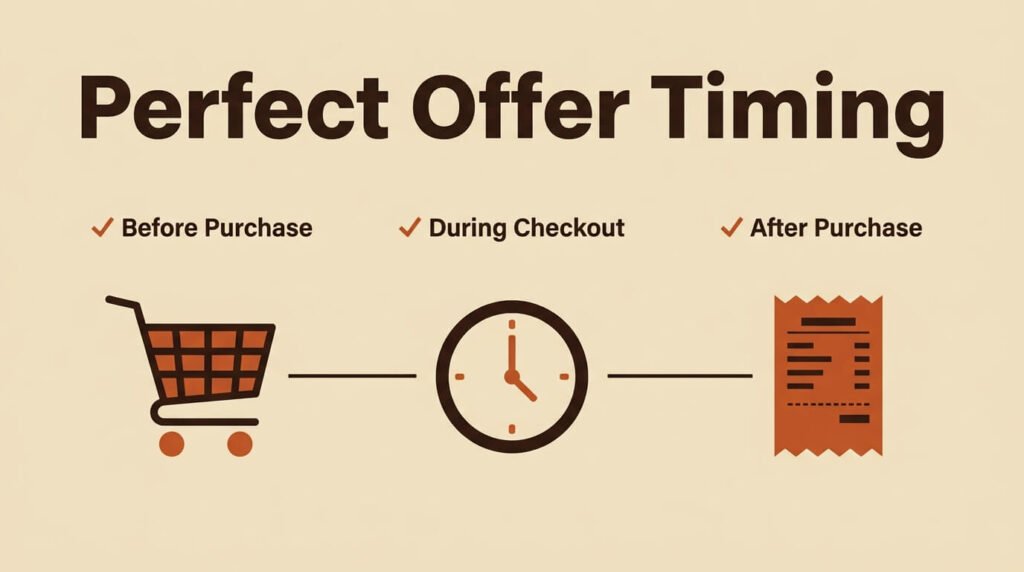
Use this list before you build any offer:
- Use upselling when the customer is still deciding on a tier
- Use upselling when the price gap stays under 30% of the original item
- Use upselling when the upgrade solves a problem the customer already named
- Use cross-selling when the customer already committed to buying
- Use cross-selling when the add-on needs no explanation
- Use cross-selling when the extra item costs less than 25% of the cart total
- Use both when you run a subscription business with renewal points
Renewal points work well for both. A subscriber renewing a plan might upgrade to a higher tier. Then they might add a new feature. Same session, both moves.
Mistakes That Kill These Offers
Most failed offers share three problems.
The upgrade shows up too early. A customer who just landed on your site isn’t ready for a big decision. Wait until they show intent. Adding an item to cart counts as intent.
The price gap breaks the rule. A $30 jump on a $40 item feels fair. A $30 jump on a $50 item feels steep. Keep upsell jumps in the 20–30% range.
The offer doesn’t match the need. Hiking boots next to a business suit make no sense. Match the item to the purchase. Don’t match it to your highest-margin product.
I tested this on a client’s furniture store. We pulled the unrelated cross-sell items from checkout. We swapped in matching accessories instead. Add-on sales rose by close to a third in one month. Match beats volume every time.
Where the Line Turns Into a Dark Pattern
Most guides skip this part. They shouldn’t. Regulators now watch how upsells and cross-sells show up at checkout.
The FTC’s click-to-cancel rule targets this. So does tighter EU enforcement. Both go after the same behavior.
Add-ons checked by default, an upgrade dressed up as a required step, or a “confirm” button that quietly accepts a paid extra.
None of that is a pricing issue. It’s a consent issue. It carries legal risk now, not just a bad review.
The fix is simple. Keep every upsell and cross-sell as an opt-in. Keep the decline button as easy to see as the accept button.
Never pre-check a box that adds cost. Clean this up and refund rates tend to drop. That protects the revenue your offer was supposed to add in the first place.
What The 2026 Data Shows
Numbers back up what most store owners sense already. Here’s what current research says about upselling vs cross selling:
- Selling to an existing customer works 60% to 70% of the time. Selling to a new prospect works only 5% to 20% of the time, per HubSpot’s sales research.
- 91% of salespeople use upselling. It adds close to 21% to company revenue on average, per the same HubSpot report.
- 87% of sales professionals run cross-selling programs. That drives a similar 21% revenue share.
- Trust ranks as the top upsell and cross-sell driver. 40% of sales professionals named it in HubSpot’s State of Sales findings.
- Understanding the customer’s goal drives repeat upsells too. 42% of sales professionals said so in that same study.
- Well-placed upsells lift average order value by 10% to 30% across most ecommerce stores.
- Post-purchase upsell offers convert better than checkout-page offers, often by 15–25%.
One pattern shows up across every source. Trust beats pressure. Timing beats volume.
The method that wins isn’t the loudest one. It’s the one that matches what the customer wants at that exact moment.
What Experts Say About This Shift In 2026
Personalization now decides a lot. It decides if an offer lands. It decides if an offer falls flat. Marika Tselonis leads retention at Kulin.
She said brands will win in 2026 with better source data. AI alone won’t cut it. She pointed to clean, consent-based customer data.
This data shows what shoppers want. It goes beyond what they clicked. That’s the true edge, in her view (Klaviyo, 2026 marketing automation trends).
Jed Hartman leads Activation Partnerships at Zeta. He pointed to a bigger shift behind the scenes.
Brands run media, CRM, and analytics off separate data sources. That splits things apart, and it costs them speed.
It costs them relevance too. This hits right when a shopper is weighing an offer (Zeta, Predictions 2026).
Pamela Lord, President of CRM at Zeta, framed the customer side plainly. People don’t experience a brand channel by channel.
They experience one brand. They expect that same feel whether they see an upsell or a cross-sell (same source).
These three views point to one theme. Data quality decides whether your offers work in 2026. Offer volume doesn’t.
How AI Changed Upselling and Cross-Selling This Year
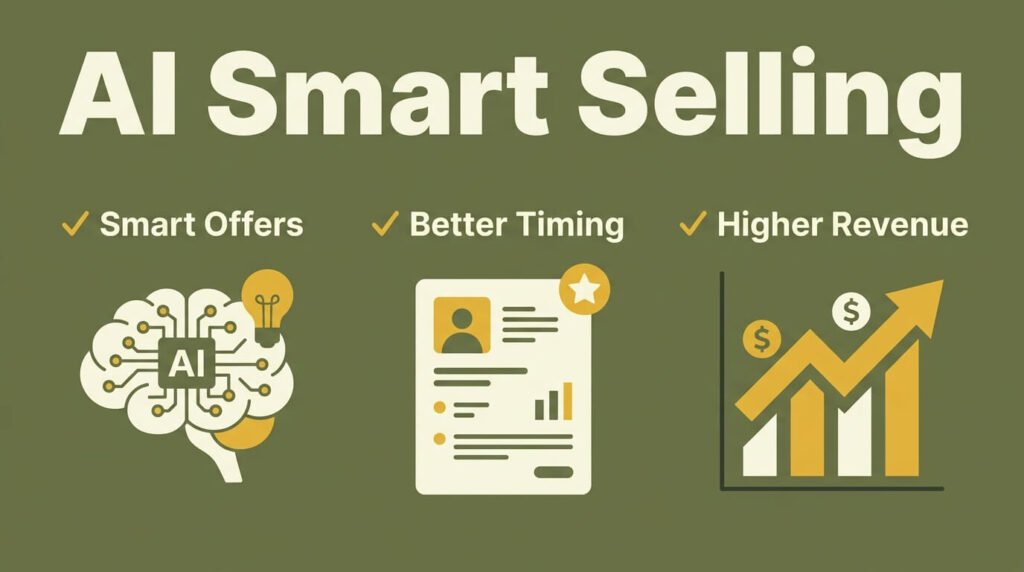
AI pulled both tactics away from guesswork. Stores used to show the same upgrade to every visitor. Now they build offers from browsing pattern, cart history, and even time of day.
I tested this shift on a client’s subscription box service. We swapped a static upsell banner for an AI tool.
The tool read purchase history first, then showed an offer. Upgrade acceptance rose within the first billing cycle.
Customers stopped seeing generic prompts. They started seeing offers tied to what they already bought.
Cross-selling shifted the same way. AI tools group products by buying pattern now, not by manual category tags.
A tool that once suggested “related items” by category now suggests items based on what similar buyers put in their cart.
This shift matters for search too. More shoppers use AI assistants to compare products before they buy.
Stores that feed clean, structured data into their catalogs show up more in those AI answers. Clear product links.
Accurate pricing. Honest descriptions. These do double duty. They help AI engines answer shopper questions. They help your upsell and cross-sell engine work better too.
Don’t Forget Mobile
Most cart and checkout traffic runs on a phone in 2026. Offers built for desktop often fail there without you noticing.
A banner that looks fine on a laptop screen turns into a full-screen wall on mobile. Shoppers close it on reflex.
A few things hold up on mobile. Place the offer where a thumb already sits, like the bottom of the screen, not a top pop-up.
Keep it to one product and one tap. Don’t stack an upsell and a cross-sell on the same mobile screen. Pick one per step.
Best Tools For Upselling and Cross Selling: A Quick Comparison
The right tool depends on your platform and budget. Here’s a simple side-by-side view of popular options in 2026:
| Tool | Best For | Upsell Support | Cross-Sell Support | Starting Price Range |
| Shopify Bundles | Shopify stores | Moderate | Strong | Free with Shopify plan |
| ReConvert | Post-purchase offers | Strong | Strong | Paid, tiered by revenue |
| Bold Upsell | Shopify, checkout offers | Strong | Moderate | Paid, tiered by store size |
| Zendesk | Support-led upsells | Moderate | Weak | Paid, per agent seat |
| Klaviyo | Email-based offers | Moderate | Strong | Free tier, then paid |
| HubSpot Sales Hub | B2B sales teams | Strong | Moderate | Free tier, then paid |
Small stores usually start with one tool for post-purchase offers. Larger stores often run separate tools for upsell timing and cross-sell placement, since each stage needs different data.
Step By Step Plan To Start Today
Follow this order if you’re starting from zero:
- Map your customer journey. Note where a shopper picks a tier. Note where they finish a purchase.
- Pick one upsell point. Start with a product page or a checkout step. Don’t start with both.
- Pick one cross-sell point. Cart page or post-purchase email work best for most stores.
- Set your price rules. Keep upsells within 30% of the original price. Keep cross-sells under 25% of cart value.
- Check mobile on its own. Test the offer on a phone. Don’t just shrink a browser window.
- Test for two weeks. Track acceptance rate. Don’t just track revenue.
- Adjust based on data. Drop offers that convert under 3%. Scale offers that convert above 8%.
I ran this exact plan for a client selling home fitness gear. We started with one upsell on the product page. We added one cross-sell in the cart. Six weeks later, average order value rose by close to 18%. No extra ad spend. Just better timing.
Final Word
The upselling vs cross selling choice isn’t about picking a winner. Each move solves a different moment in the buying process. Upselling improves the item a customer already wants. Cross-selling adds something useful next to it.
Pick one upsell point. Pick one cross-sell point. Track acceptance data, not guesswork. Adjust based on what your customers do.
FAQ
Do upselling and cross-selling need different KPIs?
Yes. Track upsell success by upgrade rate and margin lift. Track cross-sell success by attach rate and units per order. Mixing the two metrics hides which offer is actually working.
Can too many upsell offers lower customer lifetime value?
Yes, if a customer feels pushed past their budget once, they buy less next time. Cap upsell frequency per customer. One upgrade prompt per purchase cycle is a safe starting point.
What’s a healthy acceptance rate for a cross-sell offer?
Most stores see 3% to 5% as average. Above 8% signals a strong match between the add-on and the main item. Below 2% usually means the offer is placed at the wrong step.
Does upselling work the same way in B2B as it does in ecommerce?
No. B2B upsells move through a sales rep or a renewal call, not a product page. The decision often needs manager approval.
So B2B upsells need longer lead time and more proof points than a consumer upgrade.
Should upsells and cross-sells run in different channels, like email versus on-site?
Yes. Upsells work best where the customer is still comparing, like the product page or a sales call.
Cross-sells work best in channels tied to a completed purchase, like a post-purchase email or an order confirmation page.
How do you A/B test an upsell without hurting overall conversion?
Run the test on a small traffic split first, around 10% to 20%. Watch total order completion, not just upgrade rate.
An upsell that raises average order value but drops completion rate is a net loss.
Does a subscription business need a different cross-sell approach than a one-time purchase store?
Yes. Subscription cross-sells work best tied to a renewal or a usage milestone, not a random point in the billing cycle.
A one-time store only gets one shot at the cross-sell, so timing matters more per purchase.
What’s the difference between a cross-sell and a plain accessory recommendation?
A cross-sell is chosen and placed by the seller to close within that transaction. An accessory recommendation is often algorithm-driven and passive, like a “customers also bought” row. Cross-sells convert higher because they carry an active offer, not just a suggestion.
Can a chatbot handle cross-selling better than a static product page?
Often yes, since a chatbot can ask what the customer needs before it suggests an add-on. A static page shows the same item to everyone. A chatbot narrows the offer based on the actual conversation.
How often should you refresh upsell and cross-sell offers?
Review performance every 60 to 90 days. Swap out any offer under a 3% acceptance rate. Seasonal stores should refresh sooner, since customer intent shifts with the season.

Aliza Khatun is a Digital Marketing Professional and the founder of DigiGenHub. She has helped various businesses grow their online presence through real-world experience in marketing, branding, traffic growth, and business strategy.
Through DigiGenHub, she shows how to build and grow a business from the ground up using Website Setup, SEO, Branding, Paid Promotion, and smart digital tools.
She also highlights how AI can be used to its full potential to make content creation, automation, marketing, and business growth faster and smarter.
She believes that the right knowledge, modern technology, and the right tools can help any individual or business build a stronger online presence.