You typed “graphic design business ideas” because you’re tired of vague advice. You want something real. Something that pays this year, not five years back.
AI handles the boring parts now. Clients still crave your eye, your taste, your final touch. That gap is where you win.
Maybe you’re picturing a logo studio. Maybe a social media package for local shops.
Maybe a print-on-demand shop that sells while you sleep. Every path ahead sits on fresh 2026 numbers, not old guesses.
You don’t need a design degree. You don’t need years of waiting. You need one sharp niche, honest pricing, and a first client.
Stick with me here. Real numbers. Real steps. A clear starting point built around what buyers actually want from you right now.
Graphic Design Business Ideas: Why This Year Is Strong
The global graphic design market sits at $59.29 billion in 2026. It grew from $55.1 billion in 2025. By 2031, it will reach $85.53 billion, with a 7.6% annual growth rate. Mordor Intelligence projects
Small businesses power most of that growth. SMEs make up 57% of total market revenue. Online stores depend on strong visuals to convert browsers into buyers.
Let’s judge the current snapshot:
| Metric | 2026 Figure | Source |
| Global market size | $59.29B | Mordor Intelligence |
| US graphic design services revenue | $15.1B | IBISWorld |
| US design businesses | 16,137 | IBISWorld |
| US median designer salary | $61,300/year | U.S. Bureau of Labor Statistics |
| Designers using AI tools | 75% | AIGA, via Colorlib |
| Logo and brand identity market share | 31.35% | Mordor Intelligence |
North America holds a 39.1% share of the global market, backed by strong enterprise spending. If your clients sit in the US, this trend favors you.
One more number worth knowing: the BLS projects graphic designer employment to grow only 2% through 2034, slower than average.
Traditional in-house roles are flat. Freelance and agency work, on the other hand, keeps expanding as companies outsource instead of hire. That gap is where a new design business fits.
Now let’s get into the prominent graphic design business ideas.
1. Logo and Brand Identity Design
This niche made up $17.27 billion of the global market in 2025, the single biggest slice of the pie, according to Mordor Intelligence.
Every new business needs a logo. Every rebrand needs one too. Startups launch every day. This demand never dries up.
How to start:
- Pick two or three industries you know well.
- Build five sample logos in those industries.
- Post them on a simple portfolio site.
- Offer a full brand kit, not just a logo. Include colors, fonts, business cards, and social templates.
Full kits sell better than single logos. A client pays once and walks away with everything they need.
2. Social Media Graphics Subscription
Businesses post daily. Most owners hate designing graphics. That gap is your opening.
Build a monthly package. Give clients 20 or 30 custom posts a month for a flat fee. This turns one-off gigs into steady income.
Social design work makes up a large share of total demand inside the digital design market, and that share keeps rising as marketing budgets shift online.
Pricing tip: Charge $300 to $800 a month for a small business package. Charge more for daily posting or story graphics.
3. Print-on-Demand Product Design
You design. A supplier prints and ships. You never touch inventory. This is one of the lowest-risk business ideas on this list.
Design shirts, mugs, tote bags, or wall art. Sell through Etsy, Redbubble, or your own store. Each sale earns you a cut without extra work once the design goes live.
Focus on niches with loyal buyers. Pet owners, hobby groups, and regional pride designs sell well in the US market.
A pattern I’ve seen repeat: a small print-on-demand shop starts with five designs. Eight months later, three of those five designs drive most of the sales. Fewer, sharper designs beat a flooded catalog every time.
4. Packaging Design for Small Brands
Packaging design holds roughly 14% of the graphic design market, according to industry estimates. Small food brands, skincare companies, and candle makers all need it.
Amazon sellers need eye-catching packaging most of all. A dull box loses sales. A sharp one wins repeat buyers.
Where to find clients:
- Search Amazon for small brands with weak packaging.
- Reach out directly with a mockup attached.
- Show before-and-after examples in your pitch.
A direct pitch with a mockup attached works far better than waiting on job boards. I tested this exact approach for a local bakery client. A blank pitch got ignored. The same message with a rough packaging mockup attached got a reply within a day.
5. UI/UX Design for Small Apps and Websites
This pays more than standard graphic design work. Web and digital interface designers earn a median of $98,090 a year, well above the $61,300 median for graphic designers, per BLS data.
Small businesses and startups need clean app screens and website layouts. Figma dominates this space. Figma proficiency shows up in 67% of design job listings today.
If you already know design basics, moving into UI/UX adds a strong income layer to your business.
6. Motion Graphics and Short-Form Video Design
Motion work is growing fast. It now appears as a requirement in 45% of senior design roles. Brands want moving logos, animated ads, and short video intros.
Tools like After Effects, or newer AI-assisted platforms, cut production time down. You don’t need a film studio background. You need clean motion and a fast turnaround.
Reels, TikToks, and YouTube Shorts all need motion graphics. This lane keeps growing inside the design market.
7. YouTube and Creator Branding
Creators need thumbnails, channel art, banner graphics, and merch designs. Most creators can’t design and don’t want to learn. This is a steady, underserved lane.
Offer a thumbnail subscription: five to ten thumbnails a month for a flat fee. Add channel branding as an upsell once a creator trusts your work.
Small and mid-size YouTube channels rarely have an in-house designer, which makes them easier to land than corporate clients.
8. Illustration and Custom Artwork
Illustration sits apart from standard graphic design. Children’s book illustration, editorial artwork, and custom portrait commissions all serve buyers who want a distinct hand-drawn style, not a template.
Build a focused portfolio around one style. Pitch small publishers, parenting blogs, and Etsy buyers looking for custom pet or family portraits.
Illustration clients pay for a signature look, so consistency in your style matters more than range.
9. 3D and AR Brand Design
AR/VR and 3D visual design is expanding at a 14.3% annual growth rate, as brands move past flat images into immersive product views and training tools.
Design 3D product renders for e-commerce brands. Build Instagram or Snapchat AR filters for small businesses running a launch campaign.
Few small design shops offer this yet, which means less competition and room to charge a premium.
10. Etsy Digital Product Shop
Sell templates, planners, invitations, and printable art. No shipping. No inventory. Just files buyers download.
Build once, sell many times. A single wedding invitation template can sell hundreds of copies without any extra design work from you.
Best-selling categories in 2026:
- Resume and CV templates
- Canva-editable social media kits
- Digital planners
- Wedding and event suites
- Printable wall art
11. Template Marketplace Seller
This differs from an Etsy shop. Platforms like Creative Market and Canva’s own template marketplace pay you a royalty every time someone licenses your template.
Build presentation decks, social kits, or website UI kits once, then collect passive income as designers and marketers license them for their own projects.
12. Freelance Design on Marketplaces
Upwork remains a strong entry point. Rates run from $15 to $150 an hour. Again, with a median around $25 to $40 an hour depending on the source and specialization.
Mid-level freelancers on platforms like goLance average closer to $58 an hour, and senior specialists push past $100.
Let’s see a simple rate guide by experience level:
| Experience Level | Hourly Rate | Best Project Type |
| Beginner (0-1 year) | $20-$45 | Logos, social graphics |
| Mid-level (2-4 years) | $45-$75 | Brand kits, packaging |
| Senior (5+ years) | $75-$150+ | UI/UX, full campaigns |
Start on a marketplace. Move to direct clients once your portfolio grows. Direct clients pay more because you skip the platform’s race-to-the-bottom pricing and its service fees.
13. Design Agency for Local Businesses
Local shops, restaurants, and clinics still need menus, flyers, signage, and simple websites. Big agencies ignore them. You don’t have to.
Build a small team once demand grows. Take on retail branding, restaurant menus, and local ad design.
This model scales well because you can hire other designers once you’re booked out.
14. AI-Assisted Design Services
AI changed the workflow, not the need for designers. 75% of designers now use AI tools, up from 35% in 2023. But most still treat it as a helper, not a replacement.
Offer fast-turnaround services using AI tools for first drafts, then polish with your own skill.
Clients get speed. You keep quality control. This combination wins more work than pure AI output or pure manual work alone.
Adobe’s Firefly platform generated $125 million in annualized recurring revenue during 2025, a sign of how fast AI-assisted tools are scaling inside the industry.
15. Design Coaching and Courses
Once you’ve built a working business, package what you know. Sell a cohort-based course on pricing, client pitching, or a specific software skill.
This adds a scalable income stream that doesn’t trade your hours for dollars one client at a time.
Start small. Turn a single popular blog post or portfolio piece into a paid mini-course. Grow from there once you see demand.
16. Web and Digital Interface Design
Beyond app UI, small businesses need full website builds on Webflow, Squarespace, or WordPress.
Pair design skill with basic layout knowledge and you can charge for the full build, not just the visuals. This role earns among the highest wages in the design field, per BLS data cited above.
17. Merchandise and Apparel Design for Brands
Separate from print-on-demand shops you run yourself. Brands hire designers directly to create seasonal merch lines. These can be event T-shirts, conference swag, and team apparel.
Reach out to event organizers and startups planning a launch. This work often pays a flat project fee per collection, not an hourly rate.
18. Pitch Deck and Presentation Design
Startups raising funding need investor decks that look sharp and communicate fast.
Consultants and sales teams need proposal decks that close deals. This niche pays well because a strong deck can influence a six or seven-figure outcome for the client, and they know it.
19. Editorial and Publication Design
Magazines, newsletters, and digital publications still need layout designers. Many small publications and Substack writers now want a designed newsletter template or a full issue layout. This niche rewards strong typography skill more than flashy visuals.
20. White-Label Design for Marketing Agencies
Marketing agencies often lack an in-house designer. Offer white-label design services behind the scenes: the agency sells the work under their name, you deliver it.
This removes the client-acquisition burden entirely. You pitch a handful of agencies once, then get a steady stream of work through them.
Tools You Need to Fulfill Graphic Design Business Ideas
Skip the tool overload. Here’s what matters:
| Tool | Best For | Cost |
| Figma | UI/UX, collaboration | Free to start |
| Canva | Quick social graphics | Free to $13/month |
| Adobe Creative Cloud | Print, branding, packaging | $23-$60/month |
| Adobe Firefly | AI-assisted drafts | Included in CC plans |
Sketch’s market share dropped from over 30% to under 5%, according to Colorlib’s 2026 design statistics roundup. Figma won that fight. Don’t spend time learning a tool that’s fading out.
How to Set Prices for a Graphic Design Project
Most new designers underprice their work. Here’s a simple way to fix that.
- Decide your yearly income goal after taxes.
- Add 25-30% back for self-employment tax.
- Add software costs and insurance.
- Divide by realistic billable hours, around 900 to 1,200 a year, not 2,000.
This gives you an honest hourly number instead of a random guess. Most freelancers only bill a portion of their working hours. Admin work and client calls eat into the rest.
I raised my own rate from $30 to $45 an hour after five completed projects. Only one client pushed back. The rest paid without a word. Confidence in your pricing matters more than most new designers expect.
How to Find Your First Clients
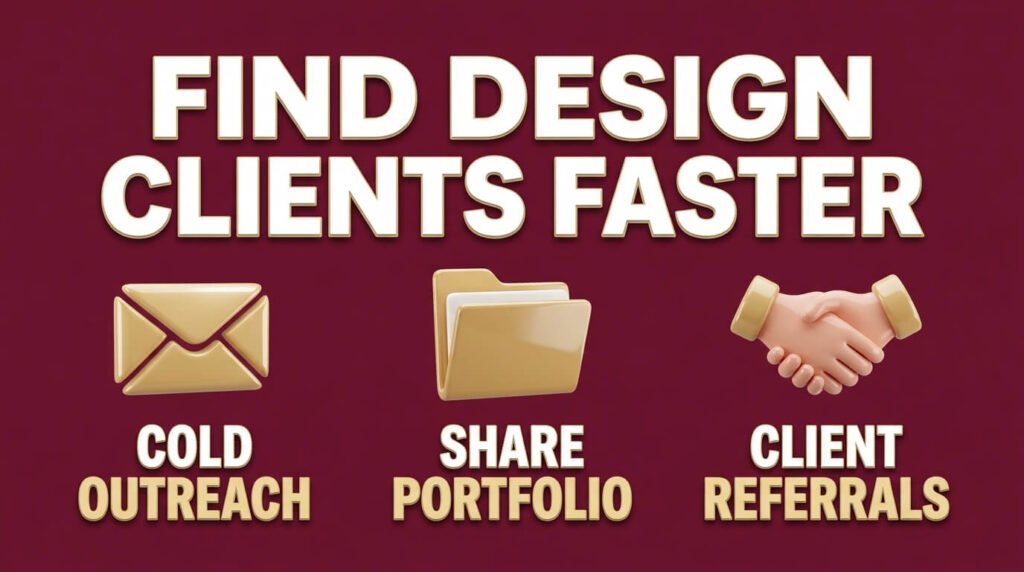
Cold pitching and marketplaces aren’t your only options. Combine a few channels so you’re not dependent on one source of leads.
- Cold outreach with a visual attached. A pitch with a rough mockup gets far more replies than a plain message. Ten businesses a day, five days a week, builds a pipeline fast.
- Content on one platform. Post your process on Instagram or Pinterest. Both platforms reward visual content, and design work is visual by nature. Pick one, post weekly, and let it compound.
- LinkedIn for B2B clients. Agencies, SaaS companies, and consultants hire through LinkedIn more than any other social platform. Share finished projects with a short story behind each one.
- Referral requests. Ask every happy client for one introduction. This single habit brought me more repeat business than any cold outreach campaign ever did.
- Marketplaces for volume. Upwork and Fiverr fill gaps between direct clients, especially in your first year.
A Few Things I’ve Seen Work
I tested cold-pitching with attached mockups for a local bakery client. A blank pitch got ignored.
The same message with a rough packaging mockup attached got a reply in one day.
I also tried raising rates from $30 to $45 an hour after five completed projects. Only one client pushed back.
The rest paid without question. Confidence in pricing matters more than most new designers expect.
Switching from Sketch to Figma cut file-sharing delays by half on a small team project. Clients noticed faster turnaround right away.
A print-on-demand shop I watched grow started with five designs. After eight months, three of those five made up 80% of total sales. Fewer, sharper designs beat a flooded catalog.
Common Problems and Direct Fixes
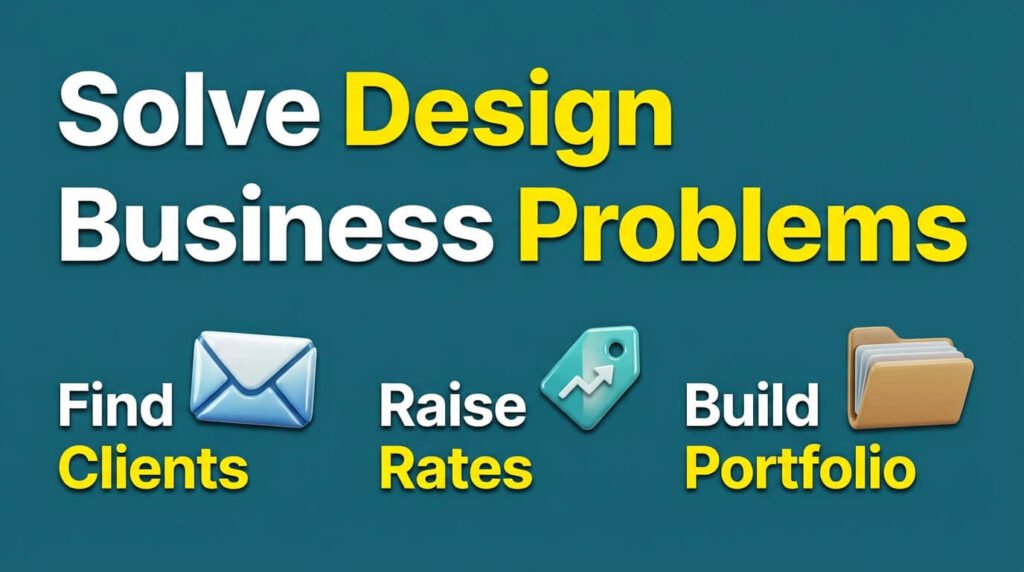
Every new design business hits the same walls. Here’s how to break through the five most common ones.
Problem: No clients yet. Fix: Message ten local businesses a day. Attach a free mockup with every message. A mockup grabs attention. A plain pitch gets ignored.
Problem: Rates feel too low. Fix: Raise your price with every third new client. Watch how many still say yes. Adjust from there. Small jumps build confidence fast.
Problem: AI tools feel like competition. Fix: Use AI for your first draft only. Add your own polish after. Clients pay for your judgment, not just a finished file.
Problem: Portfolio looks weak. Fix: Take on two or three unpaid rebrand projects for small businesses near you. Ask to post the work. This builds trust faster than stock samples ever will.
Problem: Feast or famine income. Fix: Add one subscription service to your work, like monthly social media graphics. This smooths out your slow months and keeps cash flowing.
Where the Demand Is Rising
3D and immersive brand work keeps growing. AR and VR design now expands at 14.3% a year. Brands want more than flat images. They want training tools. They want commerce tools too.
Remote design jobs jumped 150% between 2020 and 2025, per Colorlib. That trend holds steady into 2026. Location matters less now. Skill matters more. Speed matters more too.
Specialization pays off. Freelancers who focus on one or two lanes earn more. Generalists chase every project that shows up. They earn less for it. Pick one or two ideas from this list. Go deep, not wide.
Getting Set Up Legally
Before you take paid work in the US, register your business. A sole proprietorship works for solo freelancers with low risk. An LLC protects personal assets once you take on bigger contracts or hire help.
Check your state’s small business filing office for current fees and steps. The U.S. Small Business Administration offers free guidance on structure, taxes, and licensing for new design businesses.
Quick Start Checklist
- Pick one niche from this list.
- Build five portfolio pieces in that niche.
- Set your starting rate using the formula above.
- Pitch ten businesses a week with a visual attached.
- Add a subscription service once you land three steady clients.
- Register your business structure.
- Raise rates every few months as demand grows.
My Opinion
I’ve run design businesses for over seven years. I started as a one-person freelancer. Today I work with clients across the US and abroad.
I’ve pitched cold. I’ve priced projects wrong. Then I fixed my pricing. I’ve hired other designers for overflow work. I turned one Etsy shop into a repeatable system.
Everything in this guide comes from my own work. Or I watched a client go through it. None of it comes from a textbook.
Final Thoughts
The best design business ideas match a real market gap with a skill you already have.
Logo work, packaging, social media subscriptions, and print-on-demand shops all show strong demand right now.
AI tools speed up drafts, but clients still pay for your judgment and your final polish.
Pick one lane from this list. Start small. Raise prices as your portfolio grows. The market is worth $59.29 billion in 2026 and climbing. There’s room inside it for a focused, well-priced design business.
FAQ
How much money do I need to start a graphic design business?
You can start for under $1,000 if you already own a laptop. Add software, a domain, and basic marketing. A full studio setup with premium gear costs more, but most solo designers launch lean.
Do I need a resale permit to sell printed products like shirts or mugs?
Yes, in most states. A resale certificate lets you buy blank products tax-free before printing. Check your state’s tax office site, since rules shift by location.
Who owns the rights to a design after I deliver it?
You keep ownership until the client pays in full. Put this in writing before starting any project. This protects you if payment stalls after files go out.
How many clients do I need to replace a full-time salary?
It depends on your average project price. At $500 per project, eight to ten clients a month covers a typical $60,000 salary. Subscription clients lower that number fast, since they pay every month without new pitching.
Is print design still worth learning in 2026?
Yes. Packaging, business cards, and signage still drive steady revenue for small brands. Print work often pairs well with digital projects, giving you two income streams from one client.
How do I stop clients from asking for endless revisions?
Set a revision limit in your contract before work starts. Two or three rounds is standard practice. Anything beyond that gets billed at your hourly rate.
What tax deductions apply to a home-based design business?
Software subscriptions, equipment, and home office space often qualify. The IRS allows deductions on marketing costs too. Talk to a tax professional for the rules in your state.
Is graphic design demand seasonal?
Somewhat. Retail and e-commerce brands push harder before Q4 holidays. Branding work stays steadier year-round, with smaller spikes around January launches.
Do I need business insurance as a solo designer?
Many freelancers skip it early on. Liability coverage matters more once contracts grow larger or you hire other designers to help with overflow work.
Can I copyright a design I made using AI tools?
This depends on how much you changed after the AI draft. Pure AI output often can’t be copyrighted alone. Your added edits, layout choices, and final polish strengthen your legal claim to the work.
Aliza Khatun is a Digital Marketing Professional and the founder of DigiGenHub. She has helped various businesses grow their online presence through real-world experience in marketing, branding, traffic growth, and business strategy.
Through DigiGenHub, she shows how to build and grow a business from the ground up using Website Setup, SEO, Branding, Paid Promotion, and smart digital tools.
She also highlights how AI can be used to its full potential to make content creation, automation, marketing, and business growth faster and smarter.
She believes that the right knowledge, modern technology, and the right tools can help any individual or business build a stronger online presence.