

TL;DR
Selling pottery online now comes down to a few elegant moves, not a hundred small tasks.
- Start on one platform. Master it before you touch a second.
- Pick a single pottery type to sell first. A clear focus wins buyers faster.
- Use daylight for photos. Soft window light beats any studio bulb.
- Set your price with a simple formula. Cover your clay, your time, and your fees.
- Wrap and box every piece twice. This one habit stops most breakage in transit.
- Put buyer questions inside your listing text. Fewer messages, faster sales.
- Follow up after every order. A short thank you turns buyers into fans.
- Check your numbers monthly. Profit tells the truth better than sales totals ever will.
How to Sell Pottery Online Confidently
You threw that mug on the wheel, glazed it just right, and now it sits on a shelf waiting for someone to notice it.
Turning that craft into cash starts the moment you learn how to sell pottery online wisely.
Your clay business deserves an audience beyond your living room, and the internet hands you that stage today.
Pick a marketplace, snap honest pictures, wrap each piece like treasure, and open your door to strangers who’ll cherish what you made with your own hands.
Every cup, bowl, or vase carries a story worth paying for. Stop wondering if people want handmade work.
They do, and they’re searching right now. Your studio just needs a front door online, and this is your moment to build it.
Which Platform Should You Pick First?
Most new sellers ask this first. It is the right question. Your platform decides your traffic. It decides your fees. It decides how much control you keep.
| Platform | Best For | Core Fees 2026 | Traffic Source |
| Etsy | Beginners, handmade buyers | $0.20 listing + 6.5% transaction + 3%+$0.25 processing | Built-in search traffic |
| Shopify | Sellers with a following | No listing fee; monthly plan + 2.9%+30¢ card fee | You bring your own traffic |
| eBay | Vintage or collectible pottery | 13.25% average final value fee | Built-in search traffic |
| Instagram Shop | Social-first sellers | No listing fee; payment fee only | Followers and reels |
| TikTok Shop | Video-first sellers | No listing fee; commission on each sale | Short videos and the For You page |
| Sellfy | Sellers who want full control | Monthly plan, no per-listing fee | You bring your own traffic |
You know your platform now. You know your niche too. Follow these nine steps in order, and you’ll go from an empty shop to steady sales. Each step builds on the one before it, so skip nothing on your first pass through.
Step 1: Set Up Your Storefront the Right Way
Do not rush this step. Buyers judge your shop in seconds.
- Pick one main platform to start. Don’t spread thin across five sites on day one.
- Write a short shop bio. Say who you are. Say what clay you use. Say where you work.
- Add a clear return and shipping policy before your first listing goes live.
- Set up secure payment processing right away. Buyers leave if checkout looks off.
- Use your real name or a strong maker name as your shop name. Avoid random numbers.
Research your keywords before you write a single listing. Tools like the eRank search tool and Marmalead keyword tool show you what buyers type into Etsy search. They show search volume too. Use this data to shape your titles and tags from the start. Guessing at keywords wastes your first month of visibility.
A clean, simple storefront builds trust faster than a flashy one. Buyers want to see the maker behind the piece. Not a faceless store.
If you plan to sell pottery online long term, register your business early. A sole proprietorship works for most home studios starting.
Once your monthly sales climb past a few thousand dollars, an LLC protects your personal assets.
This matters if a buyer ever files a claim over a damaged shipment. Check your state’s rules on a home-based craft business too. Some cities require a seller’s permit before you collect sales tax.
Step 2: Pick Your Pottery Niche Before You List Everything
New sellers often list every piece they own on day one. That confuses buyers. It confuses search engines too. Pick a lane first.
Pottery covers many niches. Here is a full breakdown. Any type of seller can find their fit in this list.
| Niche | Example Pieces | Who Buys | Typical Price |
| Functional kitchenware | Mugs, bowls, plates, spoon rests, butter dishes | Everyday buyers who use pottery daily | $25 to $45 |
| Decorative and sculptural | Vases, wall art, abstract sculptures, wind chimes | Home decor shoppers, gift buyers | $60 to $300 |
| Garden and outdoor pottery | Planters, bird baths, garden stakes, outdoor pots | Gardeners, spring and summer shoppers | $30 to $100+ |
| Custom and personalized orders | Name mugs, wedding pieces, memorial urns, commissions | Couples, gift givers, families | Double a standard piece |
| Tableware sets | Dinnerware sets, serving bowls, platters | Wedding registries, housewarming buyers | $120 to $250 |
| Jewelry and small accessories | Ceramic earrings, pendants, trinket dishes | Fashion shoppers, small gift buyers | $10 to $30 |
| Home decor accents | Candle holders, incense holders, ring dishes | Gift shoppers, small home touch buyers | $20 to $50 |
| Pet and novelty pottery | Pet bowls, pet memorial urns, animal figures | Pet owners, animal lovers | $35 to $80 |
| Seasonal and holiday pottery | Ornaments, holiday mugs, themed serving dishes | Holiday shoppers, gift buyers | $20 to $60 |
| Wholesale and bulk pieces | Espresso cups, small bowls, simple mugs in batches | Cafes, boutiques, wholesale buyers | Lower per piece, higher volume |
Step 3: Take Photos That Sell
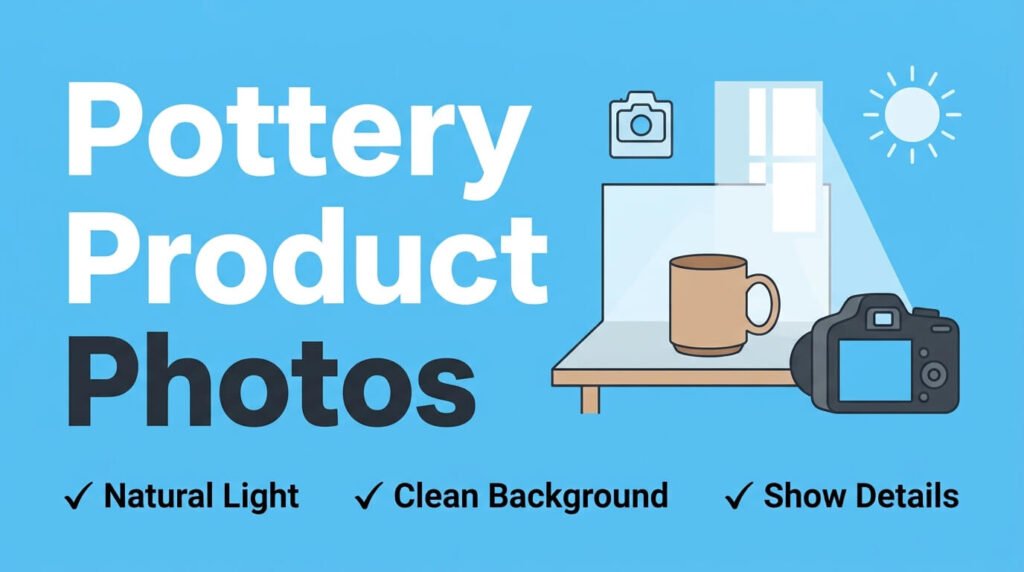
Pottery buyers shop with their eyes. Photos decide most of your sale before anyone reads your description.
- Shoot in natural light near a window. Skip yellow indoor bulbs.
- Use a plain background. White or neutral linen works best.
- Take one photo showing scale, like a hand holding the mug.
- Photograph the bottom and rim closely. Buyers want to check for flaws.
- Show the piece in use. A bowl with food. A vase with flowers.
Six to ten photos per listing is the sweet spot. Fewer photos make buyers hesitate. Too many feels cluttered.
A tripod costs under thirty dollars. It fixes half your photo problems instantly. Shaky hand-held shots make good pottery look cheap.
Set your camera on a tripod near a window. Turn off flash. Shoot at eye level with the piece.
Phone cameras from the last three years handle pottery photography well. You do not need a professional camera to sell pottery online.
A basic photo kit costs under one hundred dollars total. Grab a white foam board for a backdrop. Add a roll of natural linen fabric.
Add a cheap tripod and a reflector card to bounce light onto shadows. That kit handles most of what a home studio needs. Save the expensive lighting gear for later, once sales justify the cost.
Step 4: Price Your Pottery So You Profit
This step trips up more new sellers than any other. Underpricing kills your business slowly. You get busy, but broke.
Use this formula:
Materials + Labor + Overhead = Base Cost
Base Cost × 2 = Wholesale Price
Wholesale Price × 2 = Retail Price
A potter paying themselves twenty-five to fifty dollars an hour. Again, factoring in clay, glazes, and kiln time, lands a mug at thirty to sixty dollars (Sellfy pricing guide). That range holds across most US pottery shops in 2026.
Do not forget platform fees when you set your price. If Etsy takes roughly twelve percent, build that into your number before you list. Not after your first payout.
Step 5: Write Listings That Answer Buyer Questions
Buyers searching “how to sell pottery online” often start as sellers who once bought pottery themselves. They know what confused them as shoppers. Fix that confusion in your own listings.
Answer these in every description:
- What is the exact size, in inches and ounces?
- Is it dishwasher and microwave safe?
- What clay and glaze did you use?
- How long does shipping take?
- Is it one of a kind or part of a small batch?
Keep sentences short. Skip flowery language. A buyer wants facts fast. Not a poem about your studio.
Put your main keyword in the title first, then once again in the description. If you sell pottery online through Etsy, your title should read like a buyer’s exact search. Try something like “Handmade Stoneware Coffee Mug, Wheel Thrown Ceramic Cup.” Skip stuffing ten keywords into one title. Search engines and buyers both reward clear titles over cluttered ones.
Tell Buyers Your Glaze Is Food Safe
Functional ware buyers ask about glaze safety more than any other topic in 2026. Mugs, bowls, and plates touch food and drink daily.
State plainly if your glaze is lead-free. State if it passed a food-safety test. Buyers trust sellers who share this upfront. Skipping it leads to more return requests and slower sales on functional pieces.
Step 6: Package and Ship Without Breaking a Single Piece
This step scares most new sellers, and for good reason. Ceramic breaks easy under rough handling. But the fix is simple once you know the method.
Follow the double-box method:
- Wrap the piece in three to five layers of bubble wrap. Face the bubbles toward the pot.
- Fill hollow items like mugs and bowls with crumpled paper first.
- Place the wrapped piece in a snug inner box with two to three inches of padding on every side.
- Put that inner box inside a larger outer box with another two to three inches of padding around it.
- Shake the sealed box. If you feel or hear movement, add more padding.
- Mark the box “Fragile” clearly on every side.
This double-box method works because it builds a protective cushion zone between two layers of cardboard. That zone absorbs shocks, drops, and rough handling (Innovative Haus shipping guide). Skip it and you risk losing pieces to breakage. Even careful sellers see breakage.
Experienced shippers report breakage rates of 3 to 5 percent on ceramics due to rough handling in automated sorting facilities (ID Ship That data).
Always buy shipping insurance. It costs little next to the price of a lost sale and an upset buyer.
Choosing the right carrier matters too. USPS Priority Mail works well for small, light pieces like mugs.
UPS or FedEx Ground service suits heavier boxes like large vases or dinner sets. Their handling tends to be gentler on oversized parcels.
Step 7: Market Your Pottery Without Wasting Time

You do not need to be everywhere. Pick two or three channels and go deep instead of thin.
Instagram and Pinterest work well for pottery. Buyers browse these apps to discover new makers.
Post your process, not just finished pieces. People buy the story behind the object.
TikTok Shop earns a spot on this list now too. Short videos of you throwing a mug, trimming a bowl, or opening a fresh kiln load pull in buyers who never search a marketplace at all.
A fifteen-second video can do more for a new shop than a week of photo posts. Learn the basics through TikTok Shop guide before you set one up.
Email your past buyers when you drop new pieces. A short note beats a long newsletter every time.
Join local craft fairs even if you sell mainly online. Every fair builds your email list. Every fair builds your local following too. That feeds your online sales later.
Dan Cordero runs the Etsy shop Reclaiming Creativity. He says sellers need genuine care for their craft.
Buyers can tell the difference. A rushed listing feels different from one made by a maker who cares (Pottery Crafters interview).
That care shows up in your photos. It shows up in your captions. It shows up in your replies to customer questions.
Step 8: Track Your Profit, Not Just Your Sales
Sales numbers lie if you never track fees. Tunahan, founder of the print-on-demand platform Listybox, built his advice around this gap.
He has spent over ten years watching the daily challenges Etsy sellers face. He pushes sellers to calculate every fee before setting a price, not after (Listybox seller notes).
Track these monthly:
- Total sales revenue
- Platform fees paid
- Material and studio costs
- Shipping and packaging spend
- Net profit after everything
A spreadsheet works fine. You do not need fancy software when you’re starting.
One more line worth tracking: your tax setup. Marketplace platforms like Etsy and eBay report your income once you cross certain yearly thresholds. Those thresholds shift from year to year. Check current IRS rules or talk to a tax professional before you file. Do not guess at this part.
Step 9: Turn First-Time Buyers Into Repeat Customers
Getting a sale is only half the job. Keeping that buyer coming back is where growth happens.
- Send a short thank-you note with every order. Handwritten beats printed.
- Ask happy buyers to leave a review a week after delivery, once the piece has settled into their home.
- Reply to every message within twenty-four hours, even on weekends.
- Offer a small discount code for a buyer’s next order.
- Fix problems fast. If a piece arrives cracked, replace it or refund it without argument.
Add a QR code to your packaging insert. Point it straight to your own store or your email list sign-up.
A buyer who scans it right after unwrapping a piece they love is far more likely to follow you than one who has to search your name later.
Reviews carry weight for anyone learning how to sell pottery online for the first time.
A shop with twenty honest five-star reviews outsells a shop with zero reviews and better pottery, every time. Buyers trust other buyers more than they trust your product photos.
Cost Chart: From Startup to First Profit
Most guides skip the money math from day one to your first payout. Here is a plain breakdown of what most home studios spend, and when they tend to break even.
| Stage | What You Spend On | Typical Cost | What You Get Back |
| Week 1: Setup | Photo backdrop, tripod, packaging supplies, listing fees | $80 to $150 | A storefront ready for buyers |
| Month 1: First listings | Clay, glaze, kiln firing for 10 to 15 pieces | $100 to $250 | Your first live inventory |
| Month 1 to 2: First sales | Etsy or platform fees on early orders | 8% to 12% of each sale | Cash flow to reinvest in materials |
| Month 3: Break-even | Materials, shipping supplies, small ad test | $150 to $300 | Consistent orders each week |
| Month 6: Steady profit | Ongoing materials, packaging, minor ad spend | 15% to 20% of revenue | Repeat buyers and referral sales |
Most home potters spend $300 to $600 total before their shop turns a steady profit. That number shifts with your niche.
Custom orders take longer to scale but pay more per piece. Functional ware sells faster but at a lower price point.
Track your own numbers from week one. That way you know exactly when you cross into profit, instead of guessing at it months later.
How to Sell Pottery Internationally: What Changes
Once your shop gains traction, orders from Canada, the UK, or Australia start coming in. International shipping raises your risk and your paperwork. It also opens a bigger buyer pool.
- Add a customs form with an accurate declared value. Under-declaring can delay or destroy a package at customs.
- Charge higher shipping rates for international orders upfront. Do not absorb that cost yourself.
- Warn buyers about possible import duties. Some countries charge the buyer extra fees on delivery. It is not your job to cover that.
- Use double-boxing for every international shipment. Longer transit time means more handling. More handling means more risk.
- Track every international package. A tracking number protects you if a buyer claims non-delivery.
Sales tax rules shift by buyer location, not seller location. Most marketplaces like Etsy and eBay handle this for you. They collect and remit sales tax on US orders automatically.
This saves you from tracking fifty state rules yourself. A Shopify store works differently, though. Check your state’s economic nexus rules first. Do this before your first sale ships out.
Sell Wholesale Once You Outgrow One-by-One Sales
Some shops hit a ceiling on solo sales. Making and shipping one mug at a time only stretches so far. Wholesale fixes that ceiling.
Platforms like Faire wholesale marketplace connect small studios with boutiques and gift shops looking to stock handmade pottery in bulk.
You set minimum order sizes. You set wholesale pricing using the same base cost formula from Step 4. This route suits potters who already have a tested, repeatable design and the studio capacity to fill larger orders on a schedule.
Common Problems and Fast Fixes
| Problem | Fast Fix |
| No sales after two weeks | Check your photos first, then your price |
| Buyers ask the same questions repeatedly | Add those answers directly into your listing |
| High shipping costs scare buyers away | Offer local pickup as a second option |
| Items arrive cracked | Switch to the double-box method immediately |
| Etsy fees eating your margin | Build fees into your price, not your profit |
Why the Pottery Market Still Has Room for New Sellers
Some sellers worry the market is too full. The numbers say otherwise. The global pottery ceramics market reached $11.73 billion in 2025.
It will grow to $14.88 billion by 2030 (Business Research market data). That growth comes from buyer demand. Not hype.
Buyer taste keeps shifting toward handmade work too. Shoppers want pottery for its look. They want the craftsmanship behind it.
They want the sense of uniqueness tied to handmade pieces (Markwide research report).
Sustainability matters more to buyers now. Shoppers look for locally sourced pieces. They look for handmade, eco-friendly work over factory-made goods. This trend favors small pottery sellers directly. You can speak to your materials and your process. A factory brand never can.
The wider ceramics industry backs this up too. Analysts expect the global ceramics market to grow from $248.82 billion in 2025 to $261.15 billion in 2026.
Tableware and pottery stand out as steady drivers of that growth. This is not a shrinking hobby market. It is a growing category. Small studios have room to stand next to big brands.
Asia Pacific leads global pottery production. North America and Europe hold strong ground for artisan and retail demand.
This matters if your shop targets US buyers. Your local, handmade angle speaks directly to what American shoppers already search for.
Lessons From Home Pottery Sellers
Photos outsell words every time. My friend Irani switched her mug photos from studio lighting to natural window light. Favorites and inquiries jumped within days. The pieces stayed the same. Only the light changed.
Free shipping baked into price beats a shipping charge. I maintain the online store for a client who sells stoneware bowls. We folded her shipping cost into the listed price instead of charging it separately at checkout. Cart abandonment dropped within the first week. Her total price stayed close to the same either way.
Conclusion
Your hands made something worth owning. Now let the world find it. Open your shop, list that first piece, and let your work speak for itself. The sales come to those who show up.
FAQ
How long does it usually take to make a first sale?
Most new shops see a first sale within two to six weeks. Shops with sharp photos and full descriptions sell faster than that average.
Should I sell pottery online part time or full time?
Start part time. Most successful shops grew from a side project. Move to full time once monthly sales cover your studio costs and your own pay.
Do I need a kiln at home to start selling?
No. Many potters rent kiln time at a shared studio or community art center. Buying a kiln comes later, once order volume justifies the cost.
Should I offer local pickup alongside shipping?
Yes, if you live near your buyer base. Local pickup removes shipping risk entirely and saves both sides money on heavy or oversized pieces.
How do I compete with mass-produced ceramics on the same platform?
Lead with your process, not your price. Buyers pick handmade pottery for the maker’s story and the small imperfections that machines can’t copy.
What is a normal return or refund rate for handmade pottery shops?
Most established shops see returns under two percent. Clear listing photos and honest sizing details keep that number low.
Do I need business insurance beyond shipping insurance?
General liability coverage is worth adding once you sell regularly, especially for pieces meant to hold food or drink. A local insurance agent can quote a small business policy.

Aliza Khatun is a Digital Marketing Professional and the founder of DigiGenHub. She has helped various businesses grow their online presence through real-world experience in marketing, branding, traffic growth, and business strategy.
Through DigiGenHub, she shows how to build and grow a business from the ground up using Website Setup, SEO, Branding, Paid Promotion, and smart digital tools.
She also highlights how AI can be used to its full potential to make content creation, automation, marketing, and business growth faster and smarter.
She believes that the right knowledge, modern technology, and the right tools can help any individual or business build a stronger online presence.