
Your desk shouldn’t feel like a battle every morning. You sit down, ready to work, and pens are missing, papers are everywhere. Your monitor sits too low and your neck hurts by noon. Still, you deserve better.
That’s why the right desk organizer for office use can changes everything. It’s not just storage. It’s peace of mind. Picture your desk clean, your supplies exactly where you need them, and your screen finally at eye level.
You stop searching. You stop stressing. You just work. Whether you’re managing files, running dual monitors, or fighting daily clutter, there’s a desk organizer for office spaces built for exactly your problem. You don’t need to settle. You need a setup that works as hard as you do. Let’s find yours.
Which Desk Organizer for Office Fits Your Space the Best
If you searched for the best desk organizer for office use, you already know the feeling. You want your supplies within reach. You want a setup that actually works, not just looks nice in a photo.
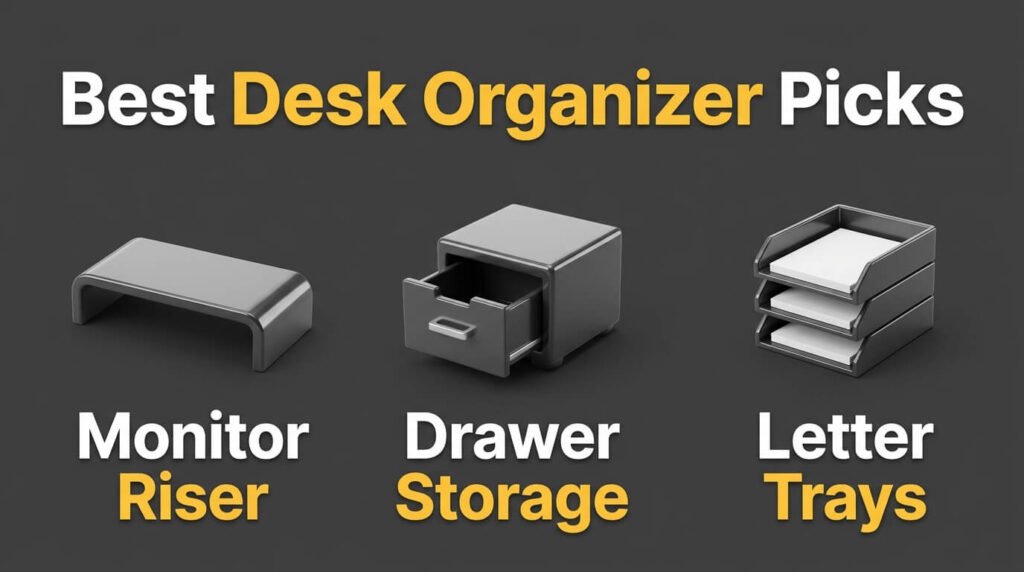
Let’s see popular options for 2026. Each one solves a different problem. Some raise your monitor and add storage. Others sort your paperwork into neat stacks.
Desk Organizer for Office Picks You Will Love
| Product | Best For | Storage Type | Assembly | Material |
| Gianotter Dual Monitor Stand Riser (Drawer + 2 Pen Holders) | Monitor height and small item storage | Drawer + 2 magnetic pen holders | No assembly | Metal |
| Gianotter Desk Organizer with Drawer and 2 Pen Holder | Dorm and small office desks | Drawer + 2 pen holders | Minimal assembly | Metal |
| Simple Houseware Dual Monitor Stand Riser | Adjustable width setups | Sliding drawer + side caddies + phone holder | Snap-together, no tools | Wood and metal |
| LEKETREE 5-Tier Paper Letter Tray Organizer | Paper and file-heavy desks | 5 sliding trays + side file shelf | About 7 minutes | Steel mesh |
Each product on this list solves a real desk problem. Read on for a full breakdown of every desk organizer for office use.
Gianotter Dual Monitor Stand Riser
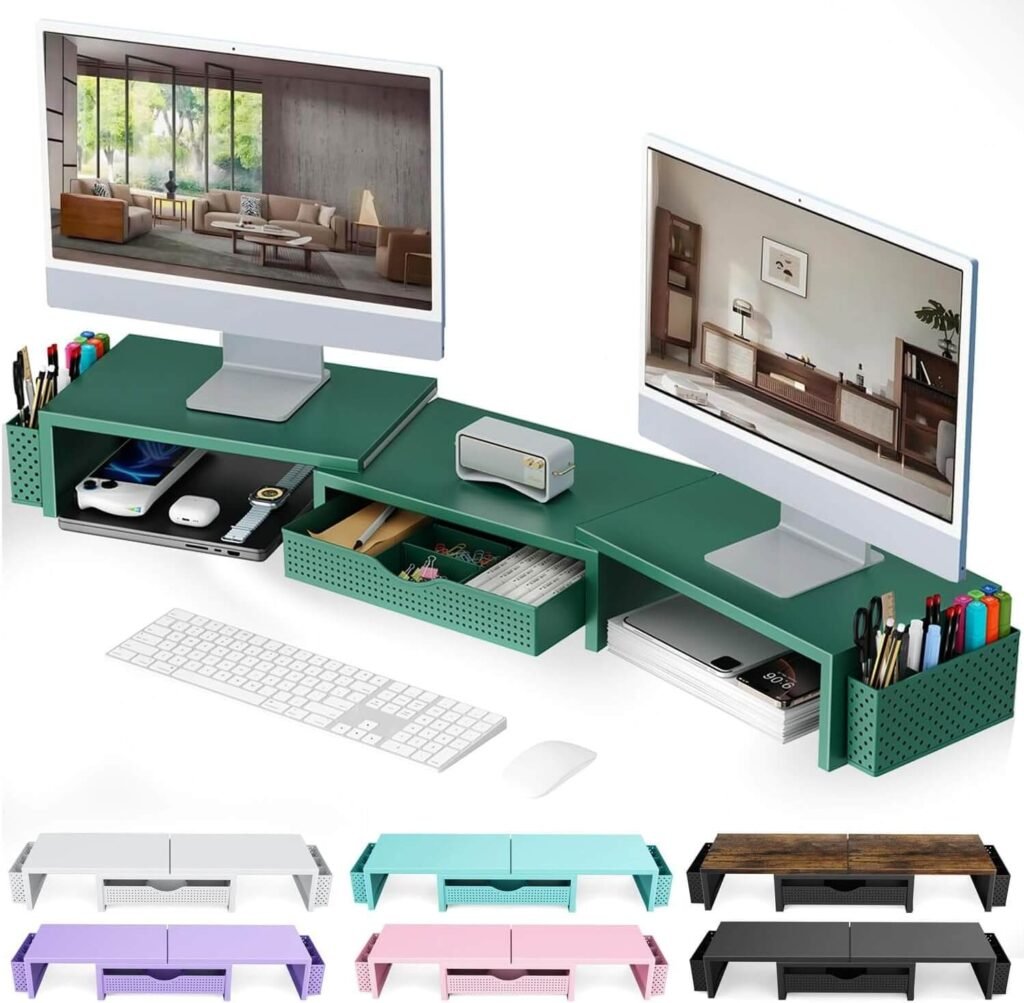
Best for monitor height and storage in one. This stand raises your monitor to eye level. It also gives you a drawer and two magnetic pen holders underneath.
You get better posture and a tidier desk at the same time. The frame is metal. It needs no assembly. You unbox it and place your monitor right on top.
Pros
- Raises monitor to a healthier eye-level height
- Drawer keeps small items out of sight
- Two magnetic pen holders hold pens upright and steady
- No assembly required
- Frees up desk space underneath for a keyboard or mouse
Cons
- Fixed height, not adjustable
- Drawer size fits small items only, not thick folders
- Metal surface may show scratches over time
Real-World Use Case
A remote worker with a small home desk needs a monitor riser and a place for sticky notes, USB drives, and pens.
This stand handles both jobs. It clears desk clutter without adding a second accessory. For anyone comparing a desk organizer for office setups with limited space, this model earns its spot on the desk.
Gianotter Desk Organizer with Drawer and 2 Pen Holder
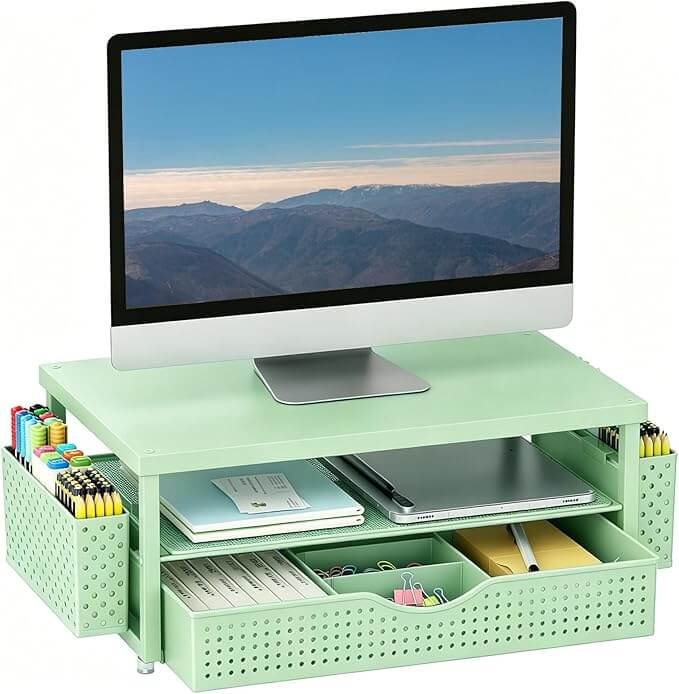
Best for dorms and compact desks. This version shares the same core design. A drawer sits below the monitor platform. Two pen holders sit on top. It works well in dorm rooms, small offices, and shared workspaces. The build stays sturdy under a single monitor or a laptop stand.
Pros
- Compact footprint fits tight desks
- Suitable for both office and dorm use
- Drawer hides cables, chargers, and stationery
- Sturdy metal construction
- Easy to wipe clean
Cons
- Not built for dual monitors
- Drawer depth is shallow
- Style is basic, not decorative
Real-World Use Case
A college student sharing a small desk with a roommate needs storage that does not eat up space. This organizer stacks function into one compact unit. It keeps pens, notes, and small supplies off the desktop. Business owners searching for an affordable desk organizer for office or dorm use often land on this exact model.
Simple Houseware Dual Monitor Stand Riser
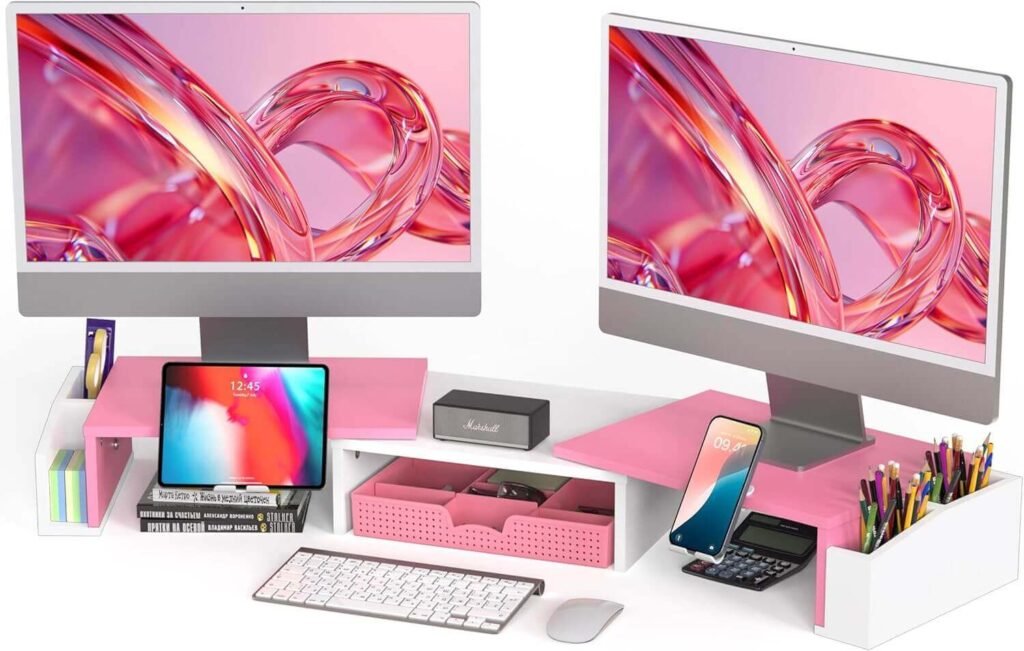
Best for flexible, adjustable setups. This stand extends from about 33 inches to 45 inches wide. It fits one large monitor or two smaller ones side by side.
A sliding drawer sits in the middle. Side caddies hold extra items. A built-in phone or tablet holder rounds out the design.
The finish comes in rustic brown, giving it a warmer look than plain black metal.
Pros
- Adjustable width fits single or dual monitor setups
- Sliding drawer plus side caddies for extra storage
- Built-in phone or tablet holder
- No tools needed for setup
- Warm wood-tone finish suits home offices
Cons
- Wider footprint needs more desk depth
- Drawer tray is not divided into compartments
- Slightly heavier than all-metal stands
Real-World Use Case
A freelancer running two monitors for design work needs a stand that adjusts to fit both screens.
This riser stretches wide enough to support that setup while still hiding cables and supplies in the drawer.
Anyone hunting for a desk organizer for office use with dual-screen flexibility should shortlist this option.
LEKETREE 5-Tier Paper Letter Tray Organizer
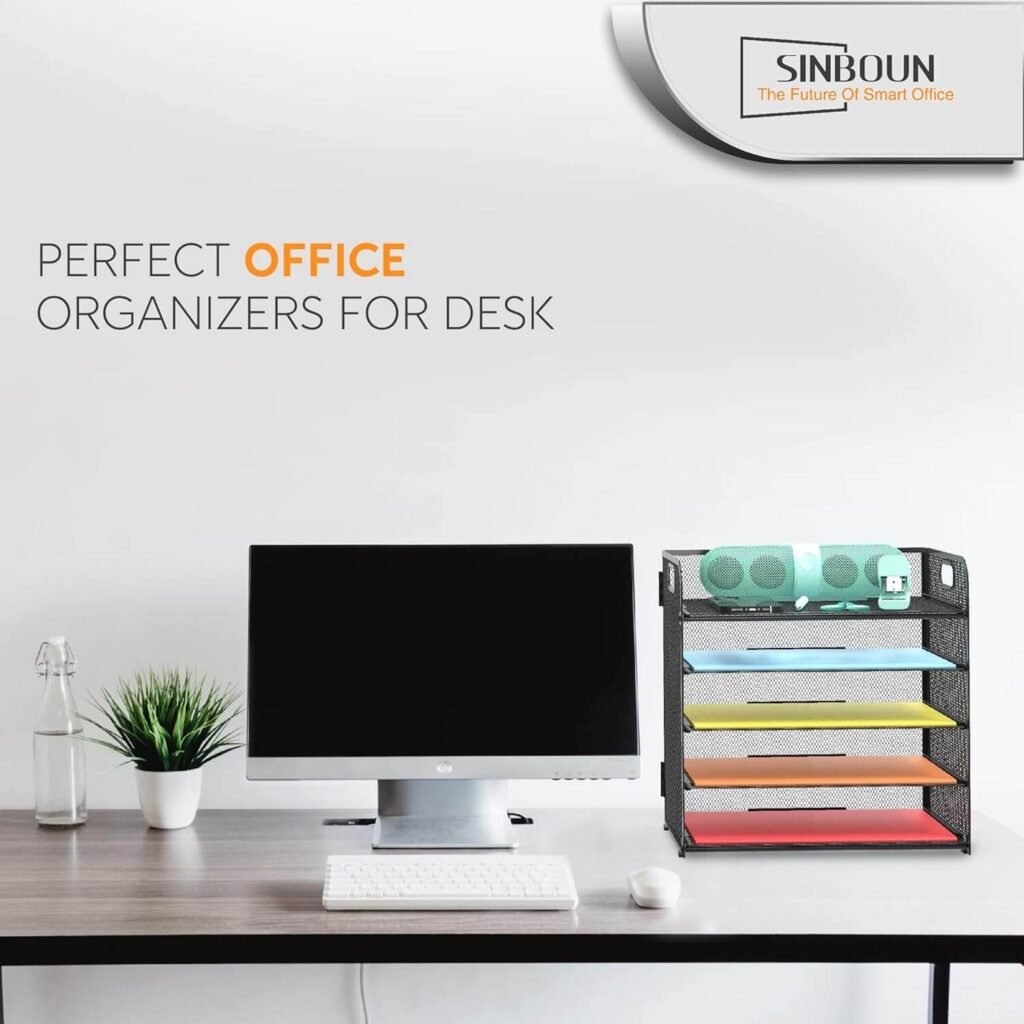
Best for paper-heavy desks. This organizer skips the monitor riser design entirely. Instead, it stacks five sliding trays plus a side file shelf into one vertical unit.
It targets people drowning in paper: invoices, letters, folders, and A4 documents. The frame uses steel mesh, giving it a light but sturdy structure. Setup takes about seven minutes with the included instructions.
Pros
- Five separate trays for sorting documents by category
- Side file shelf adds extra vertical storage
- Steel build resists bending under paper weight
- Vertical design saves desktop footprint
- Simple, quick assembly
Cons
- No monitor riser function
- Takes up more vertical space, may block a window view
- Mesh gaps are not ideal for very small items
Real-World Use Case
An office manager handling client files, invoices, and internal memos needs a system that sorts paper by type.
Five trays let her separate urgent items, pending approvals, and completed files at a glance.
For teams and professionals who deal with heavy paperwork daily, this desk organizer filing needs solves a real bottleneck.
How to Choose the Right Desk Organizer for Office Use
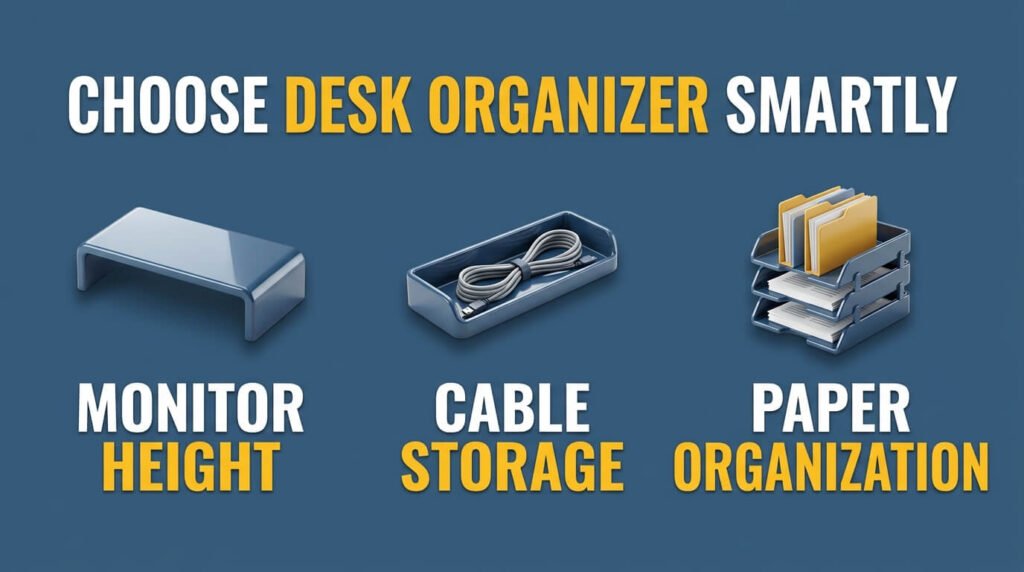
Picking the right organizer depends on your daily workflow. Not every desk has the same problem.
Some desks drown in cables and small supplies. Others drown in paper. Match the product to the problem, not the other way around.
Think About Your Monitor Setup First
If your monitor sits too low, your neck and shoulders pay the price over time. A riser style organizer solves two problems at once.
It lifts your screen and adds storage underneath. Check the width if you run dual monitors. A fixed-width stand may not fit two screens side by side.
Measure Your Desk Space Before You Buy
Wide risers need more desk depth. Tall paper organizers need more vertical clearance. Grab a tape measure before you shop. A great desk organizer for office use still fails if it does not physically fit your desk.
Decide Between Drawer Storage and Tray Storage
Drawers work well for small loose items like pens, clips, and cables. Trays work better for flat paper and folders. If your clutter is mostly small objects, pick a drawer style. If your clutter is mostly documents, pick a tray style.
Check the Assembly Time
Some organizers need zero assembly. Others need a few minutes with a screwdriver or snap-fit parts. If you want something ready in seconds, look for a no-assembly listing. If you do not mind a short build, tray-style organizers often take under ten minutes.
Look at Material and Build Quality
Metal frames tend to hold weight better over years of daily use. Wood-accented frames add warmth to a home office look. Steel mesh trays resist sagging under stacks of paper. Pick the material based on how heavy your daily load gets.
Match the Style to Your Workspace
A black metal riser fits a modern office look. A rustic brown wood-tone stand fits a softer home office style. Small style choices matter when you look at your desk every single day.
Conclusion
Every product on this list solves a real desk problem. Pick the one that matches your daily habits.
Do you fight monitor height and small clutter? Choose a riser with a drawer. Do you run two screens? Pick a wider stand. Do you drown in paper? Go with a tray system.
Match the product to your problem. Not the other way around. Measure your desk first. Check your storage needs next. Then choose with confidence.
The goal stays simple. A clean desk. Less stress. A workspace that finally works for you.
FAQ
Are AI-powered or app-connected organizers becoming a thing?
Yes. Some newer models now pair with phone apps to track inventory, set reorder reminders for supplies, or log desk usage patterns. It’s still niche, but growing fast among tech-forward offices.
How is the rise of micro-offices changing organizer design?
As city apartments and co-working pods shrink, brands are shifting toward vertical, wall-mounted, and fold-away designs that free up floor space entirely instead of sitting on the desktop.
Is renting office furniture instead of buying becoming popular?
Subscription and rental furniture services are expanding into desk accessories too. Businesses like the flexibility of upgrading or swapping organizers without a full repurchase.
Are certified ergonomic standards influencing organizer purchases now?
More buyers check for recognized ergonomic certifications before purchasing, not just comfort claims. This shift reflects growing awareness around workplace health regulations.
Will personalized or custom-branded organizers grow in demand?
Yes. Companies increasingly order custom-branded organizers for employee desks, turning a functional item into part of workplace identity and culture.

Aliza Khatun is a Digital Marketing Professional and the founder of DigiGenHub. She has helped various businesses grow their online presence through real-world experience in marketing, branding, traffic growth, and business strategy.
Through DigiGenHub, she shows how to build and grow a business from the ground up using Website Setup, SEO, Branding, Paid Promotion, and smart digital tools.
She also highlights how AI can be used to its full potential to make content creation, automation, marketing, and business growth faster and smarter.
She believes that the right knowledge, modern technology, and the right tools can help any individual or business build a stronger online presence.