

A stock video business turns raw footage into steady income. You shoot clips once. You sell them again and again.
Now, this model still works, but the rules have changed. AI tools, new copyright laws, and shifting buyer demand all shape how this business earns money today.
Buyers everywhere need fresh footage today, from small brands to big agencies. This demand keeps climbing every month. You don’t need fancy gear to jump in.
You don’t need years of filming experience either. What you need is a clear plan and steady effort. Pick a niche you know well.
Shoot clean, simple clips buyers actually want. Tag them the right way so buyers find you fast. Upload every week, without skipping.
Your first sale might take a while, but it comes. Then your tenth comes faster. Then your hundredth. This business can pay you back again and again once you build it right.
The Definition of a Stock Video Business
This means you record video clips and license them through stock platforms.
Buyers pay to use your clips in ads, films, websites, and social posts. You keep a share of every sale.
No client meetings. No custom shoots. You upload once and earn on repeat.
This differs from freelance videography. In freelance work, you get paid once per project. In a stock video business, one clip can sell hundreds of times over several years.
How to Start a Stock Video Business: Full Step-by-Step Breakdown
Starting used to require expensive gear. It also took years of trial and error. Now the path is shorter. Follow these steps in order.
Step 1: Pick a Niche First
Do not shoot random clips. Random shooting wastes time. It wastes money too. Pick one niche. Maybe two. Stay focused there. Business scenes sell fast. Tech scenes sell fast.
Healthcare scenes sell fast. Lifestyle scenes sell fast too. Think about what buyers need. They need clips for ads. They need clips for websites.
They need clips for social posts. Office scenes work well. Doctor visits work well. Remote work scenes work well.
Pick a niche you can shoot often. Pick something close to home. This saves travel costs. This saves your time. A tight niche builds a strong portfolio fast. Scattered clips do not.
Step 2: Get Basic Gear
You do not need a big budget. A mirrorless camera works fine. A recent smartphone works fine too. Most phones shoot in 4K now.
That meets platform standards. Add a small gimbal. This keeps your shots steady. Add storage too. An external SSD works well.
Skip fancy lenses for now. Skip drones for now. Build your gear list slowly. Let your earnings guide your spending. Buy new gear only after clips start selling.
Step 3: Shoot With Buyers in Mind
Buyers do not want artistic clips. They want clean footage. They want usable footage. Clean backgrounds work best. Steady shots work best. Avoid shaky handheld footage.
Avoid clutter in the frame. Skip brand logos completely. Skip visible text on screens or signs. Skip background music too. Buyers add their own branding later.
Keep your clips simple. Buyers can edit around simple footage with ease. Simple shots sell more than busy ones.
Step 4: Collect Releases Early
Skip this step and you risk trouble. You risk rejection too. Get model releases for every face. This includes friends. This includes family. Get property releases for private spaces.
This includes homes. This includes offices. Any space that is not public needs one. Ask for a signed release the same day. Do not wait on this. People move often.
Contact details change fast. Keep every release in one folder. Back that folder up twice.
Step 5: Choose Two or Three Platforms
Do not depend on one buyer pool. One platform can change its rules anytime. Spread your catalog across two sites. Maybe three sites.
This protects your income. This grows your reach too. Different platforms pull different buyers. Some buyers stick to one site. Others compare prices across many sites. List your clips wide. You catch more sales that way.
Step 6: Write Real Metadata
Buyers search by keyword. They do not browse folders. Vague titles kill sales fast. “Video001” will not sell. “Woman working on laptop in home office” will sell.
Use plain words. Use words buyers actually type. Add ten tags per clip. Maybe fifteen tags.
Do not stuff fifty random tags in. Match your words to common searches in your niche. Strong metadata turns an average clip into a steady seller.
Step 7: Upload Weekly, Not Once
One upload session will not build a business. Platforms reward steady contributors. They give better placement in search results. Set a weekly upload goal. Ten clips a week works well to start.
Keep that pace for months. Do not stop after a few days. Consistency builds trust with the platform algorithm. It also builds a bigger catalog fast. Bursts of uploads do not work as well.
Step 8: Track What Sells
Check your dashboard every week. Note which clips get downloads. Note which clips sit untouched. Drop themes that flop.
Stop shooting scenes nobody buys. Shoot more of what moves instead. Office clips selling fast? Shoot more office clips.
Let your sales data guide your next shoot list. This turns guesswork into a clear plan over time.
Cost of Starting a Stock Video Business in 2026
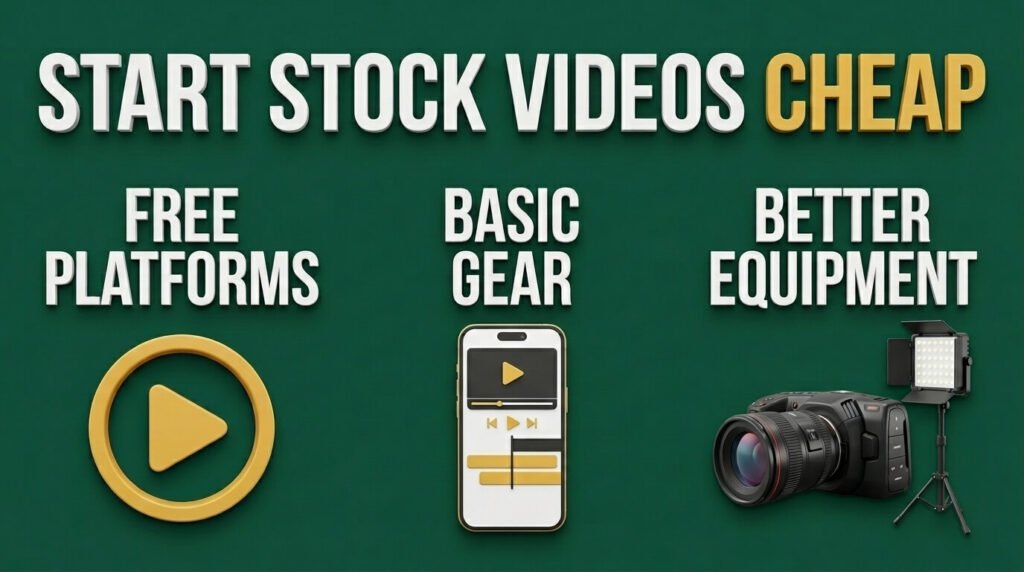
Most platforms charge zero to join as a contributor. Your cost sits in gear and time, not signup fees.
A phone and free editing software gets a beginner live this month. A full setup with a mirrorless camera and lighting pushes costs higher. Yet speeds up acceptance rates and payout timelines.
| Expense | Entry Level Cost | Growth Stage Cost |
| Camera or smartphone | $0 to $600 | $1,200 to $2,500 |
| Gimbal or stabilizer | $80 to $150 | $200 to $400 |
| Lighting kit | $0 (natural light) | $150 to $400 |
| Microphone | $0 (silent B-roll) | $100 to $300 |
| Editing software | $0 to $20/month | $20 to $55/month |
| Storage (SSD or cloud) | $60 to $100 one time | $200+ per year |
| Platform fees | $0 (free to join) | $0 |
| Total to start | $150 to $900 | $2,000 to $4,000 |
Best Platforms for a Stock Video Business Compared
Pick the right platform to secure your income directly. Here is a straight comparison based on current contributor terms.
| Platform | Video Royalty Rate | Payout Threshold | Best For |
| Adobe Stock | 35% of net sale | $25 (varies) | Creative Cloud integration, steady buyer base |
| Shutterstock | Tiered, rises with volume | $35 | Largest buyer pool, faster first sale |
| Pond5 | Up to 50% on some sales | Varies by method | Higher payout per premium clip |
| Storyblocks | Flat monthly pool split | Varies | Subscription-based recurring income |
Competitive royalties: You can earn 33% for images and illustrations, and 35% for videos on Adobe Stock.
On Shutterstock, Shutterstock has the larger buyer base and is the easier platform to start with.
Adobe Stock often pays higher per download for accepted content and integrates with Adobe Creative Cloud.
Most contributors who run a real stock video business submit to both, not just one. Ebaqdesign Photocultivator
How Much Can You Make From a Stock Video Business?

Numbers vary by portfolio size, niche, and platform mix. Here is what real contributors report.
| Portfolio Size | Typical Monthly Earnings |
| 100 to 300 clips | $50 to $150 |
| 600 clips | Around $600 |
| 3,000 to 6,000 clips | Around $1,800 |
Earnings vary, but contributors typically earn about $1 per clip monthly. A videographer with 600 clips could make around $600 each month.
Larger, well-tagged libraries scale further. Producers with larger portfolios (3000-6000 clips) have reported monthly earnings of approximately $1800.
One documented case shows the slow build clearly. A contributor named Domenico started uploading clips as a side hobby.
My earnings are a net 570 euros in less than a year. Two sales I made were of 4K videos published on Pond5, 199 dollars each.
Within thirteen months, my sales continue to increase. These last 2 months, I earned 500 euros net. This reaches 1000 euros total in these first 13 months.
This case proves a simple point. A stock video business grows in stages, not overnight. Microstockguru
A separate long-term contributor shows what patience builds. Since 2006, I have been a producer of stock footage.
With that business, I have brought home more than 100 thousand euros. Slow starts do not mean failure. They mean the portfolio has not reached critical mass yet. Microstockguru
Trending Stock Video Categories in 2026
Rapid adoption of AI-tagged visuals and vertical video formats increased by approximately 28% in the past year.
That single stat tells you where to point your camera next. Shoot vertical. Shoot people at work. Skip generic nature clips unless you have a rare angle.
| Category | Why It Trends | Growth Signal |
| Business and remote work | Every marketing site needs office and hybrid work scenes | 88% of US firms use visual marketing assets |
| Vertical video (9:16) | Built for TikTok, Reels, and Shorts | Vertical formats rose sharply this past year |
| Healthcare and wellness | Telehealth and fitness brands need real footage | Steady demand across insurance and clinic sites |
| AI-tagged and searchable clips | Buyers want faster search results | AI tagging improved search efficiency by 48% |
| Travel and culture | Tourism boards and airlines refresh content yearly | Strong seasonal spikes each quarter |
| Diverse people and lifestyle | Brands want inclusive, authentic casting | Preferred over generic stock faces |
Common Problems in a Stock Video Business and How to Fix Them
New sellers hit the same walls. Here are the fixes that actually work.
Problem 1: Clips are often rejected.
Fix: Shoot steady footage. Avoid shaky handheld shots. Clean, subtle camera movements often outperform shaky handheld footage.
Simple compositions with clear subjects typically license more frequently than complex, busy scenes.
Problem 2: Clips get accepted but never sell.
Fix: Research demand before you shoot. Business and lifestyle imagery (people working, modern remote work scenarios), healthcare, technology, food, travel, and conceptual imagery sell most consistently.
Generic landscape and flower photography is highly saturated and rarely produces strong sales.
Problem 3: The catalog feels too small to earn real money.
Fix: Treat uploads as a weekly habit, not a one-time event. Be consistent; upload regularly. Even 10 to 20 assets per week can build a strong portfolio over time.
Problem 4: Payouts take too long.
Fix: Know the threshold before you start. Time to first payout is typically 3 to 12 months after you start uploading.
This depends on portfolio size and content quality. Set that expectation early so you do not quit too soon.
AI and the Stock Video Business in 2026
AI video tools changed the supply side fast. Buyers now compare stock clips against AI-generated footage. This shifts what sells and what does not.
Copyright rules matter more than ever if AI tools touch your workflow. The US Copyright Office says AI-generated content is not copyrightable unless human creative input is significant enough to qualify as authorship.
This affects any stock video business that mixes AI-assisted editing into a portfolio. Art and Media Law
A big court decision locked this rule in place in 2026. The Supreme Court denied the case on March 2, 2026.
That decision kept the current rule standing. AI-generated footage alone still cannot get copyright protection.
This matters for your footage too. Does part of your work rely on AI generation? Then document your own input clearly.
Save your project files. Note every editing choice you make. Keep drafts along the way. This protects your licensing rights later.
A platform might ask questions. A buyer might ask questions too. Your records back up your claim fast. Morgan Lewis
Check the official Copyright Office AI guidance before you submit AI-assisted clips to any platform.
Market data backs up the shift in buyer trust too. 44% of consumers preferred real-life visuals over AI-generated imagery in advertising campaigns.
Authentic footage still holds an edge over synthetic clips, especially for brand and lifestyle categories. Marketresearchguru
Licensing Basics Every Stock Video Seller Needs
Confusion around licensing kills more stock video business efforts than bad footage does. Keep these rules simple:
- Get a signed model release for any recognizable person in frame.
- Get a property release for private homes, art, or branded interiors.
- Never include logos, trademarks, or copyrighted music without permission.
- Read each platform’s exclusivity terms before you upload the same clip elsewhere.
- Keep your own backup copy and records of every release you collect.
If a person is recognizable, you must include a model release. If private property is featured (homes, artwork, cars, etc.), submit a property release. Skipping this step causes rejections and can trigger legal disputes later.
Metadata and Search Tips That Boost Sales
Buyers find clips through search, not browsing. Strong metadata is the single biggest lever a new seller controls.
- Use specific titles. “Woman typing on laptop in home office” beats “office video.”
- Add ten to fifteen relevant tags per clip, not fifty random ones.
- Match wording to how buyers actually search, not artistic language.
- Update older clips with better tags once you learn what buyers type.
- Group similar clips into themed sets so buyers find more than one match.
Stock Video Market Value 2026: Growth Insights for Content Creators
Demand keeps rising, even with AI tools in the mix. Here is what current market data shows.
| Metric | 2026 Figure | Source |
| Global stock photo and video market size | $6.43 billion | Business Research Insights |
| Projected market size by 2035 | $12.2 billion | Business Research Insights |
| US share of global stock consumption | 34% | Market Research Guru |
| Businesses using visual marketing assets | 88% of US firms | Market Research Guru |
| Ad agencies buying stock video for campaigns | 71% | Market Research Guru |
The global stock photo and video market sits at 6.43 billion USD in 2026. It should reach 12.2 billion USD by 2035. That growth comes from steady demand. It’s not hype.
More than 5.4 billion people used the internet in 2025. Over 92% of digital marketers used visual content in their campaigns.
Video ads made up 81% of online brand promotions. Buyers need fresh clips every single month because of this. Business Research Insights Marketresearchguru
The United States drives much of this demand. It accounted for nearly 34% of global stock photo and video consumption in 2025. Strong ad spending fuels this. Creator-driven media fuels this too.
More than 88% of U.S. businesses used visual marketing assets. They used them across websites.
They used them across social platforms. They used them across streaming channels too.
Does your stock video business target US buyers? Then you’re aiming at the biggest slice of the market. Marketresearchguru
Final Thoughts
So, you must have patience. It rewards consistency too, more than luck ever does. The market keeps growing.
Buyer demand for authentic footage stays strong. Clear steps exist now for every stage. This runs from your first upload to a full portfolio.
Shoot with intent. Tag with care. Track your releases closely. Treat this like a serious business. Not a side hobby. Do that, and the payouts follow.
FAQ
Do you lose the rights to your footage once you upload it?
No. Most platforms use non-exclusive licensing. You keep ownership. You can sell the same clip on other sites too, unless you sign an exclusive contract for a bonus rate.
Can you run a stock video business alongside a full-time job?
Yes. Most contributors start part-time. Weekend shoots and evening edits build a catalog slowly but steadily. Full-time income comes later, once your library grows large enough.
How long does a clip take to get approved?
Review times vary by platform. Some approve clips within 24 to 48 hours. Others take up to a week during high submission periods. Rejected clips usually come with a reason, so you can fix and resubmit.
Do you need to pay taxes on stock video earnings?
Yes. Platforms treat you as an independent contributor, not an employee. You report this income as self-employment on your tax return, and you may owe quarterly estimated taxes once earnings grow.

Aliza Khatun is a Digital Marketing Professional and the founder of DigiGenHub. She has helped various businesses grow their online presence through real-world experience in marketing, branding, traffic growth, and business strategy.
Through DigiGenHub, she shows how to build and grow a business from the ground up using Website Setup, SEO, Branding, Paid Promotion, and smart digital tools.
She also highlights how AI can be used to its full potential to make content creation, automation, marketing, and business growth faster and smarter.
She believes that the right knowledge, modern technology, and the right tools can help any individual or business build a stronger online presence.