
You didn’t come here to scroll through another list. You came here because you want to know what’s actually paying right now, and you want it straight. So here it is.
Freelance demand shifted hard this year. Clients stopped paying for basic work anyone can copy.
They now chase people who bring real skill, sharp judgment, and speed. AI took the easy tasks. It left something better behind: room for freelancers who actually know their craft.
Top freelance skills to learn now, ranked clearly by pay and demand. You don’t need multiple skills.
You need one that matches today’s demand and fits who you are. Pick it. Practice it. Show your work to the world.
How To Pick The Right Freelance Skills to Learn
Stop jumping between skills. Pick one path. Use three checks.
Check client demand. Search Upwork and Fiverr for the skill name. Count active jobs this week.
Check pay range. Look at hourly rates before you spend weeks practicing.
Check AI resistance. Pick skills that need judgment or client trust. These skills hold value longer than pure execution tasks.
A skill that scores high on all three checks gives you a strong start. Skip skills that score low on all three, even if they sound exciting.
45 Trending Freelance Skills to Learn in 2026
The US freelance workforce keeps growing. Upwork predicts 86.5 million Americans will freelance by 2027. That’s more than half the entire workforce.
Freelancers already generated $1.5 trillion in earnings in 2024. This is no longer a side hustle trend. It is a full career shift. Upwork
The global freelance platform market backs this up too. It stood at $6.4 billion in 2025 and heads toward $24.2 billion by 2033.
North America holds the biggest share of that market. If you live in the USA, this growth works in your favor.
Still, you know your strengths. Now match them to what’s paying. The right freelance skill from this list can change your time, your income, and your freedom.
Freelance Skills to Learn That Clients Are Craving
| Skill | Category | Why Clients Pay For It | |
| 1 | AI integration | Tech | Businesses need AI tools connected to their systems |
| 2 | Prompt engineering | Tech | Better prompts cut AI errors and save time |
| 3 | AI chatbot building | Tech | Support teams need 24/7 automated replies |
| 4 | No-code app building | Tech | Startups skip costly dev teams |
| 5 | Full-stack development | Tech | Every business needs a working website or app |
| 6 | API integration | Tech | Tools need to talk to each other |
| 7 | Workflow automation | Tech | Automation saves teams hours of manual work each week |
| 8 | Cybersecurity basics | Tech | Small firms fear data breaches |
| 9 | Machine learning basics | Tech | Firms want predictive tools built fast |
| 10 | Blockchain development | Tech | Finance and gaming firms still fund this work |
| 11 | UI/UX design | Design | Poor design kills app sign-ups |
| 12 | AI-assisted graphic design | Design | AI speeds up output at the same quality bar |
| 13 | Figma prototyping | Design | Teams test ideas before full builds |
| 14 | Brand identity design | Design | New firms need a full visual system |
| 15 | Motion graphics | Design | Ads and explainer videos need movement |
| 16 | 3D design | Design | Product firms use 3D for ads and previews |
| 17 | Web design, no-code | Design | Small firms want a site live in days |
| 18 | SEO content writing | Writing | Firms want free traffic from Google |
| 19 | Direct response copywriting | Writing | Sales pages need copy that converts |
| 20 | Technical writing | Writing | Software firms need clear docs |
| 21 | Scriptwriting for video | Writing | Short video needs a tight script first |
| 22 | Ghostwriting for founders | Writing | Executives want a strong voice on LinkedIn |
| 23 | Email copywriting | Writing | Email still drives the highest sales return |
| 24 | SEO strategy | Marketing | Firms want long-term traffic, not just ads |
| 25 | Social media management | Marketing | Brands need daily posting and replies |
| 26 | Paid ads management | Marketing | Ad spend needs a skilled hand to avoid waste |
| 27 | Email marketing | Marketing | Lists convert better than cold outreach |
| 28 | Conversion rate optimization | Marketing | Small fixes raise sales without new traffic |
| 29 | Influencer campaign management | Marketing | Brands need someone to run outreach |
| 30 | Marketing automation setup | Marketing | Automation saves teams from repeat manual sends |
| 31 | AI video editing | Video/Audio | Short video drives most online engagement |
| 32 | Podcast editing | Video/Audio | Shows need clean audio fast each week |
| 33 | Voiceover work | Video/Audio | Ads and explainer videos need a clear voice |
| 34 | YouTube channel management | Video/Audio | Creators need help with upload and growth |
| 35 | Short-form video production | Video/Audio | TikTok and Reels drive brand reach now |
| 36 | Data analysis | Data | Firms sit on data they cannot read alone |
| 37 | Data visualization | Data | Clear charts win executive buy-in fast |
| 38 | AI data annotation | Data | AI models need clean, tagged training data |
| 39 | Business intelligence reporting | Data | Leaders want weekly insight, not yearly insight |
| 40 | Virtual assistance | Admin | Founders need daily task support |
| 41 | Bookkeeping | Admin | Small firms avoid full-time accounting staff |
| 42 | Project management | Admin | Remote teams need someone to track deadlines |
| 43 | Customer support | Admin | Fast replies keep customers from leaving |
| 44 | E-commerce store management | Admin | Store owners need daily order and stock help |
| 45 | Contract and legal support | Admin | Firms want cheap, fast contract review |
Now pick a lane. The next section breaks down the top 15 skills in demand.
The 15 Most In-Demand Freelance Skills to Learn
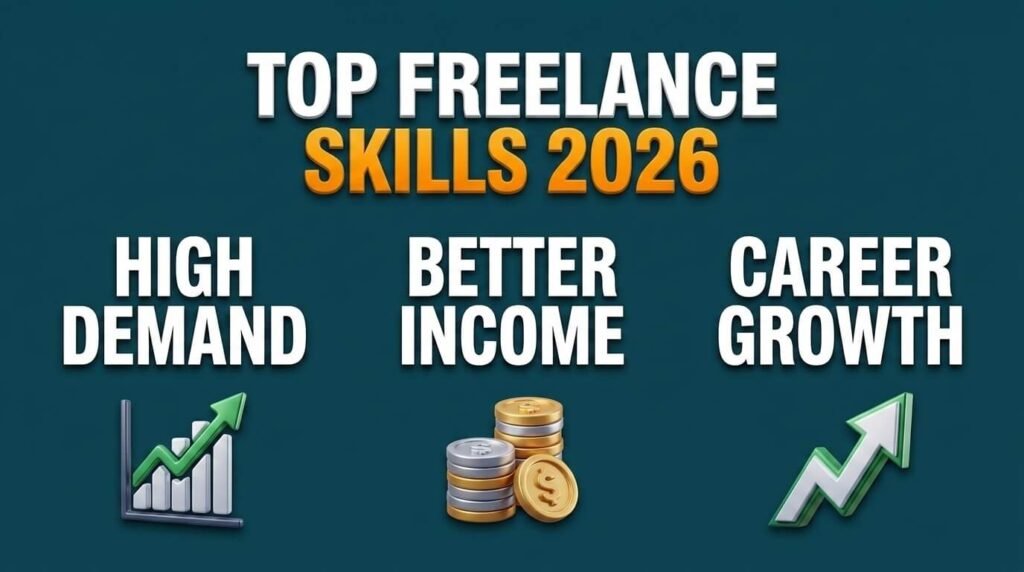
You don’t need to master all 45 skills on that list. You need one that pays well and fits you. Here are the 15 skills clients hire for most right now. Each one comes with the daily work, the pay range, and what makes it worth learning.
1. AI Integration
You connect AI tools like ChatGPT or Claude into a client’s software. Your daily work includes API setup. You test outputs. You fix broken workflows. Clients expect skill with a set of common tools:
- OpenAI API powers custom chatbots and text tools
- Anthropic Claude API handles longer documents and complex reasoning tasks
- Zapier links AI tools to apps like Gmail, Slack, and Sheets without heavy code
- Make (formerly Integromat) builds multi-step automated workflows between apps
- LangChain helps developers chain AI calls together for bigger, custom projects
Demand for this skill grew 178% year over year on Upwork. Pay sits between $80 and $200 per hour.
2. Prompt Engineering
You write prompts that make AI tools give better output. You test them for errors. You build prompt libraries. You check edge cases.
Your daily work covers a few core tasks:
- Write base prompts for chatbots, content tools, or internal AI systems
- Test prompts against tricky or unusual inputs
- Fix weak outputs by rewriting instructions, not just the AI’s answer
- Document what works so a team can reuse it later
- Track version changes as tools update over time
Popular tools include OpenAI Playground, Anthropic Console, PromptLayer, and Google AI Studio. Firms hire this skill for chatbots and internal AI systems. Pay ranges from $50 to $150 per hour.
3. Full-Stack Web Development
You build the front end of a website. You build the back end too. You write code. You fix bugs. You add AI features like chat widgets.
Your work splits into two halves. On the front end, you build what users see and click.
You use HTML, CSS, and JavaScript frameworks like React or Vue. On the back end, you build what runs behind the scenes.
You use Node.js, Python, or PHP. You connect databases like MongoDB or PostgreSQL.
You also test each page before launch. You fix broken links. You keep load speed fast. Clients now ask for AI chat widgets built into the site too.
This skill stays on top of Upwork’s most hired list every year. Strong freelancers cross $150,000 per year.
4. AI Video Editing
You cut short videos for TikTok, Reels, and YouTube. You add captions. You polish the final cut.
Your daily tasks include:
- Trimming raw footage into a tight clip
- Adding auto-captions and fixing typos
- Syncing background music to the cut
- Adding text overlays and simple transitions
- Exporting in the right size for each platform
You use tools like Runway, CapCut, and Descript. Adobe Premiere Pro and DaVinci Resolve stay popular for longer edits too.
This skill rose 329% year over year. That’s the fastest growth of any category on Upwork. Pay runs from $60 to $250 per hour.
A freelancer I know switched from long-form editing to short clips only. Her income doubled in four months. Clients paid faster. They saw results within a day, not a week.
5. UI/UX Design
You design app screens. You map out user flows. You keep them simple. Your daily work includes wireframes.
You start with rough sketches of each screen. You test the flow with real users. You fix confusing steps.
You build a clean prototype in Figma. You add notes for developers on spacing, color, and font size.
You run user tests before the final handoff. You watch how people click through the app. You fix drop-off points.
Firms lose sign-ups over bad design. This skill stays in steady demand. Pay ranges from $50 to $150 per hour.
6. Data Analysis
You pull raw numbers from a business. You turn them into clear findings. You clean spreadsheets. You build dashboards.
Your daily work often includes:
- Pulling data from sheets, CRMs, or sales tools
- Cleaning messy or duplicate entries
- Building charts in Excel, Google Sheets, or Tableau
- Writing short summaries in plain language
- Flagging trends the client should act on fast
You write short summaries for non-technical clients. Firms now tie data work to AI, since raw output feeds AI models too. Pay runs from $40 to $120 per hour.
7. SEO Content Writing
You write blog posts and web pages built to rank on Google. You research keywords. You match search intent.
You start with a target keyword. You check what already ranks for it. You study the search intent behind it.
You write a piece that answers the question fast and fully. You add clear headers. You keep paragraphs short. You add internal links to other pages on the site.
This skill still tops freelance job boards, even with AI writing tools everywhere.
Clients want a human check on tone and accuracy. Pay ranges from $30 to $100 per hour.
A client of mine once dropped a writer for using AI text with no edit pass. Google flagged the content as low value.
The next writer added original stats. She added short personal notes too. Rankings came back within six weeks.
8. Direct Response Copywriting
You write sales pages. You write ads and emails built to drive a click or a sale. You test headlines. You track which version converts better.
Your work covers the full sales sequence. You write the headline first. You write the opening hook next.
You build the offer clearly. You add proof, like reviews or numbers. You close with a strong call to action.
You test two versions at once. You track clicks and sales for each. You keep the winner. You cut the loser.
This skill sits among the highest-paying on the list, since copy ties directly to sales. Pay runs from $75 to $300 per project. Full funnels pay more.
9. Social Media Management
You plan posts for a brand’s social accounts. You write captions. You reply to comments. You build content calendars.
Your weekly work often looks like this:
- Planning a month of posts in advance
- Writing captions that match the brand’s voice
- Scheduling posts through tools like Buffer or Later
- Replying to comments and messages each day
- Checking weekly stats to see what worked
You track engagement each week. Small firms rarely have time for this. They outsource it fast. Pay ranges from $20 to $75 per hour.
10. Virtual Assistance
You handle a founder’s inbox. You manage their calendar. You take on daily admin tasks.
Your daily tasks vary by client but often include:
- Sorting and replying to emails
- Booking meetings and fixing calendar clashes
- Light research for upcoming projects
- Tracking small tasks so nothing slips
- Prepping documents before a call
This role stays among the most hired on Upwork. It saves founders hours every week. Pay ranges from $15 to $50 per hour.
I once managed inbox and scheduling for a small agency owner. I did this for six months.
She told me the biggest value wasn’t the tasks themselves. It was the mental space she got back each day.
11. E-commerce Store Management
You run daily tasks for online shops. You update stock. You fix orders. You reply to customers.
Your daily work includes checking new orders each morning. You update stock counts across the store.
You fix shipping errors before they turn into complaints. You reply to customer questions about sizing, delivery, or returns. You update product pages with new photos or prices.
This skill grew 130% year over year on Upwork. That makes it one of the fastest-growing admin roles. Pay ranges from $20 to $70 per hour.
12. Paid Ads Management
You run ad campaigns on Google or Meta. You adjust them to hit a set budget. You track the return.
Your daily tasks include checking spend against budget each morning. You test different ad copy and images. You adjust targeting when results dip.
You pause weak ads fast, before they burn budget. You report results back to the client each week, in plain numbers.
Clients pay well here, since bad ad spend costs them directly. Pay ranges from $50 to $150 per hour.
13. AI-Assisted Graphic Design
You design logos, social posts, and brand assets. You use tools like Midjourney and Adobe Firefly.
You start with a concept brief from the client. You generate rough visual ideas fast using AI tools.
You pick the strongest direction. You refine it by hand in Photoshop or Illustrator. You build a full set of files: logo, colors, fonts, and templates.
Your daily work includes concept drafts. You handle client revisions. You export final files for print or web. Pay ranges from $30 to $100 per hour.
14. Bookkeeping
You track income and expenses for small firms. You prepare basic reports. These firms can’t afford full-time accounting staff.
Your daily and weekly tasks include logging transactions in tools like QuickBooks or Xero.
You match bank statements against records. You flag missing receipts. You prepare a monthly profit and loss report. You send the client a summary they can act on fast.
This work stays steady, since every business needs it. Pay ranges from $25 to $60 per hour.
A friend of mine started bookkeeping for three local shops last year. She had no background beyond a short certificate course. Within a year, she built a full client list through referrals alone.
15. Customer Support
You answer customer questions through chat, email, or a help desk tool. You handle tickets. You escalate hard cases fast.
Your daily work includes checking the ticket queue each morning. You answer common questions fast, using saved templates.
You dig deeper into harder cases. You escalate anything you can’t fix to the right team. You log each ticket so the next agent has full context.
Firms outsource this work to keep response times short. Pay ranges from $15 to $40 per hour.
Freelance Skills Losing Value in 2026
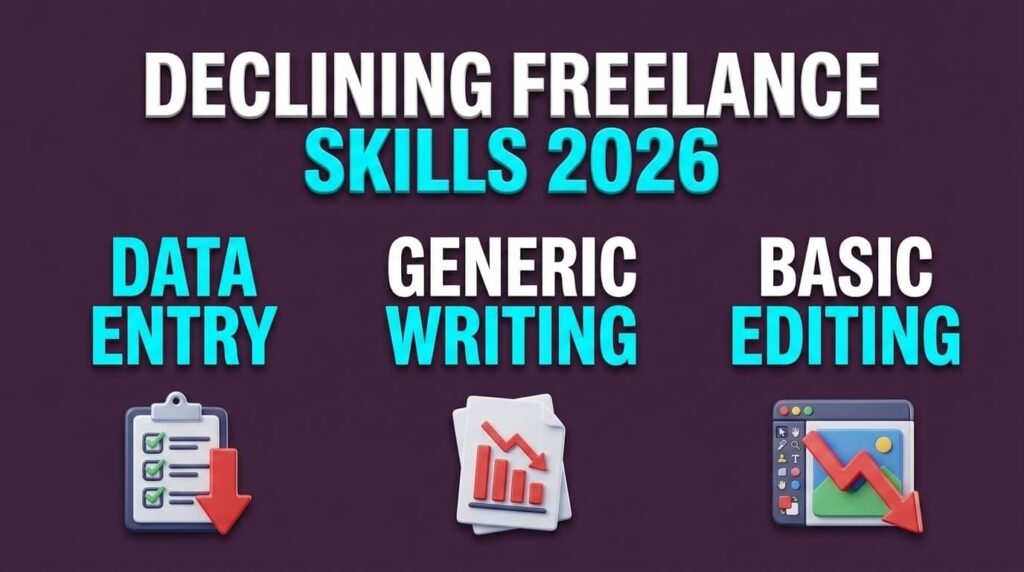
Not every skill on this list is worth your time. Some work that paid well two years ago now pays less. AI tools do the job in seconds, and clients know it.
Basic data entry pays less now. Clients run this through AI tools directly.
Generic blog writing pays less too. Posts with no research and no personal experience get outranked fast. AI writes this version cheaper than any freelancer can.
Simple logo design with no strategy attached is shrinking. Clients generate dozens of logo drafts through AI before they post a job. Freelancers who only offer the drafting step get squeezed out first.
Basic virtual assistant work faces the same pressure. VAs who add a specialty, like e-commerce operations or bookkeeping, hold their rates. Generic VAs do not.
Transcription work has nearly disappeared. AI transcription tools handle this at almost no cost with strong accuracy.
Basic photo editing competes directly with AI editing tools built into consumer apps.
The pattern is simple. Any task with one clear right answer and no client-specific judgment is a shrinking market.
If a skill on your shortlist looks like this, pair it with a judgment-heavy add-on. Or skip it.
Why Old Freelance Skills Stopped Paying
Clients used to hire for basic tasks. Data entry. Simple graphic design. Generic blog posts. These jobs pay less each year.
AI tools do this work in seconds. Clients keep their budget for freelancers who add real strategy, taste, or technical depth.
This shift is not bad news. It opens a gap. Freelancers who add AI skills on top of a core skill now earn more.
A writer who adds SEO structure earns more than a writer who just writes. A designer who adds AI tools like Midjourney or Figma AI moves faster and charges more per project.
The real question is not what skill sounds good. The real question is which skill will still pay in three years. This guide answers that question.
How Much You Can Realistically Earn in Year One
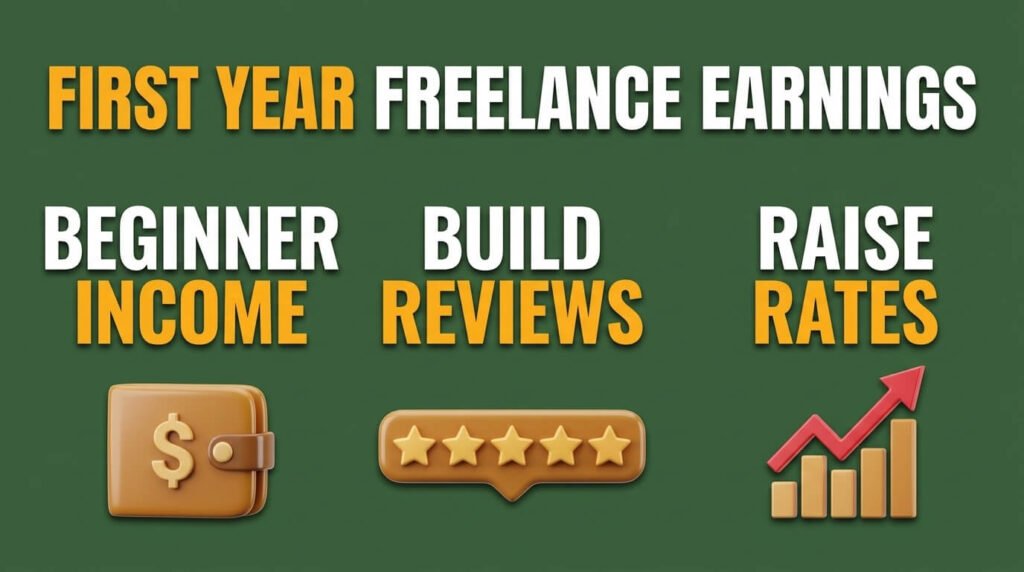
The rates listed above belong to experienced freelancers. A beginner earns less in month one. Set your expectations here first.
Most beginners earn $3,000 to $15,000 in their first year. This applies if you work part-time around a job.
Full-time beginners can reach $20,000 to $40,000 in year one. This depends on the skill and how competitive the niche is.
Rates climb with proof of work, not time served. A freelancer with five strong reviews often earns more than one who freelanced for a year with two weak reviews. This is why you should price low for your first three clients.
Skills with a high pay ceiling, like AI integration, do not pay that ceiling rate to beginners. Expect to start near the bottom of the range. Move up every few projects.
Best Platforms for Each Type of Skill
Not every platform fits every skill. Pick based on what you offer.
Upwork works best for tech, development, data, and admin skills. Clients here post detailed jobs and expect proposals with real specifics.
Fiverr works best for design, video editing, and voiceover work. Clients browse packaged services here. A clear gig listing with samples matters more than a proposal.
LinkedIn works best for copywriting, ghostwriting, and consulting. Clients hire based on visible expertise and posts, not a portfolio link alone.
Contra is a commission-free platform gaining traction for design, tech, and marketing freelancers.
Direct outreach through cold email works once you have two or three samples. This skips platform fees but takes longer to land a first client.
Most freelancers land their first client on one platform. They move to direct outreach once they have proof of work to show.
How To Start Earning Fast
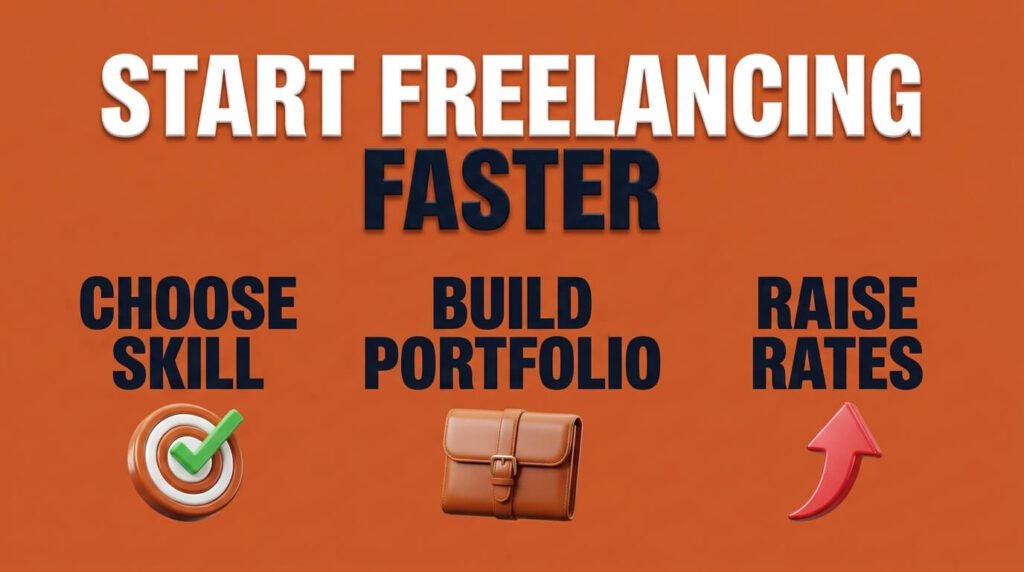
Follow this order once you pick a skill.
Pick one skill only. Do not split focus across three skills at once.
Practice on a real project. Build one sample before you pitch clients, even unpaid.
Post it on one platform. Upwork, Fiverr, or LinkedIn work well to start.
Price low for your first three clients. Trade a lower rate for fast reviews and proof of work.
Raise your rate every five projects. Do not stay at your starting price past your first month of steady work.
This order removes the guesswork that stalls most beginners. Speed beats a perfect plan here.
Common Mistakes Beginners Make When Picking a Skill
Choosing based on hype is a common mistake. A skill trending on social media is not the same as a skill with active job postings. Check real job boards first.
Switching skills every few weeks is another mistake. Momentum builds from repetition. Stick with one skill for at least three months before you judge the results.
Skipping the sample project hurts most beginners. Pitching clients with zero visible work is the top reason proposals get ignored. One unpaid sample beats a resume with no portfolio.
Underpricing forever is a trap. Pricing low helps you land your first clients. It should not become permanent. Freelancers who never raise rates plateau fast.
Ignoring your niche costs you clients. “I do social media management” competes with thousands of similar profiles. “I do social media management for local dental practices” stands out, even with a smaller audience.
Final Word
The freelance market today rewards depth over speed. Clients pay for freelancers who pair a strong core skill with AI fluency and clear communication. Pick one skill from this list. Build one sample project. Post it this week. That single step moves you ahead of most people still stuck comparing lists instead of starting one.
FAQ
Do you need to register a business to freelance?
No, not at first. Most freelancers work as a sole proprietor. No paperwork needed. Register a business once your income grows steady.
Can you freelance while working a full-time job?
Yes. Many freelancers start part-time. Early mornings and weekends work well. Build your first samples this way before you go full-time.
Does a portfolio website matter if you already list samples on Upwork?
Not right away. Your platform profile works fine at first. Build a separate portfolio site once you have five strong projects.
What happens if a client stops responding mid-project?
Send one follow-up message. Set a clear deadline for their reply. Move on to new leads if they stay silent past that date.
How do taxes work for freelance income?
You report it as self-employment income. Set aside 25 to 30 percent for taxes. Talk to a tax professional during your first year.
Should you specialize in one industry or stay general?
Specializing helps you charge more. “SEO writing for dental clinics” beats plain “SEO writing” every time. Clients trust specialists faster.
What if the skill you picked becomes outdated?
Skills evolve. They rarely disappear overnight. Keep learning new tools inside your skill. This keeps you ahead instead of starting over.
How many freelance skills should you learn before pitching clients?
One. Master it first. Add a second skill only after you land steady clients with the first.

Aliza Khatun is a Digital Marketing Professional and the founder of DigiGenHub. She has helped various businesses grow their online presence through real-world experience in marketing, branding, traffic growth, and business strategy.
Through DigiGenHub, she shows how to build and grow a business from the ground up using Website Setup, SEO, Branding, Paid Promotion, and smart digital tools.
She also highlights how AI can be used to its full potential to make content creation, automation, marketing, and business growth faster and smarter.
She believes that the right knowledge, modern technology, and the right tools can help any individual or business build a stronger online presence.