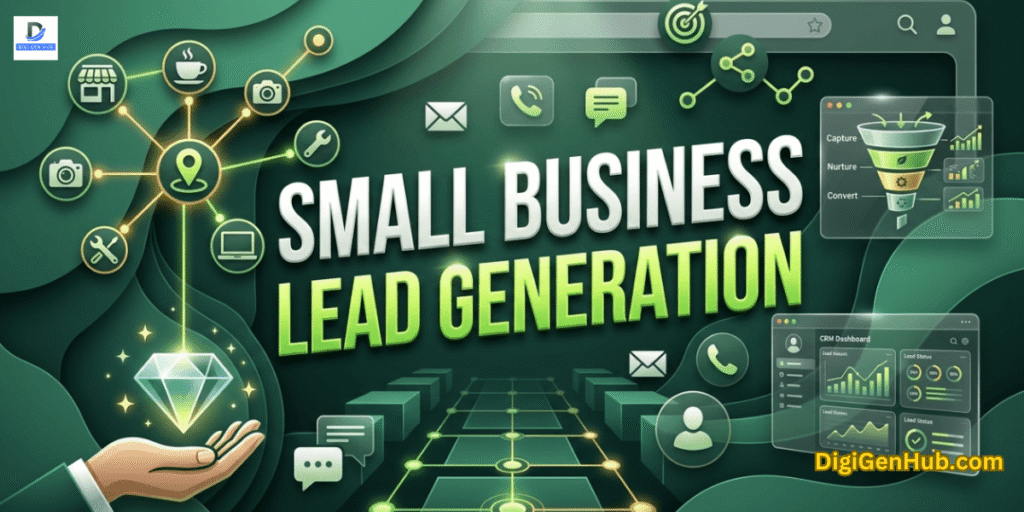
Small business lead generation is the process of finding potential customers. It helps turn interest into leads. Businesses use SEO, local search, content, email, and social media to attract people.
They do not need to rely only on paid ads. In 2026, the best results come from organic search, a well-optimized Google Business Profile, and short content that answers customer questions.
I knew little about small business lead generation when I started my business. I relied on word-of-mouth, but without new leads, my business wasn’t growing. Once I learned about lead generation, things changed. I found more customers, built trust and saw more sales.
Applying a few lead-generation methods and software can help you meet numerous prospective customers. It enables you to attract new customers, grow, build trust and keep the audience engaged.
Small Business Lead Generation
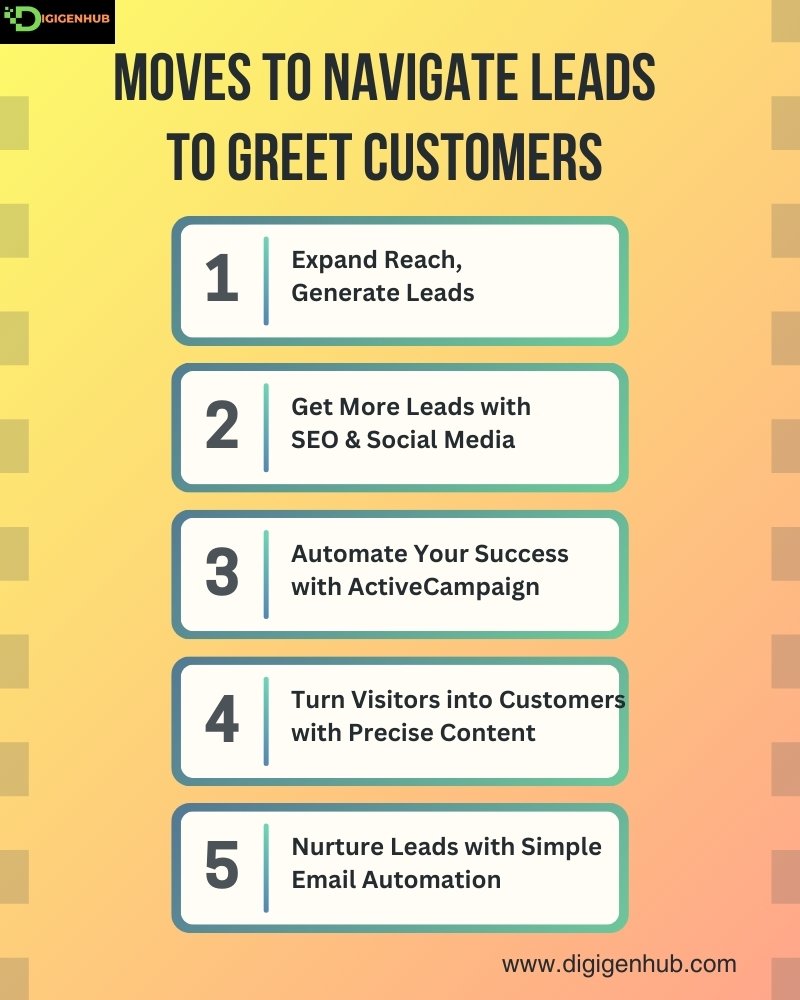
Some simple strategies are SEO, social media, content and email marketing. These help you reach more people and keep them interested.
You can also use tools like HubSpot, Mailchimp, Zoho CRM and OptinMonster. These help you capture leads and send emails.
ActiveCampaign and Intercom help you automate and nurture leads. Still, let’s learn how your business can grow faster and better with the right lead-generation tools and strategies.
Why Most Small Businesses Struggle to Generate Leads

Here is the real problem. Most small business owners pour time into social media posts or run a few Google Ads. Then they wonder why the phone stays quiet. The traffic comes. The leads don’t.
The gap is almost always a targeting problem. You’re reaching people who don’t need you right now. Lead generation only works when your message reaches someone actively looking for what you offer.
That’s why organic search intent has become the most valuable lead source in 2026. When someone types “plumber near me” or “best CRM for small business,” they already want to buy. Your job is to show up at that exact moment. The process makes it easy for them to contact you.
Most small businesses create content people see. They rarely create content people search for. Those are two very different things.
Personal Experience
My friend ran a small HVAC service in Ohio for three years. He had a Facebook page with 900 followers and got maybe two or three calls a month from it.
After he optimized their Google Business Profile and added five pages targeting specific service keywords, calls jumped to 30+ per month inside 90 days. He never spent a dollar on ads.
The Numbers You Need to See First
Before picking any strategy, look at what the data actually says. These are current 2026 benchmarks from verified sources.
- 91% of marketers say lead generation is their top priority
- 61% say generating quality leads is their biggest challenge
- 79% of leads never convert to sales without nurturing
- 14.6% close rate for SEO leads vs. only 1.7% for outbound
- $198 average cost per lead across all industries
- 9× higher conversion if you follow up within 5 minutes of an inquiry
Source: Martal Group 2026 Lead Generation Statistics martal.ca
The 14.6% close rate for SEO leads is the key number. Outbound cold calls close at just 1.7%. That is an 8× difference. Every dollar you put into SEO works far harder than cold outreach.
Channel Performance: Where Leads Actually Come From
| Channel | % of Marketers Using as Primary Source |
| Organic search | 78% |
| Email marketing | 72% |
| Social media | 58% |
| Paid ads (PPC) | 50% |
| Referrals | 42% |
| Cold outreach | 28% |
Quick takeaway
Small businesses with less than $5 million in revenue often get 300 to 500 leads each month. They achieve this with consistent SEO and content.
Use this as a benchmark. Compare it with your current results. If your lead numbers are lower, the channels below can help you attract more leads.
The Best Channels for Small Business Lead Generation
Not every channel works for every business. Here’s how to pick fast.
B2B Service Businesses
- Google organic search + long-tail keywords (highest close rate)
- LinkedIn organic posts: short, direct, posted 3× per week
- Email newsletter to past clients and warm contacts
- Referral partnerships with non-competing local businesses
B2C and Local Service Businesses
- Google Business Profile (the single fastest win for local visibility)
- Facebook and Instagram with geo-targeted organic posts
- Google Reviews: the more you have, the higher you rank locally
- YouTube Shorts or short demo videos targeting local searches
I consulted for a small accounting firm in Texas. They had a website but zero blog content. We wrote eight articles targeting questions like “how to file taxes as an LLC in Texas.”
Within four months, those pages drove 60% of their new client inquiries. Their cost per lead dropped from $240 (paid ads) to under $30 per organic contact.
How to Build Organic Leads Without Paid Ads
Organic lead generation means people find you. You don’t interrupt them. Organic leads come from intention: someone already searching for a solution. That’s why they convert at 8× the rate of cold outreach.
Let’s see the exact process that works right now.
Step 1 — Find questions your buyers actually type into Google
Use free tools like Google Search Console or AnswerThePublic. Target phrases like “best [service] for [location]” or “how to solve [specific problem].” Focus on 3–5 word phrases with real search volume.
Step 2 — Write one page per problem
Each page should answer one question fully. Keep paragraphs short. Add a clear headline, a direct answer in the first 100 words, and a contact form or CTA at the bottom. One topic = one page.
Step 3 — Build a simple lead magnet
A free checklist, guide, or short email course works well. Offer it on your highest-traffic page. Canyon Coffee built a 10,000-person email list entirely from free travel guides, no ad spend. Your free resource just needs to solve one specific problem.
Step 4 — Follow up within 5 minutes of every form submission
This single action improves conversion by 9×. Set up a free auto-reply email. So leads know you received their message. Then call or email personally within the hour.
Step 5 — Track what converts, cut what doesn’t
Use Google Analytics 4 (free) and Google Search Console (free). Set up a conversion goal for every contact form. Check it weekly. Double down on pages that generate real inquiries.
Ad costs rose 22% year-over-year in 2025. Organic search traffic costs nothing per click and compounds over time. A well-ranked page from 2024 still generates leads in 2026 with no ongoing spend.
Advantages of Small Business Lead Generation
Lead generation is helpful for small businesses to grow, both new and established. It brings in new customers, builds trust and amplifies sales. Here’s how it helps:
- Consistency in Sales: Tools like CRMs automate follow-ups, saving time.
- Analytics: Real-time data helps improve results.
- Increased Engagement: Regular contact builds trust and keeps you top-of-mind.
- Targeted Marketing: Focus on the right people for better results.
- Cost-Effective: It’s cheaper than traditional ads.
- Better Lead Quality: Reach leads who are genuinely interested.
- Faster Growth: More leads mean faster sales and growth.
- Long-Term Relationships: Build loyal customers over time.
- Better ROI: Get more value from your efforts.
Strategies for Generating Leads for Small Business
Applying lead generation strategies helps your business grow faster and stronger. You’ll attract more customers, build relationships and keep people returning. Stay consistent, stay creative and watch your business prosper through the strategies below:
1. Implement an SEO Strategy
SEO helps your website show up on search engines like Google. Use keywords that people search for when looking for your services. Make your website fast and easy to use. Add content that answers common questions your customers have.
For example, a local bakery can use SEO to show up when people search “best cakes near me.”
2. Optimize Your Website
Optimizing your website makes it easier for people to find and use. Ensure it loads fast and works well on phones. Make it clear what your business offers and how to contact you. Use simple forms for visitors to sign up or ask questions.
For example, a plumber’s website can have an easy form for people to request a quote or schedule service.
3. Social Media Marketing
Social media marketing helps you reach more people online. Share posts that show what your business offers and how it helps. Engage with your followers by answering questions and comments. Use ads to target people who might need your service.
For example, a fitness trainer can post workout tips on Instagram and run ads to get new clients.
4. Content Marketing
Content marketing means sharing helpful information to attract customers. Write blog posts, make videos, or share tips that solve problems. This builds trust and shows people you know your stuff. Offer free resources like guides or checklists to capture leads.
For example, a chef can share cooking tips on a blog and offer a free recipe ebook to get email sign-ups.
5. Email Marketing
Email marketing helps you stay in touch with people interested in your business. Send regular updates, offers, or helpful tips to your email list. Personalize your emails to make them feel special. Use clear calls to action, like asking people to buy or sign up.
For example, an online store can send a discount code to customers who sign up for their newsletter.
6. Facebook Ads
Facebook Ads lets you reach more people by showing them your ads on Facebook. You can target your ads to specific groups based on interests or location. Set a budget and choose how long you want your ad to run. Ads can lead people to your website or a special offer.
For example, a clothing shop can run ads on Facebook showing new arrivals to people who like fashion.
7. Paid Search Ads (PPC)
Paid search ads (PPC) show your ad when people search for something related to your business. You pay only when someone clicks on your ad. Choose keywords that match what people are looking for. It helps you reach people who are ready to buy or learn more.
For example, a cleaning service can show ads to people searching for “house cleaning near me” on Google.
8. Dedicated Landing Pages
Dedicated landing pages focus on one offer or goal to the audience. So, make them clear and simple, with a strong call to action. Use them for special deals, sign-ups, or downloads. Keep distractions away so visitors know exactly what to do.
For example, a gym can create a landing page offering a free trial for new members to sign up.
9. Influencer Partnerships
Influencer partnerships help you reach new customers through trusted voices. Partner with influencers who share your target audience. They can promote your product or service to their followers. This builds trust and expands your reach.
For example, a beauty brand can work with a makeup influencer to review their products and attract new buyers.
10. Lead Nurturing
Lead nurturing means building relationships with potential customers over time. Stay in touch through emails, calls, or social media. Offer helpful content or exclusive deals to keep them interested. Don’t rush them; guide them gently toward making a decision.
For example, a software company can send useful tips and case studies to leads before offering a special discount.
11. Blogging
Blogging helps you share valuable information and attract visitors to your site. Write posts that solve problems or answer common questions. Use keywords to make your blog easy to find on search engines. Share your posts on social media to reach a wider audience.
For example, a travel agency can write blog posts about top vacation spots to attract travelers looking for tips.
12. Host Webinars and Events
Hosting webinars and events helps you connect directly with potential customers. Share your knowledge or showcase your products in real-time. Allow participants to ask questions and engage with you. Use these events to offer special deals or bonuses.
For example, a business coach can host a free webinar about productivity and offer a discount on coaching services.
13. Add Testimonials
Adding testimonials shows that real customers trust your business. Display positive reviews or success stories on your website. It helps build trust and credibility. People are more likely to buy when they see others have had a good experience.
For example, a web designer can add client reviews to their homepage to show the quality of their work.
14. Referral Programs
Referral programs encourage your customers to bring in new leads. Offer rewards, discounts, or incentives for successful referrals. Make it easy for them to share your business with others. Happy customers are your best promoters.
For example, a coffee shop can give a free drink to customers who refer a friend to sign up for their loyalty program.
15. Collaborations with Strategic Partners
Collaborating with strategic partners helps you reach a wider audience. Work with businesses that complement, not compete, with yours. Share resources, cross-promote, or co-host events to benefit both. It’s a win-win that builds trust and expands your customer base.
For example, a photographer can collaborate with a wedding planner to offer package deals to couples.
16. Business Newsletters
Business newsletters help you stay connected with your audience. Send updates, offers and helpful tips directly to their inbox. Keep the content valuable and relevant to keep them interested. Make it easy to sign up and share with others.
For example, a local restaurant can send a monthly newsletter with new menu items, discounts and event news to keep customers engaged.
17. Remarketing/Retargeting Ads
Remarketing ads target people who visit your website but don’t take action. Show them ads for the products or services they viewed. This keeps your business top-of-mind and encourages them to return. It’s a great way to bring back potential leads.
For example, an online clothing store can show ads for a jacket to someone who looked at it but didn’t buy it.
18. Host Events
Hosting events helps you connect with potential leads in person. You can showcase your products, share valuable information and build relationships. Events create memorable experiences that can turn attendees into customers. Promote your event ahead of time to attract the right crowd.
For example, a bookstore can host an author-signing event to attract book lovers and promote new releases.
19. Identify Your Target Audience
Identifying your target audience helps you focus your efforts on the right people. Know who they are, what they need and where they spend their time. Tailor your messages and offers to meet their interests, making your marketing more effective.
For example, a toy store can target parents with young children by offering discounts on popular toys.
20. Build Your Community
Building your community helps create loyal customers who support your business. Engage with people on social media, reply to comments and share valuable content. Foster connections by offering exclusive deals or hosting events. A strong community creates word-of-mouth promotion.
For example, a fitness brand can create a Facebook group for workout tips, where members share their progress and motivate each other.
21. Do Basic Local SEO
Doing basic local SEO helps your business show up when people search nearby. Optimize your website with location-based keywords. Claim your Google My Business listing and keep it updated. Encourage local reviews and engage with your community online.
For example, a coffee shop can use local SEO to show up when someone searches for “best coffee near me” on Google.
22. Offer Free Trials or Samples
Offering free trials or samples attracts potential customers by letting them try before they buy. It lowers their risk and builds trust in your product. Make the process easy and clear. Use it as an opportunity to show your value.
For example, a software company can offer a 7-day free trial to let users experience their service before committing.
23. LinkedIn
LinkedIn is a great platform for connecting with professionals and potential leads. Create a strong profile and share valuable content related to your business. Use LinkedIn’s search tools to find prospects and engage with them. Build relationships through messages and posts.
For example, a business consultant can connect with LinkedIn CEOs and share articles showcasing their expertise.
24. Incentivize Referrals
Incentivizing referrals encourages customers to bring in new leads. Offer rewards like discounts, free products, or exclusive access in exchange for successful referrals. Make it easy for customers to refer others. The more value you offer, the more likely they are to share.
For example, a gym can offer a free month of membership to anyone who refers a friend who signs up.
25. Use of Chatbots
Using chatbots helps you engage visitors on your website 24/7. They can answer questions, collect contact details and guide people through sales. Chatbots improve customer experience by providing instant responses. They save time and help you capture more leads.
For example, an online clothing store can use a chatbot to recommend products and help customers with sizing.
Software for Lead Generation
With the right lead generation tools, businesses can gather valid leads more easily and effectively. Let’s examine software tools that can help small businesses collect and manage leads.
2026 Tool Comparison: What to Use and When
| Tool | Best For | Feature | Price |
| HubSpot CRM | Contact management, pipeline, email | All-in-one CRM + forms + email tracking | Free / $20+/mo |
| Mailchimp | Email marketing & list building | Automation flows, landing pages, A/B testing | Free to 500 / $13+/mo |
| Apollo.io | B2B outbound prospecting | Contact database + email sequences + intent data | $49/mo (Basic) |
| Google Business Profile | Local search visibility | Local Pack ranking, reviews, posts, calls | Free |
| Calendly | Booking & lead qualification | Routing forms to qualify leads before booking | Free / $10+/mo |
| Leadpages | Landing page creation | High-converting templates, fast build, A/B test | $37/mo |
| Tawk.to | Live chat lead capture | 100% free live chat widget for websites | Free |
| Google Search Console | SEO & keyword tracking | Track which queries bring visitors, fix indexing | Free |
| Semrush / Moz | Keyword research & SEO audits | Keyword tracking, backlink data, site audits | $117–$140/mo |
| Brevo | Email + SMS + CRM combined | Multi-channel automation at low cost | Free / $25+/mo |
Pricing sourced from vendor pages, May 2026. Always verify current pricing before purchasing.
Recommended starter stack (under $50/month)
Google Business Profile (free) + HubSpot CRM free tier + Mailchimp free tier + Tawk.to (free) + Google Search Console (free). This covers local visibility, lead capture, email nurture, live chat, and keyword tracking at near zero cost.
Add paid tools only when a free tool’s limit actually blocks your growth. If you’re not generating 200+ leads per month yet, free tools will handle everything you need. Start lean. Add complexity only when results demand it.
For B2B prospecting, Apollo.io is a strong option for small teams. The $49 Basic plan includes a contact database, email sequences, and intent data in one platform.
It offers a lot of value for the price and covers many of the tools needed to find and reach potential customers.
The 5 Mistakes That Kill Your Lead Flow
These mistakes are common. Fixing even two or three of them can double your monthly inquiries fast.
| The Mistake | Why It Hurts | The Fix | |
| 1 | No clear CTA on key pages | Visitors read and leave with no next step | Add one CTA per page: “Get a Free Quote,” “Book a Call,” or a simple contact form |
| 2 | Slow follow-up (24+ hours) | Conversion drops by 80% after the first hour | Set up an auto-reply email within 5 minutes. Follow up personally within the hour. |
| 3 | Targeting broad keywords only | Competing with huge brands you can’t beat | Target long-tail phrases: “lead generation for HVAC companies in Dallas” |
| 4 | Ignoring Google Business Profile | Missing free top-of-page placement in the Local Pack | Complete every field, add photos weekly, get 20+ reviews |
| 5 | Not nurturing leads who aren’t ready | 79% of leads need time — dropping them loses future revenue | Set up a simple 3–5 email drip sequence. Send one useful email per week. |
The nurture gap is the most expensive mistake. Businesses that nurture leads get 50% more sales-ready prospects than those that don’t. A three-email sequence costs nothing to set up in Mailchimp or Brevo and runs automatically. (Source: Frejun 2026 Lead Generation Data — frejun.com)
Your 30-Day Quick-Start Plan
This plan works for any small business. It uses only free or near-free tools. Follow it in order; each step builds on the last.
Week 1 — Fix Your Foundation
- Claim and complete your Google Business Profile. Fill every field. Add 10 photos. Set your service area. This is the highest-ROI hour you will spend this month.
- Install Google Search Console on your website. Connect your site and submit your sitemap. This shows you exactly which search queries bring traffic — and which pages Google hasn’t found yet.
- Audit your top 3 website pages. Do they have a clear headline? A direct answer to a buyer question? A contact form or CTA? Fix what’s missing.
Week 2 — Create One Lead-Generating Page
- Pick one specific buyer question. Use Google’s autocomplete to find real queries. Start typing “how to [your service] in [your city]” and see what appears.
- Write a 600–900 word page answering that question. Open with a direct 3-sentence answer. Use short paragraphs. End with a CTA and contact form. Add FAQ schema markup at the bottom.
Week 3 — Build a Simple Lead Capture System
- Create a free lead magnet. A one-page checklist, a short guide, or a template relevant to your service. It takes 2 hours to make and works indefinitely.
- Set up a free Mailchimp or Brevo account. Add a sign-up form to your highest-traffic page. Connect the lead magnet as a welcome email. Write two follow-up emails for the week after sign-up.
Week 4 — Ask for Reviews and Referrals
- Email your last 20 happy customers. Ask for a Google Review. Send a direct link to your review page. Most people want to help — they just need a nudge and the link.
- Identify two non-competing businesses that serve your ideal customer. Offer a referral arrangement: you send them leads, they send you leads. This builds a passive lead source at zero cost.
What to expect: Most small businesses following this plan see their first organic inquiries within 30–60 days. SEO compounds over 3–6 months. Every page you publish and every review you collect makes the next month stronger than the last.
Key Resources
- SEO Lead Generation Playbook for SMBs 2026; mrgreenmarketing.com
- Martal Group 2026 Lead Gen Statistics; martal.ca
- Frejun 2026 Lead Generation Data; frejun.com
- Shopify SEO Lead Generation Guide;shopify.com/blog/seo-lead-generation
Small business lead generation in 2026 is not complicated — but it requires consistency. Fix your Google Business Profile. Write one page per buyer problem. Capture emails with a free lead magnet. Follow up fast. Nurture the people who aren’t ready yet. Track what works and do more of it.
Conclusion
Lead generation is like planting seeds for your small business. It helps you grow steadily, save money and connect with virtual customers. You can reach more people and build strong relationships with the right strategies and tools. Over time, this leads to more sales and happier customers. In the end, lead generation sets your business up for long-term success.
FAQ
How much should a small business spend on lead generation?
The standard benchmark is 5% to 10% of your annual revenue. A business making $200,000 a year should spend $10,000–$20,000 on lead generation.
Channel choice matters more than budget size. Spending $500 on the wrong channel gives you nothing.
Spending $500 on the right one fills your pipeline for a month. Start with one inbound channel and one outbound channel. Measure both. Cut the one that underperforms. Lead Scrape
What is lead scoring and do small businesses need it?
Lead scoring ranks each new contact by how likely they are to buy. You assign points based on page visits, email opens, form fills, and buying signals.
A proper lead scoring model can increase lead generation ROI by up to 77%. You don’t need complex software to start. Simply mark every new contact as hot, warm, or cold.
Base it on what they did on your site and how they responded to your first message. Always call the hot ones first. Small Business Expo
Can webinars work for a small business with a tiny audience?
Yes. Audience size does not matter much. 73% of marketers say webinars produce their best quality leads.
The average cost per webinar lead is just $72. A 20-person live session on a specific problem builds trust fast. Record every session. Post the replay on YouTube. Gate it with an email sign-up form. One webinar becomes a lead source that works for months with no extra effort. Martal Group
Do micro-influencers actually drive leads for local or niche businesses?
Yes. They outperform big accounts for small businesses. Micro-influencers have between 1,000 and 50,000 followers in a tight niche.
Their audience trusts them personally. In 2026, using niche communities and micro-influencers shapes vendor shortlists and accelerates referrals.
Recommendations in trusted spaces carry built-in credibility and shrink sales cycles. A local contractor partnering with a neighborhood home-improvement creator reaches ready-to-buy people at far less cost than any paid ad campaign. TheeDigital
Is guest podcasting a real lead generation strategy for small businesses?
It is and most small businesses ignore it completely. 77% of marketers say podcasts are one of the most effective content types for generating leads.
You don’t need your own show. Guest spots on existing niche podcasts work just as well. You speak to a warm, engaged audience in 20–30 minutes.
End every appearance with one clear offer: a free resource or a link to your site. Podcast listeners convert at high rates because the host already built the trust for you. Martal Group
What does “quality over quantity” mean in real lead generation terms?
It means fewer leads that actually buy instead of many leads that never do. Generic automated pitches are ignored by 65% of buyers.
A business that gets 20 well-targeted inquiries per month closes more revenue than one chasing 500 cold contacts.
To shift toward quality, narrow your keyword targeting. Write content for one specific buyer type. Ask one or two qualifying questions before booking any call. Less volume. More closed deals. Small Business Expo
How do quizzes and calculators generate leads on a website?
They trade instant value for contact details. A “how much will this cost?” calculator on a plumber’s site. A “which service do I need?” quiz on a marketing page.
A free audit tool on an accountant’s site. About 45% of marketers find interactive content like quizzes and calculators effective for lead generation.
The visitor solves a real problem in 60 seconds. You get their email address and a clear signal of what they need. That is a warmer lead than any cold outreach can produce. Martal Group
Should a small business hire a lead generation agency or keep it in-house?
It depends on your time and budget. Agencies handle prospecting and outreach for you. They are useful when you have revenue but no time.
In-house is cheaper but slower to build. Most lead generation strategies take three to six months to show real results. SEO and content take longer.
Paid ads and direct outreach produce leads faster. A smart split: handle your Google Business Profile and content in-house since they compound over time. Use an agency only for outbound prospecting where speed matters most. Monday.com
What is the biggest budget mistake small businesses make with lead generation?
Many small businesses spread their budget across too many channels. They run Google Ads, Facebook Ads, LinkedIn outreach, and cold email at the same time. The result is weak performance across the board.
When your budget is limited, focus matters. The right channel can fill your pipeline. The wrong one can waste your money.
Choose no more than two channels. Run them for at least 60 days. Track the results. Drop the weaker channel. Put more budget into the one that works. Lead Scrape
How do online communities generate leads without any direct selling?
Build trust before you sell. Focus on being helpful. Answer a few questions each week in LinkedIn groups, Reddit communities, or Facebook groups. People will notice your expertise. Many will check your profile. Some will visit your website. Others may contact you directly.
Communities create visibility over time. They keep customers engaged. They also become a steady source of leads. Member posts and discussions build social proof. Direct conversations help you improve your message and offer.
You do not need ad spend. You do not need cold outreach. Show up consistently and help the right people. TheeDigital

Aliza Khatun is a Digital Marketing Professional and the founder of DigiGenHub. She has helped various businesses grow their online presence through real-world experience in marketing, branding, traffic growth, and business strategy.
Through DigiGenHub, she shows how to build and grow a business from the ground up using Website Setup, SEO, Branding, Paid Promotion, and smart digital tools.
She also highlights how AI can be used to its full potential to make content creation, automation, marketing, and business growth faster and smarter.
She believes that the right knowledge, modern technology, and the right tools can help any individual or business build a stronger online presence.