Looking for virtual event planner jobs? You picked the right time. Companies moved a big chunk of their meetings, conferences, and training sessions online.
They need people who can run these events without a hitch. If you search remote event planner jobs today, you get thousands of open roles across the USA.
The demand keeps climbing. Steady pay, remote freedom, and open doors for beginners make online event planner roles one of the smartest paths right now.
You don’t need a fancy degree. You need sharp organization, calm nerves, and comfort with a few key platforms.
Whether you dream of running your own freelance schedule or landing a full-time role with real growth, the path sits closer than you think. Every skill you build today puts you one step ahead tomorrow.
Ready to turn this search into your next paycheck? Your future in remote event coordinator positions starts right here.
What Does a Virtual Event Planner Actually Do?
A virtual event planner builds and runs online events from start to finish. This covers webinars, virtual conferences, product launches, and remote team meetings.
Your daily tasks often include:
- Picking the right event platform for the client’s needs
- Setting up registration pages and email reminders
- Booking speakers and testing their tech setup
- Running rehearsals before the live event
- Managing the event in real time, including chat and Q&A
- Sending post-event surveys and reports
Virtual event roles differ from regular event planner roles in one big way. You skip the venue, catering, and travel logistics. Instead, you focus on tech, engagement, and smooth online delivery.
My First Virtual Event Planner Job: A Quick Story
I took my first virtual event role in early 2023 for a small marketing agency. I had zero clue how to run breakout rooms or fix audio lag on a live call. My first webinar had a 10-minute tech delay. Clients waited. I felt sick.
That failure pushed me to test every platform feature before each event. Within six months, I ran a 500-person virtual summit without a single glitch. The lesson stuck with me. Practice runs save every event.
Virtual Event Planner Salary: What to Expect in 2026
Pay varies by platform skill, client type, and location. Glassdoor’s 2026 salary data puts the average event planner pay at $70,475 a year, slightly higher than other trackers.
| Source | Average Salary | Salary Range |
| ZipRecruiter | $63,335/year | $28,000 to $91,500 |
| Glassdoor | $70,475/year | $55,162 to $91,088 |
| PayScale (entry level) | $46,819/year | Varies by tenure |
| Salary.com | $64,932/year | $51,673 to $81,899 |
Entry-level pay looks different. PayScale’s entry level data shows new planners earn close to $46,819 a year before they build a client base.
Freelance virtual event planners often charge per project instead of a yearly salary.
A single webinar can pay $500 to $2,000 depending on scope. A multi-day virtual conference can pay $5,000 or more.
Location still shifts pay a bit, even for remote roles. Cities with high costs of living, like San Francisco and New York, tend to post higher listed salaries.
But most virtual and hybrid event jobs pay based on skill level and client budget, not zip code, since the work happens online.
Skills You Need for Virtual Event Planner Jobs Right Now
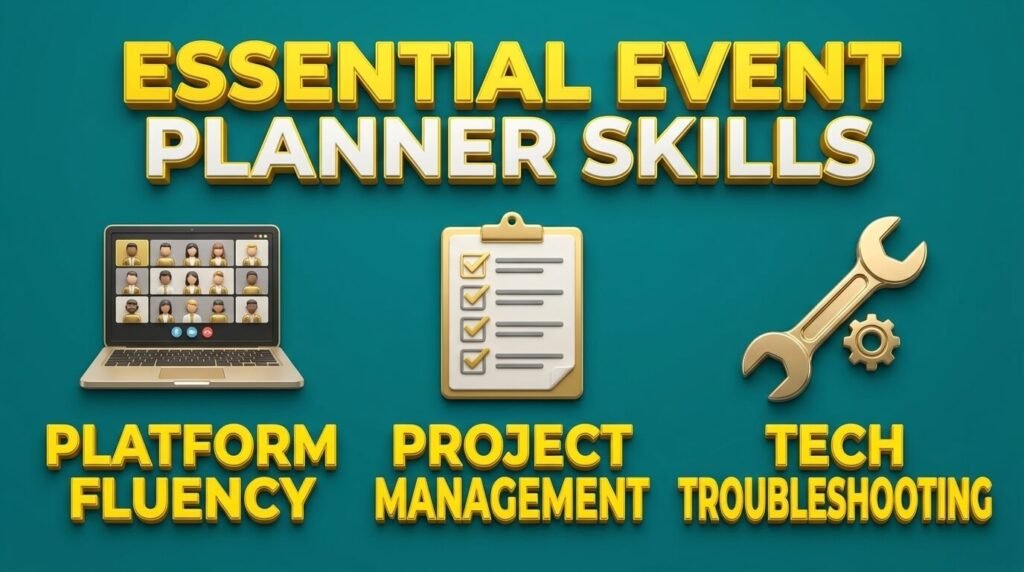
Employers now want a mix of tech skills and people skills. Here’s the exact list hiring managers ask for most:
- Platform fluency: comfort with Zoom, Webex, and similar tools
- Project management: tracking tasks, deadlines, and vendor calls
- Basic tech troubleshooting: fixing audio, video, and connection issues fast
- Content coordination: managing speaker slides, videos, and run of show
- Attendee engagement: polls, chat moderation, breakout rooms
- Data reporting: pulling attendance and engagement numbers post-event
- Clear communication: writing emails, briefs, and event scripts fast
You do not need a coding background. You need patience, sharp organization, and calm nerves during live problems.
Tool for Virtual Event Planner Jobs
Every virtual event planner picks tools based on event size and budget. Here is a straight comparison of the tools most jobs require you to know.
| Tool Type | Best For | Strength | Limitation |
| Zoom Webinar/Events | Small to mid webinars | Easy setup, wide adoption | Limited branding on free tier |
| Webex Events | Corporate meetings | Strong security features | Steeper learning curve |
| Eventbrite | Registration and ticketing | Simple ticket sales flow | Not built for live hosting |
| RingCentral Events | Large virtual conferences | Rich engagement tools | Higher cost for small teams |
| Microsoft Teams | Internal company events | Already built into many offices | Fewer external attendee features |
No single tool wins every time. Most remote event planning careers list two or three platforms as required skills. Get hands-on practice with at least three before you apply.
How to Find Virtual Event Planner Jobs in 2026
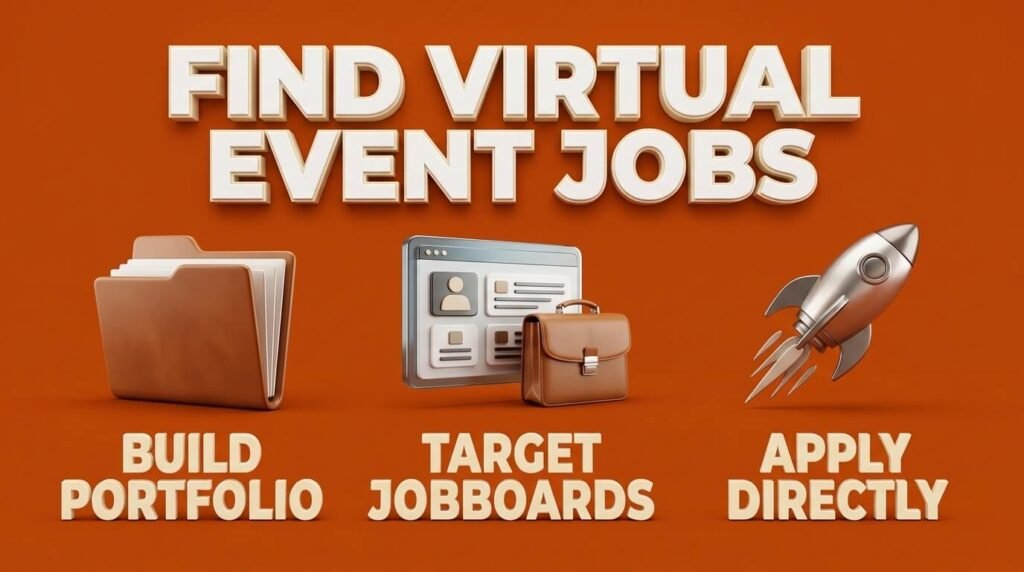
Job boards changed a lot this year. Search engines now favor direct, fast answers over long lists. Here is the current best path to land a role.
Step 1: Build a Portfolio First
Clients and employers want proof. Run one free or low-cost event for a nonprofit or small business. Record the setup process. Save the attendance report. This becomes your proof of skill.
Step 2: Target the Right Job Boards
Most open online event coordination jobs post on:
- ZipRecruiter
- Indeed
- LinkedIn Jobs
- FlexJobs (for remote-focused roles)
- Company career pages directly
Step 3: Match Your Resume to the Exact Job Title
Hiring software scans resumes for exact phrases. If the post says “virtual event coordinator,” use that same phrase in your resume. Small wording changes can block your application from human eyes.
Step 4: Apply to Agencies, Not Just Companies
Event marketing agencies hire virtual event planners on contract for multiple clients at once. This gives you steady work without one single employer.
Certifications That Boost Your Chances
Certification is not required for most of this career path. But it helps you stand out fast. The two most requested credentials in 2026 job posts are:
- Certified Meeting Professional (CMP): shows broad event management skill
- Digital Event Strategist (DES): focused directly on virtual and hybrid events
Both take months to finish, but they add weight to your resume when clients compare candidates with similar experience.
A Client Story That Changed My Approach
One client hired me for a three-day virtual training event. Halfway through day one, a speaker’s internet dropped mid-session.
I had a backup recording ready from our rehearsal. I played it while the speaker reconnected. Nobody in the audience noticed the switch.
That moment taught me the single biggest rule in virtual event roles. Always record a backup version of every live segment. Tech fails. Backups save the show.
Common Problems in Virtual Event Planner Jobs and Fast Fixes
| Problem | Fast Fix |
| Low attendee engagement | Add polls every 10 minutes |
| Speaker tech failure | Keep a recorded backup ready |
| Registration confusion | Send a reminder email 1 hour before |
| Time zone mixups | List times in three major U.S. zones |
| Platform crashes mid-event | Have a second platform link on standby |
Clients judge your value by how fast you fix problems, not by how few problems happen. Every virtual event has some hiccup. Your job is a quiet fix, not a public scramble.
Freelance vs Full Time Virtual Event Planner Jobs
Both paths work well in 2026. Pick based on your income goals and schedule needs.
| Factor | Freelance | Full Time |
| Income stability | Varies by project flow | Fixed paycheck |
| Schedule control | High | Lower, set by employer |
| Client variety | Wide, multiple industries | Single company focus |
| Benefits | None unless self-funded | Health, retirement, paid leave |
| Best for | Experienced planners | Career starters |
Many planners start full-time to build skill, then shift to freelance once they have a strong client list.
A Freelance Client I Almost Lost
I once quoted a client too low for a five-day virtual expo. Halfway through planning, I realized the scope needed twice my quoted hours.
I called the client, explained the gap clearly, and offered a fair price update. They agreed without pushback.
The lesson here applies to anyone chasing remote event planning careers on a freelance basis.
Price your first quote based on full scope, not a guess at hours. Ask detailed questions before you send any number.
What Employers Search For in 2026 Job Posts
Job posts this year lean heavily on a few repeated phrases. If your resume and cover letter match these terms, you pass automated screening faster:
- “hybrid and virtual event experience”
- “platform management”
- “attendee engagement strategy”
- “cross-functional coordination”
- “remote team communication”
Match these terms honestly. Do not stuff your resume with words you cannot back up in an interview.
Why Virtual Event Planner Jobs Are Growing Fast in 2026
The event planning field keeps growing steadily. The U.S. Bureau of Labor Statistics projects 5% job growth for meeting, convention, and event planners between 2024 and 2034. That beats the average growth rate for all jobs in the country.
Recent hiring data also shows the average virtual event planner salary sits above $63,000 a year across the USA, with top earners crossing $84,000.
Workforce numbers back this up too. Data USA workforce figures show the field grew from about 104,000 workers in 2014 to over 145,000 in 2024.
Here are the numbers that matter most for anyone chasing Virtual event planning careers this year:
| Metric | 2026 Figure |
| Total jobs held (2024) | 155,800 |
| Yearly job openings | 15,500 |
| Projected growth (2024-2034) | 5% |
| Average U.S. salary | $63,335/year |
| Top 10% earners | $84,000+/year |
| Women in the field | 76.9% |
These figures show a field with steady demand and room for growth. Companies still run remote and hybrid events.
That keeps virtual event work open across almost every industry, from tech to healthcare to finance.
Final Thought
Virtual event planner jobs keep growing because companies need steady, low-cost ways to connect with remote teams and customers.
The pay sits fair, the entry path stays open to newcomers, and the skill set focuses on tools you can pick up fast with practice.
Run one practice event. Get comfortable with two or three major platforms.
Apply with exact matching job titles. Track your wins in a simple portfolio. That path leads straight into steady virtual event planner jobs, whether you go freelance or full-time.
The field rewards calm problem-solving over perfection. Every glitch you fix quietly builds your reputation. Stay ready, stay organized, and the work keeps coming.
FAQ
What is the difference between a virtual event planner and an event coordinator?
A planner handles strategy, budget, and client goals. A coordinator handles the daily logistics under that plan. Many small businesses combine both roles into one job title.
Do I need a business license to freelance as a virtual event planner?
Rules vary by state. Most freelancers register as a sole proprietor or LLC. Check your local city and state requirements before you sign your first client contract.
How do virtual event planners handle different time zones with international clients?
Use a shared scheduling tool that shows every guest’s local time. Confirm the event time in writing with each client before you send invites.
What should go in a virtual event planner contract?
Include payment terms, cancellation policy, scope of work, and a clause covering tech failures outside your control. This protects both you and the client.
How many clients can one virtual event planner handle at once?
This depends on event size. Small webinars allow you to juggle three or four projects weekly. Large conferences often need your full focus on one client at a time.
Do virtual event planners need liability insurance?
Many freelancers carry general liability coverage. It protects you if a client claims financial loss from a technical error during a paid event.
What is the busiest season for virtual event planning work?
Corporate training events spike in January and September. Conference season often peaks between March and June, based on fiscal year planning cycles.
Can virtual event planners specialize in one industry?
Yes. Some focus only on tech product launches. Others build a niche in nonprofit fundraising events or healthcare training sessions. Specializing often leads to higher rates.
How do I price my first few virtual event planning projects?
Base your quote on total hours, platform costs, and rehearsal time. Avoid flat rates until you track your actual hours across two or three completed events.
What tools help manage client communication during event planning?
Shared project boards, a shared calendar, and one main messaging channel keep client updates organized. This avoids missed details across email threads.
Should I offer package deals or hourly rates to clients?
Packages work well for repeat services like monthly webinars. Hourly rates fit one-time or unpredictable projects better, especially early in your career.
How do I get referrals after my first successful virtual event?
Ask the client directly within a week of the event, while their satisfaction is fresh. A short testimonial request often gets a quick, warm response.

Aliza Khatun is a Digital Marketing Professional and the founder of DigiGenHub. She has helped various businesses grow their online presence through real-world experience in marketing, branding, traffic growth, and business strategy.
Through DigiGenHub, she shows how to build and grow a business from the ground up using Website Setup, SEO, Branding, Paid Promotion, and smart digital tools.
She also highlights how AI can be used to its full potential to make content creation, automation, marketing, and business growth faster and smarter.
She believes that the right knowledge, modern technology, and the right tools can help any individual or business build a stronger online presence.