

The digital product market looks very different today. A digital product business for sale offers more than monthly passive income.
The system is lucrative because you do not require physical inventory, warehouse space, or supply chain logistics.
Today, savvy founders build with an exit in mind. They design highly structured, liquid, and transferable business assets built for premium corporate acquisitions.
Many founders spend years building their storefronts. Later, they decide to sell and move on. Buyers look for businesses that already have revenue, customers, and traffic. This helps them avoid starting from zero.
If you plan to sell your digital product business, you need to understand how digital M&A works. In this guide, I will walk through each step of the process.
Digital Product Business for Sale
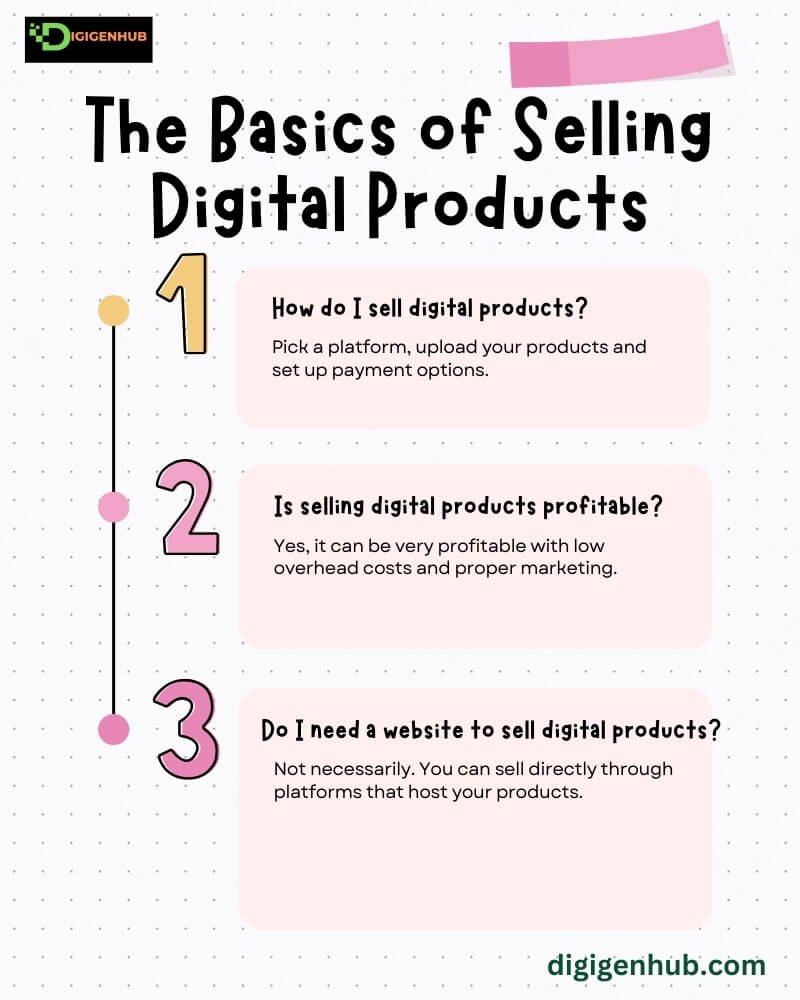
Selling digital products online is a popular and profitable business model. You can create your products or buy them to resell through platforms.
To sell digital goods, choose the right platform for your product, such as Shopify, BigCommerce, or WooCommerce. Many entrepreneurs sell through their own websites or specialized marketplaces.
The Digital Product Business Asset Class
A digital product business sells products online. These products are digital, not physical. Customers can download them or access them online.
There is no inventory to store or ship. Everything is delivered through the internet, often within seconds of purchase.
Core Business Models and Assets
Let’s introduce the core business models to sell:
Online Courses and Learning Management Systems (LMS)
This category includes video courses, online tests, and cohort-based programs.
When you sell the business, the buyer gets the video content, student list, and community channels.
Many of these systems run on Teachable, Thinkific, or Kajabi.
Digital Design and Operational Templates
This includes custom workspaces built for platforms like Notion, Canva, Figma, or PowerPoint. Sellers transfer master templates, customer email lists, and commercial rights.
Micro-SaaS and Automated Software Utilities
This model covers web applications, custom Google Chrome extensions, and automation scripts.
Sellers transfer all source code to the new owner. They hand over complete GitHub repositories and transfer control of the underlying software infrastructure.
Premium Membership Sites and Private Communities
It contains paid forums, resource centers, and group coaching platforms. Sellers move recurring subscription bases and content networks.
Stock Media Assets and Creative Add-ons
Specialized fonts, graphic icon packs, custom photo presets, and video LUTs are in this category. Sellers transfer copyright catalogs and distribution networks.
Informational Ebooks and Premium PDF Bundles
This includes financial toolkits, fitness playbooks, and self-help training manuals. Sellers transfer complete text files and distribution rights.
How to Sell Your Digital Product Business Safely
Selling a business requires a clear process. Following these steps helps protect your intellectual property, secures your payout, and keeps your transaction on track.
The workflow matrix below outlines the systematic journey your business takes from asset valuation through final closing escrow verification:
| Step Number | Phase Name | Execution Priority |
| Step 1 | Baseline Appraisal | Establish your target price bracket via historical platform calculators |
| Step 2 | Channel Selection | Choose between high-volume self-serve directories or full managed brokerages |
| Step 3 | Data Room Prep | Compile clear financial books and asset lists into private cloud storage vaults |
| Step 4 | API Verification | Connect your live Stripe and Google Analytics dashboards directly to the broker |
| Step 5 | Buyer Screening | Enforce verification checks and require signed legal NDAs before sharing blueprints |
| Step 6 | Escrow Settlement | Verify buyer capital deposits are fully cleared into institutional escrow vaults |
| Step 7 | Asset Handover | Execute a 2-4 week technical transition support plan to transfer all admin accounts |
Step 1: Run an Accurate Baseline Valuation
Set a realistic price based on your business performance. Use tools like the Flippa Valuation Tool or the Empire Flippers calculator to estimate its value. A fair price attracts serious buyers. It also helps your listing gain attention faster.
Step 2: Select Your Acquisition Channel
Choose a platform that fits your business size. For a small store and a faster sale, Flippa or Microns can be a good fit.
For a larger business with established systems, Empire Flippers or Acquire.com can handle much of the sales process for you. Their teams help manage buyer communication, screening, and negotiations.
Step 3: Assemble Your Secure Data Room
Create a private folder in Google Drive or Dropbox. Keep all important business documents in one place.
Include your profit and loss statements, traffic reports, contracts, and asset list. Organize everything clearly. Keep the folder private. Share access only after you verify the buyer’s identity.
Step 4: Connect Live Verified Data API Streams
Do not rely on dashboard screenshots. Connect your payment and traffic tools directly to your listing when possible.
Many platforms support secure API connections. Buyers can review real data right away. This builds trust and makes the review process faster.
Step 5: Screen Buyers and Require an NDA
Protect your work from copycats. Do not share download files, master templates, or source code in early chats.
Keep sensitive assets private at the start. Only share them after the platform verifies buyer funds. Make sure both sides sign an NDA first.
Step 6: Process the Payout Through a Secure Escrow Service
Do not accept direct wire transfers or personal checks before you transfer your business. This is risky.
Always use a trusted escrow service. Use platforms like Escrow.com or the broker’s built-in escrow system.
The transaction table below shows how funds stay safe during the deal process.
| Phase Step | Action Taken by Seller | Role Played by Escrow Platform | Action Taken by Buyer |
| 1. Capital Deposit | Prepares hosting and accounts for a clean transfer | Securely holds and verifies incoming purchase funds | Deposits the agreed purchase price into the vault |
| 2. Asset Release | Hands over administrative login keys and domain controls | Keeps funds locked until the buyer completes an audit | Downloads and tests the system setup to verify parameters |
| 3. Final Clearance | Receives the full cash payout directly in their bank account | Releases the verified cash directly to the seller’s profile | Confirms the completed transfer of ownership to the broker |
Step 7: Manage the Asset Handover and Transition Phase
Plan a structured support period of 2 to 4 weeks to help the new owner step in. Walk them through your product update routines.
Hand over ownership of your help desks, and introduce them to any freelance contractors. A smooth transition ensures a successful deal and prevents post-sale disputes.
Common Mistakes That Will Ruin Your Deal
Many founders make simple, avoidable mistakes that derail their sales right at the finish line. Watch out for these common deal killers:
- Overpricing Based on Emotion: Pricing your store based on the time you spent building it, rather than your actual trailing net profits, will leave your listing stuck on the market.
- Hiding Messy Analytics: Trying to cover up traffic drops or hiding a surge in product refunds will destroy your credibility during deep-dive reviews.
- Strong Personal Brand Dependency: If your marketing rely completely on your personal image, name, or social media profile, buyers will pull out. The business must be able to run independently under a neutral brand.
- Relying on a Single Traffic Source: If all your traffic comes from one specific social media account or a single Google keyword, your business is exposed to algorithm changes. Diversify your traffic channels early.
- Skipping Escrow Protection: Trying to avoid minor broker fees by moving your transaction off-platform exposes you to severe financial fraud. Always keep your money protected inside an escrow vault.
- Bad Selling Timing: Listing your storefront for sale during a major seasonal drop in revenue makes buyers nervous. Wait and launch your listing during a period of steady or growing sales.
The Digital Product Seller’s Tool Stack
To execute a clean, professional sale, you should use the right tools to run, track, and transfer your digital assets:
Hosted Storefronts and Checkouts
- Gumroad: Excellent for simple, low-friction digital downloads and template sales.
- Lemon Squeezy: A clean merchant solution that automates global tax compliance and handles software subscription models perfectly.
- Payhip: A streamlined platform for selling ebooks, design assets, and direct download bundles.
Course Platforms and Learning Management Systems
- Teachable: A popular platform for building, hosting, and managing video courses.
- Thinkific: A reliable, scalable learning management system built for independent education brands.
- Kajabi: An all-in-one platform that combines course hosting, memberships, and marketing pipelines.
Owned Audience and Email Marketing Platforms
- Kit: (Formerly ConvertKit). A powerful email tool built for creators to manage automation sequences and segment audiences.
- beehiiv: An elite newsletter platform optimized for driving audience growth and monetization.
- MailerLite: A clean, simple email marketing platform featuring intuitive drag-and-drop builders.
Verified Traffic Monitoring and Analytics
- Google Analytics 4: The global standard for tracking web traffic sources and user behavior.
- Plausible: A clean, lightweight, privacy-focused dashboard alternative to Google Analytics.
- Fathom: A streamlined, simple analytics option that keeps data collection fast and compliant.
Legal, Structure, and Financial Settlement
- Escrow.com: The gold standard portal for safely managing large financial payouts during online business handovers.
- Clerky: An elite software setup for managing corporate legal documents and asset purchase agreements cleanly.
- Stripe Atlas: A streamlined service for formal corporate formation and establishing clean bank account registries.
The Operational Architecture
Digital product storefronts use hosted checkouts and automated delivery loops.
Platforms like Gumroad, Lemon Squeezy, and Payhip handle currency conversions and sales taxes automatically.
When a customer buys an item, cloud servers send the download link right away. This structure eliminates fulfillment costs.
It allows a single founder to manage an operation that generates thousands of dollars each month.
It makes a digital product business for sale an incredibly attractive option for buyers.
Why the Digital Product Seller’s Market is Exploding
The market for buying and selling digital product businesses is growing fast. Many buyers are moving away from dropshipping and physical e-commerce.
Shipping costs continue to change, and profit margins are often lower. Digital products offer a different path. They have lower operating costs and higher profit potential.
The market has also changed over time. What started as a creator-driven space has become a serious investment category.
Today, individual buyers, business operators, and investment firms actively acquire digital product businesses. The table below shows how this shift has taken place.
Digital Asset Market: Past vs. Present
| Feature | The Early Creator Economy Era | The Modern 2026 M&A Asset Class |
| Financial Proof | Unverified dashboard screenshots | Direct API verification keys (Stripe/PayPal) |
| Operational Structure | Heavy single-founder dependencies | Automated operator handovers with full SOPs |
| Traffic Foundations | Volatile, ad-driven single channels | Diversified omnichannel organic traffic networks |
| Buyer Profiles | Casual solo hobbyists | Institutional private equity funds & investors |
Market Metrics and Indicators
- $157 Billion Industry Valuation: The global digital goods market has grown exponentially. It is on a strict trajectory to reach $511 Billion by 2031.
- 70% Surge in Transactions: The number of successfully closed digital business sales has jumped 70% over the last four years.
- The 26.6% CAGR Advantage: Massive industry growth means buyers aggressively compete for quality listings. This leads to faster closing times and better deal terms for sellers.
- Subscription Stickiness: Over 68% of digital consumers maintain active monthly payments for digital content or software access.
The core appeal lies in the financial efficiency. Physical brands struggle with inventory costs, raw material inflation, and supplier issues.
A digital product business avoids these issues entirely. It generates pure cash flow while the founder sleeps.
Simple operations attract more buyers. Many investors search acquisition platforms every day for digital product businesses.
They want businesses that already work. They have the funds ready. They prefer buying proven systems instead of building everything from the ground up.
Marcus’s Story: $53,000 Notion Exit
Marcus built a specialized Notion template shop for small business owners. He spent eight months growing it.
He focused on organic traffic and optimized his landing pages. The business reached $1,400 per month in passive, high-margin revenue.
When his daughter was born, Marcus wanted to pivot his attention to his family. He listed his business on Flippa.
Within just 12 days, his clear tracking data sparked a bidding war among 6 serious buyers.
He closed his exit at a 3.2× annual net multiple, netting him just over $53,000. Marcus noted that his biggest hurdle was pricing. He almost undervalued his business at the start because he did not realize how hungry buyers were for verified digital assets.
High-Demand Digital Product Categories
Not all digital products carry the same weight in the M&A market. Some niches move faster because they scale cleanly. Others fetch higher multiples because they have deep technical barriers to entry.
The table below breaks down what corporate buyers look for right now:
| Business Type | Examples & Sub-niches | Avg. Price Range (USD) | Market Demand Level |
| Online Courses | Technical skills, software tutorials, corporate development | $5,000 – $500,000+ | Very High |
| Template Shops | Notion setups, Canva bundles, Figma designs, presentation kits | $2,000 – $80,000 | Very High |
| SaaS / Software | Micro-SaaS utilities, Chrome extensions, workflow automations | $10,000 – $5,000,000+ | Very High |
| Membership Sites | Private job networks, resource libraries, masterminds | $8,000 – $300,000 | High |
| Digital Coaching | Cohort programs, automated accountability systems | $10,000 – $400,000 | High |
| Stock Assets | Custom typography, UI icon packs, photo presets, video LUTs | $3,000 – $100,000 | Medium-High |
| eBook / PDF Packs | Budget spreadsheets, fitness planners, technical guides | $1,000 – $30,000 | Medium |
| AI Prompt Packs | ChatGPT workflow sheets, Midjourney style matrices | $500 – $15,000 | Rising Fast |
Online education remains incredibly dominant. It represents an independent $200 billion global market.
At the same time, template ecosystems are growing rapidly. Stores built on platforms like Etsy and Gumroad show fast year-over-year gains.
AI-focused products are one of the fastest-growing categories in the market.
This includes prompt libraries, custom GPT frameworks, and content generation scripts.
More buyers are looking for these assets. As a result, AI-based digital businesses are appearing on acquisition platforms more often.
How Market Multiples Are Calculated
How much is your business actually worth? This is the first question every single founder asks before an exit.
Digital valuations do not rely on guesswork. They depend on clear, trailing financial data.
The baseline evaluation formula is:
Final Sale Price = Monthly Net Profit × The Marketplace Multiple
Real-World Calculation
Your digital asset clears a steady $2,000 per month in net profit. The brokerage platform applies a standard baseline monthly multiple of 30×. Your valuation sits securely at $60,000.
Enterprise Multiple Brackets
Valuation multiples scale upward automatically based on the size, age, and stability of your revenue:
| Enterprise Size | Annual Net Profit Range | Typical Annual Multiple | Estimated Sale Price (USD) |
| Micro Tier | Under $10,000 / year | 1.5× – 2.5× | $5,000 – $25,000 |
| Small Tier | $10,000 – $50,000 / year | 2.5× – 3.5× | $25,000 – $175,000 |
| Mid-Size Tier | $50,000 – $250,000 / year | 3× – 4.5× | $150,000 – $1,100,000 |
| Established Tier | $250,000 – $1,000,000 / year | 4× – 6× | $1,000,000 – $6,000,000 |
Core Premium Valuation Drivers
Buyers do not just look at top-line revenue. Let’s see how specific operational choices heavily impact your final marketplace multiple:
| Valuation Metric | Attributes of Low-Multiple Models (1.5× – 2.5×) | Attributes of High-Multiple Models (4.0× – 6.0×) |
| Traffic Source | 100% dependent on volatile paid ads or single accounts | 100% stable organic search engine SEO & owned list |
| Revenue Style | Volatile, unpredictable one-time product drops | Predictable, automatic recurring monthly subscriptions |
| System Standard | Kept in the owner’s head with no documentation | Exhaustive written master SOPs and system logs |
| Asset Age | Brand new under six months of operating history | Verified, consistent performance tracking for 24+ months |
- True Recurring Revenue Streams: Monthly subscriptions and recurring memberships are more valuable than one-time product launches. Buyers prefer steady and predictable income.
- Diversified Traffic Portfolios: Strong businesses get traffic from multiple sources. Organic Google traffic and an email list add stability. If all customers come from one social media account or one ad channel, buyers will see more risk and offer less.
- Extremely High Net Margins: Keep operating costs low. Digital businesses with net margins between 50% and 80% often receive higher valuations.
- Founder Freedom and Autonomy: Buyers want a business that can run without the founder. If sales depend on your face, voice, or daily involvement, selling becomes harder. Clear SOPs help new owners take over and keep the business running smoothly.
M&A Brokerage Review: Where to List Your Store
Choosing the wrong marketplace can ruin your sale. It can cost you thousands in hidden commissions, tie you up in bad contracts, or expose your ideas to copycats. Not all business sale platforms work the same way. Choose a platform that matches your business size, value, and goals.
Best Platforms to Sell a Digital Business
| Platform | Best Positioned For | Target Valuation Range | Seller Success Fees | Audit & Vetting Rigor | Total Buyer Network |
| Flippa | High visibility, rapid sales, all business sizes | $500 – $5,000,000+ | 4% – 10% + listing fee | Medium (Self-driven validation) | 600,000+ Profiles |
| Empire Flippers | Managed sales for established brands | $20,000 – $20,000,000 | 2% – 15% (Sliding scale) | High (Vetted by data analysts) | Verified Funds |
| Acquire.com | SaaS, extensions, apps, tech platforms | $10,000 – $5,000,000 | ~5% Performance fee | High (Private portfolio models) | Strategic Funds |
| Microns | Small software tools and tiny side projects | $500 – $500,000 | Flat subscription or % | High (Tailored to micro-assets) | Solo Operators |
| FE International | Large corporate SaaS and enterprise content sites | $100,000 – $100,000,000+ | 5% – 15% Performance | Full Broker M&A Representation | PE Firms |
Real Story: Priya’s Multi-Offer Etsy Exit
Priya ran a highly optimized Canva branding template kit store anchored on Etsy. She cleared roughly $2,800 per month in net cash flow.
She wanted to sell her business to fund a brand new physical DTC concept.
Priya initially listed her store on unvetted public forums. She was immediately overwhelmed by lowball automated bot offers and scammers asking for free files.
She pulled her listing down and spent three weeks cleanly organizing her financial and operational documentation. She then listed the business through Empire Flippers.
Backed by real data and a managed platform, her store closed its sale at a 3.8× annual net multiple, netting her a $127,000 lump sum payment. The entire transaction moved through a secure escrow framework and wrapped up in less than two weeks.
Pre-Sale Optimization: Pump The Business Value
Do not rush to list your business the moment you decide to sell. If you spend 90 days optimizing your operational and financial structures, you can increase your final exit price by 20% to 40%.
The playbook table below outlines your core benchmarks to prepare your business for a high-multiple exit:
| Phase Timeline | Core Focus Area | Core Operational Deliverables |
| Days 1 – 30 | Financial Cleansing | Extract personal software costs; move tracking onto dedicated P&Ls |
| Days 31 – 60 | Audience Ownership | Migrate casual social followers onto owned beehiiv or Kit list servers |
| Days 61 – 90 | System Playbooks | Record technical Loom walk-through videos; compile written master SOPs |
Step 1: Standardize Your Operating System (Write Your SOPs)
A buyer wants an investment, not a new full-time job. You need to remove yourself from the day-to-day work. Create a clear master document that details every task required to keep the storefront running.
- Record step-by-step videos showing how you update files, fulfill custom requests, or handle customer questions.
- Detail your monthly software costs so there are no surprises during data reviews.
- Outsource routine customer service emails to an assistant or set up automated support sequences.
Step 2: Build and Clean Your Financial Statements
Buyers will walk away if your financial records are messy. You must separate your personal bank accounts from your business logs.
- Build clean, dedicated Profit and Loss (P&L) sheets for the last 12 to 24 months.
- Eliminate personal expenses, unrelated travel costs, or personal software tools from your corporate balance sheets.
- Keep clean, downloadable invoice records from all your main software tools and contract helpers.
Step 3: Secure Your Audience and Move Followers to Owned Channels
Relying entirely on social media algorithms makes a business risky. If a platform drops your organic reach, your revenue can plummet overnight.
- Move casual social media followers into an owned email newsletter using platforms like Kit (formerly ConvertKit), beehiiv, or MailerLite.
- Clean your email lists regularly to show high open rates and strong click-through metrics.
- Prove that you can drive sales directly through email broadcasts without buying expensive paid ads.
Step 4: Maximize Your Customer Retention Metrics
Repeat buyers prove that your digital products have real value. This metric builds massive confidence for prospective investors.
- Set up automated follow-up sequences to offer complementary products to past buyers.
- Introduce a small subscription tier or a premium membership option to build a base of recurring revenue.
- Aim for a 25%+ customer repeat purchase rate. Reaching this milestone allows your listing to command a premium multiple.
The Ultimate Due Diligence Checklist for Sellers
When an investor makes an offer on your digital product business for sale, they will launch a deep dive into your records.
This is called due diligence. If they uncover unverified metrics or mismatched balances, the deal will fall apart instantly.
You should run through this complete verification checklist before publishing your listing:
Financial Ledger Integrity
- Export 12 to 24 months of raw, unedited processing logs directly from your payment gateways (such as Stripe, PayPal, Lemon Squeezy, or Payhip).
- Match every gateway export with your official business bank account statements to prove your deposits match perfectly.
- Build a clear chart breaking down your exact monthly profit margins after platform processing fees.
- Isolate and explain any unusual spikes in income, such as a major one-time holiday bundle promotion.
Traffic and Audience Auditing
- Set up clean “Read-Only” analyst access keys inside your tracking dashboards, whether you use Google Analytics 4 (GA4), Plausible, or Fathom.
- Prove your traffic is stable by showing that your visitors come from organic search engine keywords and direct links, rather than temporary paid ads.
- Export your email provider health reports to verify your total active subscriber counts, opening averages, and daily click rates.
- Verify that your tracking tags have been placed correctly on all your download pages for at least six months.
Product IP and Legal Governance
- Collect formal signed releases from any freelance designers or developers who helped build your digital assets.
- Confirm that all product fonts, graphics, and stock files carry commercial usage licenses that transfer fully to a new owner.
- Audit your merchant accounts to prove your store maintains a low chargeback and refund rate (ideally under 1% to 2%).
- Pull official records showing that your domains, social media handles, and hosting accounts are registered under clean business profiles that you control.
Conclusion
Your hard work is about to pay off. Selling your digital product business marks the beginning of your next big chapter.
You built a validated asset from scratch. Now, you can step away with a significant lump-sum payout.
The market has never been more ready for your exit. Clean books, solid operating procedures, and automated traffic channels will bring serious investors to your door.
Trust your data and use secure escrow platforms. You are ready to close a highly profitable deal.
Take your final step today. Check your metrics, list your storefront, and claim the rewards of your entrepreneurial journey. Your successful exit is officially within reach.
Frequently Asked Questions
Can I sell my digital product business if it generates low monthly revenue?
Yes, you can sell a digital product business with low monthly revenue. You do not need a large company to exit.
Small marketplaces like Microns and Flippa often list these businesses. Some sell for around $200 to $500 per month in revenue.
Many solo buyers look for small, working businesses. They want something simple they can buy and grow over time.
How long does the sales process take from listing to payout?
The sales time depends on your business and the platform.
If your records are clean and tools like Stripe and GA4 are connected on Flippa, you can get an offer fast. Some deals close in about two weeks.
For managed platforms like Empire Flippers, it usually takes 30 to 90 days.
Large enterprise deals take longer. They need deeper checks and legal work. These can take 3 to 6 months to complete.
How do I protect my digital assets and source code from being copied during a listing?
Do not upload your raw product files. Do not share master templates or internal playbooks on your public listing.
Keep your listing simple. Show only high-level revenue, traffic trends, and basic niche details.
Share full details in private chats only. Do this after the platform verifies the buyer. Make sure both sides sign an NDA first.
Do I have to pay taxes on the lump-sum cash payout from my exit?
Yes, you usually have to pay taxes on a business sale payout.
Most exits fall under capital gains tax. This is often lower than regular income tax.
Tax rules depend on your country and business setup.
Talk to a CPA or tax lawyer before you sign anything. They can guide you on the final numbers.

Aliza Khatun is a Digital Marketing Professional and the founder of DigiGenHub. She has helped various businesses grow their online presence through real-world experience in marketing, branding, traffic growth, and business strategy.
Through DigiGenHub, she shows how to build and grow a business from the ground up using Website Setup, SEO, Branding, Paid Promotion, and smart digital tools.
She also highlights how AI can be used to its full potential to make content creation, automation, marketing, and business growth faster and smarter.
She believes that the right knowledge, modern technology, and the right tools can help any individual or business build a stronger online presence.