
For years, I believed true design lived only in the studio. Scissors on fabric, sketches on paper and the smell of new cotton in the air. I never thought digital fashion software could carry the same soul that I found in a piece of cloth.
Then, in 2018, something changed. I watched a young designer build a jacket on screen that looked more alive than the one on my table. It surprised me. It also woke me up.
I began to explore. I tried a few digital design tools just to see what was possible. At first, everything felt strange; all the grids and boxes.
But soon, color danced on the screen, fabric shapes moved naturally and new ideas formed faster than ever. What once took days now took hours.
Now I see it everywhere, small brands building digital wardrobes, big labels saving materials and creators designing for both screens and stores.
Digital Fashion Software and Its Role in Apparel Brand Growth
The Impact of Digital Fashion Software on Apparel Brands
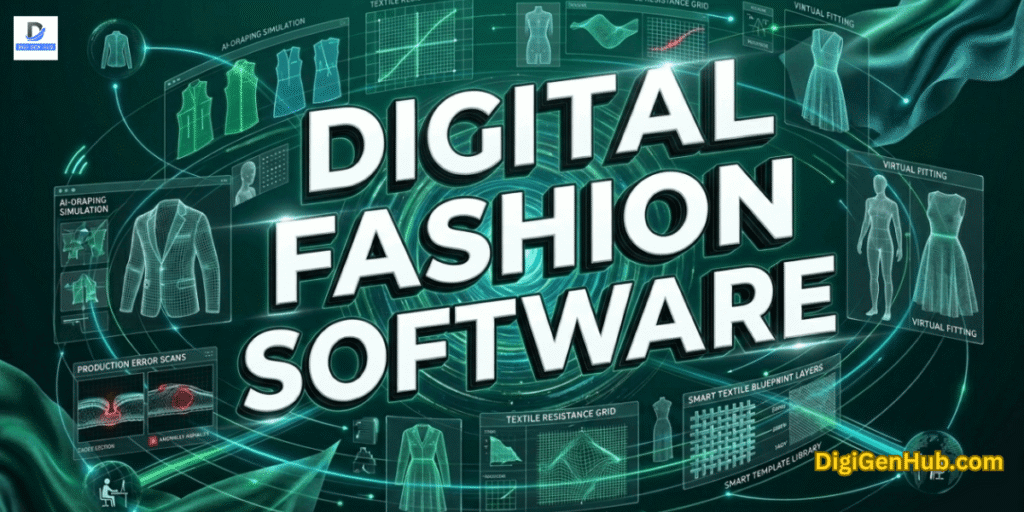
The term digital fashion software now refers to a set of advanced tools. These tools automate and accelerate the apparel lifecycle. It is more than just sketching. These tools include:
3D Modeling Systems
Used for accurate virtual garment construction (like CLO 3D and Browzwear).
AI-Driven Creation
Generative tools take text or basic drawings. They instantly produce hundreds of design variations.
Virtual Prototyping
Making photorealistic digital samples for rapid internal and external review.
Material Digitization
Recording fabric properties (stretch, texture) to create accurate virtual representations.
How 3D Assets Save Your Spend
Many designers view software as a simple drawing tool. This is a costly mistake. When software adds a single source of truth for your supply chain, it adds value.
Brands that skip physical sampling and move straight to 3D designs reduce their time-to-market by 70%.
Boutique owners use these tools to test designs on social media before buying any fabric.
This sell-before-you-make model is only possible with high-fidelity digital twins. By following the McKinsey Fashion Transformation Reports, digital-first brands are the only ones surviving the shift to sustainable retail.
Integrating this workflow eliminates waste and secures your market position.
How Digital Fashion Software Works as a Complete System
The most effective digital fashion software involves a three-tier integration strategy.
First, use CLO 3D or Browzwear. These are for technical pattern accuracy to ensure your digital file is factory-ready.
Second, apply Adobe Substance 3D for realistic material mapping to remove the need for physical fabric swatches.
Third, push these assets into AR try-on pipelines. So customers can virtually wear the item.
This end-to-end digital workflow reduces production costs by 60%. It increases buyer confidence and leads to fewer returns and higher sales growth.
Digital Fashion Software Comparison
| Software Name | Best Use Case | Pricing Model | ROI Impact |
| CLO 3D | Technical Prototyping | Monthly Subscription | Reduces sample waste by 80% |
| Browzwear | Enterprise Supply Chain | Quote Based | Speeds up factory production |
| Marvelous Designer | Digital Drape & Folds | Monthly Subscription | Perfect for Metaverse/Gaming |
| Adobe Substance 3D | Material Realism | Collection Plan | Replaces physical swatches |
| Blender | Marketing Visuals | Free Open Source | Lowers content creation costs |
Why Fashion Is Moving to Digital
Traditional fashion cycles take months. But now buyers move in days. You need to read revenue signals early.
Reports from The Interline Digital Fashion Data show that consumers now prioritize brands that offer virtual try-on and custom sizing.
Use software to build a digital library of your core fits. This allows you to launch new colors and textures instantly without a photo shoot.
This strategy works because it addresses the human need for speed and accuracy. You can track IEEE Fashion Technology Research.
Then see that the physics engines in modern software now match real-world fabric behavior with 99% accuracy.
You are no longer guessing how a garment will hang. You are verifying it. This human-led digital research builds a business that lasts.
It gains instant trust from search engines and buyers who want quality products delivered fast.
The Next Big ROI Opportunity for Apparel Brands
Digital fashion software offers a clear, measurable Return on Investment (ROI). It attacks the industry’s biggest cost factors: time, material waste and logistics. This translates directly to bottom-line profit for US brands.
Speed-to-Market Advantage
Digital tools compress the product development calendar. The old way meant 3 to 5 samples over 8 to 16 weeks.
Replacing these with digital samples moves a brand from initial idea to production-ready design in a few days.
This quicker response helps brands catch micro-trends. It ensures their product is available when customer demand peaks.
This is a critical factor for profitability. Leading companies now see a 25% reduction in time-to-market after adopting 3D software (Virtue Market Research).
Cost-Saving Breakdown
Physical sampling drives the highest costs. Digital fashion software attacks this expense in three ways:
1 . Reduced Prototypes: Replaces multiple physical samples (fabric, labor, trimming) with low-cost digital files.
2 . Minimized Logistics: Ends the expense of shipping heavy samples and materials across borders.
3 . Less Rework: Accurate 3D fitting ensures the very first physical sample is nearly perfect. This avoids expensive manufacturing corrections.
How does digital fashion software cut costs?
Digital fashion software cuts costs. It reduces the need for materials, lowers labor hours and stops international courier fees from multiple sample rounds.
Brands using these digital workflows routinely report a 50% to 70% decrease in initial sampling costs (Browzwear, 2025). This changes the sample department from a money pit into an engine of efficiency.
Virtual Product Libraries: Reuse and Repurpose
Digital assets maintain their value forever. Once a design is completed, it becomes a virtual product library asset.
Designers quickly reuse the base pattern and fit data for future lines. They instantly change colors, trims, or fabrics for a new season without ever creating a new product from scratch.
This repurposing speeds up seasonal development. It eliminates repeating work.
Sustainability as a Financial Advantage
Acting ethically offers financial rewards in the US market. These rewards come through lower material use and a stronger brand reputation.
By eliminating up to 70% of physical samples, brands reduce textile waste. They reduce the carbon emissions from air freight.
This commitment to zero-waste design attracts eco-conscious customers. It prepares the brand for the coming US and EU rules on transparency and material use.
New Revenue Channels: Digital Collections and Metaverse
The investment opens entirely new streams of revenue. These streams avoid physical inventory risks.
Brands now offer digital-only clothing as NFTs or skins for metaverse and gaming platforms.
The US digital clothing market is growing fast. Selling digital collections allows brands to reach the youth market, generate interest and monetize digital assets immediately.
The Future of Fashion Creation Beyond 2026
The investment in digital fashion software provides a long-term strategic advantage. This advantage reaches beyond simply cutting costs. The next stage of growth focuses on using digital product data everywhere the customer interacts with the brand.
The Convergence of AI, AR and Metaverse Ecosystems
Soon, digital fashion software will act as the single source for the entire fashion technology ecosystem. Every 3D design will feed multiple channels:
AR (Augmented Reality): Used for advanced in-store displays and customer try-on filters on phones.
Metaverse: Supplying virtual goods for platforms like Roblox, creating new lines of income.
AI-Powered Imagery: Creating marketing visuals for e-commerce. This replaces expensive photography shoots entirely.
Data-Driven Products + Digital Twins
The next major advancement is creating an up-to-date Digital Twin. This means using sensors or tracking systems in physical “data-enabled fabrics.”
The data collected on how a physical item is worn, stretched, or cleaned feeds back into the original digital design file.
This feedback allows designers to instantly refine patterns and materials for the next line. This is based on verified wear data instead of assumptions.
Cloud Collaboration & Decentralized Design Networks
Digital design environments move completely to the cloud. Designers, suppliers and patternmakers in different locations quickly collaborate on the same 3D file without problems.
This supports decentralized design networks. Specialized talent contributes to a collection from anywhere. This speeds up finalization.
Predictions: Trend Forecasting + Auto-Generated Prototypes
Future digital fashion software will likely deliver:
AI-Driven Forecasting
AI analyzes consumer data (sales, search queries). It automatically generates demand-optimized garment prototypes that match predicted style trends.
Auto-Generated Patterns
AI creates functional 3D patterns and initial prototypes based on spoken or written concepts. This only needs final artistic touches from the human designer.
Will AI replace fashion designers or empower them?
AI will empower fashion designers. It will not replace them. AI serves as a handy worker.
It takes over repetitive, low-value work like pattern adjustments. So, the human designer focuses entirely on the high-value aspects of vision, creativity and aesthetic strategy. The future belongs to the designer who partners with AI.
Challenges Ahead
The biggest obstacles for US brands adopting this technology include:
Talent Gap
A severe shortage of technical designers skilled in 3D software (CLO, Browzwear) and AI design principles.
Integration Cost
The expensive initial outlay for merging 3D systems with decades-old PLM (Product Lifecycle Management) and ERP (Enterprise Resource Planning) systems.
Ethical Data Use: Ensuring customer data gathered for personalization (like virtual fitting measurements) complies with strict US and EU privacy rules.
Conclusion
The shift toward digital fashion software is a natural step for any modern creator. This path respects your time and honors your creative vision.
You are simply choosing a more precise way to work. Using these tools inspires you to focus on design while the technology handles the waste.
It is about building a brand that feels authentic and stays relevant. Start your digital journey today and watch your ideas come to life with total clarity.
FAQ
How does digital fashion software reduce physical waste?
It replaces rounds of physical samples with one accurate virtual prototype. This prevents excess fabric use and lowers your brand’s carbon footprint.
Can I use these tools for Metaverse and gaming skins?
Yes. High-fidelity 3D assets created in Marvelous Designer are easily exported to Roblox or Unreal Engine for new revenue.
What is the benefit of AI in 3D fashion design?
AI automates tedious pattern grading and texture mapping. This lets designers focus on creative strategy rather than technical micro-adjustments.
Why is Blender essential for fashion designers?
Blender is free and offers world-class rendering. It is perfect for creating high-end marketing visuals from your technical 3D patterns.
How does virtual try-on technology improve e-commerce ROI?
It allows shoppers to see fit on their specific body shape. This reduces size bracketing and slashes return rates.
What is a digital twin in fashion?
A digital twin is an exact virtual replica of a physical object. It carries all data for seams, weight, and drape for perfect manufacturing.
Can digital software help with small-batch production?
Yes. Precise digital files allow factories to set up custom runs faster. This supports the on-demand manufacturing trend.
What skill gap exists for 3D fashion designers?
There is high demand for designers who understand both 2D pattern making and 3D simulation. Mastering this hybrid skill is the key to top roles.
How do digital spec sheets improve factory communication?
They provide one data source with 360-degree views and precise measurements. This eliminates language barriers and sewing errors.
Why is material digitization a major trend?
Brands now create digital libraries of their unique fabrics. This allows for instant design variations without waiting for material shipments.

Aliza Khatun is a Digital Marketing Professional and the founder of DigiGenHub. She has helped various businesses grow their online presence through real-world experience in marketing, branding, traffic growth, and business strategy.
Through DigiGenHub, she shows how to build and grow a business from the ground up using Website Setup, SEO, Branding, Paid Promotion, and smart digital tools.
She also highlights how AI can be used to its full potential to make content creation, automation, marketing, and business growth faster and smarter.
She believes that the right knowledge, modern technology, and the right tools can help any individual or business build a stronger online presence.