


You’re missing a massive opportunity if you’re ignorant about “how to use Facebook groups for marketing”. Business owners struggle to find the right audience because they aren’t influential with this powerful tool.
Still, after working with many clients, I can tell you precisely what works and what doesn’t. No more guessing, no more trial and error.
How to Use Facebook Groups for Marketing (Lessons I’ve Picked Up)
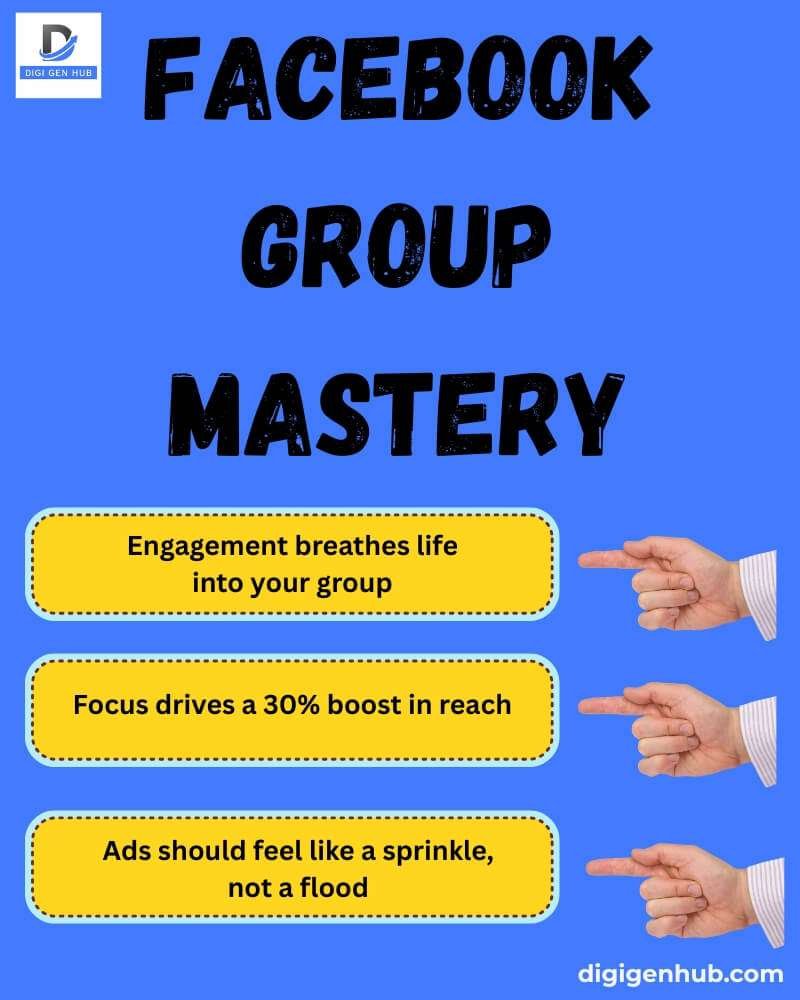
First, you’re wasting time if you’re just posting without a clear direction for any social media marketing. It’s like trying to drive without a map; you won’t get anywhere. Similarly, if your Facebook Group doesn’t have one, you’ll lose 40% of engagement.
Think of it like a party. No one will know where to go or what to expect if the theme’s unclear. That’s where how to use Facebook Groups for marketing comes in.
When your group has a clear purpose, like sharing helpful tips or offering specific advice, your reach can increase by 30%.
Now, let’s talk about engagement. Without it, your group will feel like a ghost town. A group without conversations is like a gym with no members.
But the magic happens when you get people talking, sharing tips, running polls, or asking questions.
Yet, I worked with a fitness brand that switched to regular Q&As with their members. Their group grew 40% in visibility in just a few months. That’s how you keep things alive.
When it comes to ads, think of them like a pinch of salt. Too much and they’ll ruin the vibe. Too little and no one notices. The secret? Make ads feel natural.
One of my clients, a small boutique, shared style tips and added a product post only after the engagement was there. Their sales jumped 15-25%.
So, if your Facebook Group isn’t focused, engaging and using smart ads, you’re leaving growth on the table. But when done right, you can raise audience participation by 30% and reach by 25%.
How to Build Your Facebook Group (The Right Foundation)

Using a Facebook Group isn’t just about creating a space for marketing. Indeed, it’s about crafting a community for your products. Think of it as planting a tree. You need the right soil, care and focus for it to grow. So, let’s learn how to lay that perfect foundation for your business:
What’s the best way to launch a Facebook Group that catches attention?
Define your group’s purpose. A group without a purpose is like a ship without a sail. People need to know why they should join. What will they get? What value does your group offer?
The more specific your niche, the more you’ll attract the right members. A niche group is like a VIP club. Members know they belong and feel special.
Skill needed: Content creation, targeted marketing, community building
Success Story: The “Female Entrepreneur Association” flourishes because it gives women the tools, connections and support to grow their businesses. This laser-focused approach on a specific audience is a winning strategy. Resources: Female Entrepreneur Association
How do you structure your group to appeal to your ideal audience?
Organize for engagement. Structure your group like a well-organized kitchen, everything in its place. Split the content into clear sections: “Resources,” “Discussions,” and “Weekly Tips.” Make it easy for members to navigate and find what they need.
Otherwise, a messy group is like a cluttered desk, discouraging participation. Meta’s AI tools will help organize things, but you must start with a solid structure.
Skills needed: Community management, content strategy and organizing information.
Real-life example: HubSpot’s community keeps things clean. They have dedicated spaces for discussions, learning and exclusive resources. This clear structure helps them grow and engage over 100k members. Resources: HubSpot Academy Community
Should you go public, private, or closed? What suits your business needs?
Choose public, private, or closed? Your group’s settings depend on your goal. Let’s learn how to do this:
Public Groups: Best for spreading brand awareness. Open to anyone. Perfect for viral content.
Private Groups: For more focused, loyal customers. You control who joins. These will have higher engagement due to Meta’s push for more privacy.
Closed Groups: A mix of public and private. Great for VIP experiences, where people feel they’re part of something exclusive.
Skill needed: Strategic thinking, understanding of privacy and audience engagement.
Yet, do not forget these objects:
Value is a must: Don’t just talk—deliver. Make sure your group brings something worthwhile.
Engagement > Numbers: A small but active group is more valuable than a huge, passive one.
Adapt to Change: Meta’s constantly evolving. Stay updated on new tools and features.
Foster Real Connections: Engage Your Community
Success depends on offering real value, making interactions fun and creating content that builds trust. Let’s explain how to keep your members returning and growing your brand naturally.
How do you spark conversations without being pushy or overly promotional?
Your group should feel like a friendly chat, not a sales pitch. Ask questions that make people think. Share stories and experiences, not just product plugs. Let them speak up and share their thoughts. Make it about them.
Try this: “What’s one tip that changed how you work?” Keep the conversation natural. No hard selling. Just create space for real talk.
Skill needed: Community engagement, conversational marketing.
Real-life example: “The Content Marketing Institute” thrives on discussions. They ask questions that spark honest, helpful conversations. It’s not about selling, it’s about learning together. Resources: Content Marketing Institute
What type of content keeps members coming back for more?
People crave content that speaks to them. Like a great book, it should offer something new, valuable and worth returning to. Mix things with helpful tips, behind-the-scenes peeks and stories that resonate.
Share content that solves problems. Posts should educate, entertain and inform. People want to feel like insiders, so give them exclusive content they can’t get anywhere else.
How do you involve members with fun activities like polls, feedback, or Q&As?
Set up regular polls, feedback threads and monthly Q&As. Make them short and simple. People love sharing their thoughts and feeling part of the conversation.
Skill needed: Event management, engagement strategy.
Real-life example: “DigitalMarketer” does weekly Q&As with industry experts. It’s an interactive way to keep the group buzzing with energy. Resources: DigitalMarketer
What kind of content builds trust and positions the brand as a valuable resource?
Share how-to guides, insider tips and free resources. Be transparent and show your brand’s story. When you solve problems, trust naturally follows.
Skill needed: Knowledge sharing, authenticity.
Real-life example: “The Digital Marketing Institute” shares up-to-date strategies. They give value with every post, building trust and credibility. Resources: Digital Marketing Institute
Facebook Group Strategy: Turning Engagement into Growth

Keep members interested, mix content types and make the group interactive. Let’s explain:
What are the best ways to keep members interested without overwhelming them?
Post consistently, but with variety. Keep it fresh, not spammy. Drop a meaningful post a few times a week. It’s about quality, not quantity.
Skill needed: Content timing, audience pacing.
Real-life example: “The Minimalists” share thoughtful posts at a steady pace. Their members appreciate the balance. Resources: The Minimalists
How do you mix different types of posts (informative, fun and promotional) to maintain balance?
Too much of one thing ruins the flavor. So, mix valuable info, fun content and just a sprinkle of promotion.
Stick to 70% value-driven posts (how-tos, tips), 20% light content (polls, memes) and 10% promotional. Keep it breezy, not salesy.
Skill needed: Content planning, community building.
Real-life example: “Social Media Examiner” mixes solid advice with light, engaging posts. This keeps their group active without pushing products too hard. Resources: Social Media Examiner
How do you create content for different audiences?
Use polls to find out what your members need. Then, split the content into targeted buckets. This personal touch builds deeper engagement.
Skill needed: Audience insight, content segmentation.
Real-life example: “Patreon” segments content by membership level. Higher-tier members get extra perks. It’s a smart way to keep people loyal. Resources: Patreon
How can you make your group more impactful with Meta’s approach?
Meta’s algorithm loves groups that prosper on interaction. The more members talk to each other, the bigger your reach. It’s like a conversation that keeps spreading.
So, encourage member-to-member conversations. Use Meta’s tools to track what’s working. Ask questions, host Q&As and let members lead the discussion.
Skill needed: Data tracking, group moderation and content interaction.
Real-life example: “The Healthy Gamer” uses Meta’s insights to adjust their strategy. They foster genuine conversations, which keep members engaged and growing. Resources: Healthy Gamer
Build Trust: How to Influence Without Selling Directly
Trust works as the glue that holds communities together. But how do you earn it without selling like a door-to-door salesman? Let’s discuss:
What’s the secret to gaining trust while still subtly showcasing your brand?
Give before you take. Don’t push your product; push knowledge and help. Think of it like being a mentor, not a seller. When you add value, your brand becomes trusted naturally.
Skills needed: Content creation, empathy, problem-solving.
Real-life example: “Marie Forleo” shares actionable advice without a hard sell. She builds trust and her audience listens when it’s time to promote. Resources: Marie Forleo
How do you position your business as a credible leader within the group?
Show your knowledge, share experiences and help without expecting anything. Over time, members see you as a reliable source of wisdom.
Be present. Offer helpful advice regularly and share success stories. Your credibility will grow because you’ve proven yourself reliable.
Why is open communication crucial for long-term relationships?
Communication is the foundation of trust. Without it, you’re just talking to an empty room. Open, honest conversations make members feel seen and heard.
Respond to comments, ask for feedback and encourage open dialogue. The more you communicate, the stronger the bond.
Skill needed: Active listening, responsiveness and clarity.
Real-life example: “Tesla” is known for its transparency with customers. They openly share updates and respond to feedback, which builds a loyal fan base. Resources: Tesla
Explore New Facebook Features: What’s Hot for Marketing
Facebook’s latest tools and AI features are shaking things up in to present products vigorously. Let’s learn how to use them to raise your group and marketing efforts.
How can Meta’s AI-powered tools elevate group management and engagement?
Meta’s AI is like a behind-the-scenes assistant. It learns from activity and helps you manage content without breaking a sweat.
So, use Meta’s AI to automate moderation and suggest trending content. Let the tools do the heavy lifting while you focus on growing your community.
What new tools can help you manage your group and content?
Group Insights and Content Scheduling are your new best friends. These tools let you schedule posts ahead of time, see what works and adjust on the fly. They make managing a group feel like a breeze.
Use Insights to track member activity. Schedule posts during peak times for maximum reach. With these tools, your content strategy practically runs itself.
How do you use smart content suggestions?
Meta’s algorithms are like a compass, pointing you toward what’s trending. They suggest the best topics and content to post. Regularly check the suggested content. The algorithm makes it easy to stay relevant.
Real-life example: BuzzFeed uses trend data to shape its articles, keeping its content fresh and timely. Resources: BuzzFeed
Paid Ads in Facebook Groups: How to Use Them Wisely

Paid ads can work wonders in Facebook groups. Still, you must handle it carefully. Let’s learn how to make them work for your business:
Are paid ads effective in Facebook Groups this year?
Yes. When used right, paid ads target specific groups, reaching the people who matter.
Target ads to niche audiences based on group interests. Ensure they feel part of the conversation, not a sales pitch.
Real-life example: “GoPro” runs ads for adventure enthusiasts. The ads feel natural because they match the group’s passion. Resources: GoPro Facebook
How can You Add Ads Naturally into Group Conversations?
Think of your ad as a guest at a party, not a loudspeaker. It should feel like a conversation, not a sales pitch.
Share value first—tips, insights, or stories. Then introduce your product or service. Make it feel like a natural extension of the conversation.
Real-life example: “Nike” introduces workout tips before mentioning their products, making the transition smooth. Resources: Nike Facebook
Turn Engagement into Earnings: Monetize Your Facebook Group

Monetizing a Facebook group is all about trust. Build relationships first, then offer value. Let’s explain how to turn your group into a revenue engine.
How do you sell to your community without annoying them?
Sell like a friend on any social media platform, not a salesman. It helps to increase sales. If you offer value, members will want your product. Don’t push—let it come naturally.
When you introduce your product, it should feel like a solution, not a pitch. Keep it light.
Real-life example: “Glossier” sells through relationships, not pushy ads. They focus on customer stories. Resources: Glossier
How can you promote products or services effectively in your group?
Share product demos and testimonials. Give exclusive deals to group members. It also works better for public relations which helps you authorize the present market.
Real-life example: “Canva” shares tips and tutorials, then mentions their product naturally. Resources: Canva
What’s the best approach to affiliate marketing without compromising trust?
Pick products that match your audience’s interests. Be honest about affiliate links.
Real-life example: “Pat Flynn” shares products he trusts, building credibility while earning commissions. Resources: Smart Passive Income
Measure Success: Track Group Performance
Track the correct numbers to develop your group’s growth. Let’s discuss:
What numbers should you focus on to track your group’s performance?
Track reactions, comments, shares and clicks. Aim for higher engagement rates. Measure how many take action—sign-ups, purchases.
Aim for at least a 5-10% engagement rate per post. If you’re getting more, you’re on track.
Resources: Facebook Group Insights
How does engagement relate to long-term business goals and revenue growth?
Focus on engaging posts. A 10% increase in engagement can lead to up to 3x higher conversion rates.
Real-life example: Groups with 20% higher engagement see 2-3x more sales.
Resources: Sprout Social
What tools should you use to get real-time insights and keep your strategy on point?
Use Facebook Insights, Google Analytics, or Sprout Social. These track engagement and provide data for adjustments. Set up regular reports. Look at reach, reactions and clicks to see what works.
How can you tweak your approach based on what the data is telling you?
Use data like a map. Change the format, time, or topic if a post isn’t working. If engagement drops, ask members for feedback.
Adjust timing, content and style. Data will guide your next steps.
A 2-3% decrease in engagement means you should try a new approach. Resources: Patagonia
Conclusion
A Facebook group is a community. Define your purpose, engage your audience and share value. Be consistent, be authentic and watch your group grow. When done right, it turns conversations into conversions. Your business, fueled by real connections.
FAQ
Is Facebook Marketplace Good for Small Business?
Facebook Marketplace is highly beneficial for small businesses in 2025. Here’s why:
Massive Reach: Over 1 billion people use Facebook Marketplace monthly. Market.us Scoop
Low Costs: Listing items is free. Selling fees are just 5% per shipment or $0.40 for items under $8. Fit Small BusinessFit Small Business+3Biz2Credit+3Social Champ+3
High Engagement: 80% of users visit the Marketplace to buy products. Market.us Scoop+4Sprout Social+4LeadsBridge+4