

B2B industrial marketing isn’t just about making a sale. It’s about creating meaningful connections with other businesses.
Think of it like offering the right tool to help someone fix a problem they’ve been struggling with. If you do it right, you’re not just selling; you’re becoming part of their solution.
Whether it’s machinery, software, or raw materials, your purpose should always be to make their operations smoother and more efficient.
Still, B2B industrial marketing connects businesses with cutting-edge solutions like machinery, software, raw materials and automation tools.
It includes everything from manufacturing gear to sustainable materials and advanced energy systems. The focus is on delivering tech that flourishes performance, sparks innovation and powers a more sustainable future across industries. Let’s discuss slightly deep all aspects of this topic.
Core Concept of B2B Industrial Marketing
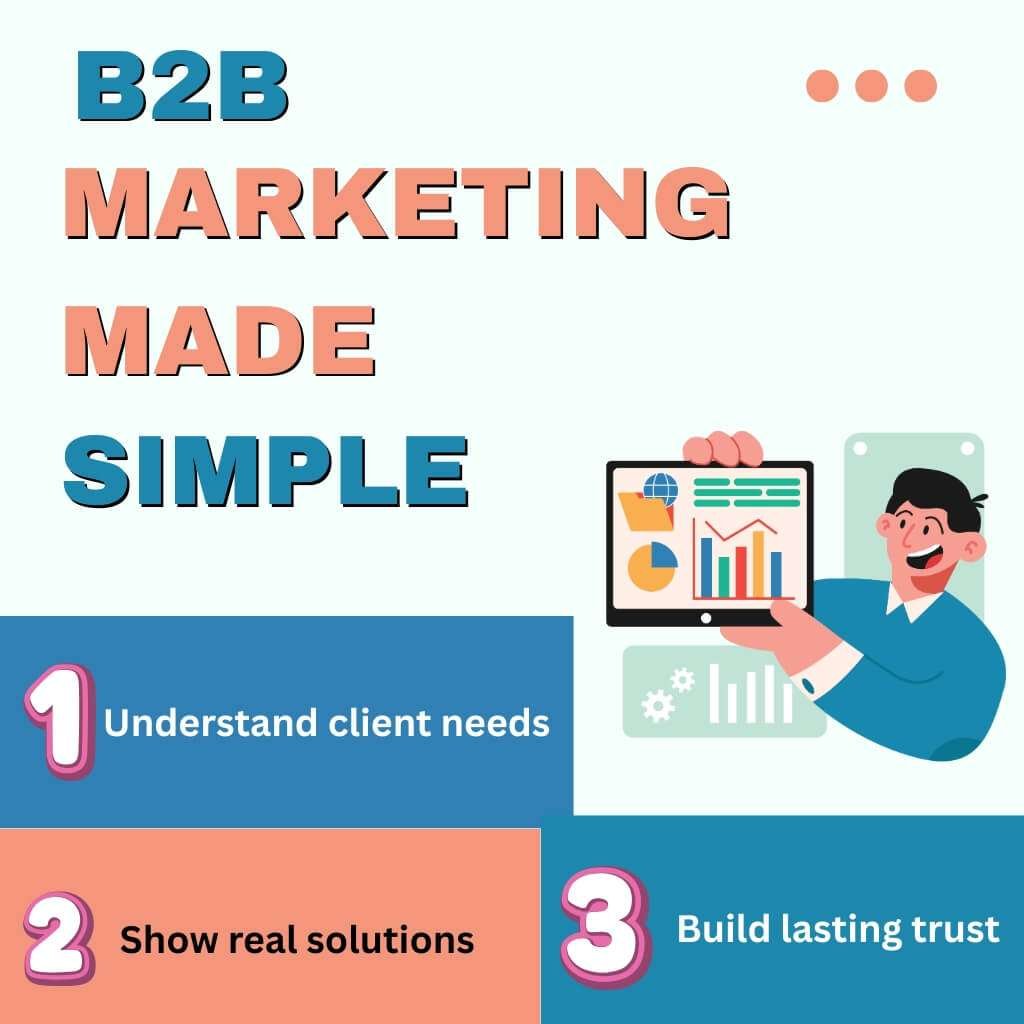
Businesses don’t want fluff. They want solutions that work, fast. It’s not enough to just know your product—you need to understand the exact pain points of the businesses you’re reaching out to.
For example, selling inventory management software. Instead of throwing out generic marketing messages, venture into your audience’s day-to-day struggles. Show them exactly how your product will save time, cut costs and increase productivity.
In today’s world, there’s no room for “one-size-fits-all.” The best part? With the right strategies, like focusing on their specific needs and using smart tools, you can build trust quickly and turn them into long-term customers.
Lucrative B2B Industrial Marketing Opportunities
B2B industrial marketing has increased with innovation and sustainability in the present demanding market. Industries like EV components, energy storage, IoT and 5G create alluring opportunities. You just require the right technical skills and a focus on prolong sustainability to invest in these areas. Let’s explain:
1 . Electric Vehicle (EV) Components
The EV market is set to hit $1.2 trillion by 2025, growing at 19.2% CAGR (marketwatch.com). Of course, you must have the required skills like electrical engineering, battery technologies and supply chain management. Then, invest in EV components to obtain extensive profit.
Example: Tesla leads the EV industry with innovative battery technology and vehicle components. They focus on sustainability and vertical integration (tesla.com).
2 . Water Treatment Solutions
The water treatment market will reach $306.2 billion by 2025, growing at a 7.2% CAGR. (prnewswire.com). You must have expertise in environmental engineering and water treatment technologies.
Example: Xylem Inc. provides innovative water treatment and conservation solutions. They focus on sustainability and global water issues (xylem.com).
3 . Construction and Building Materials
Sustainable construction materials have exceeded $1 trillion this year. This grows at 12.4% CAGR (grandviewresearch.com). It improves brand image and meets eco-demand. You must learn building material technology and environmental design.
Example: LafargeHolcim focuses on sustainable building materials. Their ECOPact concrete range is eco-friendly (holcim.com).
4 . Battery and Energy Storage Systems
Energy storage solutions support clean energy adoption. This has reached $18.8 billion by this year, growing at 26.7% CAGR (bnef.com). You must have battery technology and renewable energy integration.
Example: LG Chem is a leader in battery technology for energy storage and EVs. They continue innovating to expand capacity (lgchem.com).
5 . Industrial IoT (Internet of Things)
The Industrial IoT market will reach $263 billion by 2025, growing at 10.6% CAGR. IoT enhances operational efficiency and reduces downtime. Focus on IoT systems and cybersecurity to enjoy the desired result.
Example: Cisco provides IoT solutions for smart factories, predictive maintenance and energy management (cisco.com).
6 . Circular Economy and Recycling Technologies
Circular economy practices reduce waste and meet consumer eco-demands. This market has reached $4.5 trillion this year (greenbiz.com). Sustainability management and waste recycling expertise are essential in this b2b industry.
Example: TerraCycle leads in recycling technologies, focusing on the circular economy. They reduce waste and repurpose materials (terracycle.com).
7 . 5G Technology and Infrastructure
5G ensures live communication and industrial automation. This industry has reached $49.6 billion this year, growing at 34.6% CAGR (forbes.com). Telecommunications and IoT skills integration are fundamental to make a profit in this b2b industrial marketing.
Example: Qualcomm is at the forefront of 5G, developing key chipsets for faster communications and industrial automation (qualcomm.com).
What is a B2B Marketing Strategy?
A B2B marketing strategy targets businesses with customized, precise campaigns. It uses digital channels like social media, content marketing, SEO, email and LinkedIn to generate and nurture leads. The goal is to build enduring relationships by nourishing trust, solving problems and showing clear ROI.
Core Elements of a B2B Marketing Strategy
Marketing isn’t about shouting the loudest. It’s about being where the buyers are, when they need you and helping them find the right solution according to their needs. Whether you’re a small business or a large enterprise, virtual interaction is your ticket.
How Industrial Buyers Make Decisions – What’s New?
The buyer’s acquisition in industrial markets is no longer a straight line. Industrial buyers are doing their research online, way before they talk to you. The digital space has made the buyer more independent. There are three main stages. These are:
Awareness: The buyer has a problem but doesn’t know the solution yet. This is where your content (blogs, videos, guides) comes in. Solve their problem before they even ask.
Consideration: They know the problem, now they want answers. They’re comparing options, examine more deeply what you offer. Show them why your solution is best.
Decision: The final call. At this point, they need proof: case studies, reviews and testimonials.
Digital self-service is vital. Self-service digital channels have worked for 50% of large B2B purchases (Forbes). Buyers want information fast, no fuss.
Craft Your Value Proposition – Stand Out Like a Beacon
Your value proposition should make a buyer stop scrolling, stop comparing and say, “This is exactly what I need.” It’s like the perfect headline in an ad that grabs your attention instantly.
What’s the astounding formula?
A . Clarity: Tell them, simply, what you do. No jargon, just value. For instance, “We help you reduce machine downtime by 30%.”
B . Differentiation: How are you different from the next guy? Maybe you’re faster. Maybe you provide a custom solution. Show why your offer is a diamond in a pile of stones.
C . Relevance: Speak directly to their pain. If they’re losing money from production delays, highlight how your solution speeds up operations.
Stats & Real Numbers You Can’t Ignore
Social Media Activity: 80% of B2B sales happen digitally (Forbes) today. Today’s buyers visit your website, compare and make decisions all without picking up the phone.
Content Consumption: The average B2B buyer consumes 13 pieces of content before they even think about making a purchase. Your blog post or video could be the one that convinces them. Source.
Influencer Impact: 70% of B2B buyers trust recommendations from peers or case studies more than other sources. If your customers rave about you, share their story. Let their words do the selling. (Forbes)
How B2B Industrial Marketing Differs from Consumer Marketing
In B2B industrial marketing, the sales cycle is like a marathon, not a sprint. Unlike consumer sales, which can happen quickly, industrial deals take 3.8 weeks longer, on average (Forbes). Let’s learn the reasons for these core comparisons:
Why the Slow Pace?
A . More Stakeholders: Big decisions mean more people are involved. You’re not just talking to one person but to teams. Each one has their own set of questions.
B . Big Budgets: You’re not selling a $50 gadget. These transactions can go up to $500,000 or more.
C . Detailed Negotiations: The back-and-forth isn’t quick. You’re dealing with contracts, custom solutions and long-term investments.
So, obtain the following expertise:
Project Management: You need to juggle timelines and teams.
Negotiation: Don’t rush. Be patient and flexible with contracts.
Analytical Thinking: Be sharp on ROI, pricing and what’s best for your clients.
Establish Trust Gradually
Trust in B2B marketing is like a plant. It takes time to grow. Unlike consumer marketing, where a flashy ad might convince someone to buy, in B2B, buyers want to know you’re reliable.
Why Does This Matter?
Efficient Content: Educational content (white papers, case studies, videos) helps build trust. If your customer reads about your success stories, they’ll trust you more.
Reliability matters: Keep showing up with relevant information. Every time you offer value, you build that trust.
Word of Mouth: More than 70% of B2B buyers trust peer reviews and case studies (Content Marketing Institute).
Still, be an expert to build trust by following these things:
Content Creation: Write, film and design educational pieces that genuinely help your customers.
Storytelling: Tell your company’s story in an authentic way.
Relationship Management: Stay engaged with your leads over time. Don’t rush for a sale.
Make sense for Success performing these:
Determine the Buyer’s Demands: Create content for each stage: awareness, consideration, decision.
Use Data to Your Advantage: Track who’s clicking, reading and moving down the funnel. Adjust as needed.
Adopt Tech Tools: Use tools that automate and personalize. Marketing doesn’t have to be a manual grind.
Work Together: Get your marketing, sales and customer service teams to align. Everyone should know the strategy.
Personalized Solutions for Niche Industries
Industrial buyers want precision. Generic solutions won’t cut it. They want something that fits their exact needs, like a tailor-made suit. Small businesses can win big by offering these personalized solutions.
Why does this matter?
Better Fit: Unifying your offer makes it hit closer to home. Buyers feel you understand their unique challenges.
Stand Out: Offering custom solutions sets you apart from the crowd. It’s the difference between being just another choice or the obvious one.
Build Trust: When buyers see you know their world, they trust you. They’re more likely to choose you over a one-size-fits-all provider.
Success Story
BuyersFlow focuses on industry-specific email marketing strategies. Their approach cuts through the noise and speaks directly to the target audience’s pain points. BuyersFlow Website
Modify Communication Channels
Industrial buyers don’t communicate the same way. Some prefer email, while others like phone calls. Some use social media, but for others, it’s all about face-to-face. This is the golden rule: Meet them where they are.
Why should you care?
Stronger audience connection: When you reach them on their preferred channel, they’re more likely to respond.
Higher Response Rates: Personalized communication methods boost your chances of getting a “yes.”
Stronger Relationships: Consistent communication via their chosen method builds trust over time.
Take AppFlows, for example. They show businesses how to master multiple B2B marketing channels. It’s about finding what works best for each client. AppFlows Website
How to Build Long-Term Relationships in B2B Industry
You have to invest a methodological expertise to perform this strategy. Let’s explain:
Nurture Leads with Educational Content
Industrial buyers want knowledge, not just a pitch. They need answers. Small industrial businesses can give them exactly that.
Why It Works:
A . Builds Trust: Knowledge positions you as a go-to expert.
B . Keeps Them Engaged: Buyers stick around when you teach them something valuable.
C . Generates Leads: Good content brings the right buyers to you.
Real-World Example:
VWO offers deep guides and webinars on conversion optimization. This helps them stay top-of-mind in the industry. (Content Marketing Institute)
Contribution of AI in B2B Marketing Strategy
AI shows high performance in B2B marketing by predicting what customers want. It sends the right message at the right time. This leads to faster sales and stronger connections. Let’s learn more:
Cost-Effective AI Solutions
AI can level the playing field for small businesses. Tools like Writesonic and SurferSEO make content creation easy and fast. They help target leads with personalized content. HubSpot offers AI-powered CRM tools to automate lead scoring and segmentation. This saves time and effort. Forbes: 2025 AI Predictions For Small Businesses
AI-Powered Automation in Lead Generation
AI can automate lead generation and participation. Smartlead.ai automates tasks like lead qualification and follow-up emails. AI saves time on repetitive tasks. It lets you focus on strategic work. More leads, faster, at lower costs.
Skills Needed:
CRM Management: Manage leads with AI-driven tools like HubSpot.
Email Marketing: Set up automated campaigns that engage leads.
Lead Analysis: Track how well your leads convert.
Learn more from Forbes.
Predictive Analytics in B2B Industrial Marketing
AI-driven predictive analytics helps businesses plan better, manage inventory and optimize marketing campaigns. Predictive analytics helps you stay ahead of market changes, improving decisions. Wikipedia: Artificial Intelligence Marketing
What Are Some Effective B2B Marketing Ideas for Industrial Businesses?
Create valuable content, share real stories, optimize for local SEO and explore virtual events. These methods help you to connect with your target audience, generate leads and build trust, all without huge investments.
Simplified Content Creation for Industrial Audiences
You can use blogs, infographics and videos to create a big impact. A blog post explaining your product’s benefits or an infographic showing statistics can attract leads without blowing the budget. Even a short video that presents how your product works can draw in potential customers.
Why it works: Simple, valuable content is easy to share. It speaks directly to your audience’s needs.
Create Thought Leadership Content
Share real-world stories. Publish case studies or white papers that demonstrate your expertise. A company that specializes in custom metal fabrication could share a case study about how their products solved a client’s problem. This builds trust and shows you know the industry.
Why it works: Sharing real experiences connects with customers and builds credibility.
SEO for Industrial Marketing
You can win by focusing on local and niche SEO. Use local keywords or long-tail phrases like “custom CNC machining in Chicago.” These help you attract specific customers searching for specialized products or services.
Why it works: Local SEO puts your business on the map for people nearby. Niche keywords connect you to those who need your unique product. Reference: Forbes: The 2025 Local SEO Shift
Trade Shows and Events for Networking and Lead Generation
Physical trade shows can be expensive. But don’t worry. Virtual events are a great alternative. You can host or participate in online trade shows or webinars. They get the same exposure, but without the travel costs. You could host a virtual booth to display your latest products and interact with potential customers.
Why it works: Virtual events connect you to a global audience. They allow you to interact with prospects without leaving your office.
Skills Needed:
Event Planning: Organize successful online events.
Digital Marketing: Use ads and emails to promote events.
Customer Engagement: Build relationships with attendees.
Reference: Wikipedia: Virtual Trade Show
How Can a B2B Industrial Marketing Agency Help?
Partnering with an industrial marketing agency contributes to growing business. Agencies offer scalable solutions, segment markets, build relationships and use data for success. Let’s discuss:
Scalable Solutions for Small Businesses
Small businesses have limited resources. A marketing agency provides scalable solutions. They offer customized strategies that grow with your business. This lets you compete with larger companies.
Example: A manufacturing company saw a 30% increase in leads in six months by partnering with an agency. Reference: Forbes: 2025 Marketing Trends Small Businesses Can Use To Get Ahead
Agency Expertise in Industrial Market Segmentation
Agencies help identify target market segments. They break the market into smaller, focused groups. This makes your messages more relevant and engaging.
Example: A small industrial business targeted at automation needs, improving engagement. Reference: Wikipedia: Microsegment
Unified Campaigns for Long-Term Relationship Building
Agencies automate this with tools like email campaigns. They keep your brand top of mind, nurturing leads over time.
How Agencies Utilize Data and Analytics for Campaign Success
Data is critical. Agencies use tools like Google Analytics and HubSpot. They measure campaign success and optimize strategies based on results.
Example: An agency cut cost-per-click by 15% and increased conversions by 20%. Reference: Forbes: Best Data Analytics Tools & Software 2025
How to Apply B2B Marketing in Healthcare Industry?
B2B marketing in healthcare needs compliance and trust. You must follow the rules and engage healthcare professionals with valuable content. By doing so, you can succeed in this complex market.
Differences Between Healthcare B2B Marketing and Other Industries
Healthcare marketing is different. It requires strict compliance and ethics. Small businesses must follow laws like HIPAA. These rules control how patient data is used. Violating these laws can lead to big fines. Reference: Wikipedia: Health Insurance Portability and Accountability Act
Challenges in Healthcare B2B Marketing:
Regulatory Restrictions: Laws limit how patient data can be used.
Sensitive Data: Handling health information needs extra care.
Building Trust: Healthcare decisions are based on trust.
Importance of Regulatory Compliance in Healthcare Marketing
Compliance is essential. Businesses must understand and follow healthcare laws. HIPAA, for example, requires patient consent before using their data. Not following these laws can lead to fines and loss of business.
Effective Strategies for Healthcare B2B Marketing
Focus on relationships. Healthcare marketing works best with educational content. Offer webinars, white papers and case studies. These help build trust and engage healthcare professionals.
What Role Does Play B2B in Healthcare Sector?
B2B marketing in the healthcare sector is about providing essential products and services that support healthcare operations. Let’s explain:
How B2B Marketing Supports Healthcare Organizations
Small industrial businesses supply essential medical equipment, technology and services that support healthcare operations.
For example, companies provide diagnostic tools, surgical instruments and IT solutions to hospitals and clinics. These contributions are vital for the efficient functioning of healthcare systems. 407area.com
Build Relationships with Healthcare Providers and Institutions
You can build relationships with healthcare providers by attending industry-specific networking events or joining associations. These interactions help in understanding the needs of healthcare professionals and in establishing trust
What are The Most Prominent B2B Healthcare Companies
Small healthcare B2B companies are flourishing by focusing on niche products, innovation and relationship-building.
By using digital tools and strategic marketing, they overcome challenges and grow. These companies play an important role in the healthcare sector. Let’s introduce a few of them, known for their innovative products and services:
1 . Medtronic
State: Minnesota
A leader in medical technologies, Medtronic offers products in cardiovascular, diabetes and surgery. You can visit Medtronic Official Website
2. Thermo Fisher Scientific
State: Massachusetts
Provides laboratory instruments, diagnostics and chemicals for healthcare and research facilities. If needed, learn more from Thermo Fisher Official Website.
3 . GE Healthcare
State: Wisconsin
A major player in diagnostic imaging and healthcare IT solutions. You can see more here, GE Healthcare Official Website
4 . Siemens Healthineers
State: Illinois
Offers medical imaging, lab diagnostics and point-of-care testing. Get more details here Siemens Healthineers Official Website
5 . Johnson & Johnson MedTech
State: New Jersey
A global leader in medical devices, covering areas like orthopedics, surgery and vision care. Take a closer look at here Johnson & Johnson MedTech Official Website
Conclusion
B2B industrial marketing is not about quick wins. It’s about building trust over time. Your sales cycle is longer. Your deals are bigger. But with patience, great content and smart strategies, you can close those big deals. Focus on what matters: trust, relationships and long-term value.
FAQ
What are the 4 types of B2B marketing?
The four main types of B2B marketing are Account-Based Marketing (ABM), Content Marketing, Demand Generation and Product Marketing.
What are the three main types of B2B sales?
The three main types of B2B sales are Inside Sales, Account-Based Selling (ABS) and Digital Commerce.