


An AI research paper is more than technical writing. It’s a well-tested study that explains how intelligent systems think, learn, predict, or create.
It includes real data, logic, testing, results and often proposes a new method or solution.
You must verify every claim. You must be able to repeat every model. If you cannot explain or test a model again, you must reject it.
These papers appear in trusted journals and global events like NeurIPS, ICML and open libraries like arXiv.
AI research papers are the source of new ideas. Startups use them to build new things. Governments use them to create new regulations..
Why are AI Research Papers so Important for Business, Education and Innovation?
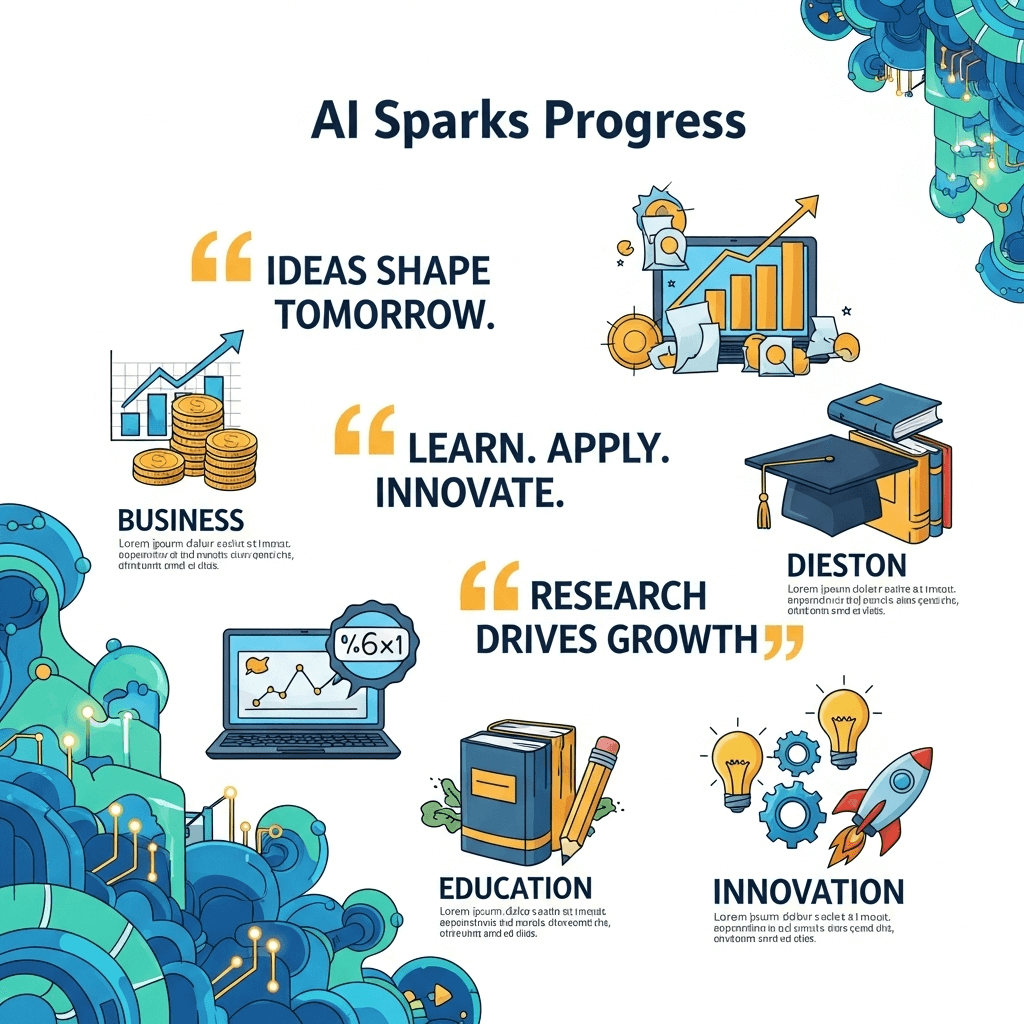
These papers are the building blocks of new technologies and solutions.
What It Takes for Businesses to Lead the Market
AI research papers help businesses understand emerging trends. This leads to better products and fair marketing. Customers prioritize personalization today. Personalized emails bring a 122% higher return on investment.
AI-Powered Personalization: Businesses use AI research for deep customer insights. This creates hyper-personalized experiences. It drives higher sales and loyalty.
Operational Efficiency: Papers offer new algorithms to automate tasks. This improves productivity by over 25%. It frees up human workers for creative tasks.
Predictive Analytics: Research provides models to forecast market trends. This helps companies plan better. It gives a crucial first-mover advantage.
Optimizing Supply Chains: New AI methods help businesses manage complex logistics. They predict disruptions and suggest alternatives. This reduces costs and increases resilience.
Enhanced Decision-Making: AI research provides frameworks for data-driven choices. This leads to better strategic planning. It reduces human error and bias.
Cybersecurity: Papers present new AI defenses. These systems detect threats in real time. They protect against fraud and cyberattacks.
Product Innovation: AI research accelerates product development. It helps businesses discover new features. It helps create products that customers truly want.
Risk Management: AI algorithms analyze data to spot risks. This helps companies take preventive measures. It protects their reputation and finances.
Talent Management: Research helps companies use AI to find top talent. It also helps with employee training. This builds a skilled and future-ready workforce.
Customer Service Excellence: AI chatbots and tools, built from research, handle routine queries. This offers 24/7 support. It improves customer satisfaction.
The Worthy Chapter in Education and Learning
AI research paper moves learning from uniform to personalized. Papers in this field help create new teaching methods and tools.
In education, these papers shape how teachers teach and how students learn.
They drive curriculum upgrades, personalized tutoring and skill-based assessments.
For example, Wharton Business School launched a full AI major to prepare students for data-driven industries. → Business Insider
Research shows students now rely more on AI tools than on textbooks.
Personalized Learning Pathways: AI research creates adaptive systems. These systems tailor content to each student’s pace and style. This boosts engagement and understanding.
Intelligent Tutoring: Papers describe new AI tutors. They give instant, one-on-one feedback. This helps students grasp difficult concepts.
Dynamic Curriculum Design: AI helps educators design better courses. It uses data to find learning gaps. This allows for more relevant and effective lessons.
Automated Assessment: AI tools, based on research, can grade assignments. They track student progress. This frees up teachers’ time.
Fostering Critical Thinking: AI prompts students to question information. This helps them analyze and evaluate content. It teaches them to think critically, a vital 21st-century skill.
Inclusive Learning: AI research leads to tools that support all students. This includes those with disabilities. It makes education more accessible and equitable.
Data-Driven Insights for Teachers: AI systems give teachers dashboards. These show class-wide trends and student performance. This helps them improve their teaching strategies.
Bridging Language Barriers: AI research has led to real-time translation tools. This helps students and parents from diverse backgrounds communicate. It promotes inclusion.
Engaging Content Creation: Generative AI, a product of research, helps create interactive lessons. It makes learning more fun. This improves student retention.
Reskilling the Workforce: AI research helps create training programs. These help workers learn new skills. This is vital for a changing job market.
Innovation: Craft Tomorrow’s Solutions
Research papers propose new ideas and methods. These are used to create new technologies. They also help solve global challenges.
Accelerate Scientific Discovery: AI analyzes huge datasets in science. It finds patterns humans miss. This speeds up research in every field.
Create Novel Materials: AI simulates new material properties. This leads to lighter, stronger and more sustainable products. This impacts manufacturing and engineering.
Drug Discovery: AI research helps find new medicines faster. It analyzes molecular data. This saves time and lives.
Climate Change Solutions: AI simulates climate models. It helps find effective ways to reduce carbon emissions. It helps create cleaner energy systems.
New Forms of Energy: AI research helps develop new nuclear fusion and solar tech. It speeds up the path to sustainable power.
Robotics and Automation: Research papers drive new robot capabilities. This includes smarter robots for manufacturing and healthcare.
Sustainable Agriculture: AI helps farmers grow more food with less waste. It optimizes irrigation and pest control. This is vital for global food security.
Space Exploration: AI is crucial for space missions. It helps analyze cosmic data. It helps navigate spacecraft.
Urban Planning: AI analyzes city data. This helps create smarter cities. It improves traffic flow and public services.
Ethical AI Frameworks: Research is key to creating responsible AI. It explores bias and safety. It ensures technology is used for good.
Can You Earn or Monetize Your AI Research Papers or Academic Work?
Yes, through several channels. Let’s see the main options:
Earning Methods from AI Research Papers
| Monetization Method | Description | Estimated Earnings |
| Consulting & Speaking | Use research to advise businesses or speak at events | $5K–$20K per talk or project |
| Sponsored Research | Partner with companies for funded studies | $10K–$100K+ per project |
| Licensing IP | Patents or tech from papers licensed to firms | Royalties from 5%–15% of product revenue |
| Publishing Books | Write commercial books based on research | $2K–$10K+ per book, varies widely |
| Online Courses | Build courses explaining your research | $500–$5K+ per course launch |
| Research Grants | Government or private funding for follow-up studies | $20K–$200K+ per grant |
| White Paper Sales | Sell detailed reports to niche industries | $1K–$10K+ per report |
Nature Careers, July 2025, Forbes
What are the Best Free AI Research Paper Databases?
Several top sites offer instant access to millions of studies. These databases are free. No paywalls. Whether you’re a digital marketer, a student, a pro, or just curious, these platforms open the door to the latest AI work. Below are a few sources you can trust.
Top 5 Free AI Research Paper Databases
| Platform | Description |
| arXiv | A free preprint archive for over 2.6 million scholarly articles in various scientific fields. |
| Semantic Scholar | An AI-powered search tool that provides smart summaries, citation graphs and research feeds. |
| CORE | Aggregates millions of full-text open-access research papers from global repositories and journals. |
| OpenAlex | An open and free successor to Microsoft Academic Graph, linking research papers, authors, institutions and more. |
| BASE | A search engine from Germany that indexes a massive number of open-access academic documents with full-text links. |
They cycle through new research fast. Think of them as the source of public relations for business and other sectors of the online world.
How to access cutting-edge machine learning papers easily?
Simple steps for fast access:
Visit arXiv daily – Check machine‑learning (cs.LG), deep learning (cs.CV, cs.CL). New spikes show the latest work.
Use Semantic Scholar filters – Sort by “Highly Influential” or “Recent”. Let its summaries guide you.
Visualize related studies with tools like Research Rabbit or Connected Papers (both free). They map connections like a subway chart.
Try AI assistants like Elicit or Perplexity. They dig answers and pull top references. Free tiers available.
Set up alerts or RSS on these platforms—new papers get flagged fast.
How to Read, Analyze and Use AI Research Papers Effectively?
Understanding AI research papers doesn’t have to be hard. The key is to be intelligent about how you read. You don’t have to read every word.
You just need to find the key information fast. I’ll help you with how to do that. This method is for everyone. It helps you understand papers quickly. You don’t need a deep technical background.
A Step-by-Step Guide:
Start with Your Goal. Know what you want. Are you seeking a new method? A key finding? This focus is your guide.
Read the Abstract. It is a short summary. It covers the problem, the method and the results. It helps you decide if the paper is right for you.
Go to the Conclusion. This section is key. It explains the main takeaways. It discusses the paper’s importance. It often lists future work.
Skim the Introduction’s Final Paragraphs. This part states the paper’s purpose. It outlines the authors’ contributions. It’s a quick way to get the core idea.
Examine Figures and Tables. Visuals tell a story. They highlight the main results. Graphs and charts make complex data easy to grasp.
Scan for Keywords. Look for unfamiliar terms. Make a list. You can define them later. This builds your knowledge without slowing down.
Read Methods and Results (If You Need To). Only read these parts for specifics. This is for when you must understand the details. It is for replicating a result or a technique.
This approach saves time. It cuts confusion. It delivers clarity. It helps you get the most out of every paper you read.
Can ChatGPT or Other LLMs Help Summarize or Critique Research Papers?
Yes, ChatGPT and other LLMs can quickly process complex information and distill it into core points. They can also identify strengths and weaknesses. This saves a lot of time. However, it’s vital to remember that they can make mistakes. So, you must fact-check their outputs.
Let’s learn the most trending LLMs that people use for this purpose:
ChatGPT: This is a powerful and popular choice. It’s great for general-purpose summarization. It can also answer specific questions about a paper. This makes it a go-to tool for many.
Google Gemini: Google’s LLM is a strong competitor. It can summarize text, code and more. It is known for its reasoning capabilities. It’s a reliable choice for complex documents.
Claude: Claude is known for its focus on safety and long context windows. This means it can handle very long papers without losing track. It is a favorite for those working with dense, detailed documents.
DeepSeek: This model is known for its strong reasoning skills. It performs well on benchmarks for complex tasks. It is a popular choice for research-oriented analysis.
Perplexity AI: Perplexity is a conversational search engine. It’s built for research. It provides summaries with clear citations. This makes it a great tool for verifying information as you read.
Which Are the Top Trending Topics in AI Research Papers?
You can justify the following objects:
Agentic AI—autonomous systems that plan and decide—tops the list. It’s like giving AI a mind of its own.
Reasoning models—LLMs trained to think stepwise—are surging. Surveyers list them as #1 in new LLM research.
Emotionally aware AI—machines that sense feelings—gets traction in education and healthcare. It’s compared to a calm teacher who knows when you’re stressed.
Living Intelligence—mixing AI, biotech and sensors—is rising fast. A concept from Harvard Business Review’s Future Today group.Wikipedia
AI for sustainability and materials science—tools that help discover new materials or fight climate change—are deeply embedded across conferences.WikipediaarXiv
These topics combine cutting-edge methods with purpose. They show where research meets real life.
Which fields—deep learning, NLP, generative AI—lead in research?
The leadership is shared, but generative AI and reasoning models lead the pack.
Generative AI (text, images, code) rules attention. Papers on efficient multi-modal generation appear monthly.
→ Trending broadly at arXiv and reviewed on Wikipedia.Wikipediapaperdigest.org
Deep learning keeps evolving. New architectures like mixture-of-recursions (MoR) promise more efficiency than transformers. Reuters
NLP focuses now on reasoning and logic, not just text. Flow‑matching and step reasoning in LLMs are shaping the research agenda. reddit.com
Deep learning offers the engine. NLP adds the brain. Generative AI gives creativity.
What are the most cited and impactful AI conference papers?
The most influential AAAI and arXiv papers emphasize autonomous agents and reasoning systems.
The arXiv survey on Agentic AI for Scientific Discovery is among the most cited recent works. It reviews how AI now plans experiments, makes decisions and pushes science further on its own.
CEO Demis Hassabis of DeepMind says AI’s next goal—AGI—is 10× bigger and faster than anything before. His statements and AlphaFold breakthroughs earn wide academic citations.
Story:
DeepMind’s AlphaFold—now freely available—sparked hundreds of follow‑up studies in proteins and drug design. vox.com
Which AI Tools Support Academic Research, Citation and Paper Formatting?
Several AI tools are now available to streamline academic research and publishing. These tools help with everything from managing citations to writing and formatting papers. They save time and improve accuracy, making the research workflow more efficient.
Zotero: This is a smart citation manager. It uses AI to recommend sources and help fix citations.
Mendeley: This tool manages literature. It has AI-powered features for PDF summarization and for extracting key information from research papers.
Grammarly: Grammarly has been updated to help with academic writing. It checks for grammar and spelling. It also gives feedback on tone, style and academic voice in a manuscript.
Overleaf: This is an online LaTeX editor. Its AI features automate formatting for journals and conferences. It helps with LaTeX code and language feedback.
Elicit: This AI research assistant helps you find relevant papers. It can summarize research and extract key data quickly.
Together, these tools reduce tedious work by up to 60%, letting scholars focus on ideas.
Is AI-generated content accepted in peer-reviewed journals?
AI use in journals is not banned. It is highly regulated. You must be fully transparent. Most peer-reviewed journals have policies. This includes major publishers like Elsevier and Springer Nature.
AI cannot be an author. This is a consistent rule. Authorship means responsibility. AI cannot be responsible. An AI cannot approve a manuscript. It cannot be held responsible for its accuracy.
Disclosure is mandatory. If you use an AI tool to create text, you must say so. This is required in the acknowledgments. Or in a methods section. This ensures transparency. Not telling is a serious ethical breach.
Editing is generally allowed. Most publishers let you use AI to improve grammar. This includes readability and style. But the human author is still responsible. The author must carefully check for errors.
AI images are often prohibited. Many journals have strict policies against AI-created images. This is due to copyright concerns. It is also about originality. And it prevents tools from creating false data. So, create a natural image prompt with proper editing.
The content must be original and accurate. The human author is responsible for the research. The author must check AI-generated text. It must not have “hallucinations” or false facts. It must be free of plagiarism.
Policies are still evolving. This is a fast-changing field. Many publishers, like the IEEE and Springer Nature, will update their rules.
The consensus is clear. AI is a powerful tool. It assists human researchers. It is not a replacement. It cannot replace human intellect, accountability, or ethical oversight.
How to Publish, Cite and Monetize Your Own AI Research Papers?
Publishing, citing and monetizing your papers takes a plan. Tools are handy to make tasks easy. But the core rules are the same.
Publishing Your Paper:
You must choose the right place to publish. There are three paths.
Peer-Reviewed Journals: This is the most respected path. Look for journals with high impact factors. Examples are Journal of Machine Learning Research and IEEE Transactions on Pattern Analysis and Machine Intelligence. Experts review your paper.
Conference Proceedings: This is popular in AI. Top conferences like NeurIPS and ICML publish papers. This is faster than journals. It is great for networking.
Preprint Servers: Platforms like arXiv let you share work instantly. It is not peer-reviewed. But you get a DOI. You get feedback early. Most journals now accept papers from these servers.
Citing Your Paper:
Proper citation gets you credit. Use a consistent style. Make your paper easy to cite.
Choose a Style: AI papers often use IEEE or ACM styles. APA is also common. Always follow the journal’s rules.
Use a DOI: A paper gets a Digital Object Identifier (DOI) when published. It is a unique, permanent link. It makes your paper easy to find and cite.
Use AI Tools: Tools like Zotero and Mendeley help you. They automate citation. They help you organize sources. They format your bibliography correctly.
Monetizing Your Paper
Monetizing research is more than a salary. It turns your ideas into value.
Grants and Funding: Successful papers can get you new grants. They attract funding for more research. Grants come from governments. They also come from private companies.
Commercialization: Your research can be a product. Work with your university’s technology transfer office. They can help you get a patent. They can license your technology. They can also help you start a company.
Consulting and Expertise: A respected paper makes you an expert. Companies will pay for your knowledge. This can be consulting. It can be speaking. It can be a full-time job.
Open Source Contributions: You can build a community around your code. Companies may pay for premium features or support. You can also get donations.
Conclusion
Thus, publishing an AI research paper is not just about sharing knowledge. It’s about building your reputation and opening doors. Monetization turns passion into profit, but it demands smart strategy and ethical clarity.
FAQ
What is the best AI for competitor research?
90% of top online businesses use AI tools for competitor research. The most reliable are:
Similarweb – Tracks traffic, ads and audience. Used by 70% of digital brands.
Semrush – Strong in SEO, paid ads and content gaps. Trusted by 10M+ users.
Crayon – Best for real-time tracking of competitor moves. Used by 60% of B2B industrial marketing.
Kompyte (by Upland) – Automates competitor updates. Saves 40% research time.
ChatGPT (with web tools) – Great for summaries, trend scans and quick insights.
Note: These tools cut research time by up to 75% and boost decision speed. Businesses using AI-driven research grow 35% faster.
Which is the most ethical AI tool?
No single AI tool is the most ethical. Ethics is a process. The most ethical tools give businesses control. They provide frameworks for fairness and transparency. These tools help companies check for bias. Over 80% of businesses monitor their AI for ethical compliance. This is a top priority.