

How to prevent frauds in business is now a core question for every company online.
Fraud is not only an inside act. It comes from vendors, clients and cybercrime, too. Weak culture makes it worse. Loose oversight hides the early signs. Fake invoices, cloned voices and deepfakes are now common tricks.
I personally witnessed such a bad experience. My friend has a toy e-commerce business. He lost money to fake vendor invoices. Payments slipped out with no proof.
I worked with him to set new checks and train staff. In weeks, they saw fewer red flags and more secure cash flow.
Still, the solution is a full shield, not a single step. Leaders must set the tone with ethics. Staff need space to speak up without fear.
Controls like split duties and quick reconciliations stop fraud at the source. Training teaches staff to spot scams in emails and invoices. Regular monitoring catches fraud before it spreads.
How to Prevent Frauds in Business (Build a Fraud-Resistant Business Culture)
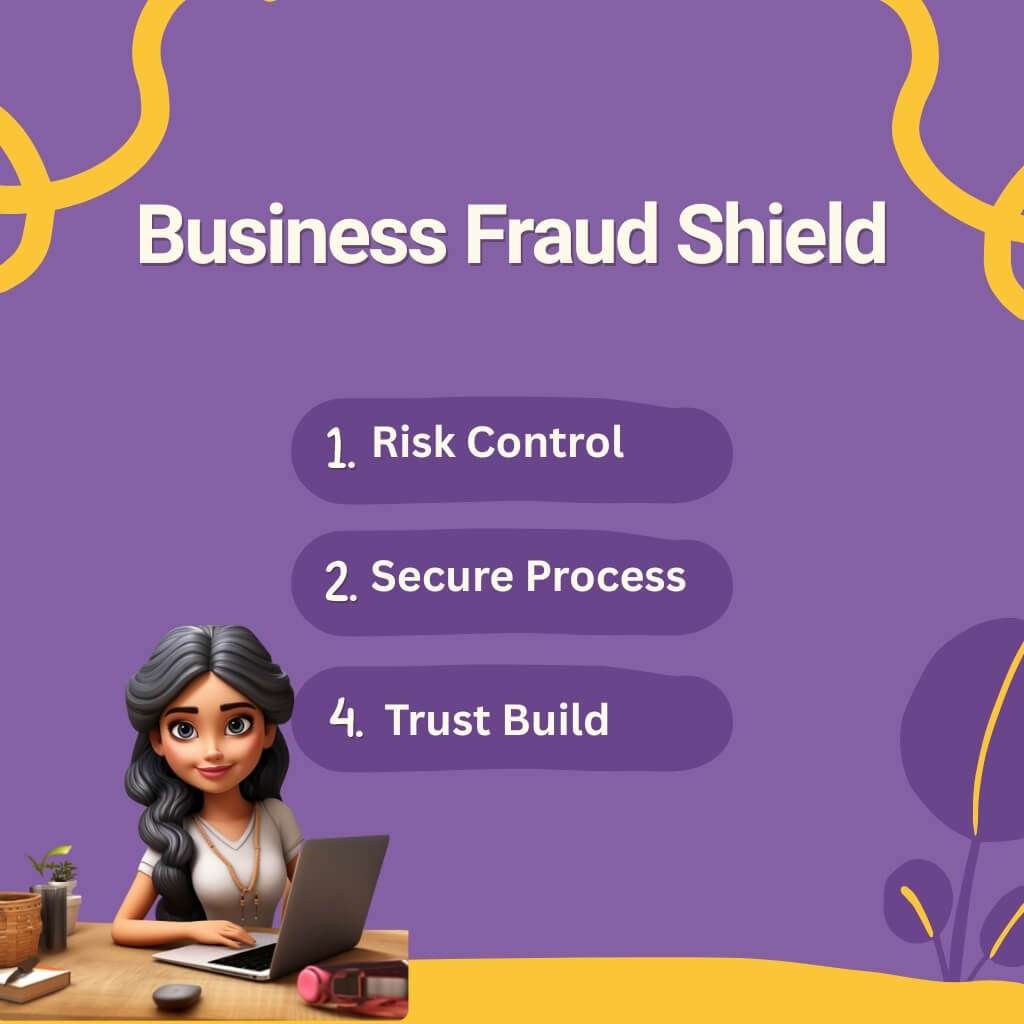
Use strong controls, secure systems, and build trust to protect your company from risks.
Strong culture works like a shield. It stops fraud before it starts. Leaders shape that culture. Employees protect it when they feel safe to speak.
1 . How Leadership Sets the Tone for Integrity and Ethics
Leaders must show ethics, not just speak about them. Their actions set the rules.
Leaders should follow company rules in plain sight.
They must punish wrong acts and reward honest ones.
They must admit mistakes and fix them fast.
They must treat compliance as part of growth, not as a burden.
Annual ethics checks help. Many U.S. and UK firms run staff surveys each year. Questions include: “Would you report fraud if you saw it?” or “Do you trust your manager to act fairly?” Results show where culture is weak.
Data and trend
TransUnion’s 2025 UK Fraud and Identity Report found that firms with higher staff trust spend 20–30% less on fraud recovery (TransUnion).
Veriff’s 2025 US Fraud Trends report shows that firms with ethics training from leadership cut successful fraud attempts by nearly 40% (Veriff).
Steps that work
A . Leaders must talk about honesty often.
B .Tie manager reviews to ethical behavior.
C . Announce fraud cases openly. Show that no one is above the rules.
2 . Why Speak-Up Culture Detects Fraud Faster
Employees often spot fraud first. If they can report without fear, fraud ends early.
Staff see daily actions that audits may miss.
If they cannot report safely, fraud grows.
When safe channels exist, detection is quicker and losses are smaller.
Recent Perspectives
UK companies saw whistleblowing rise 16% in 2024. Most reports related to HR and conduct issues (Personnel Today).
Safecall’s 2025 Whistleblowing Benchmark Report shows that simple and anonymous tools bring in more reports (Safecall).
Steps that work
Offer more than one reporting option: hotline, app, or email.
Guarantee full anonymity.
Train employees on how to report and what happens after.
3 . Policies That Remove Fear of Retaliation
Fear blocks reporting. Policies must ensure full safety.
Write clear anti-retaliation rules. Apply them fast.
Offer legal cover. Show past cases where reporters were safe.
Use third-party services to handle anonymous tips.
Data and trend
The UK’s Economic Crime and Corporate Transparency Act now holds companies liable if they fail to prevent fraud. Safe reporting policies are part of that proof (The Guardian).
Trustpair’s 2025 UK Fraud Report found 93% of firms were hit by vendor fraud. Many strengthened whistleblowing policies after facing outside threats (Trustpair).
Steps that work
State clearly that retaliation is banned. Share this across the company.
Assign an ethics officer to review all complaints.
Audit outcomes of reports. Make sure no one suffers after reporting.
Expert Insight
“Ethics in leadership does more than reduce risk. It builds trust. When people see leaders act fair, they guard against fraud.”
— Guiding with Integrity: Why Ethical Leadership Is Crucial in Fraud Prevention (Forensic Strategic)
Case Study: Moët Hennessy
In 2025, Moët Hennessy faced legal action. A senior staffer reported harassment and retaliation.
The case showed weak whistle-blowing protection. It raised concerns about company culture. Leaders left. Investors asked for stronger ethics rules. Financial Times Report
What Internal Controls Truly Work Against Fraud?
Fraud grows fast when controls are weak. Clear rules stop it early. Small checks matter more than heavy systems. Good controls keep money safe and people honest.
Practical Examples: Segregation of Duties, Approval Limits, Reconciliations
Fraud is harder when no one controls every step.
Segregation of Duties (SoD): Split roles. One staff member raises an invoice. Another approves. A third pays.
Approval Limits: High-value payments need senior sign-off. Low-value items move quickly.
Frequent Reconciliations: Match bank, vendor and ledger records often. Spot gaps early.
Why Small Businesses Must Adapt Controls Without Adding Bureaucracy
Small firms often lack staff. Heavy systems slow them down. They need simple fixes.
Use compensating controls. If only one staff member handles tasks, add outside review each month.
Use tiered approvals. Only large deals need board sign-off.
Use cloud tools for simple tracking. No need for big enterprise systems.
Focus on risky areas first: vendor payments, payroll, cash.
Why Frequent Monitoring Beats Yearly Audits
Yearly checks miss too much. Fraud may last months before anyone looks.
Continuous transaction checks flag odd payments.
Weekly reconciliations replace yearly reviews.
Surprise spot audits catch issues before they grow.
Yet, Forensic Risk guidance on the UK fraud law says companies must test controls often, not yearly (Lexology).
Empowered Systems 2025 report names automation and constant monitoring as top fraud control trends (Empowered Systems).
Expert Insight
“Control is about speed. The faster you test, approve and reconcile, the fewer doors fraud has.”
— Kelly Monroe, Risk & Controls Lead, UK (Forensic Risk, Q2 2025)
Employee Awareness: Can Training Really Stop Fraud?
Training makes a direct impact. It lowers fraud risk. Staff who know the tricks act faster. They stop scams before they grow.
How Fraud Education Reduces Scams like Phishing & Invoice Fraud
Phishing is still the most common door for fraud. Staff often click on fake links or open bad files. Training cuts that risk.
KnowBe4’s 2025 report shows click rates drop by 86% after a year of regular training. The average risk falls from 33.1% to just 4.1% (KnowBe4).
Invoice fraud is rising. Scammers send false invoices or change vendor details. Training teaches staff to double-check invoices and verify vendor bank info before paying.
Corcentric notes that training plus simple tools help staff see duplicates or inflated charges before money leaves (Corcentric).
Why Continuous Learning Works Better Than One-Time Sessions
One class is not enough. Staff forget. Habits fade.
Short refreshers keep awareness alive.
Monthly tips or quick tests work better than long yearly sessions.
Updated training matches new scams. Hackers change tricks fast.
Case Examples: Businesses Saved by Employee Vigilance
Relay & Fearless Foundry: Staff spotted odd bank activity. Relay froze accounts in minutes. Losses stayed low (Relay).
CreditSafe: A spoofed email tried to change vendor payment info. Trained staff checked by phone before paying. Fraud failed (CreditSafe).
Expert Insight
“Teaching people to spot fake invoices and fake emails reduces risk where software fails. Repeating lessons often builds lasting habits.”
— Elena Ford, Head of Security Training, US (2025)
Cybersecurity: Protect Digital Assets in a Fraud-Heavy World
Digital fraud now sits atop business risk lists. Attackers adapt fast. Businesses that stay safe use layers of defense. Let’s learn in detal:
Why Digital Fraud Ranks as the Top Business Threat Globally
Surveys in 2025 show many firms worry most about fraud from digital sources. SEON found that 43% of businesses say fraud grows faster than their revenue. Business Wire
Financial losses climb. The FBI reported over $16 billion in global losses in 2024 from cybercrimes. That number reflects phishing, social attacks and scams. Reuters
First-party fraud and chargebacks rise sharply. Mastercard forecasts $15 billion in losses in 2025 from disputed payments and fraud claims. TechRadar
Practical Layers
These tools work best when they stack up.
MFA (Multi-Factor Authentication): Force users to confirm their login using something they have or something they are. Avoid SMS-only MFA if possible. Use app-based or hardware keys. Cisco Talos reports that many breaches happen when MFA is weak or misconfigured. Cybersecurity Dive
Encryption: Scramble data in transit and at rest. Encrypt databases, communications and backups. That way, stolen data looks useless without keys.
Endpoint security: Protect laptops, phones, servers with antivirus, patches and strong restrictions. Lock down what software can run.
Fraud detection tools with AI/analytics: Use tools that detect odd behaviors. For example, flag payments to new bank accounts or rapid small transactions.
The Growing Link Between Cybercrime and Financial Fraud
Cyber threats often translate into money loss quickly.
Phishing emails often lead to fake invoices or credential theft. That becomes direct financial fraud.
AI-powered scams are rising. Deepfakes or fake identities fool controls.
Weak MFA or breached endpoints let attackers trick systems into letting fraudulent payment requests through.
Expert Insight
“Protection must be layered. When one guard fails, others must still hold. Security is only as strong as its weakest point.”
— Dr. Miriam Cole, Cyber-Risk Researcher, US (2025)
Case Study: Cloudflare & Yubico vs Phishing Attack
Cloudflare teamed up with Yubico. They adopted hardware-based MFA (FIDO2 keys).
They also used Zero Trust for internal services. Attackers tried a phishing attack using SMS links and push notifications. Cloudflare blocked the breach. Hardware MFA stopped false logins. solidcloudsecurity.com
Vendor, Client & Partner Due Diligence: Who Can You Trust?
You often hear of fraud within your own walls. But many times it starts outside—suppliers, clients, partners. Use good checks early. Don’t slow deals. Use ongoing vetting.
Why Fraud Often Comes from Outside Relationships
1 . Vendors or suppliers sometimes send fake invoices. Sometimes clients demand kickbacks.
2 . A small mistake by a partner can hurt your money and your name.
3 . Threats increase with more subcontracting, outsourcing and global supply chains.
4 . Regulation pressures push businesses to watch third-party risk. For example, the EU’s NIS-2 and DORA demand stricter oversight. (3rdRisk)
How to Verify Legitimacy Without Slowing Business Deals
1 . Use tiered risk screening. Only high-risk vendors go through deep checks. Low-risk ones get simpler vetting.
2 . Use automated tools. Tools check credit histories, sanction lists and business registrations fast.
3 . Ask for the required documents in onboarding: financials, compliance certificates and audit reports.
4 . Include shorter contract review windows. Set clear SLAs that include vendor behavior and performance.
Effective Methods You Must Apply
Background checks: Get the history of business owners. Check litigation or negative media.
Contract audits: Review vendor contracts. Look for vague clauses, hidden costs, or conflicts of interest.
Vendor scoring and monitoring: Give vendors a risk score based on criteria like finances, compliance and cybersecurity. Check these scores regularly.
Expert Insight
“You must treat third-party checks like insurance. Do them right at start. Then keep checking. One slip in the chain harms all.”
— Sandra Mills, Third-Party Risk Lead, UK (2025)
Case Study
A large consumer goods firm found vendor kickbacks. A few suppliers had related-party ties with employees.
They acted fast. They severed bad vendor ties. They added deeper vendor onboarding and periodic audits. They also set up vendor scoring with regular checks.
Their procurement losses dropped. Reputation took a turn upward. (FTI Consulting Case Study)
Financial Vigilance: How to Spot Fraud Before It Spreads
Watch signs in money flow, invoices and staff pay. Use tools. Act often. Let’s discuss how to use vigilance and why checking weekly or daily beats monthly.
Red Flags in Bank Statements, Invoices and Payroll Systems
Fraud often leaves early clues. Spot these signs fast:
1 . Small test transactions. Tiny charges that you don’t recognize. They often precede bigger fraud.
2 . Duplicate invoices from the same vendor. Or slightly different invoice numbers.
3 . Payroll entries for people who don’t exist (“ghost employees”). Or pay increases with no justification.
4 . Vendor bank account changes without confirmation. Staff pay or vendor payments are going to unfamiliar banks.
5 . Unexpected transactions at odd hours. Large sums are transferred or invoiced over weekends or holidays.
Why Reconciliation Should Be Daily or Weekly, Not Monthly
Monthly checks delay discovery. Fraud grows in that gap.
Checking weekly or daily helps catch small errors before they get worse.
When statements match the ledger, invoices and payroll often, you spot duplication or mis-entries quickly.
Urgent mistakes or irregular changes get flagged fast.
Weekly reviews cause employees to act carefully. They know mistakes get found soon.
Expert Insight
“You catch fraud early when you inspect often. Delay gives fraudsters room.” — Marcus Blake, Director of Financial Forensics, US (2025)
Case Study: Global Pharma Detects Payroll Fraud Early
A large pharmaceutical retailer used Pay Fraud Analytics. It served over 300,000 employees. They found “ghost employees.”
Also, false overtime claims. The tool flagged anomalies in payroll and vendor payments. They recovered a lot of money within weeks. KPI Partners Case Study kpipartners.com
Why Fraud Happens in Business: The Hidden Risk Factors
Fraud in business does not appear by accident. It arises when financial pressure, weak controls and poor culture meet in the same space. Perceiving these root risks is the first step to protecting any company.
Root Causes of Fraud in Business
Fraud grows from pressure, gaps and poor culture. The main causes today are clear and measurable:
1 . Financial pressure: Economic stress, inflation and shrinking margins push individuals to cut corners. SEON’s 2025 Digital Fraud Report shows 43% of firms said fraud growth outpaced revenue (SEON).
2 . Weak oversight: Limited or poorly designed audits create blind spots. Without strong governance, fraud hides easily.
3 . Appearance management: Executives and managers often try to meet unrealistic forecasts, rationalizing fraud as temporary.
4 . Opportunity gaps: Outdated systems, single-person approvals, or loose access controls give room for fraud. Alloy’s 2025 State of Fraud Report shows nearly one-third of financial firms lost over $1 million in direct fraud losses in the last year (Alloy).
5 . Poor training: Staff without knowledge of common schemes miss early warning signs, such as fake vendor invoices or phishing.
6 . Tech misuse: Fraudsters use AI, synthetic IDs and deepfakes to exploit businesses that rely on manual checks.
How Lack of Accountability and Transparency Fuels Fraud
Fraud expands where oversight is weak and reporting is unclear.
Loose reporting lines: No clear owner for reviewing contracts or expenses.
Poor visibility: Opaque vendor processes or outsourced functions hide red flags.
Leadership silence: Ignoring small violations normalizes bigger ones.
Slow reviews: Monthly checks miss quick fraud schemes. SEON shows 62% of firms now shifting to daily or real-time transaction monitoring (SEON).
Weak external oversight: Limited regulatory checks or underfunded audit functions let misconduct spread.
The Fraud Triangle: Pressure, Opportunity, Rationalization
The Fraud Triangle explains most fraud cases.
Pressure: Financial targets, layoffs, or personal debt. These pressures increase misconduct risk.
Opportunity: Weak controls, poor identity checks and delayed monitoring. Alloy reports 60% of banks and fintechs saw higher fraud attempts in 2025 (Alloy).
Rationalization: Employees justify fraud by believing “the company owes me” or “this is temporary.” When leaders tolerate small breaches, rationalization grows.
Solutions
Pressure: Set fair performance goals. Offer staff support for financial and mental stress.
Opportunity: Require dual approvals, use identity verification and apply real-time transaction checks.
Rationalization: Train staff on fraud awareness. Promote ethics through leadership example and open reporting channels.
Accountability: Define clear control and ownership. Audit weekly in sensitive areas. Publish transparent reports.
Newer studies add a fourth element: capability. Fraud requires both motive and the skills to exploit systems. Advanced fraud today often depends on employees with inside knowledge or tech expertise (arXiv).
Expert Insight
“Fraud is not new in intent, but it is faster and more complex. The real risk lies in systems that leave an opening.” — Jim Houlihan, Partner, Paladin Fraud (BAI)
Future-Proofing: What Fraud Prevention Looks Like in 2030
AI makes attacks more believable. Deepfakes and fake identities won’t be fringe. They will be common threats. Firms that wait will pay more.
Emerging Threats: AI Frauds, Deepfakes, Fake Identities
1 . Deepfake attacks rise sharply. Veriff reports that in 2025, 1 in 20 identity verification failures trace back to deepfake content. (Veriff)
2 . Fraudsters clone voices. They forge faces. They fake documents. These tools are cheaper and easier now. (Entrust 2025 Identity Fraud Report)
3 . Generative AI scams grow. TrustPair sees a 118% increase year-over-year in advanced AI tactics like voice cloning and deepaudio. (CFO / TrustPair)
How Businesses Can Stay Proactive Instead of Reactive
A . Scout fraud threats early. Watch trends in AI fraud. Study identity failures. Use fraud intelligence feeds.
B . Adopt advanced detection tools. Look for inconsistent behavior in biometrics, document checks, customer interactions.
C . Train ethics and security teams on new attack methods. Deepfake detection. Synthetic identity spotting.
D . Build or adopt policies around AI fraud. Include verification of media and document authenticity.
Add procedural steps: record video calls, verify face or voice with multiple checks.
Why Prevention Costs Less Than Recovery: ROI of Trust
Recovering from fraud drains money and reputation. Prevention cost is far lower.
A fintech cut losses by US$500,000 per year. It lowered its “false negative rate” (cases where fraud passed through) from 2.1% to 1.8%. That step saved money and risk. (Arbitra case study)
SEON shows a 27× return when firms invest early in fraud prevention and automated detection. (SEON Case Study)
Expert Insight
“Fraud in 2030 won’t just test your budget. It will test your trust. If you guard trust now, you save far more later.”
— Dr. Alicia Greer, Fraud Strategy Lead, US (2025)
Case Study: Mid-Sized Fintech Cuts Losses by Withstanding Identity Fraud
A U.S. fintech firm saw rising fraud losses from fake IDs and synthetic accounts.
What it did:
Upgraded its identity verification system.
Added deeper checks on documents and biometric matching.
Set up automated fraud intelligence alerts.
Result: It reduced fraud losses by $500,000 per year when it dropped its false negative rate from 2.1% to 1.8%. Arbitra “Economics of Fraud”
Conclusion
Thus, fraud is like a hidden debt that weakens the books. Culture clears it away. Controls keep the vault closed. Training grows like interest and adds value each day. Trust becomes real capital. Protect it. Grow it. Spend it wisely. A business that holds trust builds profit, keeps partners close and walks into the future with steady steps.
FAQ
Can small startups prevent fraud without hiring a full audit team?
Yes. Startups can hire part-time auditors or use affordable cloud tools for checks. They can also bring in external advisors only when needed.
How can leadership communication styles reduce fraud risk?
When leaders explain rules clearly, staff see purpose behind them. Frequent, open talks reduce secrecy and build trust. This stops fraud from hiding in silence.
Does company size change the type of fraud prevention needed?
Large firms deal with layered schemes and global threats. Small firms face simple but direct scams. Each business adapts controls to its size.
What role does customer awareness play in preventing fraud?
Educated customers report scams faster. They also protect themselves by avoiding risky payments. This lowers fraud reaching the business in the first place.
Can insurance cover fraud losses in business?
Yes. Many insurers offer policies that cover certain fraud events. But they only approve firms that show they already use strong controls.
How do cross-border operations increase fraud risk?
Different countries use different rules and vendor practices. These gaps open room for fraud. Global firms must add extra checks to fill those blind spots.
Is outsourcing fraud prevention to third-party specialists effective?
Outsourcing can help when in-house teams lack tools or knowledge. Specialists often track fraud trends across many industries. They provide insights that single companies may miss.
Can data privacy laws like GDPR or CCPA help reduce fraud?
Yes. These laws push companies to protect customer data. Less exposed data means fewer ways for fraudsters to attack.
How does board oversight connect with fraud prevention?
Boards that demand regular risk reviews set a strong tone. They also approve budgets for prevention. Their active role forces accountability across the company.
What new fraud risks come from AI tools used inside companies?
AI models can be tricked into false results. Fraudsters may also feed bad data into systems. Firms must monitor their AI tools as closely as they monitor staff.