


An enterprise order management system is the core engine of a customer-centric business. For multi-channel order management, it gathers orders from all your sales points. This includes websites, apps, stores and others creative asset management software.
This unified view gives a complete picture. It helps offer seamless shopping experiences. Over 89% of consumers will buy again after good service. ( Salesforce Research). This integrated approach makes customers feel valued.
Enterprise Order Management System
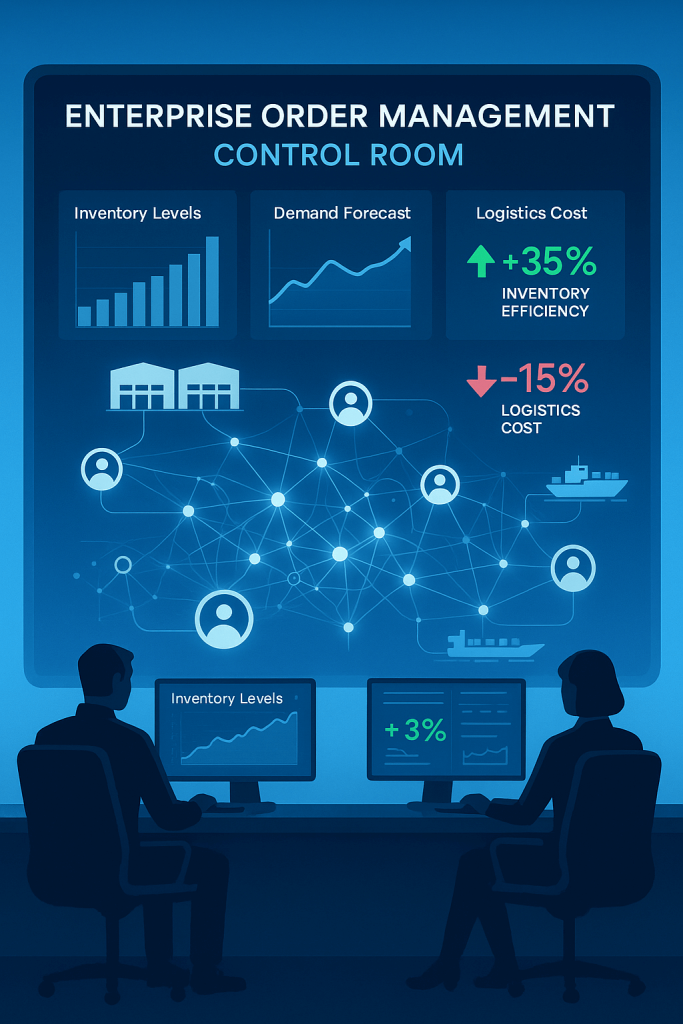
Still, AI is making these systems more efficient. AI helps with inventory management and supply chain management forecasting.
It predicts demand more accurately. It spots potential issues. This leads to 15% lower logistics costs and 35% better inventory levels.
AI also powers personalized customer experiences. It offers proactive communication. It makes an order processing system smarter and more responsive.
Enterprise OMS can meet evolving customer needs ike the central command of a highly complex operation.
What Exactly is an OMS and Why Does Business Need One?
The journey of an order is complex. An order management system streamlines it all. This ensures efficiency and delight for customers.
What’s the core difference between basic order management software and a full enterprise order management system?
Think of basic order management software as a rowboat; it handles simple tasks. An enterprise order management system (OMS) is a mighty cruise ship.
It’s for large businesses with many sales channels. It orchestrates the entire order journey. This means real-time inventory visibility across all locations.
It integrates deeply with other vital systems, like ERP for finances. Now, businesses want flexible, integrated solutions. Not just basic order tools.
How does an order processing system directly improve business efficiency and customer satisfaction?
An order processing system is like a well-oiled machine. It automates tasks. This cuts errors and speeds up delivery. This means faster fulfillment and accurate orders. Customers get proactive updates. Good service leads to repeat buys.
When is the ideal time for a business to invest in an OMS platform?
Invest in an OMS platform when growth brings pain. If inventory is often wrong, orders are delayed, or managing multi-channel sales is hard, an OMS is vital.
For example, if “buy online, pick up in-store” (BOPIS) is a struggle, it’s time. The complex omnichannel retail of 2025 makes an OMS platform an urgent need.
What are the most significant problems an Enterprise OMS solves for modern businesses?
An Enterprise OMS fixes major business challenges:
A . Scattered Data: It gathers all order data into one clear view.
B . Bad Inventory: It provides live, accurate inventory management. This prevents selling out or having too much stock. Businesses using IoT for inventory can cut costs by 15% and boost inventory turns by 10%. (Source: Infosys BPM).
C . Slow Fulfillment: It directs orders to the best spot. This means quicker, cheaper delivery. This can slash delivery times by 22%.
D . Manual Mistakes: It automates tasks, cutting human error. AI automation can cut errors by up to 50% in data-heavy roles. (Source: Bain & Company).
E . Customer Experience: It ensures accurate orders and easy returns. This builds customer loyalty besides saving their data breaching.
F . Lack of Growth Capacity: It provides the framework for more orders and expansion.
Essential Features: What Key Capabilities Define a Modern OMS?
Today’s market demands more than just basic order handling. An advanced OMS platform must offer deep capabilities to truly shine.
What are the must-have functionalities of a top-tier OMS platform?
A top-tier OMS platform goes far beyond simple tracking. It offers real-time inventory visibility across all locations.
Think of it as a live map of all your stock. It also needs smart order routing. This is like an expert traffic controller. It sends each order to the best fulfillment spot.
Decisions are based on stock, cost and delivery speed. Crucial features include strong payment processing for all payment types.
Also, smooth handling of returns and refunds. Powerful reporting tools are essential too. These analytics give insights into order trends.
They also show operational bottlenecks. Businesses can then adapt quickly. Without these, an OMS is merely a ledger, not a strategic asset.
How does an Enterprise OMS handle orders from all sales channels?
An Enterprise OMS acts as a central hub for all orders. Customers buy from an e-commerce order system, a physical store, a mobile app, or social media.
This prevents overselling or running out of stock. Inventory is instantly updated across all channels. It’s like having one brain for all your sales arms.
What role does real-time data play in an effective order processing system?
Real-time data is the heartbeat of an effective order processing system. It’s not about old sales figures. It’s about seeing what’s happening right now.
This instant info lets businesses make quick decisions. If an item sells out online, the system instantly updates all channels. This prevents customer disappointment.
Immediate insight helps businesses adapt fast. It gives them an edge. (Source: Google Cloud: Data Engineer).
Imagine predicting demand spikes and adjusting stock before they happen. This power comes from real-time data with an automated order system. It leads to 15-25% faster order processing times. This is by reducing manual steps. (Source: Coderapper).
What critical integrations should an OMS platform offer (e.g., with ERP, CRM)?
A modern OMS platform isn’t alone. It’s part of a connected ecosystem. Critical integrations are vital:
ERP (Enterprise Resource Planning)
This link is like connecting the OMS to the company’s financial brain. It moves order, inventory and billing data to financial systems. This stops errors and automates accounting.
CRM (Customer Relationship Management)
This integration gives a full view of the customer. Sales and service teams see order history and preferences. This allows personalized service and faster problem-solving. (Source: Salesforce).
WMS (Warehouse Management System)
This connects the OMS platform directly to the warehouse. It optimizes picking, packing and shipping. It’s the direct link to fulfillment.
Shipping Carriers
Direct integration with carriers simplifies label creation. It also handles tracking numbers and ensures accurate shipping costs.
Payment Gateways
Secure connections for processing payments are a must. These integrations create a unified shopping experience. 60% of large retailers are expected to adopt this by 2026. (Source: CS-Cart Blog). This improves customer experience and operations.
Inventory & Supply Chain: How Does OMS Optimize Operations?
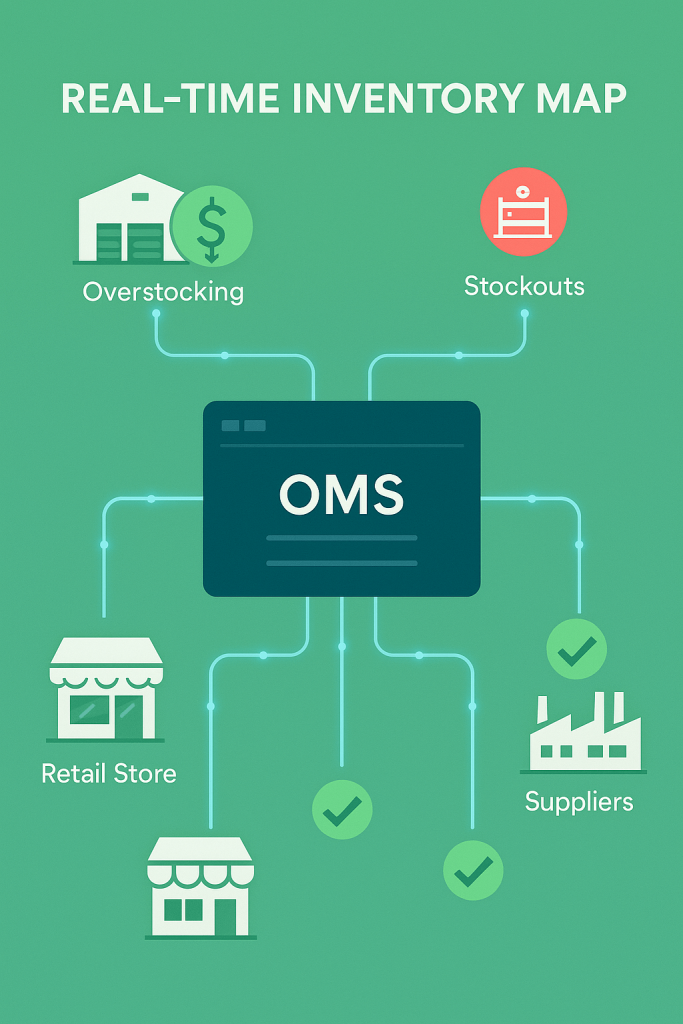
Effective inventory and a smooth supply chain are the lifeblood of product businesses. An OMS platform plays a crucial role in making these operations flawless.
How does an Enterprise OMS revolutionize inventory management?
An Enterprise OMS gives you a single, unified view of all your inventory. Imagine seeing every single item you own, no matter where it is.
This is real-time inventory visibility. It includes warehouses, physical stores and even items with suppliers. This clarity transforms inventory management. It cuts down on overstocking.
Overstocking ties up cash like a heavy anchor. It also prevents stockouts, meaning you don’t miss sales. The system tracks items as they move.
It automatically updates counts when sales happen or new stock arrives. This seamless updating means physical and digital stock levels always match. This precision is vital for timely fulfillment.
What is the impact of an OMS platform on overall supply chain management efficiency?
An OMS platform acts as the brain of your supply chain management. It connects all moving parts: orders, inventory and fulfillment.
This automates tasks like sending orders to the right warehouse. It also ensures proper communication between teams. This reduces delays and errors. The result? Faster, more accurate deliveries.
This improved efficiency is critical. Only 6% of businesses achieve full supply chain visibility. (Source: Procurement Tactics). An OMS boosts productivity. It allows staff to focus on strategic tasks, not manual work. This leads to better overall performance.
Can an order processing system prevent stockouts and optimize stock levels across locations?
Absolutely. A strong order processing system is key to preventing stockouts. It also optimizes inventory across various locations.
It does this by using real-time data. The system constantly monitors stock levels. When an item falls below a set threshold, it can automatically trigger reorders.
This is like having a watchful guard, always ready to restock. It also allows for intelligent distributed order management.
If one location is out of stock, the system can route the order to another. This ensures the customer still gets their item quickly.
This approach dramatically reduces the risk of missed sales due to unavailable products. (Source: Linnworks).
How does an OMS contribute to better decision-making in the supply chain?
An OMS platform provides deep insights. It collects vast amounts of data on sales patterns, inventory movements and fulfillment performance.
This data isn’t just raw numbers. The OMS uses analytics and dashboards to turn it into actionable insights. Businesses can track key metrics like order fill time, fulfillment costs and return rates.
This transparency helps identify inefficiencies. It allows for proactive adjustments in the supply chain management.
For example, recognizing a seasonal demand surge means adjusting inventory before a stockout. This data-driven approach leads to smarter decisions. It helps optimize resource allocation and improve overall agility. (Source: NetSuite).
Automation & Growth: Fuel E-commerce and Multi-Channel Expansion
Automation in order management isn’t just about speed. It’s about scaling your business and delighting customers. It turns chaos into order, allowing businesses to thrive in competitive markets.
How can an automated order system propel the growth of an e-commerce order system?
An automated order system is like rocket fuel for an e-commerce order system. It removes manual roadblocks and ensures cybersecurity.
Tasks like order capture, payment checks and shipping label creation happen instantly. This frees up staff. They can then focus on sales and strategy, not repetitive data entry.
Automation also means fewer errors. This speeds up order fulfillment. Quicker deliveries make customers happier.
Happy customers return and spread the word. This fuels organic growth., E-commerce sales are expected to surpass $6.8 trillion globally. (Source: SellersCommerce). Automation helps businesses grab a bigger slice of this growing pie.
What are the advantages of using an Enterprise OMS for multi-channel order management?
An Enterprise OMS is crucial for multi-channel order management. Imagine selling across your website, Amazon and a physical store.
Without an OMS, managing orders from each is a mess. An Enterprise OMS unifies all sales channels. It pulls all orders into one central system.
This means you have a single source of truth for every order. It prevents overselling items not in stock. It also allows flexible fulfillment. You can offer “buy online, pick up in-store” (BOPIS) or ship from any location. This flexibility matches customer expectations.
It boosts loyalty by making shopping easy, no matter the channel. This unified approach cuts operational complexity. It builds a more agile business. (Source: Sellercraft OMS).
How does automation within an OMS platform reduce errors and speed up order processing?
Automation within an OMS platform is a fresh shift for accuracy and speed. Manual processes invite errors.
Think of typos in addresses or wrong item picks. Automation cuts these human mistakes. It ensures data is captured and moved correctly every time.
Tasks like order validation and inventory checks happen automatically. This means orders are verified almost instantly.
This rapid verification dramatically speeds up order processing system workflows. For example, if a payment fails, the system can automatically notify the customer.
This stops the order from sitting idle. 72% of successful e-commerce companies already use automation. (Source: SellersCommerce). This focus on automation enhances accuracy and velocity.
What benefits does an automated order system bring to sales and customer experience?
An automated order system brings huge benefits to sales and customer experience. For sales, it means more efficiency.
Employees spend less time on routine tasks. They can focus on selling and customer engagement.
This boosts overall productivity. For customers, it means speed and accuracy. Orders are processed faster.
Deliveries are quicker and more reliable. Automated updates keep customers informed every step of the way. This builds trust. If issues arise, customer service teams have instant access to order details.
This helps them resolve problems quickly. This streamlined, transparent process significantly improves customer satisfaction. It encourages repeat purchases. 86% of consumers will leave a brand after two poor experiences. (Source: Giva). Automation helps avoid those poor experiences.
Order Fulfillment: Ensure Speedy and Accurate Deliveries
Order fulfillment is where promises meet reality. An OMS platform ensures this critical stage is efficient and customer-pleasing.
How does an order fulfillment system directly impact customer satisfaction?
An order fulfillment system is the direct link to customer happiness. Fast, accurate delivery is no longer a bonus; it’s a basic expectation.
77% of online shoppers expect delivery within two hours or less. (Source: ClickPost). When an order arrives quickly and correctly, customers feel valued. Delays or errors break trust.
A smooth fulfillment experience makes customers return. It encourages them to tell friends. 84% of consumers will not return after one poor delivery. (Source: Meteor Space). Excellent fulfillment is like a strong handshake; it builds lasting relationships.
What role does an Enterprise OMS play in optimizing picking, packing and shipping processes?
An Enterprise OMS acts as the maestro for picking, packing and shipping. It uses smart logic. This tells warehouse staff the most efficient ways to pick items.
It can suggest batch picking (collecting many items for multiple orders at once) or zone picking. This cuts down on travel time in the warehouse.
The OMS also generates accurate packing slips and shipping labels. It picks the best shipping carrier based on cost and speed.
This automation prevents manual errors. It speeds up the entire fulfillment process. It’s like having a robotic assistant managing the warehouse floor. (Source: Microsoft Dynamics 365).
How does an OMS platform enable efficient tracking and communication throughout the delivery process?
An OMS platform provides full visibility from order to delivery. It connects directly with shipping carriers.
This allows real-time updates on package location. Customers receive automatic notifications: “Order confirmed,” “Shipped,” “Out for delivery.”
This constant communication reduces anxiety. 93% of consumers want regular updates about their shipments. (Source: Meteor Space).
If a delay occurs, the system can proactively alert both the customer and customer service. This transparency builds trust. It turns a potentially frustrating situation into a manageable one. It’s like a transparent pipeline where everyone sees the flow.
Can an order fulfillment system simplify returns and exchanges?
Yes, an order fulfillment system can greatly simplify returns. This is often called reverse logistics.
It handles the process from start to finish. When a customer initiates a return, the OMS can automatically generate return labels.
It can guide the customer through the process. Once the item is received, the system helps track its condition. It automates refunds or exchanges.
This efficiency is vital. Complex returns can cost businesses up to 66% of an item’s original price. (Source: NetSuite).
A smooth return process enhances customer satisfaction. It encourages future purchases, even if the first item wasn’t a fit. It shows a commitment to service beyond the sale. (Source: ReverseLogix).
The AI Advantage: Future-Proof Order Management

Artificial Intelligence (AI) is no longer a futuristic concept. It’s actively reshaping how businesses manage orders.
AI gives an OMS platform predictive power and efficiency that was once impossible. It’s like adding a super-smart co-pilot to your operations.
How is AI capable of enterprise order management systems?
AI is fundamentally changing enterprise order management systems. It moves them from reactive to proactive.
AI can analyze huge amounts of data quickly. This helps find patterns human eyes might miss. It automates complex decisions.
This speeds up workflows and cuts manual errors. AI agents, for example, can handle routine tasks. They free staff for more strategic work.
Many software vendors will provide AI agents built into their systems. (Source: M-Files). This makes OMS smarter, faster and more adaptable.
What specific AI features are now available in a cutting-edge OMS platform?
Cutting-edge OMS platforms now offer powerful AI features. These include:
Predictive Analytics
AI can forecast demand with high accuracy. It looks at sales history, market trends, even weather.
Automated Order Routing
AI directs orders to the best fulfillment center. It considers stock, shipping costs and delivery times.
Fraud Detection
AI algorithms can spot unusual patterns in real time. This helps stop fraudulent orders.
Inventory Optimization
AI continuously adjusts stock levels. This balances product availability with holding costs. It’s like having a crystal ball for your warehouse.
AI-powered Chatbots
These provide instant customer support. They answer questions about order status. This improves customer experience. (Source: Zendesk).
How does AI enhance inventory management and supply chain management forecasting?
AI dramatically enhances inventory management and supply chain management forecasting. Traditional methods relied on simple historical data.
AI uses machine learning algorithms. It analyzes vast, changing datasets. These include real-time sales, social media sentiment and economic indicators.
This allows for precise predictions. Businesses can then optimize inventory levels across all locations. This reduces stockouts and overstocks. AI also helps predict supply chain disruptions. It can suggest alternative solutions. Many large global companies are using AI in their supply chains. (Source: Jusda Global). This leads to 15% reduction in logistics costs and 35% improvement in inventory levels.
What Are the Benefits of AI-Powered Personalization in Orders?

Integrating AI into an order processing system offers huge benefits for customer experience.
AI can analyze customer data. This includes past purchases and browsing habits. It then offers personalized product recommendations.
This makes shopping feel unique to each person. AI-powered tools provide real-time order updates.
For example, if a delivery looks delayed, AI can trigger an early alert to the customer. This proactive communication builds trust. It makes customers feel valued. This level of personalization can significantly increase customer engagement. (Source: Zendesk).
Skills and Guidelines for the Industry
The global Order Management Software market was USD 2.9 billion in 2024. It will reach USD 6.1 billion by 2030. This is a 13.2% CAGR. (Source: Virtuemarket Research).
The multichannel order management market segment is USD 3.4 billion. It should reach USD 6.8 billion by 2032. This is a 10.1% CAGR. (Source: P&S Intelligence). This shows OMS is vital for today’s commerce.
The global E-Commerce Logistics market grew from $743.74 billion in 2024 to $848.87 billion. It’s projected to reach $1.47 trillion by 2029. (Source: ResearchAndMarkets).
The global AI in Supply Chain market is set to explode. It’s projected to grow from USD 9.94 billion to USD 192.51 billion by 2034. This is an astonishing 39% CAGR. (Source: Precedence Research).
To succeed in this field, specific skills are needed:
Tech Savvy: Understand OMS platforms (like SAP, Oracle). Know inventory management software. Data analysis skills are key.
Supply Chain Wisdom: Grasp supply chain management and order fulfillment system processes.
Process Improvement: Know how to make the order processing system workflows better.
Customer First: Understand what customers expect in a digital world.
Project Leadership: Manage OMS projects and integrations.
Machine Learning Expertise: For AI solutions.
Data Science Skills: To interpret large datasets for AI.
If you plan a business here, keep these in mind:
Offer Seamless Integrations: This is a top issue for businesses needing an OMS.
Prioritize Cloud-Native Solutions: Businesses want agile, scalable platforms.
Embed AI: AI for forecasting and automation is essential. It’s a game-changer.
Focus on Post-Purchase Experience: Excellent order fulfillment system and easy returns build loyalty.
Provide Robust Support: Customers need strong support for complex systems.
Secure Data: Strong cybersecurity is essential for sensitive data.
Real-world examples:
PacSun used OMS for its TikTok store. This lets them use ship-from-store for their tech-savvy customers. (Source: Manhattan Associates).
Clearwater Analytics bought Enfusion for $1.5 billion in April 2025. This aims for a unified cloud investment platform. (Source: FinanceFeeds).
Victoria’s Secret used an OMS to streamline internal ordering for over 1,000 stores. This removed manual spreadsheets. It cut errors and boosted efficiency in store operations. (Source: Deck Commerce Case Study).
Conclusion
Your Enterprise Order Management System unites every sale and stock like a single pulse. AI sharpens decisions. Orders move fast and smoothly. Customers stay loyal because you deliver what they want on time, every time. Problems shrink. Growth feels natural and steady. The future is clear and full of promise. This system isn’t just tech, it’s your business’s strongest ally. Success starts here and it’s just getting better.
FAQ
What is enterprise order management?
Enterprise Order Management (EOM) joins all sales, stock, shipping and returns in one system. It shows every order in real time., 80% of big retailers use EOM.
Market size grows 12% yearly, hitting $8.5B by 2033. Speed wins: 49% want free 2‑day shipping. 40% want same‑day. AI lifts accuracy 20% and cuts complaints 35%. Returns hurt: $890B in 2024 (17% of retail). EOM fixes this with smart routing and auto returns.
What is the difference between ERP and OMS?
ERP manages company-wide tasks like finance and HR. It handles many departments. OMS only manages orders, stock, shipping and returns in real time.
85% use ERP, but 62% use OMS to speed orders. OMS raises order accuracy by 20% and customer happiness by 30%. ERP is broad; OMS is focused on orders.
What does an OMS system do?
An OMS tracks orders from sale to delivery. It links sales, stock, shipping and returns live., 70% of stores use OMS. It cuts errors by 20% and speeds shipping by 30%. OMS manages stock across channels. It also automates returns. Customers are 35% happier with OMS.
What are the three core functions of enterprise management?
Enterprise management has three core functions: planning, execution and control. Planning sets goals and strategies. Execution carries out tasks. Control monitors results and fixes problems.
92% of companies use AI to improve these functions. AI boosts efficiency by 25% and reduces risks by 30%. These steps help businesses grow and stay flexible.
Which are the three types of ERP?
The three types of ERP are cloud ERP, on-premise ERP and hybrid ERP. Cloud ERP runs online and serves 60% of businesses.
On-premise ERP is installed on company servers, used by 30%. Hybrid ERP mixes both and grows fast, with 10% adoption. Cloud ERP offers easy updates and flexibility. On-premise gives more control. A hybrid combines both benefits.