


You may struggle to get accurate results from AI tools. The problem is that prompts are not structured correctly.
Fixing this requires professionals who can design, refine and test prompts. These prompts guide AI to deliver accurate and measurable outputs.
Still, prompt engineering jobs involve creating and optimizing prompts. They also include managing prompt systems and integrating AI into business workflows to deliver results.
I recently helped a client running an online SaaS analytics platform. Their automated reports were confusing.
They were also inconsistent. By applying prompt optimization techniques, the AI started producing clear, reliable insights.
These insights were tailored to each user. The result improved satisfaction and retention.
The demand for skilled prompt engineers is growing across e-commerce, SaaS, marketing and finance.
Companies need professionals who can improve AI outputs. They also need people who reduce errors and ensure cost-effective performance.
Are Prompt Engineering Jobs Becoming a Core Business Skill?
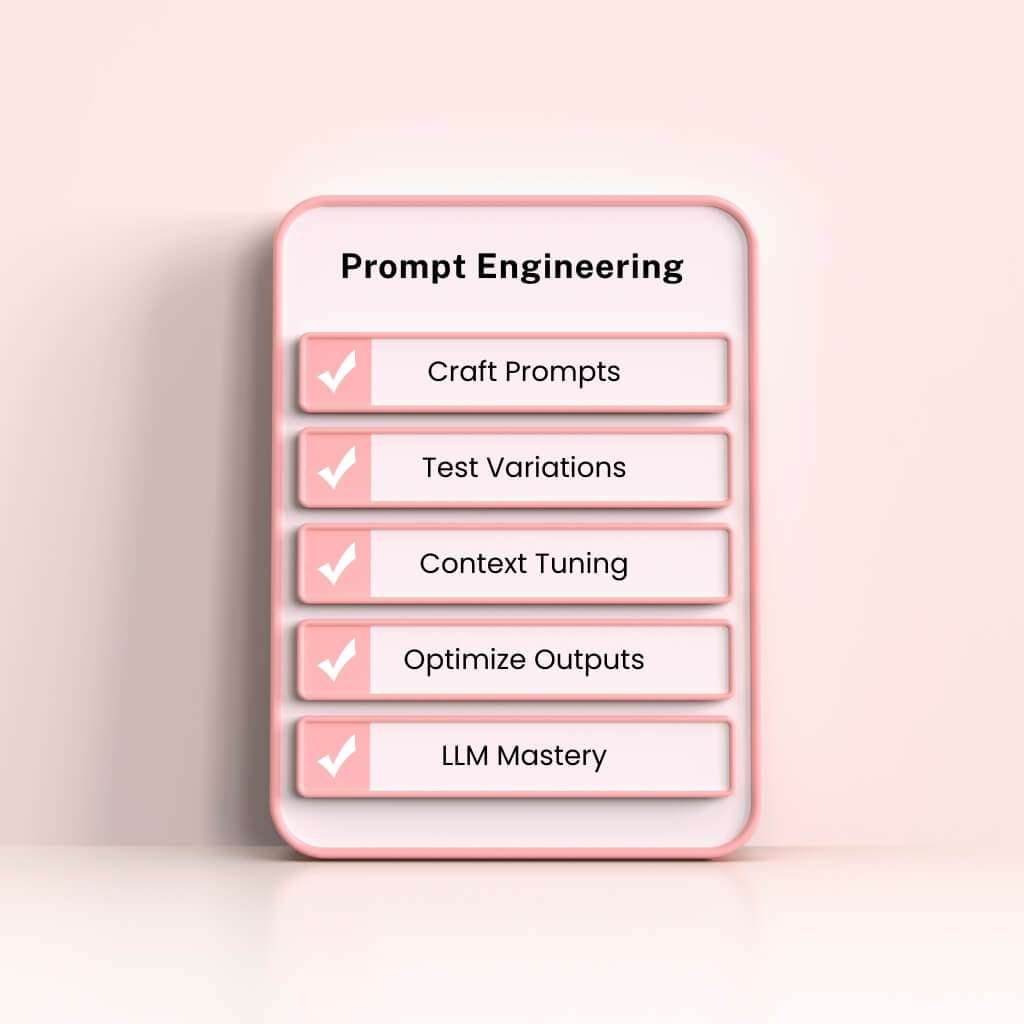
A prompt engineer writes the instructions (prompts) given to large-language models (LLMs).
They try different wording, structure and context until the model gives the right kind of answer.
They run tests and compare results to see which prompt works best. They team up with developers, data scientists or business teams. They embed those prompts into apps or workflows.
They also monitor how well those prompts perform over time and adjust them when outputs drift or model versions change.
They often perform the following tasks
1 . Craft and refine prompts for tasks like content generation, Q&A or image-generation.
2 . Test models using those prompts, measure things like accuracy or cost (API token usage).
3 . Build prompt-libraries, version control or templates that other teams reuse.
4 . Make sure the prompt outputs unite with business needs, style guidelines, or domain requirements.
5 . Address safety, bias or unintended outputs from the model.
Why the role grew: the generative-AI boom and broad model usage
The job grew fast because many businesses started using LLMs in meaningful ways.
Once generative AI moved beyond demos, it entered real business use. Companies soon saw a gap. They needed people who could get real results from the models. You can’t just plug them in and hope for the best.
Organizations found that a model alone often gives weak, irrelevant or expensive outputs.
The human part of designing what to ask the model became vital. Also, the use of these models spread across sectors.
These were content, marketing, legal, customer service and even healthcare. As that happened, the demand for prompt engineers rose. Coursera
How prompt engineering jobs are expanding
1 . It’s shifting from solo prompt writing to building prompt systems: libraries of tested prompts, templates and governance around prompts.
2 . It’s expanding in scope: multimodal prompts (text + image + audio), agent-based workflows where prompts trigger tools or chains of tasks.
3 . It’s often becoming a built-in skill rather than a separate role. Some companies say “prompt engineer” is not a standalone job anymore — the activity is part of many roles.
4 . Demand is moving toward specialists in “AI prompt infrastructure” rather than just prompt crafting.
Who Is Hiring for Prompt Engineering Jobs?
Big tech, startups, agencies and regulated firms all hire prompt engineers. They pay well. They want practical, prompt craft, code skills, product sense and safety checks.
A. Top hiring sectors — who hires and why
1 . Big tech & cloud platforms
They build copilots, search and developer tools. They hire to tune system prompts and agent flows. (Microsoft AI)
2 . AI startups and tooling firms
They sell prompt-powered features. They hire prompt experts to ship fast and cut API costs.
3 . Content, marketing & agencies
They use prompts to make content, outlines and ads. They hire to keep the brand voice consistent.
4 . Finance and consulting.
They use prompts for reports, summaries and risk checks. They hire for accuracy and compliance skills.
5 . Healthcare and life sciences.
They use prompts for note summarization and triage aids. They hire for domain safety and privacy skills.
6 . Legal and compliance firms.
They use prompts for brief drafts and case research. They hire to reduce errors and document risks.
B. Sample job titles & how roles shift
1 . Prompt Engineer. Classic role. Works on prompt design and testing.
2 . Prompt Optimization Specialist. Focuses on cost, accuracy and metrics.
3 . AI Agent Strategist / Agent Engineer. Builds chains and tool calls. Sets orchestration rules.
4 . Prompt Ops / Prompt Governance Lead. Runs libraries, versions and tests.
5 . Copilot Prompt Engineer (product teams). Works in product squads to tune UX prompts.
Jobs moved from single-prompt work to system design. Teams now expect code + docs + tests.
C. Main skills and qualifications employers ask for
1 . Python and API scripting. Send calls, parse results, automate tests.
2 . LLM behavior and prompt patterns. Know how models respond to context and examples.
3 . Multimodal prompt practice. Work with text plus images or files.
4 . Cost and token control. Measure tokens, run cheaper variants, design short system prompts.
5 . Safety and bias checks. Run injection, hallucination and fairness tests.
6 . Experiment design and metrics. A/B tests, success metrics and rollback plans.
7 . Domain knowledge (finance, health, legal). Many firms prefer people who know the domain.
Recent Hiring and Salary Trends
| Metric | Snapshot | Notes |
| Active U.S. listings (LinkedIn) | ~330–4,000 prompt-role listings (varies by search term). | LinkedIn shows 330–4000+, depending on the query and title. (LinkedIn) |
| Indeed U.S. average base | $90,715 / year (updated Oct 26, 2025). | Based on job postings aggregated by Indeed. Low–high range: $53,626–$153,453. (Indeed) |
| ZipRecruiter U.S. avg | $62,977 – $63k / year (Oct 2025 average variant). Hourly shows ~$47.09/hr in another Zip view. | ZipRecruiter shows lower median in some queries; hourly figures vary. |
| High-end roles (big tech) | $120k–$258k base (senior / product prompts, Copilot roles). | Microsoft Copilot postings show ranges up to ~$258k. (LinkedIn) |
| Entry/mid ranges | $60k–$110k is typical across startups and agencies. | Aggregated from ZipRecruiter and job sites. turn0search1turn0search6 |
| Growth signal | AI roles fastest growing (LinkedIn 2025 report). | LinkedIn found AI jobs among the fastest-growing titles. |
| Remote share | High — many listings offer remote or hybrid. | Cloud work suits remote prompt roles. Coursera and job boards show remote options. |
| Contract / freelance | Common on Upwork and niche agencies. Day rates vary widely. | Many firms hire contractors for short projects. |
Yet, big tech pays the most. They value product impact and scale. Aggregators disagree on the exact median. Use Indeed for one view and ZipRecruiter/Glassdoor for another. City matters. New York, SF and Redmond show higher averages.
Upcoming Demand
Expect steady hiring into 2026. Recruiters still add AI roles.
Demand will shift to agent engineering and prompt governance. Firms want people who build systems.
Contract work will grow. Companies use contractors for fast launches.
Salaries will widen. Top firms push pay up for senior prompt leads.
Remote and contract work
Remote gigs suit cloud APIs and prompt tests. Employers list remote options often.
Contractors find work on general freelance sites and niche AI agencies.
Freelance pay changes by skill, niche and client budget. Expect wide swings.
Case study
Website: https://www.jasper.ai/ (customer stories section).
What Jasper did. Jasper built prompt templates and a prompt library for marketing tasks. They productized those templates inside their platform.
Jasper hires prompt engineers and content engineers to keep the brand voice consistent at scale.
Result
Jasper reports customer wins and usage growth from prompt libraries in published customer stories. See their customer stories page for real examples.
How to Prepare for a Prompt Engineering Job

Learn core code and ML basics. Master prompt-specific techniques. Build a visible portfolio with metrics. Add courses and proof. Keep learning, agent and safety work.
Position Yourself to Get This Job
1 . Show 3 live experiments. Include inputs, outputs and metrics.
2 . Publish a small prompt library on GitHub or Notion. Add version notes.
3 . Add code that automates prompts and retries. Show test scripts.
4 . Build one agent chain that calls a tool or a chain of prompts.
5 . Run safety tests and document them. Show how you handle bad outputs.
6 . Focus on one industry and show domain wins. Employers trust domain proof.
A . Skill steps
1 . Core programming & data skills
Learn Python fundamentals: modules, API calls, data formats.
Understand basic machine learning and natural language processing (NLP) ideas. According to DataCamp, prompt engineers need knowledge of NLP and language models behaviour.
Practice sending prompts through an API and handling responses.
2 . Prompt-system engineering skills
a) Read about “formatting, verification chains, output constraints” in the 2025 guide from Lakera AI.
b) Build prompt workflows: for example, ask a model to draft, then ask it to critique its own draft.
c) Learn to handle multimodal inputs (text + image/file) — this helps in many current roles.
d) Track token usage and prompt cost; optimise prompts to run cheaper/leaner.
e) Test prompts under different model versions and measure change in output quality or cost.
3 . Portfolio building for results
a) Create 3-5 public projects that you can share. For each: show the prompt you used, the output, the improvement over time (e.g., “Version 1” → “Version 2” reduced error rate 18 %). Use code repos, screenshots and a short report of what you learned.
b) Use one project to show prompt experimentation specifically: many prompt engineers focus only on “write one prompt,” but the trend is now in prompt systems (chains, libraries).
c) Track metrics like “token cost saved”, “error reduction”, or “speed improvement”. This gives measurable outcomes.
B . Certifications & strategic credentials
Take courses like those on Coursera labelled “Prompt Engineering for Developers”. They offer proof of effort.
Get familiar with frameworks like LangChain or prompt evaluation libraries (many open-source).
But don’t just collect certificates: employers care more about what you built and what you measured.
Because the role is shifting from “write good prompts” to “design prompt systems and governance”, shape your training around that shift.
Does a non-CS background work for prompt engineering jobs?
Yes. You can come from a non-computer-science background (e.g., communications, marketing, domain specialist).
The trick: you must demonstrate you can code or at least interface with APIs and deliver measurable results. Domain expertise helps in niches (finance, healthcare).
The real requirement is: show you can bridge the domain + the prompt-model interface. DataCamp lists language proficiency, subject-matter expertise and critical thinking among needed skills.
C . Tips for staying current
1 . Follow the research: things like “responsible prompt engineering” are now part of the required skill set. For instance, a 2025 paper outlines frameworks for ethical prompt design.
2 . Subscribe to prompt‐engineering newsletters or GitHub repos. Weekly updates help you spot model changes and new patterns.
3 . Build mini-demos every month: test a new model version, test new input types (images, uploads), record your results.
4 . Document your learnings publicly: blog posts, GitHub issues, mini-videos. This builds credibility.
Focus on domain-specific solutions. For example, if you like healthcare, build prompt chains for clinical note summarization. Domain specificity is more valued than generic content generation.
Case study : UiPath (automation + prompt systems)
Website: https://www.uipath.com/ (see case-studies section)
UiPath created a team to integrate prompts inside RPA (robotic process automation). They developed “prompt libraries” for different business functions, measured token-cost savings (approx 45 %) and error reductions over the initial baseline.
The Future of Prompt Engineering Jobs
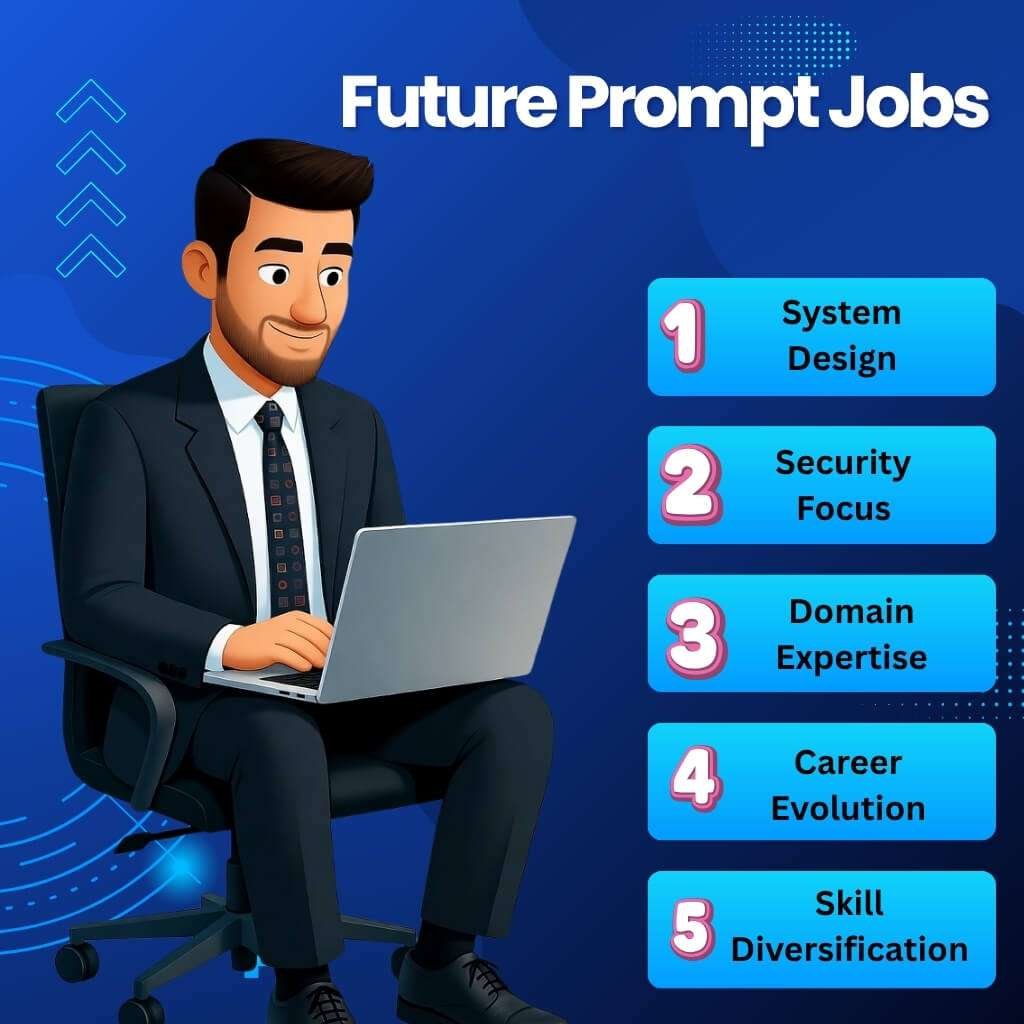
Prompt engineering is not dead. It is changing fast. The job splits into new roles. Careers will favor system work, security and domain depth.
A) Is the dedicated “prompt engineer” role fading or transforming?
Some articles say the title is shrinking. They note that more people learn basic prompt skills. This reduces demand for lone prompt-only hires.
Other reports show firms building agent teams and prompt platforms. These need engineers with broader skills. So the role evolves rather than vanishes.
Still, titles change. The work grows deeper. Employers want people who design whole prompt systems and guardrails.
B) Forecast to 2026+ (what hiring will look like)
1 . Agent engineering rises. Firms will hire people to design multi-step agents. These agents call tools, fetch data and act. Expect many job posts for “agent engineer” and “agent ops.
2 . Multimodal roles grow. Jobs will demand prompts that mix text, images and files. This shows up in product teams and research teams.
3 . Security and governance jobs appear. Prompt-injection and misuse drive demand for defenders who test inputs, logs and RAG controls.
4 . Product roles absorb prompt work. Expect titles like “LLM Product Engineer,” “Copilot Product Engineer,” and similar blends.
C) New specializations you will see more often
1 . Agent Architect. Designs agent flows and tool integrations.
2 . Prompt Security Specialist. Tests for injection and misuse.
3 . Prompt Efficiency Lead (sometimes called prompt amortization). Focuses on token cost and throughput.
4 . Prompt Governance Lead. Runs version control, approvals and audits.
5 . Chief Prompt Officer (emerging executive role in some organizations). This role shapes how AI fits the company’s strategy.
D) The shift from craft to system (what that means for work)
Work moves from single prompts to libraries and templates.
Teams will build observability for prompts. They will log inputs, outputs and failures.
Engineers will write tests for prompts and agents.
Organizations will adopt deployment pipelines for prompt changes.
This reduces ad-hoc prompt editing. It raises product rigor and audit trails.
Will the prompt engineering job title disappear?
No. Titles will shift and multiply. Some companies will drop the exact label. Others will keep it for specialized teams. What matters is the skill set, not the label.
Actionable advice: what you should do now
1 . Learn agent orchestration. Build one agent that calls a tool.
2 . Add prompt security tests to your demos. Show injection checks.
3 . Show cost metrics. Give token savings and dollars saved.
4 . Pick an industry. Build prompts for that domain. Repeatable domain wins attract hires.
5 . Learn observability tools. Know how to trace prompt calls and failures.
6 . Publish a small governance plan. Show version control and review steps.
Expert snapshot
Bob McGrew, former head of research at OpenAI, on human+agent work:
“People will still write, test and maintain the systems around models. AI speeds prototype work, but humans keep the product intact.” — Business Insider.
Conclusion
Prompt engineering jobs are like running a profitable campaign. Every prompt is a sales pitch. Skills are your capital. AI is the team you manage. Results are measurable profits. By 2026, this career will grow your portfolio and influence.
FAQ
Is prompt engineering only for tech people?
No. People from design, writing and research backgrounds also work in prompt roles now.
Many companies train creative professionals to craft structured prompts. The best jobs value logic, clarity and communication, not just coding.
Do I need to know deep learning to start?
No. You need awareness, not mastery. Basic knowledge of how models read and respond helps.
You can learn that from short GenAI or LLM courses on Coursera, Udemy, or NVIDIA’s AI Essentials. Focus on reasoning over complex math.
How do companies measure good prompt work now?
Firms track clarity, token cost, model accuracy and reusability. The best prompt engineers show metrics such as “output precision,” “token-per-task,” and “error rate reduction.” Many include these numbers in reports or dashboards.
Can prompt engineers work freelance or part-time?
Yes. Remote contracting is rising fast. Startups and small agencies often hire on a project basis.
U.S. job boards like Contra, Braintrust and PromptlyHired show steady listings for short-term AI prompt and agent projects.
What is “prompt observability” and why is it trending?
Prompt observability means tracking and comparing how prompts behave across users or versions.
It’s trending because businesses need audit trails for compliance and cost control. Tools like LangSmith and Humanloop lead this field.
How are prompt engineering roles changing inside companies?
Prompt work is shifting from individual tasks to structured systems. Teams now maintain “prompt libraries” like code repositories. Version control, testing and governance are becoming standard job duties.
Are universities in the U.S. teaching prompt engineering now?
Yes. Several universities like Stanford, the University of Pennsylvania and Georgia Tech have added GenAI prompt courses in their computer science and communication programs. Short executive workshops are also growing.
What’s the difference between a prompt engineer and an AI product engineer?
A prompt engineer crafts and tests prompts. An AI product engineer designs full AI-driven products using those prompts.
The second role covers data pipelines, evaluation and user feedback. Many prompt engineers transition into product or agent roles by 2026.