


Buyers now expect simple clicks, instant answers and products that feel built just for them.
This is where digital product development services for small businesses step in. They cover everything from testing an idea with AI tools to building, launching and keeping it updated for changing demands.
I saw this clearly with my brother’s fitness gear shop. He had steady traffic but almost no sales. He was exhausted, thinking maybe the idea wasn’t good enough.
When I looked closer, the problem wasn’t the products; it was the digital setup. The store felt outdated, the checkout was confusing and buyers gave up halfway.
We rebuilt the site with a cleaner design, added a simple subscription plan for loyal customers and fixed payments so they worked in one step. Within weeks, sales doubled and he finally felt proud of his business again.
Digital Product Development Services for Small Businesses
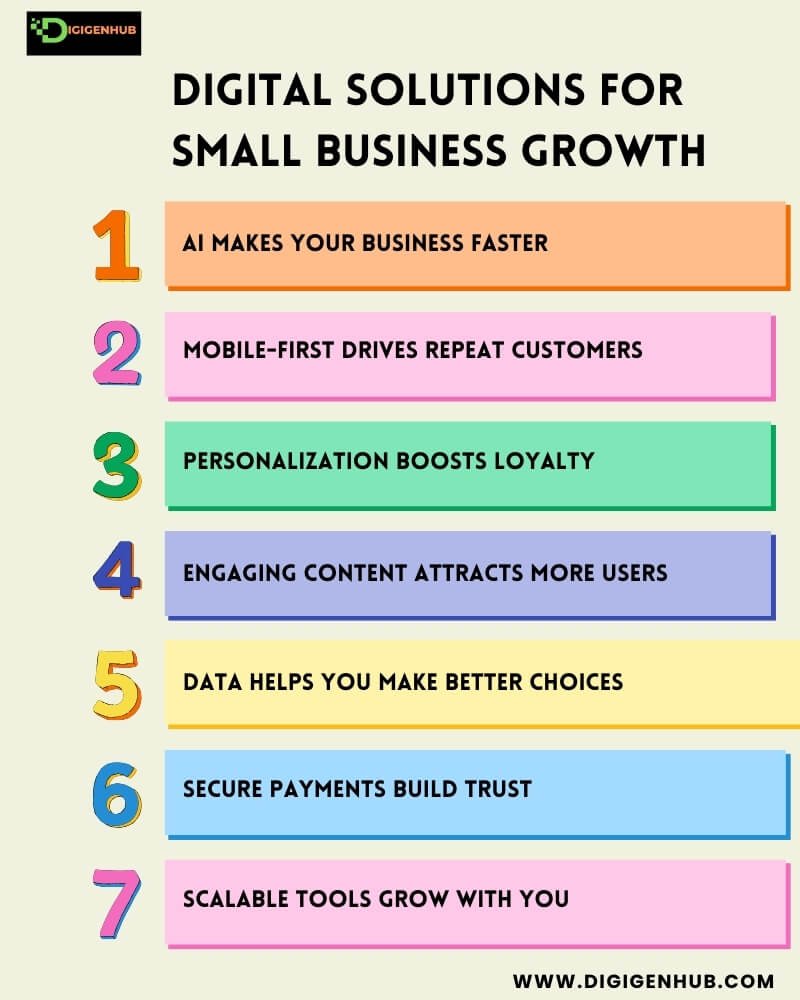
Today, development services mean more than code. They help test ideas with AI before investing.
They release faster versions using low-code tools. They add automation in testing to cut errors.
They connect new systems with old ones. They keep products fresh with updates as customer habits shift.
For small businesses, the effect is direct. More income options. Less wasted effort. Happier customers.
Growth that doesn’t require starting over. Picking the right partner is about speed, trust and long-term support. The process starts with idea validation and ends with a product that works in the market. Let’s see what this usually includes:
1 . Researching the market and testing demand with AI-driven analysis.
2 . Designing clear, user-friendly experiences for web and mobile.
3 . Developing lean versions of the product using agile sprints.
4 . Testing for security, speed and usability before release.
5 . Launching the product with monitoring and support.
6 . Scaling and adding new features as customer demand grows.
This approach ensures small businesses don’t waste money on half-finished or irrelevant products. Instead, every stage connects directly to business goals.
Why small businesses invest big (core benefits)
Small businesses are spending more on digital product development now because the market has changed.
AI-driven consumer demand: Customers expect personalized, fast responses. They use voice search, chatbots and recommendation engines. Businesses that cannot provide this lose trust quickly.
E-commerce growth: The U.S. Census Bureau reports that online retail sales crossed 22% of total retail in 2025, up from 18% in 2023. That share is rising every quarter.
Hybrid business models: Service providers (gyms, restaurants, learning centers) mix online and offline models. Customers book online, pay through apps and expect digital updates.
Freelancer vs. specialized service provider
Freelancers can help with specific tasks, like coding a website or designing a logo. But small businesses that want to build and scale a product need more than one person.
| Aspect | Freelancers | Specialized Partner |
| Skills | Usually narrow (design only, coding only) | Full service: strategy, design, development, testing, support |
| Project scope | Good for small one-off tasks | Handles complex, long-term projects |
| Reliability | Can vary; risk of missed deadlines | Structured process, teams, accountability |
| Support | Often ends after delivery | Provides upgrades, security patches and scaling plans |
| Cost reality | Cheaper short-term but hidden costs in coordination | Higher upfront but lower long-term costs due to efficiency |
For businesses that want to launch and grow digital products, a specialized partner is almost always the safer, long-term choice.
Main Services Every Small Business Should Expect
The evolved essentials are:
1 . Product Discovery & Roadmapping
Uses AI to analyze markets and trends.
Helps test if your idea has demand.
Avoids building products nobody wants.
2 . UI/UX Design
Micro-interactions guide users step by step.
Accessibility is no longer optional under U.S. law.
Mobile-first design ensures phone users get smooth navigation.
3 . Agile Development
Builds minimal viable products (MVPs) first.
Uses low-code and no-code tools to save time and money.
4 . Testing & Deployment
Automated testing catches bugs early.
Security scans prevent data leaks.
Multi-device testing ensures the product works everywhere.
5 . Integration & Maintenance
API-first design allows new features to connect easily.
Ongoing updates keep products fresh.
Support reduces long-term risks.
What are The Trending Digital Product Development Services Now
Customers want products that feel quick, easy and modern. Let’s get a closer look at the services shaping digital growth right now.
1. Generative AI Features
AI assistants, content tools and recommendation engines are now built into many products. An online shop can suggest items based on what a buyer clicks. This drives more sales without hiring extra staff.
Cost & ROI: $20k–$50k extra. ROI comes from higher conversions (15–25%) and staff savings. Payback is usually in 12–18 months.
2. AI-Driven Discovery
Machine learning tools scan markets, track demand and spot gaps. Small businesses can test ideas before they spend on development. This prevents wasted money on features no one uses.
Cost & ROI: $8k–$20k. ROI is immediate by avoiding $50k+ wasted builds. Often pays for itself in the first cycle.
3. Low-Code / No-Code Builds
These platforms let you create apps faster with drag-and-drop tools. They are cheaper than full coding and help launch prototypes within days. Later, you can expand with custom development.
Cost & ROI: Cuts 30–50% of build cost. ROI comes from speed and lower upfront spend. Payback is usually under 12 months.
4. On-Device AI
Instead of sending data to the cloud, AI now works on phones or devices. It gives quicker responses and protects private information. A fitness app, for example, can process workout data directly on the phone.
Cost & ROI: $15k–$40k. ROI is retention (10–15% churn reduction). Payback within 1–2 years in apps handling sensitive data.
5. Digital Twin Models
A digital twin creates a virtual model of a system or process. A shop can test new layouts online before changing the physical store. This reduces trial and error.
Cost & ROI: $40k–$100k. ROI is savings from avoided errors. Retailers often save 2–3x the cost in under 2 years.
6. AR / VR Features
Augmented reality lets customers try clothes, glasses, or furniture online. Virtual reality shows houses or training spaces in detail. These tools are no longer limited to big brands; smaller firms now use them too.
Cost & ROI: $25k–$75k. ROI from 15–20% bigger order values. Payback in 12–18 months if applied to retail or property.
7. API-First Architecture
Apps are built with modular blocks that connect through APIs. This means you can add payment, booking, or CRM features later without rebuilding the entire system.
Cost & ROI: $15k–$40k. ROI is long-term savings by avoiding $50k+ rebuilds. Payoff shows over 2–3 years.
8. Continuous Delivery & Chaos Testing
Updates roll out regularly instead of waiting months. Chaos testing checks if a product holds up under stress. For small businesses, this means fewer crashes during busy hours.
Cost & ROI: $10k–$30k. ROI is downtime avoided. Just 2–3 crash-free weekends can recover the cost.
9. Predictive UX
Apps now adapt to user behavior. A learning app might suggest the next lesson automatically. This keeps users engaged and lowers drop-offs.
Cost & ROI: $20k–$50k. ROI comes from 15–20% higher retention. Subscription apps often recover costs within 18 months.
10. Eco-Aware Development
Products are designed to use less energy and run more efficiently. Many U.S. customers prefer companies that care about sustainability, so this matters for brand trust too.
Cost & ROI: $5k–$15k. ROI is indirect—better brand trust and slightly lower hosting bills. Payback varies but helps long-term.
11. Voice Interfaces
Voice commands are growing popular with smart speakers. A food app could allow “order my usual” instead of tapping menus. This makes the process quicker and more natural.
Cost & ROI: $15k–$40k. ROI comes from higher checkout conversions (10–15%). Payback is often within a year.
12. Offline-First Apps
Not every user has perfect internet all the time. Offline-first apps let people keep using features even when disconnected. Orders or data sync once they reconnect.
Cost & ROI: $20k–$50k. ROI is order recovery. Preventing 10% lost sales pays back within 12 months for high-volume apps.
13. Subscription & Micro-Payment Engines
Recurring payments bring steady income. Small businesses now add subscription plans or let customers pay small amounts for single features. This makes digital products more profitable.
Cost & ROI: $15k–$40k. ROI is strong—200 users paying $10/month = $24k per year. Payback is usually in 12–18 months.
14. Deep Analytics Tools
Modern apps track where users click, how long they stay and where they leave. Heatmaps and flow charts give small businesses a clear view of what works and what needs fixing.
Cost & ROI: $10k–$25k. ROI comes from fixing leaks. Even a 1% better conversion rate often covers the cost in months.
15. Security by Design
Privacy laws such as GDPR and CCPA require strong protections. Security is now built in from the start: encrypted data, safer logins and controlled access. For small firms, this avoids risk and builds trust.
Cost & ROI: $15k–$35k. ROI is protection. Avoiding one breach (average SMB breach cost $150k+) means this service pays itself back many times over.
Should You Invest in Digital Product Development Now?
You can ask, Is it expensive?
It depends on the approach.
If you try to build everything at once, yes, it gets expensive.
If you start with MVP, costs stay lower and you get proof before scaling.
Subscription-based development models now exist, where you pay in milestones instead of large lump sums.
Can it scale with you?
Yes, if the product is built correctly.
Cloud-native systems expand without extra rebuilds.
Modular architecture allows you to add features over time.
API-first designs prevent disruption when integrations are added later.
Benefits:
1 . New revenue streams
SaaS models, digital add-ons, subscription options.
Example: a yoga studio offering a subscription app for online classes.
2 . Efficiency gains
Automating admin, invoicing, scheduling saves hours.
Connecting CRM, payment and email tools avoids duplication.
3 . Better customer experience
Personalized dashboards.
Chatbots for quick support.
Predictive features that anticipate next steps.
4 . Competitive edge
Small firms that adapt quickly can beat larger companies stuck on legacy tech.
5 . Scalability
Growth does not require full rebuilds.
Cloud infrastructure expands on demand.
How to Choose the Right Service Partner
The question may arise, Which service is right for me? Do I need a full product, or just one function? Will I expand in the next 6–12 months? Do I need AI features now, or can I add later? Let’s explain:
A . Checklist
1 . Look for real portfolios with measurable results.
2 . Check if they know your industry.
3 . Ask about their agile process.
4 . Confirm if they offer post-launch support.
5 . Demand clear pricing tied to milestones.
6 . Review case studies with actual ROI.
B . Warning signs
1 . Promises of overnight delivery.
2 . No testing strategy.
3 . Vague or hidden costs.
4 . Refusal to offer upgrades or ongoing support.
C . Future-proofing
Best partners provide:
1 . AI integration
2 . Low-code / no-code capability
3 . Cross-platform (iOS, Android, web)
4 . Modular, API-first builds
Case Study: LawnStarter’s Digital Growth
LawnStarter, a U.S.-based startup connecting homeowners with lawn care providers, began as a small MVP that focused on simple booking and payments.
Over time, they layered on scheduling, reviews and subscription features. By building lean and scaling gradually, LawnStarter grew into a national platform serving thousands of users.
Their story proves that small businesses can start narrow, integrate APIs smartly and expand later. (lawnstarter.com)
Praiseworthy Digital Product development company for Small Business
A digital product agency helps businesses build apps, websites and software that you have already learned. They focus on making digital tools that work for your business.
These companies handle design, development and strategy to create the best products. Let’s look at a few top companies that can help with digital product development.
1 . Toptal
Toptal (toptal.com) is a global talent marketplace founded in 2010. They connect small businesses with top freelancers for digital product development.
Services: Freelance app development, design and consulting.
Best Sectors: Tech, healthcare, finance, e-commerce.
Tech Used: JavaScript, React, Python, Ruby on Rails, Java and AI.
Cost: $50,000–$500,000 depending on the project.
Toptal specializes in providing high-quality talent for businesses in need of skilled professionals. They offer flexible solutions, from short-term projects to long-term partnerships.
2 Intellectsoft
Intellectsoft (intellectsoft.net) is a digital product agency founded in the USA in 2007. They help small businesses create custom software solutions and digital products.
Services: App development, design, enterprise solutions and consulting.
Best Sectors: Healthcare, finance, retail, logistics.
Tech Used: Java, .NET, React, Angular, Python, AWS, Blockchain.
Cost: $50,000–$500,000 depending on the project.
Intellectsoft focuses on delivering enterprise-grade solutions with a strong emphasis on innovation and scalability. They help businesses build and maintain complex digital products.
3. DockYard
DockYard (dockyard.com) is a digital product agency founded in Boston, USA, in 2011. They help small businesses build custom web and mobile apps, focusing on:
Services: Custom app development, UI/UX design and strategic consulting.
Best Sectors: Tech startups, healthcare, retail, education.
Tech Used: React, Ruby on Rails, Elixir.
Cost: $50,000–$500,000 depending on project complexity.
They create scalable, tailored solutions for small businesses, with an agile approach and long-term support.
4 . Netguru
Netguru (netguru.com) is a digital product agency based in, founded in Poland, in 2008. They help small businesses create web and mobile apps.
Services: App development, design, strategy and consulting.
Best Sectors: E-commerce, fintech, healthcare, education.
Tech Used: React, Ruby on Rails, Python, Node.js, JavaScript.
Cost: $50,000–$500,000 depending on the project.
Netguru focuses on creating user-friendly, scalable products. They offer full support to help businesses grow.
5 . SoftServe
SoftServe (softserveinc.com) is a digital product agency founded in Ukraine, in 1993. They help small businesses build web and mobile apps.
Services: App development, design, cloud solutions and consulting.
Best Sectors: Healthcare, retail, finance, tech.
Tech Used: Java, .NET, Python, React, AWS and Azure.
Cost: $50,000–$500,000 depending on the project.
SoftServe creates custom digital solutions with a focus on innovation and scalability. They provide end-to-end support for businesses.
6 . Eleks
Eleks (eleks.com) is a digital product agency based in Ukraine, founded in 1991. They help small businesses develop web and mobile apps.
Services: App development, design, QA and consulting.
Best Sectors: Healthcare, fintech, logistics, retail.
Tech Used: .NET, Java, Python, JavaScript, React, AWS.
Cost: $30,000–$500,000 depending on the project.
Eleks focuses on building innovative and scalable products. They offer full-cycle services from idea to launch.
7 . Zco Corporation
Zco Corporation (zco.com) is a digital product agency founded in the USA, in 1989. They help small businesses create custom web and mobile apps.
Services: App development, design and consulting.
Best Sectors: Healthcare, finance, retail, entertainment.
Tech Used: Java, Swift, Kotlin, React Native, .NET, AWS.
Cost: $50,000–$500,000 depending on the project.
Zco Corporation provides end-to-end solutions, focusing on scalable, custom-built digital products. They have extensive experience in various industries.
8 . R/GA
R/GA (rga.com) is a digital product agency founded in 1977 in the USA. It helps small businesses create innovative digital products and experiences.
Services: App development, design, marketing and consulting.
Best Sectors: Retail, tech, entertainment, finance.
Tech Used: React, Angular, JavaScript, Python, AI and machine learning.
Cost: $50,000–$500,000 depending on the project.
R/GA combines design, technology and strategy to deliver creative, scalable solutions. It is known for its forward-thinking approach and global reach.
9 . Frog Design
Frog Design (frogdesign.com) is a global digital product agency founded in 1969. It helps small businesses create innovative, impactful products.
Services: Product design, app development, strategy and consulting.
Best Sectors: Tech, healthcare, automotive, consumer goods.
Tech Used: JavaScript, React, AI, IoT and machine learning.
Cost: $100,000–$500,000 depending on the project.
Frog Design focuses on creating user-centered designs that solve real-world problems. They offer strategic insights and design expertise for businesses looking to innovate.
10 . IDEO
IDEO (ideo.com) is a global design and innovation consultancy founded in 1991. They help small businesses create innovative and human-centered products.
Services: Product design, app development, strategy and consulting.
Best Sectors: Healthcare, consumer products, education, tech.
Tech Used: JavaScript, Python, IoT, AI and machine learning.
Cost: $100,000–$500,000 depending on the project.
IDEO focuses on solving complex problems through design thinking. They work with businesses to create innovative, user-friendly solutions that have a lasting impact.
11 . ThoughtWorks
ThoughtWorks (thoughtworks.com) is a global technology consultancy founded in 1993. They help small businesses build custom software solutions.
Services: Software development, design, cloud solutions and consulting.
Best Sectors: Finance, healthcare, retail, tech.
Tech Used: Java, Ruby on Rails, Python, React, AWS, Kubernetes.
Cost: $50,000–$500,000 depending on the project.
ThoughtWorks focuses on delivering high-quality software with an emphasis on agile methodologies. They work with businesses to create scalable and efficient digital products.
12 . Appnovation
Appnovation (appnovation.com) is a digital product agency based in Canada, founded in 2007. They help small businesses build custom web and mobile apps.
Services: App development, design, cloud solutions and consulting.
Best Sectors: Healthcare, finance, retail, media.
Tech Used: JavaScript, React, Angular, Drupal, AWS.
Cost: $50,000–$500,000 depending on the project.
Appnovation focuses on delivering tailored, user-centric solutions. They provide end-to-end services to help businesses scale and innovate.
13 . BairesDev
BairesDev (bairesdev.com) is a digital product agency founded in Argentina, in 2009. They help small businesses build custom software solutions.
Services: App development, design, cloud solutions and IT consulting.
Best Sectors: Healthcare, finance, retail, tech.
Tech Used: Java, .NET, React, Angular, Python, AWS.
Cost: $50,000–$500,000 depending on the project.
BairesDev specializes in delivering scalable and high-performance solutions. They work with businesses to build and maintain innovative digital products.
14 . Simform
Simform (simform.com) is a digital product agency founded in the USA in 2010. They help small businesses create custom software and digital products.
Services: App development, design, cloud solutions and consulting.
Best Sectors: Healthcare, fintech, retail, tech.
Tech Used: Java, Python, React, Node.js, AWS, Azure.
Cost: $50,000–$500,000 depending on the project.
Simform focuses on delivering end-to-end software development solutions with a strong emphasis on scalability and performance. They partner with businesses to create innovative and reliable digital products.
15 . Droids On Roids
Droids On Roids (droidsonroids.com) is a digital product agency based in Poland, founded in 2011. They help small businesses develop custom mobile and web apps.
Services: App development, design and consulting.
Best Sectors: Healthcare, fintech, e-commerce, entertainment.
Tech Used: React Native, Flutter, Swift, Kotlin, Node.js, AWS.
Cost: $30,000–$500,000 depending on the project.
Droids On Roids specializes in creating high-quality mobile apps with a focus on user experience. They offer full-cycle development from concept to launch.
Conclusion
Many great companies can help small businesses grow. They build apps, websites and software just for you. These tools can save time, reach more people and help you stay ahead. With the right help, your business can do amazing things. The future is bright—let the right team help you get there!
FAQ
What are digital product services?
Digital product services are services delivered online. They include apps, software, online courses, ebooks and virtual consultations.
Users access them through technology, without needing physical products. These services offer convenience and can be easily scaled. They are a big part of today’s digital world.
How to develop a product from scratch?
Start by researching market needs and gathering customer feedback. Design a user-friendly product with a focus on mobile-first experiences and security.
Build a prototype. So, test it with real users and make quick improvements based on feedback. Finally, launch the product. Of course, ensure it scales well. Then keep updating it with ongoing support and improvement.