


Performance marketing works when the data is correct. So, you need to obtain the expertise to make better decisions and avoid wrong reports.
Many businesses still rely on incomplete tracking. A large part of user behavior stays hidden due to privacy rules and browser limits.
This creates false reports. Campaigns look profitable, but real revenue tells a different story.
I see this often in my work with online businesses. They spend thousands on ads but cannot explain where profit actually comes from.
Shift your focus from surface metrics to real outcomes. Build your own data system. Track actions on your server, not just in the browser.
Send clean data into your campaigns. Then guide the system using profit signals, not clicks. When your data becomes accurate, results improve without confusion.
What is Performance Marketing?
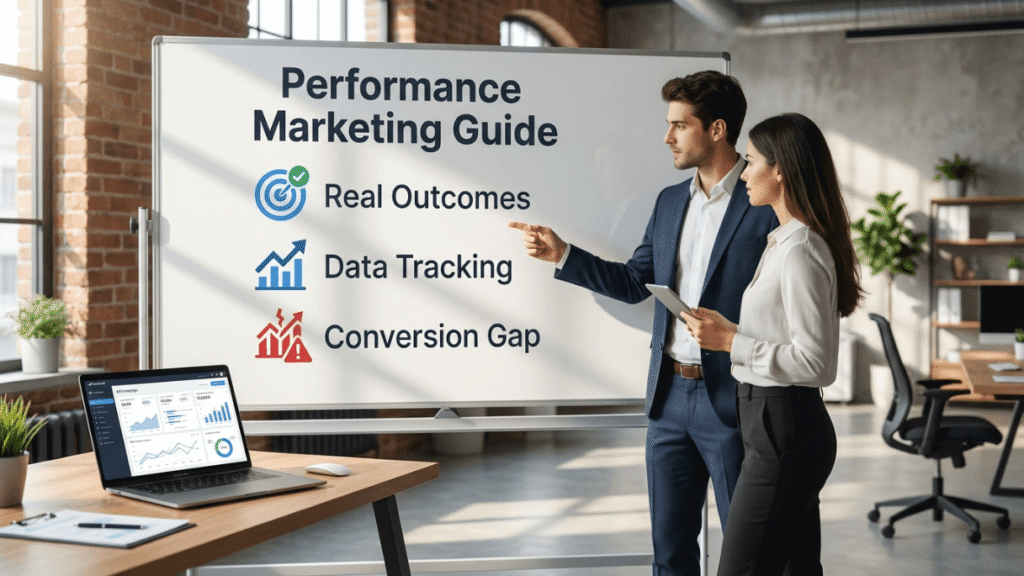
Performance marketing means you pay only when a user completes a defined action such as a purchase, a qualified lead, or a repeat order.
The meaning has changed today. It is no longer about traffic or clicks. It is about verified outcomes tied to real business value.
Why Performance Marketing has Changed So Fast
Tracking systems no longer capture full user journeys. A large part of conversions goes unreported. This leads to wrong optimization decisions.
Industry research shows that businesses can miss 20% to 40% of actual conversions when relying only on browser tracking.
My observation from work
When I audit campaigns, I often find a gap between:
1 . Platform-reported conversions
2 . Actual business revenue
After fixing tracking, reported conversions increase without increasing ad spend. This proves the issue is data loss, not campaign failure.
The New System for Performance Marketing
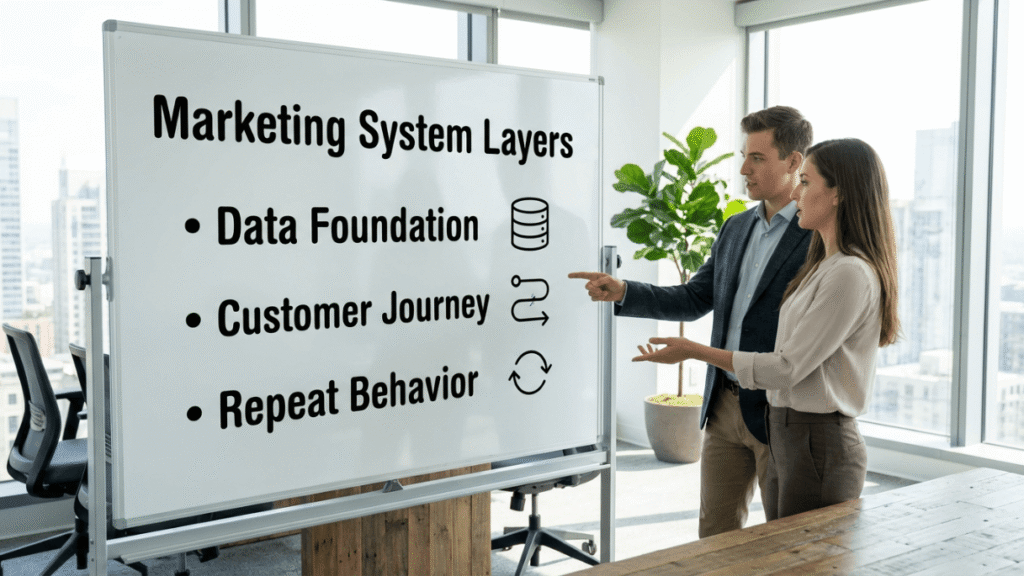
Performance marketing now runs on a connected system. Three layers work together.
If one layer breaks, results drop. I have seen many campaigns fail not because of budget, but because one of these layers was weak.
1. Data Foundation: Build Your Own Source of Truth
Most marketers still depend on browser tracking. That creates gaps. A large part of user activity stays hidden.
You need to collect data from your own system.
Focus on:
A . Exact purchase value
B . Customer journey steps
C . Lead quality from sales feedback
D . Repeat purchase behavior
An eCommerce brand selling fitness gear tracked only “purchase events.” They missed repeat buyers and product-level profit data.
After fixing this, they found that returning customers generated over 60% of total profit.
They shifted the budget toward retention. Revenue stayed stable, but profit increased.
Another case
A service-based business tracked all leads as equal. But only 30% became paying clients.
After sending “qualified lead” signals instead of all leads, their cost per acquisition dropped sharply.
Still, not all data is useful. Only accurate and filtered data improves results.
2. Decision Layer: Let Systems Learn, But Feed Them the Right Signals
Modern systems depend on machine learning. They study patterns from your data.
They decide:
1 . Who is likely to convert
2 . When to show your message
3 . How much to spend on each user
But they cannot think like a business owner. They follow signals.
If you send only “click” or “page view” data, the system will chase cheap traffic. It will not care about sales.
If you send high-value purchase data, the system learns what good customers look like.
If you send repeat-customer signals, it starts to find similar users.
A brand focused on low-cost conversions. They got many sales but low profit.
When they switched to sending profit-based signals, the system reduced low-value buyers and found high-spending customers instead. So, the system does not fail. Poor input causes poor output.
3. Creative Layer: Your Content Decides Who Sees Your Ads
Targeting has changed. Systems now read your content.
They analyze video visuals, spoken words, and text in ads.
Then they match your message with user intent.
If your video talks about “back pain relief,” it reaches users who recently searched or watched content on that problem.
You do not need to define the audience manually. We tested five different video angles for one product:
1 . One focused on beginners
2 . One on professionals
3 . One on cost savings
Each version attracted a different audience group. Cost per lead dropped because the system matched intent better.
Ads with clear problem statements perform better than generic branding. People respond when they feel understood.
So, you must be connected with these three layers :
1 . Strong data gives clarity
2 . Clear signals guide decisions
3 . Focused content attracts the right users
If you fix only one layer, the results stay unstable. When all three work together, performance marketing becomes predictable.
I stay connected with many marketers and business owners. One pattern is clear.
Those who:
1 . Track profit instead of clicks
2 . Use their own customer data
3 . Test different messaging angles
Always get better results. One business I worked with changed nothing in design or offer.
They only fixed data tracking and adjusted bidding based on profit. Within two months, their net profit increased significantly.
Performance Marketing Moves That Increase Profit
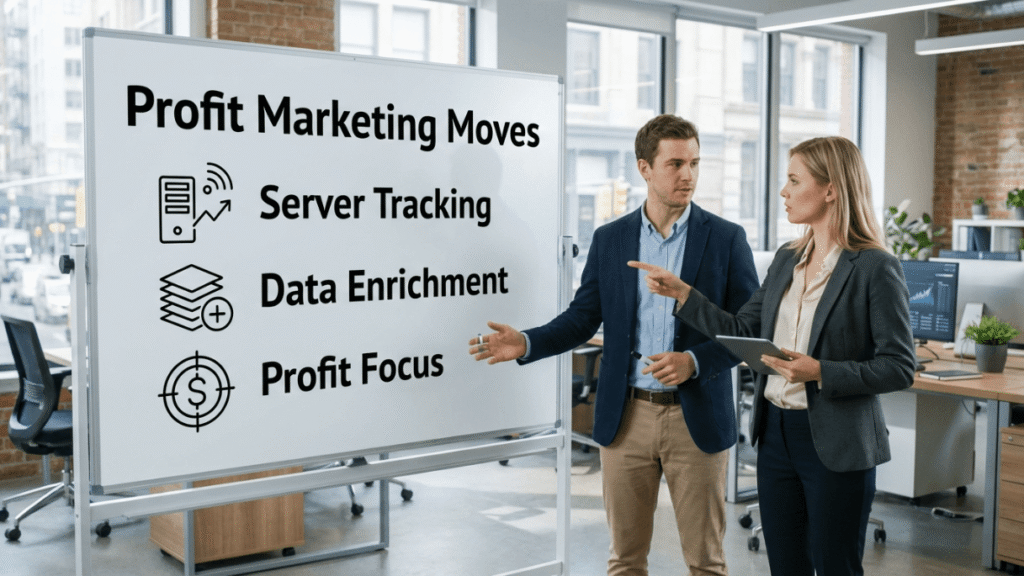
These are not theories. I tested these across different business models. Each one solves a specific gap that most marketers still ignore.
1. Move tracking away from the browser
Browsers block a large part of user activity. This creates blind spots.
What to do
Send events from your own server.
Example
A U.S. fashion store saw fewer reported sales after privacy updates. Actual orders did not drop. After switching tracking source, reported conversions increased by over 20%.
Result:
You see real performance, not partial data.
2. Send enriched customer data
Basic “purchase” data is weak.
What to do:
Add:
A . Order value
B . New vs returning customer
C . Product category
Example:
A home decor brand noticed repeat buyers spent 2x more. After sending this signal, campaigns started targeting similar users.
Result:
Higher-value customers enter your funnel.
3. Optimize for profit, not revenue
Revenue hides cost structure.
What to do:
Track profit per product.
Example:
One product generated high sales but a low margin. Another sold less but had a double margin. After shifting focus, overall profit increased without raising spending.
So, you stop scaling unprofitable sales.
4. Measure the impact of ads
Some users would buy without ads.
What to do
Run split tests between exposed and non-exposed groups.
Example
A subscription brand paused ads in one region. Sales dropped only slightly. This showed that many conversions were organic.
You invest only where ads create new demand.
5. Let content define targeting
Manual audience selection is fading.
What to do:
Create multiple message angles.
Example:
A software company ran ads with three angles. These are cost savings, time efficiency and ease of use.
Each version reached a different group. So, a better match between the message and the user’s intent.
6. Focus on question-based search behavior
Search queries now sound like conversations.
What to do
Build campaigns around real questions.
Example
A furniture brand targeted “best desk for a small apartment.” This drove higher intent traffic than broad terms.
Yet, users arrive with clear buying intent.
7. Collect direct input from users
Do not guess user needs.
What to do
Ask simple questions on landing pages.
Example
A skincare brand asked users about their skin type. They showed tailored offers based on answers.
Of course, higher conversion due to relevance.
8. Connect sales feedback with campaigns
Not every lead matters.
What to do
Track which leads turn into paying customers.
Example
A service business marked only “closed deals” as success signals. Lead volume dropped, but revenue increased.
You attract serious buyers, not just inquiries.
9. Adjust bids based on margins
Spending must follow profit logic.
What to do
Increase bids on high-margin products.
Example
An electronics store found accessories had better margins than the main products. They shifted the budget accordingly.
You can gain more profit from the same spending.
10. Filter non-human traffic
Not all clicks come from real users.
What to do
Monitor unusual patterns. Work for very short sessions and repeated clicks
Example
A campaign showed high traffic but no conversions. After filtering invalid visits, performance metrics became accurate.
So, you stop paying for fake engagement.
11. Re-engage past customers
New customer acquisition costs more.
What to do
Target users who have already purchased.
Example:
An online store promoted complementary products to past buyers. The conversion rate was much higher than cold traffic.
This method ensures lower cost and faster sales.
12. Use large-screen reminders
People consume content on multiple devices.
What to do
Show ads on bigger screens to reinforce memory.
Example
A brand noticed users saw ads on TV and later completed purchases on mobile.
13. Improve product or service data quality
Clarity builds trust.
What to do
Provide clear descriptions, honest pricing and customer feedback.
Example
A product page with detailed specs and reviews converted better than a minimal page.
14. Test different opening messages
First impressions decide engagement.
What to do
Change the first few seconds of your message.
Example
One ad started with a problem statement. Another started with features. The problem-focused version performed better.
15. Control automation with logic
Automation lacks business awareness.
What to do
Set rules like pausing out-of-stock items and limit budget on low-margin products.
Example
A store kept spending on unavailable products. After adding manual checks, wasted spend dropped.
So, each strategy fixes a specific weakness. When combined, they create a stable system. You reduce waste and focus only on actions that bring profit.
How Paid Search Works Now
Users no longer browse multiple links. They often act directly from summarized results.
So, your offer must appear as a ready-to-act option.
That means clear service details, transparent pricing and strong trust signals.
How Content Increases Targeting on Social Platforms

The system no longer depends heavily on selected interests.
Instead, it reads video content, text and user behavior.
When we tested different messaging for one product, each message attracted a different type of buyer. This cost per lead dropped significantly
Step-by-Step System to Apply Today
Step 1: Fix your tracking
Ensure your data is complete and accurate.
Step 2: Define meaningful actions
Focus on purchases and qualified leads.
Step 3: Connect business data
This includes profit margins and customer quality.
Step 4: Launch campaigns
Focus on outcomes, not clicks.
Step 5: Test messaging
Create multiple variations.
Step 6: Scale based on profit
Increase spending only where profit exists.
Common Mistakes I See Often:
1 . Chasing traffic instead of results
2 . Ignoring missing data
3 . Trusting default reports blindly
4 . Not testing messaging properly
Practical Tips for Better Results
1. Keep communication simple
A clear message builds trust.
2. Answer the user questions
Focus on what people actually ask.
3. Track everything that matters
Incomplete data leads to wrong decisions.
4. Focus on repeat buyers
They bring long-term value.
5. Review performance regularly
Do not rely on past success.
Conclusion
Most people try to improve ads first. That approach rarely works. The real issue is data quality.
If your data is incomplete, your decisions will be wrong. So make a clear action plan.
Build your own tracking system. Collect accurate customer data. Focus on meaningful outcomes.
Test different messages. Scale based on profit. When you follow this system, results become predictable. You stop guessing and start growing with confidence.
FAQ
How long does it take to see results from paid campaigns?
Most campaigns show early signals within 7–14 days. Stable results usually take 4–6 weeks.
This depends on data quality and how quickly the system learns from user actions.
Can paid advertising work with a small budget?
Yes. Small budgets can still work if you focus on high-intent actions. Clear targeting and strong messaging matter more than budget size.
Which types of businesses get the best results from result-based marketing?
Businesses with clear offers and measurable outcomes perform best. This includes eCommerce, local services, SaaS, and subscription-based models.
How do privacy changes affect digital advertising results?
Privacy rules limit tracking of user behavior. This reduces visibility into conversions. Businesses must rely more on their own collected data to maintain accuracy.
Is this strategy only useful for online businesses?
No. Offline businesses can also use it. Local services, clinics, and stores can track calls, bookings, and visits as measurable actions.
What is the most common mistake in online advertising?
They focus on traffic instead of outcomes. More visitors do not always mean more profit. The focus should be on actions that generate value.
Does paid marketing still work with AI-based search results?
Yes. It still works, but the approach has changed. Your offer must be clear and ready for quick decisions since users act faster inside search results.
How often should I update my ad campaigns for better performance?
Review performance weekly. Make small changes based on data. Avoid frequent major changes, as systems need time to learn and stabilize.