


Growth now depends on how fast a business adapts to new online behavior. Owners who learn to act early, not just react, stay visible, trusted and profitable.
You must plan to build around modern tools, fast marketing shifts and simple execution steps. This system is what many call the online small business basics solution.
I recently helped a friend, a women’s health doctor. She runs an online coaching program for losing belly fat.
Her content was strong, but her website and workflow were scattered. I redesigned her site for mobile users, added clear calls to action and automated email follow-ups with Kajabi.
I launched a subscription program using Stripe. Short workout videos for TikTok and Instagram Reels, with AI-generated captions and hashtags, reached the right audience. Analytics dashboards tracked engagement, sign-ups and retention.
Within two months, her sign-ups doubled, retention improved and engagement soared.
Build the Right Foundation for an Online Business
Many entrepreneurs still struggle with scattered tools and outdated marketing plans.
They spend more time fixing tech than building trust. That’s why an online small business basics solution must focus on practical action.
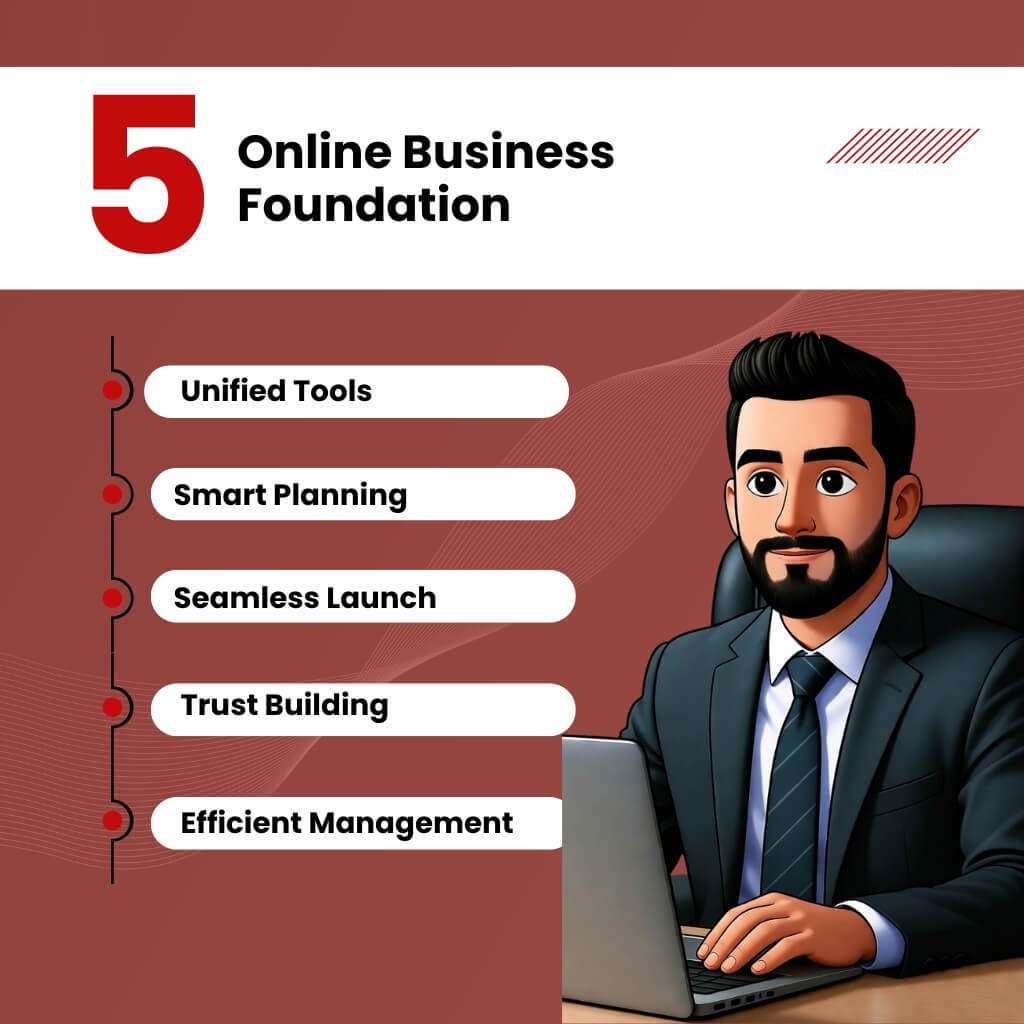
The actions are how to plan, launch and manage every digital process from one foundation.
What does “problem-solution fit” mean today?
You must begin by asking: What exact problem does my product or service solve and for whom?
The tricks of the trade have shifted:
1 . Tools now let you validate demand before full launch (for example, Google Trends, Reddit niche forums, keyword-data tools).
2 . Micro-niches win. A broad niche (e.g., “online clothing”) is less effective than something precise (e.g., “ethical activewear for women 35-50 in US suburbs”).
3 . Small businesses now account for 99.9% of all firms. That means competition is stiff—clarity wins.
How do you pick your niche and idea?
1 . List problems you already know or see in your field.
2 . Use keyword/traffic data to check demand.
3 . Check if you can realistically serve that niche online (product, service, digital).
4 . Test fast: maybe a landing page + email sign-up before full build.
5 . Refine based on feedback.
Do you need to register your online business early?
Yes. Setting up the right legal entity protects you and gives credibility. Choose one: sole proprietorship, LLC, S-Corp, depending on your revenue, liability and tax situation.
Open a dedicated business bank account. Keep business and personal finances separate.
Handle licences, ensure you understand tax rules (sales tax, depending on state).
Legal considerations for online businesses
You must maintain legal rules like registering, following tax laws and protecting customer data. Each region has different requirements, so knowing what applies to you is crucial. Let’s explain:
Do you need a business license to sell online?
Yes, most regions require a business license to operate legally. The requirements vary by location and business type. For example, in the U.S., businesses must register with the appropriate state authorities.
Example: In California, online businesses must register with the Secretary of State.
Taxes and registering
Online businesses must collect sales tax in states with a tax nexus. Registering your business with local tax authorities is essential to comply with tax laws.
Example: In the U.S., businesses must obtain an Employer Identification Number (EIN) from the IRS.
Legal requirements for online transactions
Online businesses must have clear terms and conditions and a privacy policy. These documents protect both the business and the customer. They should comply with data protection laws like GDPR.
Example: Websites often include a cookie consent banner to comply with GDPR.
Set up your business legally in different regions
Legal requirements differ by country. For instance, in the U.S., businesses must comply with federal and state laws. In the UK, companies must register with Companies House. So, perceiving local regulations is crucial.
Example: In Canada, online businesses must register with the Canada Revenue Agency.
Addressing these areas lays a strong foundation for your online business.
How to write a business plan that actually works?
Instead of a 100-page document, use a lean plan that you update quarterly. You should:
1 . Define your target audience and their problem.
2 . Set a one-year goal and 3-month sprint goals (sales, audience size, average order value).
3 . Choose at least one marketing channel and how you’ll measure it.
4 . Detail finances simply: cost structure, pricing, cash-flow for 6 months.
5 . Review the plan monthly and update based on what’s working.
Why is this foundation vital now?
With AI, automation and tools accessible, what used to be a “premium setup” is now expected.
According to a report, generative AI and hyper-personalisation are key small business trends in 2025. If you skip solid foundation work, you’ll struggle to scale or respond when things change.
Choose Actionable Digital Tools That Scale With You

Tools aren’t just extras; they are the infrastructure of your online business.
Which website/build platform should you use?
For a small online business selling products or services in the U.S.:
1 . Use a platform that handles mobile-first design, payment processing, and SEO-friendly architecture.
2 . Options: Shopify (excellent for e-commerce), Wix Studio or Webflow (better for more custom service brands).
3 . Make sure you have SSL, fast hosting and clear navigation. Google now places high importance on page experience and Core Web Vitals.
What accounting/finance tools do you need?
Run your books simply from day one:
1 . Use tools like QuickBooks Online or Zoho Books for U.S. small business tracking.
2 . Set up a chart of accounts suitable for your model (income from product/service, cost of goods, marketing expense).
3 . Track monthly cash flow and run a simple profit-and-loss summary.
What marketing stack works?
1 . CRM + Automation: Use an accessible platform like HubSpot Starter or similar.
2 . Email Marketing: Build a list from day one. Send valuable content + offers.
3 . Social Posting / Scheduling: Tools such as Buffer or Metricool to maintain presence.
4 . No-Code Automations: Use Zapier or Make to connect tools (e.g., new customer → tag in CRM → trigger welcome email).
5 . Security & Privacy: Make sure your tools comply with U.S. data regulations; upgrade cybersecurity. According to recent data, SMBs are increasing their cybersecurity spend.
How to select tools that scale with you
1 . Choose tools with tiered pricing (so you don’t outgrow immediately).
2 . Prioritise integrations (so you can automate later).
3 . Avoid investing heavily in niche tools until your model is validated.
4 . Match tools to what you do today, but with a clear path for six-month evolution.
Why is this tool urgent now
Many small businesses still lag behind because they pick tools poorly, pay too much, or choose something that doesn’t grow.
Smart tool choices mean you spend less effort, avoid re-platforming later and stay agile when algorithms or consumer behavior shift.
Run Daily Operations Like a Modern Digital Brand
Execution is where ideas meet results. Here’s how to run your online business smoothly.
How do you build your online presence?
1 . Create a professional, mobile-responsive website that clearly shows your offer, trust signals (testimonials, guarantees) and a simple call-to-action.
2 . For content, focus on helpful, short-form, mobile-friendly items: quick guides, FAQ pages, short videos. A trend now is short-form content (younger audiences) and authenticity. Coursera
3 . Make sure your site uploads fast, uses structured data when appropriate (for products, FAQ).
4 . Ensure your site is found: On-page SEO (title tags, description, headings), off-page (backlinks, social mentions) and technical (site speed, mobile-first).
How to set up payment processing?
1 . Accept major U.S. payment methods: credit/debit cards, PayPal and maybe Buy Now Pay Later.
2 . Use platforms like Stripe, PayPal or integrated e-commerce payment gateways that handle PCI compliance.
3 . Clearly display terms, shipping/returns and tax handling (especially if you ship across states).
Is dropshipping still valuable?
Yes. But with caution. Dropshipping can let you launch with minimal inventory, but:
You must ensure supplier reliability, shipping times and product quality.
Consider alternatives: holding micro-inventory, print-on-demand, or hybrid models.
Focus your marketing not just on price but on value (service, speed, trust).
Consumer expectations are higher: they expect clarity, fast shipping and excellent support.
What marketing strategy works for small brands now?
1 . SEO: Use content that answers real questions people ask (FAQ pages, “how to” content, product comparisons).
2 . Social Media & Short-Form Video: Platforms like TikTok, Instagram Reels matter. The younger audience drives trends.
3 . Email Marketing: Build a list from launch. Send welcome series, educational content and re-engagement offers.
4 . Paid Advertising: Use targeted ads (Google Ads, Meta Ads) but start with one channel to learn and optimise.
5 . Community & Retention: Create a small community around your brand (newsletter, social group) to drive repeat business.
6 . Customer Service Excellence: Respond fast. Use chatbots or live chat. Good reviews help conversions and SEO.
Measure, Adapt and Future-Proof Your Small Business
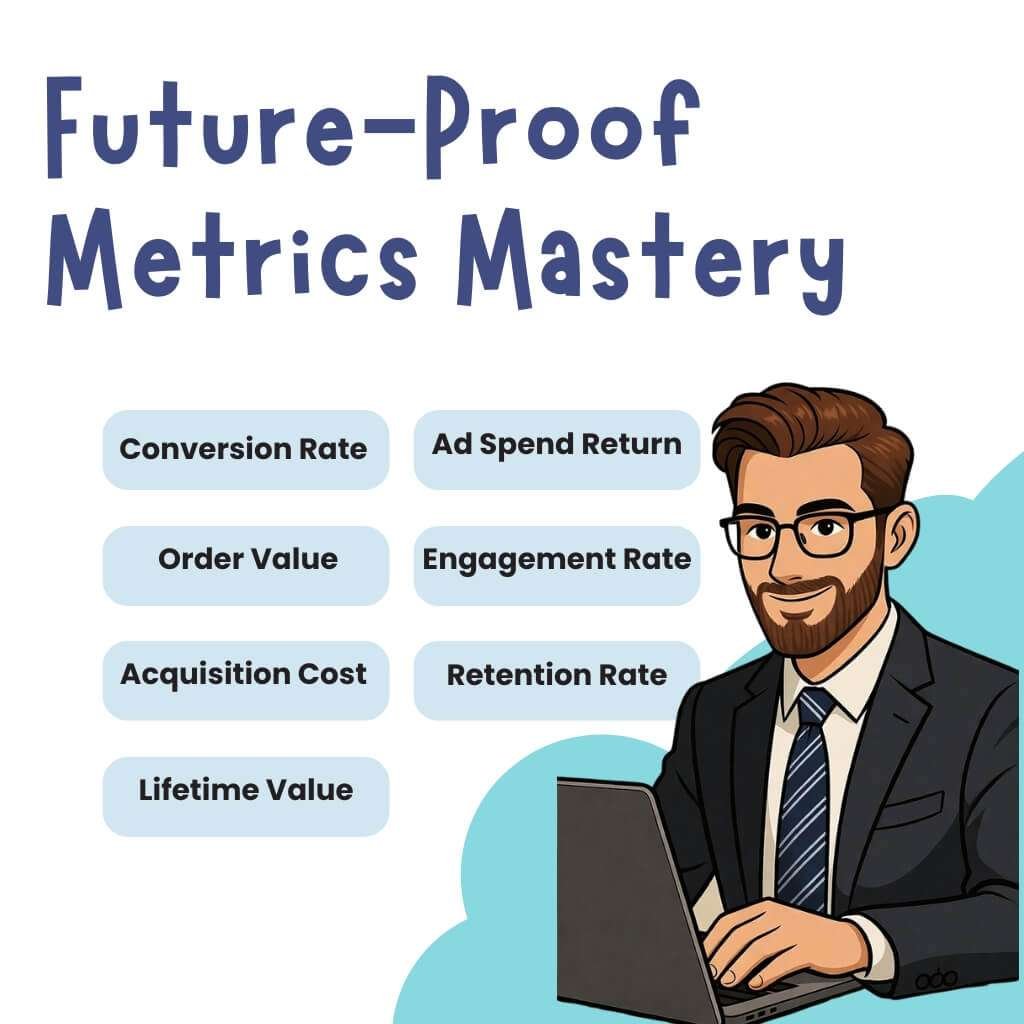
What metrics should you track? Go beyond “website visits”. Track:
1 . Conversion rate (visitors → customer).
2 . Average order value (AOV).
3 . Customer acquisition cost (CAC).
4 . Customer lifetime value (CLV).
5 . Return on ad spend (ROAS).
6 . Engagement metrics (email open rate, social content interaction).
7 . Retention rate (repeat customers).
These numbers tell you what works, what doesn’t.
How do you use AI or analytics today?
Many small businesses now use AI tools: one study found that 58% of U.S. small businesses are using generative AI tools.
Use dashboards like Google Analytics, Looker Studio, or built-in analytics in your platform. Pull data weekly.
Use AI to spot trends (e.g., rising demand for a product) or risk areas (e.g., drop in email engagement).
Set review periods: every 30 days, check key metrics; every 90 days, refine strategy.
How often should you update your online strategy?
Review operational metrics weekly for signals (especially if you run ads).
Update marketing tactics every 30–60 days (what’s working, what’s not).
Reevaluate your broader strategy and tool stack every 6 months — technology changes fast.
Adapt to new trends: Voice search, short-form video, AI content and privacy regulation.
What are the next-wave themes you must plan for?
1 . Voice & conversational search: People ask smart speakers or voice assistants for “best online small business tools”.
2 . AI-driven personalisation: Customers expect offers and experiences tailored to them.
3 . Privacy & first-party data: With changing regulations and cookie deprecation, build direct relationships with customers.
4 . Sustainable & cause-driven branding: Younger consumers buy brands with clear values.
5 . Hybrid models: Combining online presence with occasional offline touchpoints (pop-ups, events).
6 . Habits of Gen Z buyers: They expect authenticity, fast service and mobile-first.
Expert View
“Small businesses that treat analytics, AI and customer relationships as integrated parts of their business not as optional add-ons will lead in 2026.”
From the research report Leveraging Artificial Intelligence as a Strategic Growth Catalyst for SMEs
Case Study
Company: Shapeways (USA)
Shapeways leveraged marketing automation to improve its email performance.
They saw a 238% increase in email open rate and 525% increase in click-through rate by applying a combination of tag-based automation and personalised flows. SuperAGI
What they did:
1 . Mapped customer journey: first visit → interest → purchase → repeat.
2 . Tagged based on behaviour (viewed product, subscribed, abandoned cart).
3 . Automated targeted emails for each tag.
4 . Monitored metrics weekly and refined subject lines/offers.
Conclusion
Building an online business is an exciting money-making expedition. Keep learning and stay flexible as things change. Connect with other business owners for support and ideas. Take care of yourself to avoid burnout. Use helpful books, podcasts and apps to stay on track. Start with a solid plan, take small steps and constantly improve. You have everything you need to succeed. Keep moving forward and your business will flourish.
FAQ
What payment options will customers expect in 2026?
Buy-Now-Pay-Later, Apple Pay, Google Wallet and other digital wallets will dominate. Adding flexible and instant checkout options will help small online stores. This keeps more buyers from dropping off at payment.
How can small businesses get found through voice search?
Use short, natural phrases that match how people talk. Add direct Q&A formats and location cues. Tools like Google’s “People Also Ask” can guide which spoken queries to target.
Will building small online communities still matter?
Yes. Micro-communities on Discord, Reddit, or Slack grow loyalty faster than paid ads. People trust small, active spaces where founders talk directly to members.
Do new privacy rules affect small business sites?
Yes. The U.S. and EU are pushing stricter data laws by 2026. Collect only what’s needed, use first-party analytics and show clear consent boxes. Customers stay longer when they feel safe.
Is livestream selling worth trying?
Yes. Social platforms like TikTok Shop and YouTube Live are turning short videos into sales. Even one weekly live demo can raise visibility for smaller eCommerce brands.
Will sustainable packaging attract buyers in 2026?
Definitely. U.S. shoppers now prefer recycled or biodegradable packaging. Showing eco efforts in your product pages helps build trust and repeat orders.
Should online stores add local events or pop-ups?
Yes. Hybrid selling is rising again. Small online brands that host local meetups or pickup points make buyers feel closer to the brand.
How can small businesses handle supply delays better?
Keep multiple local suppliers, update delivery timelines quickly and offer pre-order options. Fast updates reduce refund requests and improve reliability.
Are product subscriptions still profitable?
Yes. Small brands offering monthly kits, refills, or exclusive content keep a steady income. Subscriptions also lower marketing costs because customers stay longer.
Which online channel gives the best return now?
SEO and email still lead. Content that answers clear questions and regular email updates convert better than random social ads. Both remain low-cost but high-impact for small businesses.