


When I started my small business online, I had many problems. I didn’t know how to manage people or match HR goals with business needs. This ignorance made it difficult to build a good team and support leaders.
Then, I took hr business partner online courses like those from Coursera, edX and AIHR. These taught me how to plan, solve problems and lead better.
These courses explained the job, the skills and how to become an HR Business Partner step by step. They were flexible, easy to follow and provided real practice. After learning, I could handle my team and business much better. These courses changed everything for me.
Advantages of Taking HR Business Partner Online Course
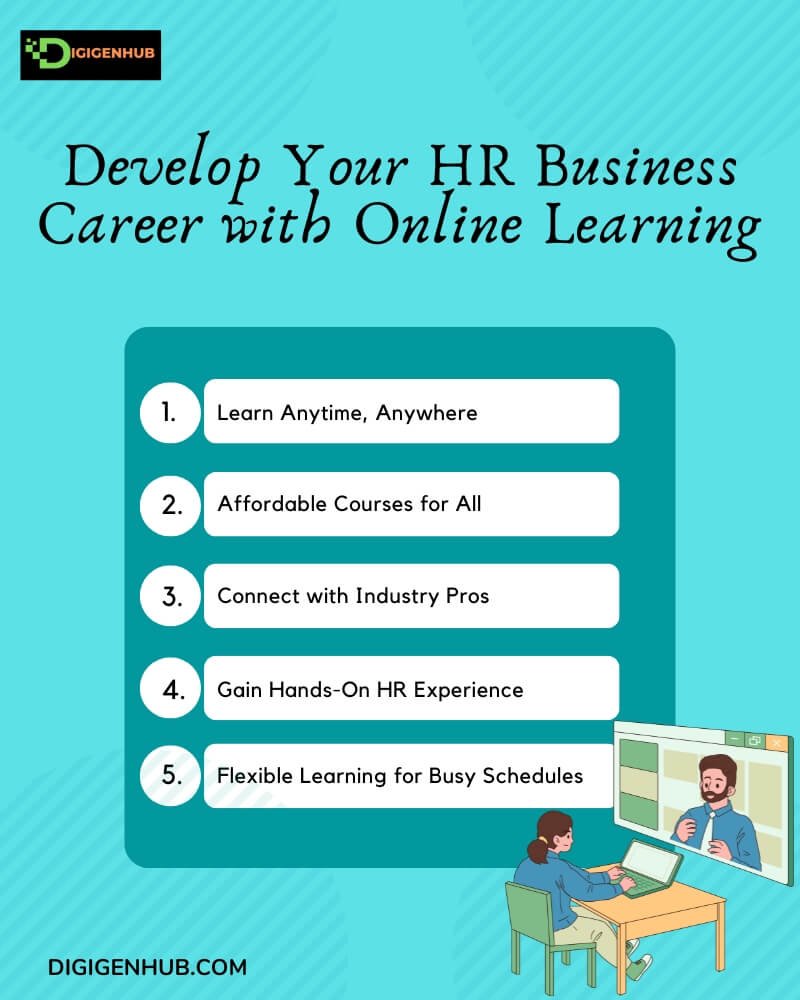
An HR Business Partner Online Course is a great way to grow your career. It helps you learn new skills, connect with others and prepare for HRBP roles. Here’s why it’s worth it.
Accessibility and Affordability
Online courses are easy to access. You can study from anywhere, anytime. This is helpful if you have a busy schedule. For example, Udemy offers courses for as little as $15. Platforms like Coursera also provide financial aid, making it affordable for everyone. Many courses also give certifications, like SHRM-CP or CIPD, which are known worldwide.
Building Skills and Networking
These courses teach skills like HR strategy, leadership and data analysis. For example, AIHR’s HRBP Program helps you learn consulting and data-driven decision-making. Some courses also offer live sessions or group chats. This allows you to meet other professionals and share ideas.
Nurture Career Prospects
Online certifications make your resume stand out. For example, earning a CIPD or SHRM-CP certification shows employers you are ready for HR challenges.
You also learn practical skills like handling employee issues or designing recruitment plans, which prepare you for HRBP jobs.
Online courses are flexible, affordable and a smart way to grow your HR career in today’s digital business era.
Features of an Effective HR Business Partner Online Course
A few features make a course easy to follow and helpful for career growth. Let’s learn about this:
What to Look for in a Good HRBP Course
A good HR Business Partner Online Course should teach key topics. These include HR strategy, leadership, data analytics and consulting. HR strategy helps you align HR with business goals.
For example, AIHR’s HRBP Program teaches real-world business skills. Leadership is important because HRBPs guide teams and managers. Data analytics helps you make decisions using numbers, like tracking hiring trends or employee performance.
Good courses also include case studies. For example, you might work on solving a problem like improving employee engagement or creating a hiring plan.
Notable HR Business Partner Online Courses
Popular HR business partner online courses teach primary HR strategies, including employee relations and leadership skills. They equip professionals to drive business success. Flexible learning and certification options make them accessible.
edX: CIPD People Management Professional Certificate
This course follows CIPD standards and helps you grow in your HR career. It is great for professionals and small business owners.
Cost Insights
Fee: $600 to $800.
Discounts and financial aid may be available.
Pros
A. Globally recognized certificate.
B. Easy to study online.
C. Mix of theory and real-world skills.
D. Includes interactive lessons.
E. Great for career growth.
Cons
A. Needs more time to complete.
B. It is best for experienced learners, not beginners.
Coursera: Human Resource Management Specialization
This course teaches HR skills like hiring and team management. It is great for beginners and includes a certificate.
Cost Insights
Monthly subscription: $39 to $59.
Financial aid is available.
Pros
A . Flexible schedule.
B . Taught by experts.
C . Real-world projects included.
D . Certificate to share.
E . Highly rated by users.
Cons
A . Takes time to finish.
B . Needs internet access.
Udemy: HR as a Business Partner
This course focuses on HR’s role in supporting business goals. It teaches skills like strategic planning, leadership and employee management. It is perfect for beginners and small business owners.
Cost Insights
Fee: $15 to $50 (varies during sales).
Lifetime access after purchase.
Pros
A. Affordable price.
B. Learn at your own pace.
C. Taught by industry experts.
D. Simple lessons for beginners.
E. Certificate of completion included.
Cons
A. Limited advanced content.
B. No live interaction with instructors.
LinkedIn Learning: Become an HR Business Partner
It covers topics like talent management and organizational design.
Cost Insights
Monthly subscription: $39.99.
Annual subscription: $299.88.
Free trial available.
Pros
A . Comprehensive content.
B . Learn at your own pace.
C . Taught by industry experts.
D . Certificate upon completion.
E . Access on multiple devices.
Cons
A . Requires a subscription.
B . Time commitment is needed.
AIHR: HR Business Partner Program
It covers consulting, data skills and employee experience.
Cost Insights
Single program: $1,125 for 12 months’ access.
Full access membership: $1,850 annually for all courses.
Monthly plan: $185 per month.
Pros
A . Self-paced learning.
B . Globally recognized certificate.
C. Access to a supportive community.
D . Practical assignments.
E . Expert instructors.
Cons
A . Higher cost compared to some courses.
B . Requires significant time commitment.
For more details, visit the AIHR: HR Business Partner Program course page.
HCI: Strategic HR Business Partner (sHRBP) Certification
This course is an excellent part of prudent thinking, data analysis and talent management.
Cost Insights
Fee: $2,795.
Includes a 3-day intensive program.
Offers both virtual and in-person sessions.
Pros
A . Interactive, hands-on learning.
B . Taught by industry experts.
C . Focuses on real-world applications.
D . Provides a recognized certification.
E . Enhances strategic HR skills.
Cons
A . Higher cost compared to some courses.
B . Requires a 3-day time commitment.
For more details, visit: HCI: Strategic HR Business Partner (sHRBP) Certification.
Korn Ferry Academy: Business Partnering and Consulting Skills for HR Professionals
This two-day course covers strategic partnerships and consulting skills.
Cost Insights
Fee: $2,100.
Up to 90% of funding is available for eligible participants.
Includes course materials and assessment.
Pros
A . Interactive, hands-on learning.
B . Taught by experienced instructors.
C . Focuses on real-world applications.
D . Provides a recognized certificate.
E . Enhances strategic HR skills.
Cons
A . Higher cost compared to some courses.
B . Requires a two-day time commitment.
Learn more if needed: Korn Ferry Academy: Business Partnering and Consulting Skills for HR Professionals.
Informa Academy: Certified HR Business Partner
This course teaches strategic HR, leadership and business alignment.
Cost Insights
In-person (Dubai, UAE): $3,445.
Live digital: $3,195.
Early booking discounts may apply.
Pros
A . Flexible learning options: in-person or online.
B . Recognized certification upon completion.
C . Focuses on real-world HR challenges.
D . Interactive sessions with experienced trainers.
E . Enhances strategic HR skills.
Cons
A . Higher cost compared to some courses.
B . Requires a three-day time commitment.
HR University: HR Business Partner Certification Course
This course teaches planned initiatives, change management and consulting.
Cost Insights
Single course: $249.
Full access (6 courses): $499.
Occasional discounts are available.
Pros
A . Self-paced learning.
B . Lifetime access to materials.
C . Certificate upon completion.
D . Practical assignments included.
E . Access to a community of HR professionals.
Cons
A . Requires self-discipline to complete.
B . Limited interaction with instructors.
For more details, visit the course page: HR University: HR Business Partner Certification Course
HRCI: Professional in Human Resources (PHR) Certification
This certification shows you know HR operations and U.S. laws. It’s good for HR professionals with experience in managing HR tasks.
Cost Insights
Application fee: $100.
Exam fee: $395.
Total: $495.
Pros
A . Recognized HR certification.
B . Enhances career opportunities.
C . Demonstrates knowledge of HR laws.
D . Validates HR management skills.
E . This can lead to a higher salary.
Cons
A . Requires relevant HR experience.
B . Needs ongoing education to maintain.
For more details, visit the website: PHR Certification
SHRM: SHRM Certified Professional (SHRM-CP) and SHRM Senior Certified Professional (SHRM-SCP)
These certifications show HR professionals’ skills in applying HR principles to real-life situations. SHRM-CP is for operational roles, while SHRM-SCP is for strategic, senior-level positions.
Cost Insights
Exam Fees:
Early-bird: $300 (members), $400 (non-members).
Standard: $375 (members), $475 (non-members).
Additional Fees:
Application processing: $50.
Retest: Full exam fee.
Pros
A . Recognized HR certifications.
B . Enhance career advancement.
C . Demonstrate HR expertise.
D . Applicable to real-world scenarios.
E . Access to SHRM resources.
Cons
A . Requires ongoing recertification.
B . Exam preparation can be time-consuming.
HR Business Partner Job Description
HR Business Partners (HRBPs) ensure HR works hand-in-hand with business aims. This perception ensures growth through a positive work environment. The hr business partner job description contains the following stuff:
A. HRBP Role & Responsibilities
An HR Business Partner (HRBP) connects HR with company goals. They work closely with leaders and manage employee issues. HRBPs help grow the company and create a good workplace.
They handle hiring, solve employee problems and improve the work environment. For example, they help managers boost team performance or set up training.
B. HRBP Tools & Technology
HRBPs use tools like data analytics to make smart decisions. Tools like Workday and SAP SuccessFactors help manage HR tasks and analyze data. They use social media, like LinkedIn and Glassdoor, to find the best candidates. These tools help HRBPs work faster and smarter.
How to Become HR Business Partner
To become an HR Business Partner (HRBP), you need a degree in HR, business, or psychology and certifications like SHRM-CP or CIPD. Primary skills include communication, problem-solving and strategic thinking.
HRBPs work with managers and staff, solve conflicts and plan using employee data. Recently, HRBP Online Courses, covering HR analytics and digital tools. This can help stay updated and improve decision-making.
Hence, you need to follow these steps to maintain hr business partner qualifications:
Education: Earn a bachelor’s degree in Human Resources, Business, or Psychology. This foundation helps you understand HR’s role in business.
Gain Experience: Work in HR roles like HR Assistant or HR Generalist to build practical skills. Aim for at least four years of experience.
Develop Leadership Skills: Enhance your ability to lead teams, manage projects and make strategic decisions. These skills are crucial for an HRBP.
Obtain Certification: Consider certifications like SHRM-CP or CIPD to validate your expertise. These credentials are recognized globally and can boost your career prospects.
Pursue Specialized Training: Enroll in an HR Business Partner Online Course to learn advanced skills such as data analysis and digital tools. Programs like AIHR’s HRBP Program teach how to use HR analytics for better decision-making.
Conclusion
Thus, an HR Business Partner Online Course helps small business owners and HR professionals align HR strategies with business purposes. It covers talent management, employee relations and company culture.
FAQ
What does an HR business partner do for small online businesses?
An HR Business Partner (HRBP) aligns people with business goals. They focus on strategy, help hire the right people and improve teamwork.
For small online businesses, they create remote work policies, train workers and hire freelancers. HRBPs drive growth and employee satisfaction.
What are the top 3 skills of an HR business partner?
The top three skills for an HRBP are:
1 . Communication: Clear talks with managers and staff.
2 . Strategic Thinking: Use data to plan for the future.
3 . Problem-solving: Quickly fix workplace issues.
What are the 7 major HR activities?
The 7 major HR functions are:
1 . Recruitment: Finding and hiring the right people.
2 . Onboarding: Helping new employees settle in.
3 . Training and Development: Teaching employees new skills.
4 . Performance Management: Tracking and improving employee performance.
5 . Compensation and Benefits: Handling pay and employee rewards.
6 . Employee Relations: Managing workplace relationships and solving problems.
7 . Compliance: Making sure the company follows laws and regulations.