


How to find target audience on YouTube? It can be tricky because people have different preferences. Assume you upload a video, but no one watches it. Frustrating, right? Don’t worry, it happens to everyone! Still, I’ve learned a few things that helped me find my audience. I think this experience will be handy for you, too.
First, try YouTube Shorts. People love short videos. You can share tips, funny moments, or trends. These videos grab attention quickly, and people will want to watch more.
Second, pay attention to the algorithm. Use good keywords in your titles and descriptions. Indeed, make your thumbnails bright and catchy. This helps YouTube recommend your videos to more people. Also, YouTube Analytics works better to identify the right audience and their demographics.
I also learned that people like honest creators. So, be yourself! Share your challenges and funny mistakes. When people see the real you, they connect with you.
Lastly, go where your audience hangs out. Join groups on Reddit or Discord. Talk to people, share your videos, and learn about your audience. This will help you find the right viewers.
How to Find Target Audience on YouTube

YouTube—the astounding marketplace of ideas and influence! Picture yourself as a visionary entrepreneur navigating a boundless digital universe. First, identify your target market—your audience. Who are they? Define them clearly; they are the customers your brand will serve.
Next, build your product: your content. Tutorials, reviews, or vlogs—create value that resonates with your audience’s needs.
YouTube is a powerful tool for business and creativity. It turns ideas into influence, and influence drives success. But how do you find your target audience on YouTube in such a crowded space? Remember, success doesn’t happen overnight. With hard work and focus, your brand can shine on YouTube. Yet, let’s learn more about how to make all this happen.
1 . Compile the Power of Short-Form Content
YouTube Shorts are short, vertical videos up to 60 seconds long. They are YouTube’s answer to TikTok and Instagram Reels. Since their launch, shorts have become very popular. As of July 2023, YouTube Shorts had reached over 2 billion monthly logged-in users.
However, people enjoy quick, engaging content. Also, short videos fit into busy schedules and short attention spans. They are easy to watch and share. For creators, Shorts can reach new audiences and develop engagement. They also help in promoting longer videos on your channel. Let’s analyze a few tips for creating compelling shorts:
A . Grab Attention Quickly: The first few seconds are crucial. So, start with something that hooks the viewer immediately. This could be a surprising fact, a bold statement, or an eye-catching visual.
B . Keep It Concise and Engaging: Focus on a single idea or message, avoiding unnecessary details. Indeed, use clear visuals and sound to maintain interest.
C . Add Value: Provide informative, entertaining, or inspiring content. Think about what your audience wants to see and deliver it creatively.
D . Include a Call to Action: Encourage viewers to like, comment, share, or subscribe. Remember, a simple prompt can increase engagement and grow your audience.
Examples of Successful YouTube Shorts
Sephora’s Beauty Tutorials: Sephora created quick beauty tutorials as Shorts. These videos were easy to follow and visually appealing. They educated viewers on beauty techniques and showcased products. This approach positioned Sephora as a go-to resource for beauty enthusiasts.
Dunkin’s Creative Recipes: Dunkin’ used Shorts to share quick and creative recipes. These videos engaged their audience by providing fun and easy-to-make ideas. This strategy helped Dunkin’ interactively connect with its customers.
Yet, creators can make the most of this platform by focusing on delivering value quickly and creatively.
Case Study: Nike’s Use of YouTube Shorts
Nike, a leading sportswear brand, effectively promoted its campaigns using YouTube Shorts. They created short, engaging videos that resonated with their audience. This strategy helped Nike reach a wider audience and enhance brand engagement.
2. Unify AI Tools and Personalization
People love content made just for them. It feels special and keeps them coming back. AI tools make it easy to create high-quality videos quickly. These tools help edit, create thumbnails, and find the best keywords. Personalization, like focusing on trends in different regions and YouTube’s demographics, makes your content even more engaging.
How to Use AI Tools
A . For Editing:
AI tools like Descript make editing easy. You can edit a video just by changing the text. It’s fast and straightforward!
B . For Thumbnails:
Thumbnails are the first thing people see. Tools like Canva can create amazing thumbnails for you. A good thumbnail grabs attention and gets more clicks.
C . For Keywords:
AI tools like VidIQ help you find the best keywords for your videos. These keywords make it easier for people to find your content.
Personalize Your Content
A . Follow Regional Trends:
Use AI to see what’s popular in different places. Make videos about those trends to connect with local audiences.
B . Know Your Audience:
AI tools can show you who’s watching your videos. Are they young or older? Where are they from? Use this info to make content they will love.
Examples
Generative AI Intros:
AI can create cool intros for your videos. This grabs attention right away!
On-Screen Captions:
Add captions with AI. This helps viewers follow along, even if they can’t turn on the sound.
Case Study: Lumen5
Lumen5 is an AI tool that turns blog posts into videos. It picks pictures, clips, and music to match your text. Marketing companies use Lumen5 to save time and reach more people.
3. Create Authentic and Relatable Content
Today’s viewers prefer genuine content over perfect-looking videos. Authenticity builds trust and makes your audience feel connected to you.
A . Share Behind-the-Scenes Moments:
Show Your Process: Let your audience see how you create your content. This transparency makes you more relatable and human.
Example: A musician might share clips of their songwriting process, including mistakes and revisions.
B . Incorporate Storytelling
Connect Emotionally: Share personal stories that reflect your experiences. This approach helps your audience relate to you on a deeper level.
Example: A fitness coach could discuss their journey of overcoming health challenges, inspiring viewers facing similar struggles.
Real-Time Case Study
Alix Earle, a popular content creator, openly discusses her personal life, including her boyfriend’s injury and her challenges. By sharing these experiences, she has built a strong connection with her audience, who appreciate her honesty and authenticity.
4. Engage with Niche Communities
Focusing on specific, smaller groups—known as micro-niches—helps build strong loyalty among viewers. These communities share common interests and values, making them more likely to engage deeply with your content. You can focus on micro-niches following the below steps:
A . Identify Specific Interests: Instead of targeting a broad audience, concentrate on a particular niche. This approach allows you to connect more authentically with viewers with that interest.
Example: A fitness channel might create content for “home workouts for busy moms,” addressing their unique challenges and needs.
B . Participate in Discussions on Forums
Join Relevant Communities: Engage in platforms like Reddit, Discord, or Facebook Groups where your target audience congregates. Active participation helps you understand their interests and establish credibility.
Share Valuable Content: Contribute meaningful insights and share your content when appropriate, ensuring it adds value to the discussion rather than appearing as self-promotion.
Case Study: Fitness Creator’s Success
A fitness content creator focused on “home workouts for busy moms” joined a Reddit community dedicated to postpartum fitness. By participating in discussions and sharing tailored workout videos, the creator built trust within the community.
Still, this engagement increased subscribers and higher video engagement rates. Indeed, this concern demonstrates the effectiveness of targeting micro-niches and promoting active community participation.
5. Create Interactive Content to Boost Engagement
Interactive content encourages your audience to participate actively. This involvement builds stronger connections and keeps viewers interested. You need to implement a few strategies to do this:
A . Use Polls, Quizzes, or Challenges
Polls: Ask your audience questions to learn their preferences. This makes them feel valued and involved.
Quizzes: Create fun quizzes related to your content. They entertain and educate your audience.
Challenges: Start challenges that encourage viewers to participate and share. This can increase engagement and reach.
Example: A cooking channel might run a “Home Chef Challenge,” inviting viewers to recreate a recipe and share their results.
B . Host Live Q&A Sessions or Real-Time Tutorials
Live Q&A Sessions: Interact with your audience in real-time, answering their questions. This builds trust and shows you value their input.
Real-Time Tutorials: Conduct live demonstrations, during which viewers can follow along and ask questions. This interactive approach enhances learning and engagement.
Example: An artist might host a live painting session, guiding viewers through techniques and answering questions as they arise.
Case Study: Virtual Cooking Masterclass
A renowned chef hosted a virtual cooking masterclass, incorporating real-time Q&A and live chat engagement. Viewers could ask questions and receive immediate feedback, creating an interactive and immersive experience. This activity enhanced audience engagement and provided valuable cooking tips, effectively promoting the chef’s brand.
6. Standarize Content with Current Trends and Challenges
Creating content around trending topics and challenges can make your videos more discoverable and shareable. This approach increases the chances of your content going viral. You can do the following tasks:
A . Monitor Platforms for Emerging Trends
Stay Updated: Regularly check platforms like TikTok, Instagram, and Twitter to see what’s popular. This helps you understand current interests and adapt your content accordingly.
Use Tools: Utilize tools like Google Trends to identify rising topics. This can guide your content creation to align with audience interests.
B . Adapt Trends Creatively
Incorporate Trending Elements: Use popular memes, challenges, or audio clips to fit your content and audience. This makes your content relatable and timely.
Add Your Unique Twist: Add something unique that reflects your brand or message while participating in trends. This will set you apart and maintain authenticity.
Example
If there’s a trending dance challenge on TikTok, a fitness instructor could create a YouTube Short demonstrating the dance as a fun workout routine. This combines the trend with their niche, making the content engaging and relevant.
Case Study: The Suspect Challenge on TikTok
The Suspect Challenge became popular on TikTok, with over 46,000 tagged posts. Creators from various niches participated by adding their unique spin to the challenge, increasing their visibility and engagement.
7. Focus on Sustainability and Inclusivity
Modern audiences value ethical practices and diversity. Emphasizing sustainability and inclusivity in your content can build trust and broaden your reach.
A . Highlight Eco-Friendly Practices and Social Justice Themes
Sustainable Solutions: Share tips on reducing waste, conserving energy, or supporting eco-friendly products. This will educate your audience and encourage positive change.
Social Justice: Discuss topics like equality, human rights, or community initiatives. This shows your commitment to creating a fair and just society.
Example: A fashion channel could explore “10 Affordable Sustainable Brands,” guiding viewers toward ethical shopping choices.
B . Feature Mixed Voices and Enhance Accessibility
Diverse Representation: Include people from various backgrounds in your content. This reflects the real world and makes your content relatable to a broader audience.
Accessibility: Use subtitles and provide translations to make your content accessible globally. This ensures inclusivity for viewers with hearing impairments or those who speak different languages.
Example: A lifestyle channel might create content celebrating cultural traditions worldwide, showcasing the richness of diverse cultures.
Case Study: Shelbizleee’s YouTube Channel
Shelbizleee focuses on sustainability, breaking down complex topics into easy-to-understand content. Her channel covers zero-waste living, ethical fashion, and minimalism, educating her audience on sustainable living practices.
8. Foster Community-Driven Content
Involving your audience in the creative process makes them feel valued and connected. This engagement fosters a sense of community and loyalty. Still, you can follow the below methods:
A . Encourage User-Generated Content (UGC)
Solicit Contributions: Invite your audience to submit content, such as photos, videos, or stories related to your niche. This participation enhances engagement and provides fresh perspectives.
Incorporate Audience Ideas: Ask for suggestions on topics or themes for future videos. Implementing these ideas shows that you value your audience’s input.
Example: A DIY channel might request viewers to share their project ideas. Then, they feature these submissions in upcoming videos.
B . React to Viewer Submissions and Host Challenges
Create Reaction Videos: Review and respond to content submitted by your audience. This interaction acknowledges their contributions and encourages further participation.
Organize Challenges: Initiate challenges that motivate viewers to create and share content. Recognize and showcase outstanding entries to build community spirit.
Example: A cooking channel could host a “Recipe Remix Challenge,” inviting viewers to reinvent a classic dish and share the results.
Case Study: Dude Perfect’s ‘Trick Shot of the Month’
The popular YouTube channel Dude Perfect invites its audience to submit videos of their trick shots. Each month, they feature the best submissions in a dedicated video, fostering a two-way conversation with their followers.
9. Highlight Real-Life Impact
Showcasing meaningful contributions resonates deeply with viewers. When audiences see tangible positive changes resulting from your content, it builds trust and fosters community. This activity enhances engagement and encourages viewers to participate in or support similar initiatives. So, confirm the following tasks:
Share Stories of Charitable Acts and Fundraisers
Document Collaborations: Partner with charitable organizations and document the journey. Sharing behind-the-scenes footage of planning and execution provides transparency and authenticity.
Highlight Outcomes: Showcase the direct impact of the initiatives, such as funds raised, people helped, or resources provided. This offers concrete evidence of positive change.
Example: A cooking channel could collaborate with local food banks to create a series on affordable, nutritious meals, demonstrating how viewers can cook healthy dishes on a budget.
Engage in Community Initiatives
Participate Actively: Get involved in local community events or causes related to your content niche. Active participation shows commitment and can inspire viewers to engage similarly.
Share Personal Experiences: Discuss your motivations for supporting specific causes, sharing personal stories that connect with the audience on an emotional level.
Example: A lifestyle vlogger might volunteer at environmental clean-up events and create content around the experience, encouraging viewers to participate in environmental conservation.
Case Study: Jacksepticeye’s ‘Thankmas’ Livestreams
Seán McLoughlin, known as Jacksepticeye on YouTube, has effectively mobilized his audience for charitable causes. Through his annual “Thankmas” livestreams, he has raised over $26 million for various charities.
By engaging his community in these philanthropic efforts, McLoughlin demonstrates the significant impact content creators can have when they highlight real-life contributions.
10. Emphasize Consistency and Quality
Maintain a consistent upload schedule. Also, ensure high production quality. These objects are crucial for building trust and retaining your audience on YouTube. Indeed, regular uploads keep viewers engaged, while polished content enhances their viewing experience. So, perform the below pieces of stuff:
A . Develop a Content Schedule and Stick to It
Establish Regular Uploads: Determine a realistic daily, weekly, or bi-weekly posting frequency and adhere to it. Consistency helps in setting viewer expectations and encourages repeat visits.
Plan Content in Advance: Utilize content calendars to organize ideas and production timelines, ensuring a steady flow of content without last-minute rushes.
Example: A tech review channel might commit to uploading new gadget reviews every Tuesday and Friday, creating anticipation among subscribers.
B . Use Professional-Quality Tools for Filming and Editing
Invest in Equipment: High-definition cameras, proper lighting, and quality microphones significantly enhance video and audio clarity, making content more appealing.
Editing Software: Employ reliable editing tools to refine footage, add effects, and ensure seamless transitions, contributing to a polished final product.
Example: A cooking channel utilizing multiple camera angles, clear audio narration, and well-edited cooking process close-ups can provide viewers with a more engaging tutorial.
Case Study: Tasty’s Consistent and High-Quality Content
Tasty, a renowned cooking channel, exemplifies the power of consistency and quality. By regularly posting visually appealing recipe videos with clear instructions, they have amassed a vast audience. Their commitment to high production values and a steady upload schedule has solidified their position as a leading food content creator.
11. Educate with a Fun Twist
Combining education with entertainment, edutainment makes learning enjoyable and engaging. This approach appeals to a broad audience by simplifying complex topics and maintaining interest. Hence, do the below tasks:
A . Use Storytelling, Gamification, or Quirky Analogies
Storytelling: Craft narratives that weave educational content into compelling stories, making information memorable.
Gamification: Incorporate game-like elements such as challenges or rewards to motivate learners and enhance engagement.
Quirky Analogies: Employ creative comparisons to explain complex ideas in relatable terms, aiding comprehension.
Example: A video titled “History of Memes Explained in 10 Minutes” could use a storytelling approach to trace the evolution of internet memes, making the subject both informative and entertaining.
B . Add Infographics, Animations, or Engaging Visuals
Infographics: Present data visually to simplify understanding and retention of information.
Animations: Use dynamic visuals to illustrate concepts, keeping viewers engaged and aiding in explaining complex topics.
Engaging Visuals: Incorporate appealing graphics and designs to maintain interest and enhance the learning experience.
Example: A video titled “How to Save Money Using 5 Creative Hacks” could utilize animations to demonstrate each tip, making the content visually appealing and easier to follow.
Case Study: Ted-Ed’s Educational Videos
Ted-Ed is renowned for its educational animated videos that blend storytelling with engaging visuals. By presenting lessons through captivating narratives and animations, Ted-Ed makes complex subjects accessible and enjoyable, exemplifying effective edutainment.
12. Collaborate with Micro-Influencers
Partnering with micro-influencers—creators with 10,000 to 100,000 followers—can significantly enhance your channel’s reach and engagement. These influencers often have highly engaged, niche-specific audiences, making their endorsements authentic and impactful. Follow the below tips:
A . Identify Relevant Micro-Influencers in Your Niche
Research: Find creators whose content aligns with your channel’s theme and values. This ensures that collaborations feel natural and resonate with both audiences.
Engagement Metrics: Prioritize influencers with high engagement rates over sheer follower count, indicating a more active and connected audience.
B . Establish Mutually Beneficial Partnerships
Co-Hosted Content: Create videos together, such as interviews, challenges, or joint projects, to provide diverse perspectives and attract each other’s followers.
Cross-Promotion: Share each other’s content across platforms to maximize exposure and build credibility within the community.
Example: A travel vlogger collaborating with local guides can offer unique insights into destinations, enriching content quality and authenticity.
Case Study: HelloFresh’s Micro-Influencer Campaign
HelloFresh, a meal kit delivery service, effectively utilized micro-influencers to expand its reach. The brand achieved authentic engagement and increased subscriptions by partnering with creators who shared their cooking experiences using HelloFresh kits.
13. Utilize Free and Paid Promotion Techniques
Promoting your videos is essential to grow your YouTube channel. Free methods help you engage with your audience and build loyalty. On the other hand, paid strategies expand your reach to new viewers quickly. Together, they create a robust plan for growth.
A . Free Methods
Share Videos on Social Media
Use platforms like Instagram, Facebook, and Twitter to promote your content. Sharing links and snippets can attract new viewers. Social media makes it easy for followers to share your videos with others.
Example: A tech YouTuber posts a clip from their video on Instagram Stories to encourage followers to watch the full video.
Create YouTube Shorts
Short videos are popular and grab attention quickly. They are great for promoting your longer content. Shorts also reach a wider audience because YouTube often recommends them.
Example: A fitness creator posts a 20-second workout tip as a YouTube Short to encourage viewers to check out their full-length videos.
Engage with Your Audience
Respond to comments on your videos to build a connection with viewers. Use YouTube’s Community tab to run polls or share updates. This keeps your audience engaged and makes them feel valued.
Example: A cooking channel asks its audience in a poll, “Which recipe should we make next week?”
B . Paid Methods
Run Ads on Social Media and Google
Ads can help your videos reach more people. Use targeted ads on platforms like Facebook and Google to show your content to viewers interested in your niche. Ads are beneficial for promoting new videos or series.
Example: A travel vlogger runs an ad on Instagram to promote their latest destination vlog.
Collaborate with Influencers
Work with influencers who have engaged audiences in your niche. They can promote your videos to their followers and increase your credibility. Influencers often have strong connections with their audience, making their recommendations powerful.
Example: A beauty YouTuber partners with a makeup influencer for a tutorial video. The influencer promotes the video, bringing new viewers to the channel.
Be Transparent
If you use paid methods like sponsorships, always tell your audience. Transparency builds trust. Include clear statements like, “X sponsors this video, but all opinions are my own.” This shows honesty and ensures viewers trust your recommendations.
Who Watches YouTube and What They Love
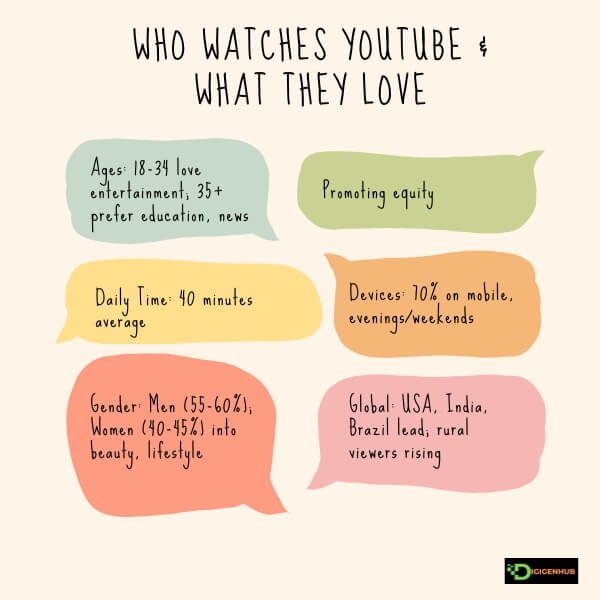
YouTube has a wide range of users from different age groups. The largest group is 15-35 or 18-24 years old, followed by 25-34 years. They enjoy entertainment, tutorials, and lifestyle videos.
However, people aged 35-44 like education and family-focused content. Those 45+ watch news, documentaries, and niche topics. More men use YouTube (55-60%) than women (40-45%). Women are active in beauty, wellness, and lifestyle areas. The biggest audiences are in the
Yet, the USA, India, and Brazil have urban users who lead, but rural viewers are growing due to smartphones. English is the main language, but local languages like Spanish and Hindi are popular. Most users are middle-income, while wealthier viewers prefer luxury content.
They watch on mobile devices about 70% of the time, primarily in the evenings or weekends. On average, people spend 40 minutes a day on YouTube. These facts help create content that fits the audience.
How Can You Identify the Demographics of YouTube Audience Effectively?
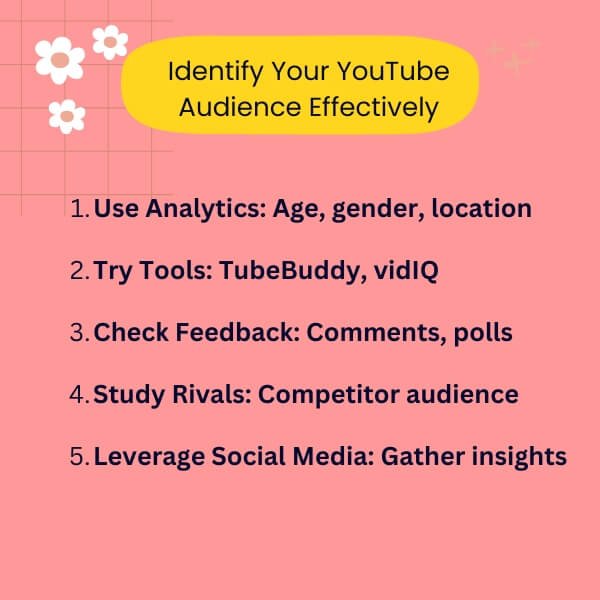
To recognize YouTube audience demographics, start with YouTube Analytics. It shows the age, gender, and location of your viewers. Check the “Audience” tab for watch times and returning viewers. Study comments and polls to understand viewer preferences. Use tools like TubeBuddy or vidIQ for keyword insights. Analyze competitors to see who engages with similar content. Social media feedback also helps you know your audience better.
Conclusion
Finally, follow the latest trends to find your target audience on YouTube in 2024. Focus on short and fun videos, as people love quick content. Use YouTube Analytics to check your viewers’ age, gender, and location. Make videos for mobile users since most watch on their phones. Add subtitles to reach more people, including those who speak different languages. Keep learning new YouTube features and change your audience’s habits.
FAQ
How to identify your target audience on YouTube?
To identify your target audience on YouTube, use YouTube Analytics to check their age, gender, location, and language. Study watch time, returning viewers, and their behavior. Look at comments and polls to see what they like. Analyze competitors and trends to find similar audiences. You can apply tools like TubeBuddy or vidIQ for extra data.
Who are YouTube’s target audience?
YouTube’s primary audience is people aged 15-35. They use it for music, entertainment, and learning. This age group is the most active on the platform. Younger kids and older viewers also watch YouTube because of its variety of content.