


Thousands of apps launch every day. Only a few earn serious money. The difference isn’t luck. It’s how the app earns and keeps users paying.
That’s the point many founders miss when they ask, “how do apps make money?” It’s not about pushing ads or selling random upgrades.
It’s about finding how your app fits into a user’s daily flow and where genuine value turns into payment.
Last spring, one of my long-time clients who ran a language learning app was stuck. Downloads were rising, but revenue was flat.
We tested a simple idea. We added subscription tiers that unlocked cultural lessons and partner offers from online book retailers.
Within six weeks, his monthly revenue doubled and retention improved without spending more on ads.
To earn well, add value first for the specific job. Mix revenue streams like subscriptions, in-app buys and tokens. Use AI tools to see what users want. Pick the right platform and coding method.
How Do Apps Make Money Today
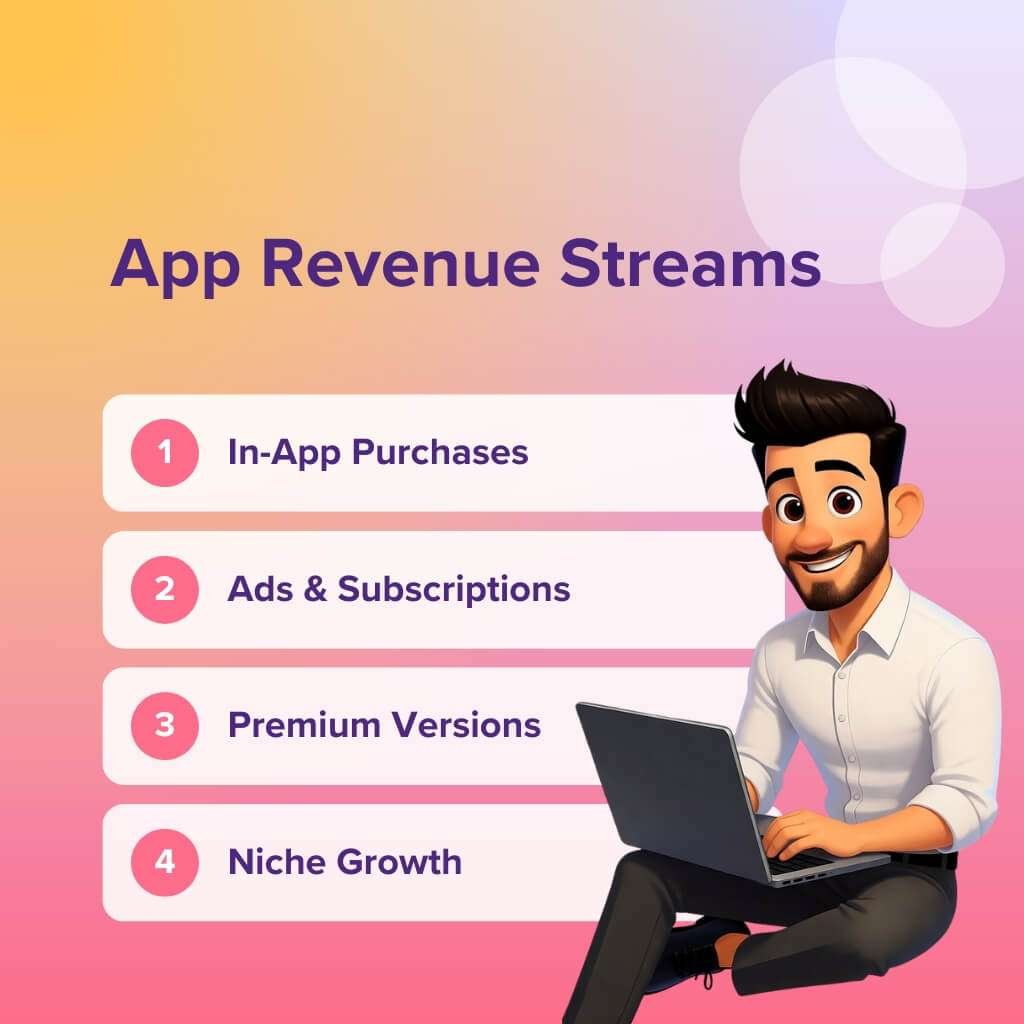
Today’s app market is very active. Free apps, subscriptions, in-app purchases and ads make billions. Games, social media, fintech, streaming, e-commerce and AI apps earn the most. Niche apps are growing fast, too.
Digital businesses compete for attention and revenue. So, how do apps make money today? Success comes from offering value, timing payments right and using revenue methods that match user habits. AI suggests purchases, shows offers that fit users and tracks habits to raise income.
How do free apps make money?
Ok, let’s justify the process:
1 . Ads
Most free apps earn via ads. In-app ads power about 31% of monetization strategies. Developers show users banner, interstitial, rewarded video, or native ads to earn per view or click.
2 . In-App Purchases & Freemium
Apps offer basic features for free. Users pay for extras—runs, power-ups, filters. Only 10% of users generate 70–85% of that IAP revenue. Freemium conversion rates range from 1% to 30%, though most apps stay near the lower end.
3 . Affiliate Deals & Sponsorships
Some apps earn by linking or promoting products. Others embed branded content. Data on their share is small but growing.
4 . Lead-Gen / B2B & Licensing
Many free tools drive business deals behind the scenes. Apps act as funnels to paid services, consulting, or enterprise licenses.
5 . Value-first, Revenue-later
Free apps add value before asking for money. They convert users at a moment of need. This strategy works without ads if you plan upgrades or services smartly.
Paid Apps: One-Time Purchases
Paid Apps still earn, though they are rare. Only 3% of Google Play apps charge upfront. They work in narrow fields where users want full access right away.
For example, ProCamera gives pro-level photo tools. Affinity Designer helps creators with design work. GoodNotes is popular for digital notes. Pleco supports language learners.
Prices stay simple. Most paid apps cost between $2 and $30. They suit pro users, students and hobbyists who want ownership.
But their earnings are far smaller than subscriptions or in-app buys, which now lead global app income.
What are the Main App Monetization Models Right Now?
Global app store + in-app spending hits hundreds of billions in digital marketing. That size lets many models prosper at once. Let’s discuss:
1 . In-App Purchases (IAP)
Apps sell items, upgrades, or consumables inside the app. IAPs make about 48% of total mobile app revenue. Market.us Scoop
2 . In-App Advertising
Brands pay to show banners, interstitials, rewarded video, or native ads. Global in-app ad spend nears $390 billion.
3 . Subscriptions
Users pay recurring fees for content or service access.
Analysts put subscription market size in the tens-to-hundreds of billions; some reports cite ~$170B.
4 . Paid (One-time) Apps
Users pay once at download.
This model now serves niche, high-value tools and utilities.
Overall, consumer spending across stores still hits hundreds of billions annually.
5 . Hybrid Models
Developers combine ads, IAP and subscriptions.
Apps use mix-and-match to steady income and raise lifetime value.
6 . Commerce & Transaction Fees
Apps take a cut from sales, bookings, or marketplace transactions.
This works for ride, food and marketplace apps.
7 . Affiliate & Sponsorship
Apps earn commissions or brand fees from affiliate and sponsored content. This sits outside core store revenue but grows fast in niches.
8 . B2B / Licensing / API Access
Apps sell enterprise licenses, white-label versions, or API calls. This yields predictable contracts for some developers.
9 . AI-Driven Monetization
Apps charge for AI features: pay-per-use, premium AI tiers, or token packs. Reports show AI functions now shape subscription tactics and pricing.
How Much Do Apps Earn from In-App Advertising?
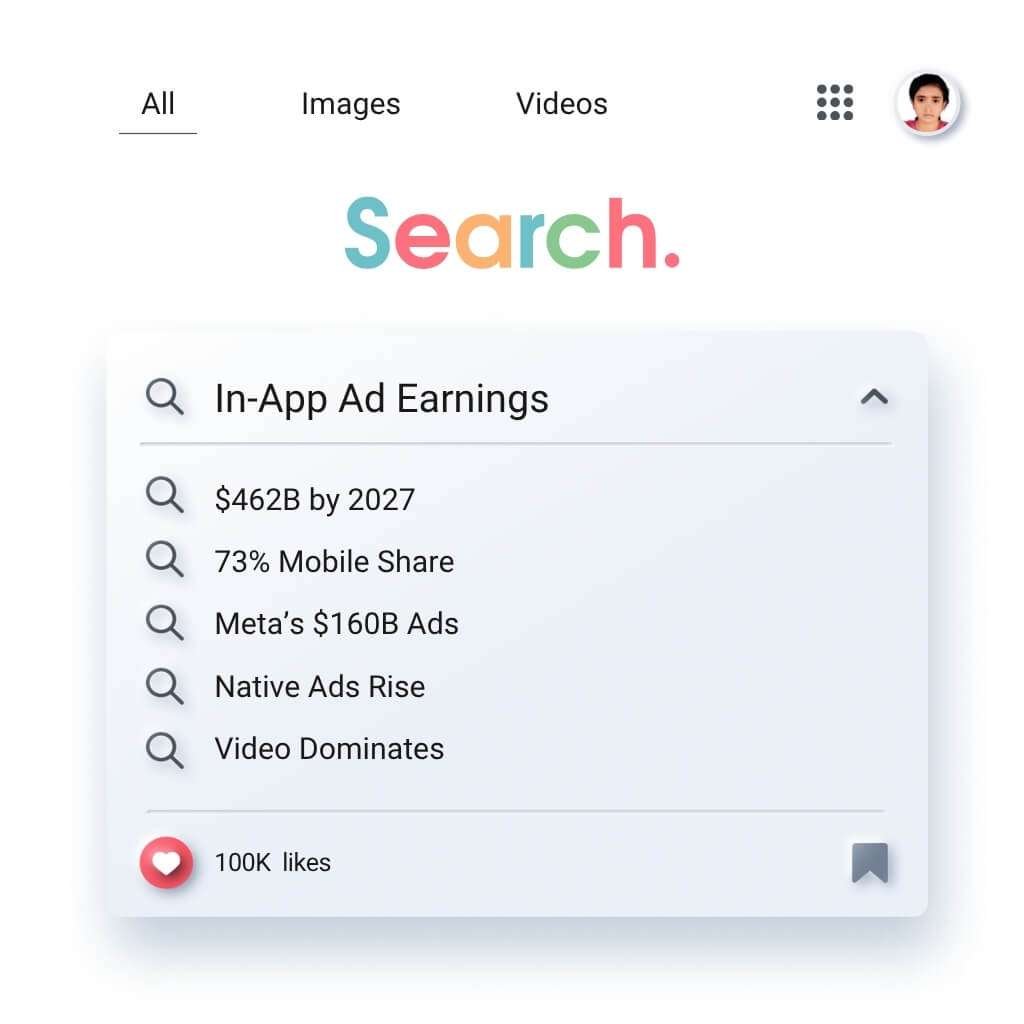
Ads bring massive money. Mobile advertising makes up 73% of the global $1.08 trillion ad market.
Yet, mobile advertising now accounts for over 60% of digital ad revenue. In-app advertising is projected to reach $462.3 billion by 2027.
1 . AppLovin earned $1.16 billion from ads, a 71% increase year-over-year. Ads now make up 78% of AppLovin’s total revenue.
2 . Meta’s total revenue was $164.5 billion, with $160.6 billion from ads.
3 . Instagram generated $32.03 billion in U.S. ad revenue, accounting for 50.3% of Meta’s U.S. ad sales.
4 . WhatsApp introduced ads in its Updates tab, reaching up to 1.5 billion daily users.
Industry Trends
Native ads are leading the growth in mobile ads. Video ads are becoming more prevalent, with 85% of all consumer internet traffic expected to come from video.
Which Type of Apps Generate the Highest Revenue Now?
Social media, games, streaming, e-commerce and finance lead. Each earns in different ways. Some rely on ads. Others earn from subscriptions or purchases. Let’s see which apps make the most and how they do it.
Social Media Apps
Social media apps earn huge revenue. TikTok made $33.1 billion. That is a 40% increase from 2024.
Most revenue came from ads. In-app purchases added extra income. TikTok has over 1 billion monthly active users.
YouTube earned $36.1 billion. Revenue comes from ads and YouTube Premium. It has 2.74 billion monthly users.
Instagram contributed $32 billion in U.S. ad revenue. WhatsApp introduced ads for 1.5 billion daily users. These apps dominate engagement and ad income worldwide.
Gaming Apps
Games earn massive revenue too. Honor of Kings made $143.3 million in June. Most of it came from in-app purchases. Whiteout Survival earned over $3 billion in lifetime revenue.
Royal Match made $17.2 million. Updates and in-app purchases keep players active.
Mobile gaming continues to lead global app revenue. Popular puzzle and strategy games engage millions every day.
Streaming Services
Streaming apps dominate subscription revenue. Spotify earned over €4.2 billion in Q2 2025. It has 276 million subscribers. Millions of users listen daily.
Netflix made $41.69 billion. Global subscribers exceed 300 million. It offers multiple pricing tiers and ad-supported content.
Audible earned $336 million from subscriptions. Users enjoy thousands of audiobooks and offline listening. These services rely on loyal users for recurring revenue.
E-commerce Apps
E-commerce apps earn billions from mobile shopping. Amazon made $670 billion recently. Revenue grew steadily from last year.
eBay earned $2.7 billion in Q2. Nearly half came from international sales. Both platforms charge transaction fees and take marketplace cuts.
They dominate mobile commerce with a wide product selection and easy checkout. Global reach adds to their strong earnings.
Finance & Payment Apps
Finance and payment apps earn significant revenue. Cash App made $3.58 billion in Q3 2023.
Most came from Bitcoin transactions. Other fintech apps earn from subscriptions, transaction fees and embedded financial services.
These apps attract both casual and serious users. Convenience and tools drive revenue.
How Does AI Influence App Monetization
AI helps you earn more money in many ways. It shapes subscriptions, in-app purchases, ads and even new income models.
Apps create personal subscription plans. So, you must be an AI consultant. Duolingo is a strong example. It uses AI to build learning paths that fit each user.
This keeps people inside the app longer. Longer use means more subscription money. In-app purchases also rise with AI.
Games and productivity tools suggest upgrades at the right moment. Users get offers when they actually want them.
This makes purchases feel natural and frequent. Ads also change with AI. Systems like Google AdMob and Meta Audience Network track user habits.
They show ads that fit each person. Relevant ads attract more clicks. More clicks bring higher ad earnings. Some platforms follow usage-based pricing.
AI21 Studio and OpenAI both do this. The more a user interacts, the more revenue they bring. The cost matches the activity.
Token systems are another model. Apps sell tokens for actions or features. Users pay per step they take. Engagement grows and so does revenue.
How AI raises subscription and purchase revenue
AI watches how people act in apps. It suggests subscriptions and items that match those actions. Users are more likely to buy when offers feel right.
Prices also change with user behavior. AI can lower or raise offers based on how often someone uses a feature.
This dynamic pricing makes sales more frequent. AI also predicts which users might leave.
Apps then send discounts or rewards to hold them. This increases lifetime value. Tools like Mixpanel, Amplitude and Firebase Analytics help apps track these signals.
Behavioral segmentation also matters. AI groups users by their habits. Daily users see one type of offer.
Casual users see another. Each group receives offers that match them best. Sales rise across all groups.
Measured Impact
AI-powered apps now earn $0.63 per install after 60 days. Other apps earn only $0.31. The income gap is wide.
Around 35% of apps now mix subscription models with one-time or consumable purchases. This hybrid style brings steady money. Gaming and social apps benefit the most from it.”
Most profitable AI monetization models
AI apps are no longer dependent only on ads or small upgrades. New models bring a stronger and steadier income.
Subscriptions work best for stable money. ChatGPT Plus and Claude Pro both use this model. Users pay each month for faster replies or wider access. Stability AI also sells premium plans for its creative tools. Regular payments make this model safe and predictable.
In-app purchases also bring strong returns. Replika AIsells digital gifts and premium voices. Jasper sells writing credits and custom features. People pay for things that feel personal. This makes the model effective.
Affiliate marketing is growing fast. AI agents suggest services or products inside chats. LangChain and Zapier AI Agents now support these setups. Each referral gives the app a share of sales. It is flexible and can fit many apps.
Freemium models attract large crowds first. Apps like Notion AI and Canva AI give free access to basic tools. They then charge for pro edits, team use, or extra space. A wide user base slowly turns into paying users.
AI-as-a-Service is the fastest-rising model. Platforms like Anthropic, Perplexity AI and Cohere rent AI through APIs. Firms pay for each query, token, or action. This grows with use and creates strong income at scale.
How Developers Choose the Right Monetization Model
Choosing the right model depends on how users behave and what the app delivers.
You can’t copy others blindly.
You must unify your plan with your app’s value and user intent. Match your model to your app’s user behaviour, value delivered, cost structure and market position.
A . Questions to Ask First
1 . How often do users open your app?
Daily use → subscriptions work better.
Occasional use → ads or pay-per-feature fit best.
2 . When does your app deliver value?
Immediate value drives faster payments.
Slow payoff lowers conversion.
3 . Can your model cover acquisition and maintenance costs?
In U.S. markets, user acquisition is costly.
Pick a model that offers strong lifetime value (LTV).
4 . Does it fit your long-term goals?
Do you want scale or depth?
Do you target enterprises or general users?
B . How to Test and Validate
1 . Segment your users into heavy and light groups.
2 . Show different monetization offers to each segment.
3 . Track conversion, churn and ARPU carefully.
4 . Keep user experience smooth — poor design kills retention.
5 . Be ready to switch if numbers drop.
Metrics to track
Conversion rate, churn, ARPU, LTV and CPA. These metrics help you measure real growth.
Match Models to App Type
| App Type | Best Model | Why It Works |
| Utility or Task App | Subscription or Freemium | Frequent use justifies recurring payment |
| Social or Game App | Ads + IAP | Mass audience, high CPC ads |
| Niche or B2B App | Subscription or Licensing | Higher spend tolerance |
| Marketplace | Commission or Affiliate | Users expect a transaction-based model |
Ethics and Compliance
Be open about all fees. Don’t hide cancel buttons or auto-renew traps. Follow U.S. privacy laws when using data for monetization. Users pay longer when they trust your process.
Expert Thought
“Choosing the right monetization model isn’t about picking the trendiest option. It’s about matching the model to what users do, what you deliver and what you can sustain.” Katarzyna Sobczak-Rosochacka, Head of Marketing at TeaCode.io
Case Study: Calendly
Company: Calendly
Model: Freemium + subscription
Result: The free plan attracted professionals. Many upgraded once scheduling limits hit.
Lesson: Clear value drives conversion faster than discounts. Frequent-use apps work best with tiered plans.
What Is the Future of App Revenue Growth
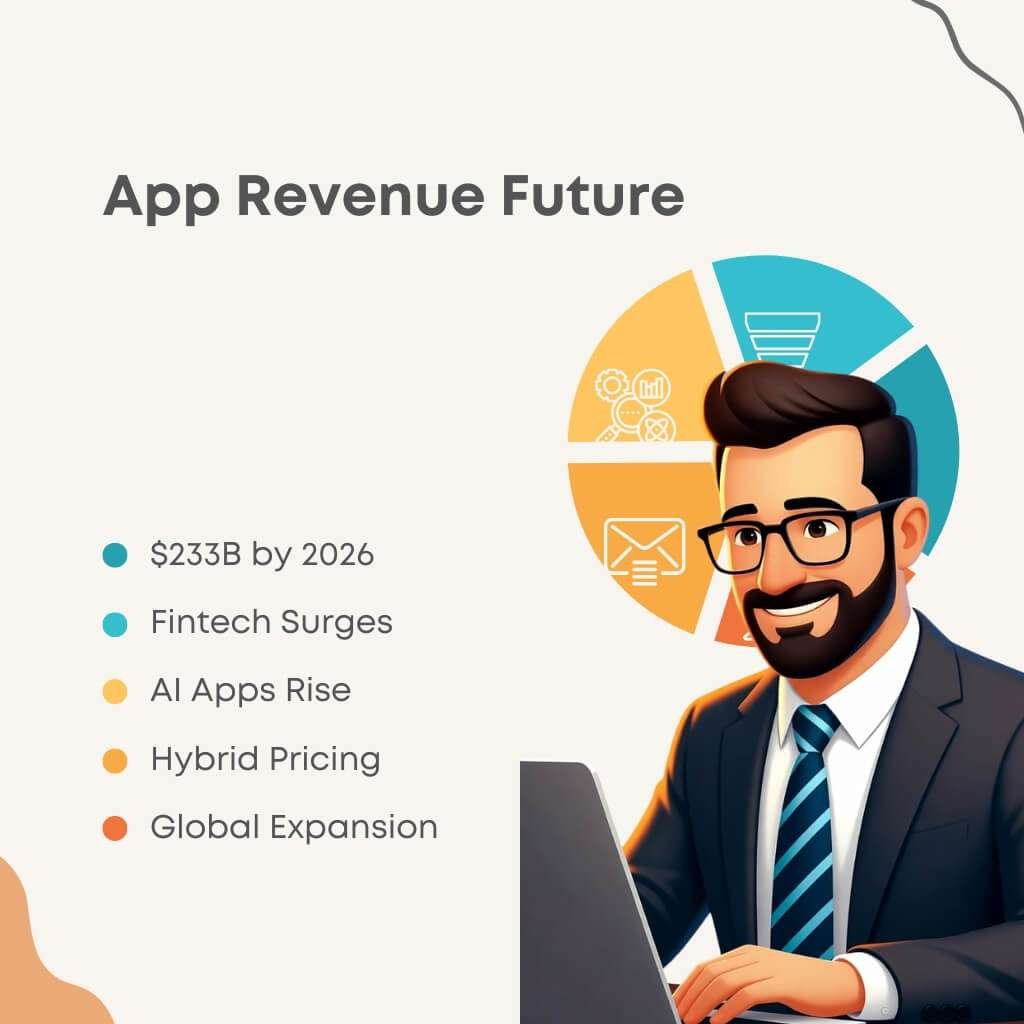
App income keeps climbing. The way it grows is also shifting. New pricing styles now lead the market.
AI features bring fresh ideas to earn. Regional trends push growth even higher. Hybrid models expand.
Fintech and niche apps create new paths. Global numbers show strong momentum. The next phase is bigger, wider and more diverse. Indeed, let’s calculate what’s next for app revenue growth:
1 . Global app spending (premium apps + IAP + subscriptions) will hit $233B by 2026 on iOS & Android combined.
2 . In-App spending will grow ~12% annually.
3 . Finance apps are surging. By this year, the fintech app market revenue is expected at $356.7B.
4 . Personal finance apps (budget tools, investment, robo-advisors) grow at ~25% CAGR through 2029.
5 . Hybrid pricing mixes are getting more common. Over 35% of apps already combine subscriptions with one-time sales or lifetime deals.
6 . Apps with longer-term subscription plans (annual vs monthly) see much better user retention and greater lifetime value.
7 . AI apps are rising fast. In 2024, their revenue jumped from ~$30M to $1.3B.
8 . Non-game apps are catching up. Non-games will make a larger revenue share on iOS by 2026.
9 . Emerging markets show fast growth in finance and health apps.
Conclusion
Thus, every app starts as an idea. Users are your investors. Every click adds value. Ads are signboards on a busy street. Subscriptions act like steady dividends.
In-app purchases are small steps that grow big returns. AI guides each move. It helps the app earn more. Launch well. Engage often.
Watch your revenue rise. Treat every feature as an asset. Turn effort into currency. Ambition becomes business.
FAQ
How much money can an app make?
Apps earn very different amounts. It depends on the category, users and model. Let’s analyze:
App Earnings by Model
| Model | Total Revenue | Description |
| In-App Purchases | 56% | Users buy virtual goods or features. |
| In-App Advertising | 35-40% | Apps show ads to users. |
| Subscriptions | 15-20% | Users pay a regular fee for premium features. |
| Paid Apps | <3% | Users pay a one-time fee to download the app. |
Revenue by App Type (Highest to Lowest)
| App Type | Annual Revenue | Notes |
| Gaming | ~$125B+ | In-app purchases dominate this category. |
| Social Media | ~$50B+ | Ads and in-app buys generate money. |
| Fintech | ~$356B (market size) | Fees, premium plans and trading revenue. |
| Streaming | ~$45B+ | Recurring subscriptions drive income. |
| E-commerce | ~$60B (app revenue) | Transaction fees and marketplace cuts. |
| AI Apps | ~$8.5B | Paid tiers, tokens and API calls. |
Core Money Facts
98% of app revenue comes from free apps.
The top 1% of apps earn most of the market’s money.
iOS users spend much more than Android users.
Hybrid models are a major trend. Over 50% of apps use a mix of ads, subscriptions and purchases.
AI apps are the fastest-growing sector.
How much does it cost to create an app?
Costs to build an app vary widely. A simple app can cost $20,000, while a complex one can easily go over $400,000. The final price depends on the features, the team’s location and its complexity.
App Development Cost & Time
| App Type | Cost Range | Development Time |
| Simple App | $20,000 – $60,000 | 3 – 6 months |
| Medium App | $60,000 – $150,000 | 6 – 9 months |
| Complex App | $150,000 – $400,000 | 9 – 12+ months |
| Enterprise App | $400,000+ | 12+ months |
Other Cost Factors
Location: Developer rates vary by country. U.S. rates are much higher than those in Asia.
Team Size: Hiring a full team of designers, developers and a project manager costs more than a single freelancer.
Maintenance: You must also pay for ongoing maintenance. This cost is usually 15-20% of the initial development price each year. This covers bug fixes, updates and server fees.
How long does it take to create an app?
App development time depends on complexity. Simple apps take less time. Complex apps need more work.
| App Type | Time Required |
| Simple App | 2–4 months |
| Medium Complexity App | 4–7 months |
| Complex App | 7–12+ months |
Notes:
1 . More features and integrations increase time.
2 . Multi-platform apps take longer.
3 . Design and testing add 1–2 months.
4 . Planning and post-launch setup take 1–2 months.
Average: Most apps finish between 3 and 7 months.
How to write code for an app?
App code depends on your platform. You can code for iOS, Android, or both. Your choice affects the language and tools you use.
App Coding Chart
| Platform | Best Languages | Top Frameworks |
| iOS (Native) | Swift | SwiftUI, UIKit |
| Android (Native) | Kotlin | Jetpack Compose, XML |
| Cross-Platform | Dart | Flutter |
| Cross-Platform | JavaScript | React Native |
Step-by-Step Guide
1 . Choose a platform
Decide if you want an app for iOS, Android, or both. iOS uses Apple’s tools. Android uses Google’s tools. A cross-platform app works on both. This saves time and money.
2 . Pick a language
Native apps for iOS use Swift. Native Android apps use Kotlin. Cross-platform apps often use JavaScript with React Native or Dart with Flutter.
3 . Use a framework
Frameworks offer pre-written code and tools. They help you build faster. For native apps, use SwiftUI (iOS) and Jetpack Compose (Android). For cross-platform, use Flutter or React Native.
4 . Write the code
Build the app’s user interface (UI) first. This includes screens and buttons. Then code the backend. The backend handles data and server logic. Common backend languages are Python and Node.js.
5 . Test the app
Check for bugs. Make sure the app works on different devices. You can use a simulator or a real phone.
6 . Launch the app
Publish it on the App Store or Google Play Store.
Other Options
Low-code tools let you create apps with minimal coding. This is good for simple apps. It is also a way to build quick prototypes.
AI helps developers write code faster. It can suggest code snippets.