


Imagine you’ve decided to start selling handmade jewelry online. You’re excited to share your creations with the world. Then, you ask yourself, “Do I need a business license to sell online?” The answer is yes. It protects you from fines or legal issues.
Otherwise, your online business could get into trouble with the government without the correct licenses. It’s like when you go to a new town—you must follow the local rules to stay out of trouble. So, let’s discuss the different aspects of a business license that you need to use to sell online.
Do I Need a Business License to Sell Online?
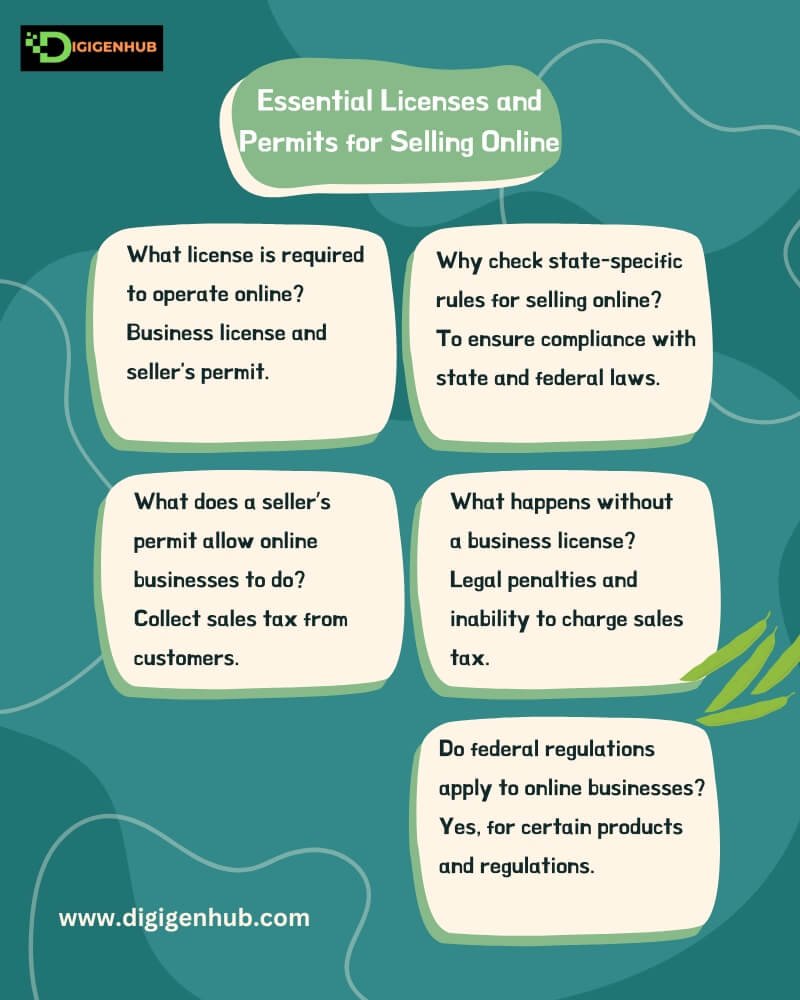
Now, here’s where it gets interesting. Every state has its own rules. For example, if you’re selling your jewelry in California, you’ll need a business license from the state.
You’ll also need a seller’s permit to charge sales tax. But the rules could be different if you’re selling only in Texas. That’s why checking what your state requires before trading is essential.
On top of that, some rules apply to everyone, no matter where you are. These are federal rules, like taxes you have to pay or special regulations for specific products. For instance, if you sell health products or supplements, you must follow the FDA’s rules, no matter what state you are in.
To run your online business legally, you’ll need a general business license, which lets you operate in your state and a seller’s permit to collect sales tax from your customers.
Assume trying to sell your jewelry online in New York without a seller’s permit. Of course, you wouldn’t be able to charge sales tax and that’s a big no-no.
So, just like that, you need to have the proper licenses in place. They’re not just for following the law. Indeed, they help you run your business correctly and keep you out of trouble.
Types of Business Licenses and Permits You Need to Sell Online
Starting an online business means you need to get specific licenses and permits. These licenses let you sell legally and avoid problems.
The rules can change depending on where you live, which I have already explained. Let’s explain what you need to know about business licenses for selling online:
1. General Business License
This is the basic license required to operate your business legally. This lets you run your business legally in your city or county. Most states need this license, even if you’re just selling online.
How to acquire a business license: Apply at your local government office or online.
Cost: It can Cost anywhere from $50 to $500, depending on where you live.
A . Los Angeles: Around $100–$500.
B . Miami-Dade County: Around $50–$300.
C . New York City: About $100–$150.
2. Sales Tax Permit
You need a sales tax permit to collect sales tax if you sell goods or services.
Example: If you sell products to customers in Florida and reach $100,000 in sales, you must register to collect sales tax in Florida.
How to get it: Apply through your state’s Department of Revenue.
Cost: Most states don’t charge for this.
A . California: Free, but may Cost if filing on paper.
B . Texas: Free.
C . New York: Free.
3. Employer Identification Number (EIN)
What it is: If you run your business as an LLC or Corporation, you need an EIN for taxes.
How to get it: Apply online at the IRS website.
Cost: Free.
All businesses can get an EIN for free from the IRS.
4. Home Occupation Permit (if needed)
What it is: If you run your business from home, you may need a permit.
How to get it: Apply at your city or county’s office.
Cost: Usually between $50–$500.
A . Los Angeles: Around $200–$500.
B . Miami-Dade: About $100–$200.
C . New York City: Around $100.
5. Fictitious Business Name (DBA) Registration
What it is: If you use a business name that isn’t yours, you must register it.
How to get it: File with your local county or state.
Cost: Typically $10–$100.
A . Los Angeles: $40–$100.
B . Texas: $15–$25.
C . Florida: About $50.
6. Reseller’s Permit (Sales Tax Exemption Certificate)
What it is: If you buy products to resell, this permit helps you avoid paying sales tax.
How to get it: Apply through your state’s Department of Revenue.
Cost: Free or very low Cost.
A . California: Free.
B . Texas: Free.
C . New York: Free.
7. Zoning Laws (if needed)
What it is: Zoning laws dictate where you can run your business. This matters whether you operate from home or a physical store.
How to check: Ask your local zoning office.
Cost: Varies by location, but can be $50–$500.
A . Los Angeles: $100–$500 for special home business permits.
B . Miami-Dade: Usually, there are no restrictions for online businesses.
8. State-Specific Business License
What it is: Some businesses need extra licenses, mainly if they sell things like food, alcohol, or health products.
How to get it: Check with the relevant state department (like health or alcohol control).
Cost: It can range from $100 to $5,000.
A . California: Food businesses may need a Food Establishment License costing $100–$500.
B . Florida: If you sell alcohol, you may need a Liquor License, which can Cost $200–$1,000.
9. Insurance Requirements
What it is: Insurance helps protect your business. Depending on what you sell, you might need General Liability Insurance or Product Liability Insurance.
How to get it: You can get insurance from private companies.
Cost: It can Cost $300–$2,000 per year, depending on your business.
A . California: General Liability Insurance costs around $500/year.
B . Florida: Product Liability Insurance can Cost $500–$1,500/year.
10 . Special Licenses for Certain Products
Certain products may need extra licenses.
A . Alcohol: Selling alcohol online requires a specific license that differs by state and type of alcohol (beer, wine, spirits).
If you sell wine to customers in New York, you need a special license from the state’s alcohol control board.
B . Firearms: Selling firearms or ammunition online requires federal and state licenses. The rules are strict to ensure safety.
If you sell firearms in the U.S., you need a Federal Firearms License (FFL) and to comply with state laws where you ship to.
C . Health Products: If you sell products like supplements or medical devices, you may need special permits or approvals, often from the FDA.
If you sell vitamins online, you must follow FDA rules and may need to get specific approvals or permits.
Cost: Varies by industry.
A . California: Selling alcohol requires a $200–$1,000 liquor license.
B . Florida: Health products may require FDA Registration, costing around $100–$500.
11 . Selling Across State Lines
You may need a license for each state if you sell to people in different states. Each state has its rules, so selling across state lines can require extra requirements, like sales tax registration.
Example: If you run an online store selling shoes in Florida and ship to customers in New York, you need to register for sales tax in New York if you meet specific sales thresholds.
Still, the Cost sections present just a few states here—just examples. Indeed, presenting 50 states’ Costs will be a broad discussion. Yet, check with your local and state authorities to ensure you have everything. Having the correct licenses keeps your online store compliant with the law.
How to Obtain a Business License
You may ask, “how to get a business license to sell online legally”. To apply for a business license, you must register, get an EIN and acquire permits. These are all crucial steps to sell online legally.
The process is straightforward. Still, different states have different license rules. So, you’ll need to provide basic details about your business, such as its name, type and location. Most states require a small application fee. So, let’s learn how to obtain a business license in detail :
1 . Choose Your Business Structure
Register with the state: You need to register your business officially. This step makes your business a legal entity.
Decide what type of business you want to start (sole proprietorship, LLC, corporation or other structure). This will affect the licenses you need.
2 . Register Your Business Name
If you use a business name that’s different from your name. Of course, you need to register it. This is called a DBA (Doing Business As) registration.
3 . Apply for a Business License
Go to your state’s business website to apply for a general business license. This license allows you to run your business legally.
Example: To sell online in California, you’ll apply for a California business license through the state’s website. You’ll fill out the application form, pay the fee and await approval.
4 . Get Your EIN (Employer Identification Number)
An EIN is like a business’s social security number. It helps with taxes and hiring employees. You can apply for an EIN through the IRS website (it’s free).
Example: After deciding on your business structure (like an LLC), you register it with the state of Texas and apply for an EIN through the IRS.
5 . Apply for a Seller’s Permit (If Needed)
If you sell products and need to collect sales tax, apply for a seller’s permit from your state’s tax agency.
Example: If you sell handmade jewelry online in Texas, you must apply for a seller’s permit to collect sales tax.
6 . Register for Sales Tax in Multiple States (If Needed)
You may need to register for sales tax if you sell in other states. Some states require you to register once you reach a specific sales amount.
Example: If you sell products in New York and Florida, you must register for sales tax in both states if your sales exceed a certain threshold.
Once you’ve completed these steps, you’ll be ready to sell online legally!
What is Nexus and How It Affects Your Online Business
Nexus is a connection between your online business and a state. If you have nexus in a state, you must collect sales tax from customers there. Nexus can happen in a few ways, such as having a physical presence (like a warehouse or office) or making a certain amount of sales in that state.
For example, if you sell 100 products to customers in Florida and Florida requires sales tax after 200 transactions, you must collect sales tax once you hit 200 transactions.
Yet, if you live in Texas but sell over $500,000 of products online to customers in California, you have nexus in California. This means you must collect sales tax on sales made to California customers.
Each state has its own rules about when sales tax applies. In some states, the number of sales or transactions determines if you need to collect tax.
How to Maintain Tax Laws for Digital Sales
Laws change often. It’s essential to stay updated on local, state, or national rules that affect your business. These can include taxes, business licenses, or rules for online sales.
Example: A state might require online sellers to collect sales tax on digital products. If you sell e-books, you must start charging sales tax in that state.
1 . Stay Compliant with New Laws
New laws are constantly being introduced. So, you need to be cautious about the following stuff:
A . Data Privacy: Protecting your customers’ personal information is crucial. For example, the California Consumer Privacy Act (CCPA) allows customers to request data deletion.
B . Remote Selling: Selling products across states or countries may require special rules for shipping and taxes.
C . Product Regulations: Some products, like alcohol or cosmetics, have extra rules for online sales.
Example: If you sell beauty products, ensure they meet FDA rules. New regulations might require changes to your products or packaging.
2 . Get the Right Permits
As your business grows, you may need new permits or licenses. Each state may have specific rules for out-of-state sales.
Example: If you sell in a new state, you might need a state seller’s permit. If you start selling internationally, you may need new permits to ship abroad.
Conclusion
Thus, rules for online selling are stricter now. Many U.S. states and countries now require sellers to register and pay sales tax. Amazon and Etsy collect sales tax in more areas. Sellers must make sure they are registered where needed.
Some regions also need licenses for products like health items or electronics. The IRS is focusing on online sellers’ taxes. To stay compliant, check for new laws, update your licenses, and adjust your business as needed. Indeed, stay ahead of changes to avoid problems.
FAQ
Can I sell online without paying tax?
No, you can’t sell online without paying taxes in many places. Most states and countries now require sellers to collect and pay sales tax. Platforms like Amazon and Etsy collect tax for you in many regions. You must still register and follow local tax rules.
Do I need a business license to sell on Amazon?
Yes, you may need a business license to sell on Amazon. It depends on where you live and what you sell. Some places require registration for sales tax. Check your local rules to see if you need a license.
What does the IRS know about your online sales?
The IRS knows about your online sales if you earn enough money. Platforms like Amazon and eBay report your sales to the IRS. If you make over $600, they will send you a tax form. You must pay taxes on your online income.
An IRS audit is when the IRS checks your records to see if your tax return is correct. They compare your income with data from banks or employers. They also use programs to find mistakes or unusual patterns.
What is the IRS $600 rule?
The IRS $600 rule means if you make over $600 from online sales, platforms like Amazon or eBay will report it. They will send you a tax form called a 1099-K. This form shows how much money you made. You must pay taxes on any income over $600.