

Ads that worked yesterday can waste money today. AI PPC management handles bidding, targeting and ad testing. It frees humans to focus on strategy and growth.
My younger cousin Naushine sells personalized gifts online. She spent hours managing Google and Meta campaigns. Most ads missed the right audience. Budgets drained quickly.
We applied a simple AI PPC process to fix this. First, we used Optmyzr for automated bidding and budget adjustments.
It focused spend on top-performing ads. Next, AdCreative.ai generated multiple ad versions for testing.
This helped find visuals and copy that actually engaged her customers. We also used Brandhype to manage campaigns across platforms from one dashboard.
Finally, AI-driven audience tools discovered new customer segments and long-tail keywords.
Her campaigns started running efficiently within weeks. Spending became smarter. Ads reached the right people. She finally had time to create new products and grow her store.
How Does AI PPC Management Improve Audience Targeting
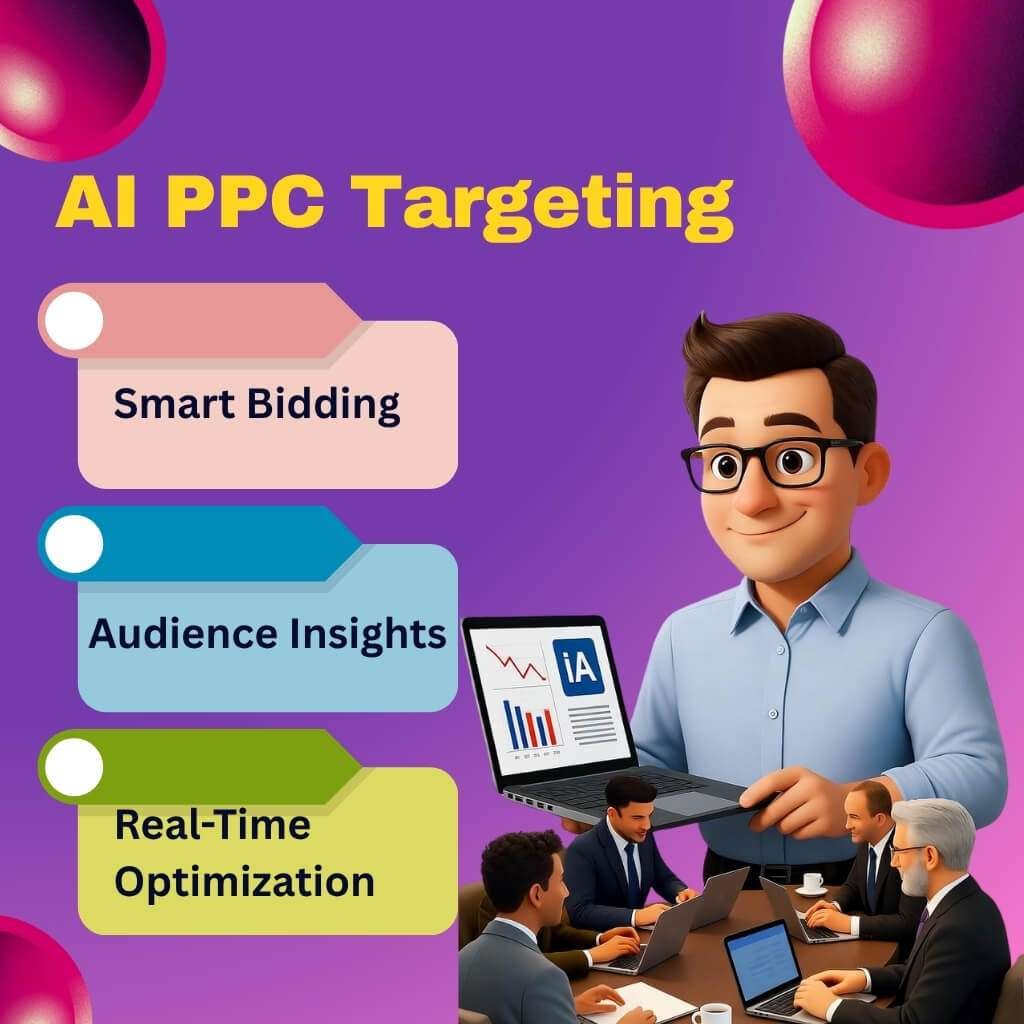
In the past, PPC campaigns were controlled by human hands. Marketers picked keywords. They set bids for the digital business.
They watched the metrics and adjusted each day. This worked when data was limited and campaigns were smaller.
Now things are different. Platforms handle far more user-signals, channels, formats and bids than humans can track manually.
Tools apply algorithms that monitor millions of interactions. The human role shifts from doing every tweak to supervising the machine’s work.
Agencies are reporting that firms relying solely on manual adjustments find it hard to keep up.
For example, a recent article highlights how PPC operations are merging into “AI-first formats … the granular controls you used to rely on keep disappearing.” Search Engine Journal
So, how does AI manage data and every aspect of PPC campaigns? Let’s explain through its components:
Machine learning for bids & budgets
The system reviews past results, user behaviour, device, geography and time of day. Then it raises or lowers bids to reach your goal (e.g., cost-per-acquisition).
Predictive analytics
The system forecasts which keywords, audiences or placements will convert. It then shifts the budget or targeting ahead of time.
Creative optimization
Instead of one headline per ad group, AI tests tens or hundreds of combinations: text, image, video. It picks top performers and drops weak ones.
Advanced targeting
The system uses patterns (search history, on-site behaviour, demographics) to build high-value segments or “lookalike” groups. It spots audiences you didn’t think to use.
Multi-channel orchestration
AI integrates across search, display, social and shopping. It allocates budget and creative assets in all places — not just Google Search.
Which Trends Make AI PPC a Must-Have?
We’re at a moment where several forces collide:
Privacy and data shifts
Third-party cookies are fading out. Apple and Google limit tracking. Advertisers must rely more on first-party data and smarter modelling. AI systems handle less complete, more complex data better than purely manual ones.
More channels, more formats
People use voice, video, mobile, TV, social and search. Ads must appear in many places. A manual person can’t coordinate all channels well. AI can.
Scale pressure
Big and mid-sized advertisers run dozens or hundreds of campaigns. The workload grows fast. Manual monitoring becomes a bottleneck.
AI tools have matured
Platforms like Optmyzr, AdCreative.ai and built-in features in Google Ads or Meta Ads Manager are no longer experimental. They deliver measurable gains.
Competitive urgency
Because advertisers adopt these systems, staying with manual methods may cost more in CPC/CPA. One 2025 report even calls PPC in 2026 “AI, Automation And The Fight For Visibility.”
What Benefits Can AI Bring to Your PPC Campaigns?
So, what advertisers can expect from using AI PPC management. Let’s count he major benefits worth your attention:
1. Saving time and resources
Running big PPC programs by hand takes hours. You manage bids, swap keywords and rotate ads daily.
With automation, much of that work gets handled by tools. That means staff shift from manual tasks to planning and insight work. A recent study found agencies using automation saw up to a 30% rise in ROI.
For advertisers in high-cost verticals, this means you don’t need large teams just to keep up. Your team can focus on growth and direction.
2. Better cost-effectiveness
Automated systems put more money where it pays off. They shift the budget away from low-performers and push it into strong performers.
In sectors like finance or SaaS, where each click costs a lot, this matters.
Google’s own documentation says automated bidding works to hit your target cost or value. (business.google.com)
For you: define CPA or ROAS goals clearly, let the system apply them and review regularly.
3. More personalized ads at a mass scale
People expect ads that speak to them. Today’s tools track behaviour, device, audience, past activity—then tailor ads accordingly.
In one U.S. ecommerce example, dynamic ads that used behaviour signals and machine-driven asset rotation improved conversion rates within weeks.
If you feed clean audience data and enable variation, you’ll see stronger relevance and higher conversions.
4. Scaling across channels with less friction
Managing search, shopping, social and video all separately drains resources and creates inconsistency. Modern platforms allow connected campaigns.
If one channel performs well, tools can move the budget to another channel faster. For high-CPC advertisers, scaling without a giant team is huge.
Your setup should include unified data, clear goals across channels and a dashboard view that shows how everything fits.
5. Discovering hidden demand
Traditional keyword lists will miss many converting search paths. Systems now find intent patterns, long-tail phrases and niche users.
For instance, a U.S. ecommerce brand uncovered a low-volume search phrase that converted at double their usual CPA. The system bid on it once the data confirmed the value.
You must allow your campaigns enough learning phase and avoid shutting off exploration too early.
6. Better forecasting and seasonal readiness
Campaigns that wait for bad performance to correct themselves lose time and money. Modern tools forecast demand shifts, seasonal trends and performance dips.
In U.S. markets where competition intensifies at specific times (holiday retail, tax season), that foresight gives you an advantage.
You should examine forecast outputs, decide budgets ahead of peaks and let tools apply suggestions.
7. Aligning creative assets with performance
Creative fatigue costs a lot when your CPCs are high. Automation helps rotate creatives, test assets and discover what works.
A U.S. brand improved its click-through and conversion numbers when it added creative testing with automation.
Action: create asset libraries, upload variations and allow the system to test without threatening brand integrity.
8. Clearer reports and faster insight
When you have large budgets, decision-makers want fast, accurate insight. Modern systems track signals humans often miss and clean up data into useful visuals.
Agencies report that automated reporting reduces dashboard build time from days to hours.
Make sure your reporting platform covers all channels and gives simple summaries for stakeholders.
9. Lower risk of human error
Manual work introduces mistakes—wrong bid caps, paused ad groups that should run and mis-defined audiences. Automation applies rules consistently and watches for anomalies.
For high-CPC accounts, even small errors cost big dollars. One U.S. legal advertiser found dozens of mis-set campaigns within weeks of switching to automated monitoring.
Your job: define your rules clearly, give the system the right inputs and check performance regularly.
10. Staying competitive in high-cost markets
If your cost per click is high and your competition adopts newer tools, doing things the old way puts you at a disadvantage.
Many U.S. marketers say ignoring modern PPC tools means higher costs or slower growth.
Top AI Tools for PPC Management and What’s Hot in 2026
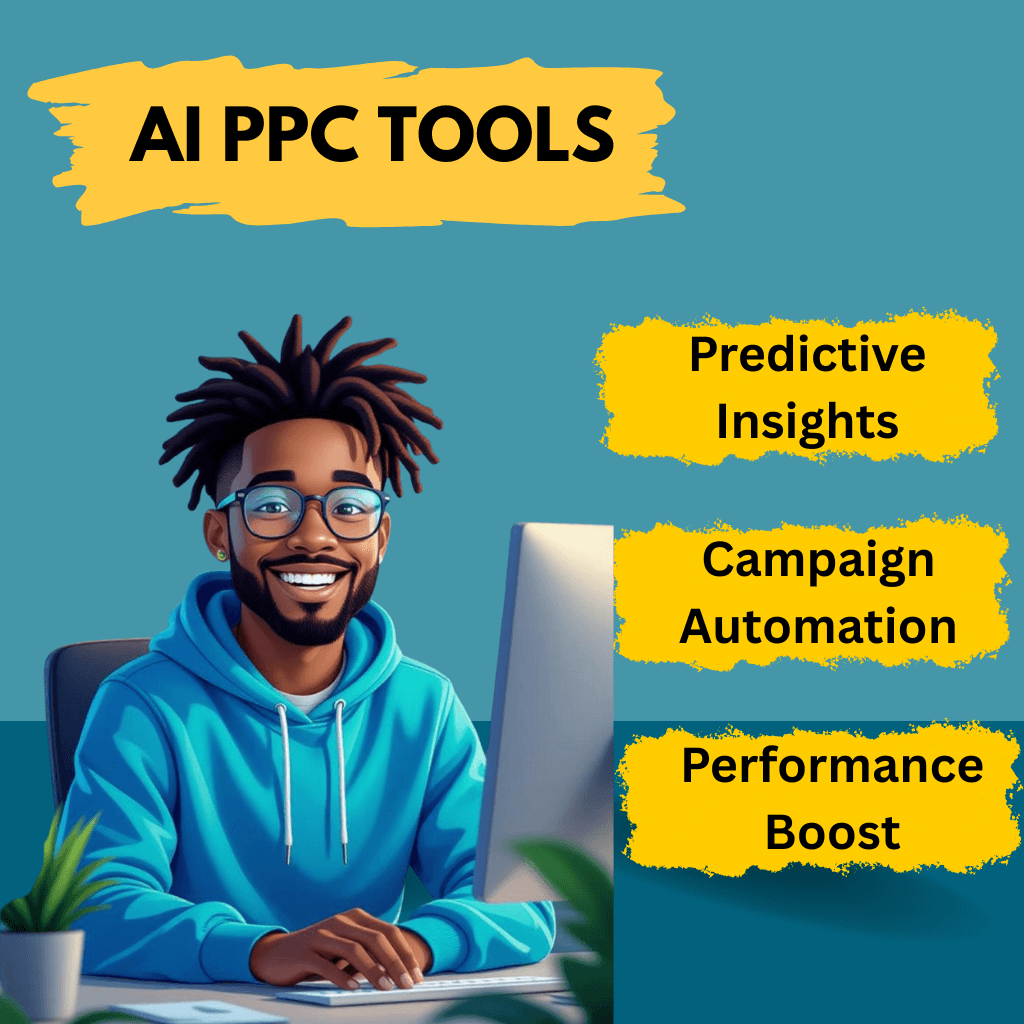
Let’s see the types of AI tools for PPC to manage the entire campaign lifecycle. They now integrate predictive methods.
Bid & Budget Automation: Tools use Predictive Analytics to set auction-time bids. Budgets shift in real-time for maximum ROI.
Creative & Ad Generation: Platforms deploy Generative AI. They create hyper-personalized ad copy and visuals at scale.
Cross-Channel Dashboards: Solutions utilize Unified Data Modeling. This provides a single view across all ad platforms.
Audience Discovery: Tools employ Intent-Based Marketing. This targets why a user searches, not just what they search for.
Feature-Based Breakdown of Prominent Tools
A . Tools for Bidding & Budget Automation
Optmyzr: It layers Custom Rule Logic over native bidding systems. This prevents overcorrection by platform AI.
Acquisio: It uses its own AI-Driven Bid Optimization. This enhances efficiency across various platforms.
AdScale: This tool specializes in E-commerce Automation. It connects store data to ad campaigns for focused optimization.
PPC Entourage: It is tailored for Amazon PPC. It offers Bid and Keyword Automation for maximum profitability.
Helium 10 Adtomic: It uses AI for Amazon PPC. It focuses on bid strategies and ACoS Reduction.
B . Creative & Ad Generation Tools
It generates creatives with a Conversion Scoring AI. This predicts ad performance before launch.
Pencil: This AI platform uses Predictive Analytics on creative assets. It helps marketers deploy top-performing ad variations faster.
Canva’s Magic Write: It uses a large language model (LLM). It quickly generates ad copy integrated with design via Magic Studio.
Copy.ai: It provides AI-Driven Content Generation. It focuses on creating high-converting ad formats and marketing copy.
Jasper: This tool is known for creating Brand Voice content at scale. It ensures engaging ad copy across all channels.
C . Cross-Channel/Unified Tools
Brandhype: This platform manages PPC campaigns. It provides a single dashboard for Cross-Channel Management.
Adzooma: It offers a unified interface. It uses Performance Monitoring to improve ad efficiency.
Kenshoo: It provides cross-channel campaign management. It uses advanced analytics for Holistic Budget Allocation.
Marin Software: It specializes in Omnichannel Advertising. It focuses on automation and optimization across search and social.
Quotient: It manages campaigns by integrating Digital and In-Store Data. This creates effective omnichannel campaigns.
D . Trend-Forward Tools for 2026
Search is no longer just text. Now, tools support voice and visual queries. Your campaigns must appear when users speak or snap an image. That means visibility across all search formats.
Predictive LTV Bidding Platforms
These platforms estimate customer lifetime value (LTV). AdZeta+1
They adjust bids based on long-term worth, not just one conversion.
You target high-value users early. This drives smarter spend and better returns.
Tools that build AR and VR ads are emerging. Ads become interactive, 3-D experiences—not just banners. Brands create virtual try-ons, immersive displays and engaging worlds.
Advanced models track multiple touchpoints. They assign credit across channels and devices. You see the full conversion path and make smarter budget decisions.
These tools deliver brand content without a click. Ads surface in feeds or results directly. Users engage before ever visiting your site. Brand visibility becomes its own conversion.
How to Evaluate and Choose the Right Tool
Data Integration
Select a tool that connects easily with your existing data and platforms. Seamless integration keeps your campaigns accurate and efficient.
Transparency
Make sure the platform explains how it makes decisions. Opaque “black-box” models reduce trust and control.
Channel Coverage
Choose tools that support all channels you use: search, display, social and shopping. Broader reach ensures your entire audience is covered.
Ease of Use
Pick solutions that your team can adopt quickly.
Minimal training means faster rollout and stronger results.
Which AI PPC Tool Should You Pick First?
For budget control, start with Optmyzr. Its automation features are comprehensive.
For creative asset generation, use AdCreative.ai. It offers user-friendly tools for engaging ads.
For unified management, explore Brandhype. It manages multiple platforms from one dashboard.
How AI Works Inside Modern PPC Campaigns
Let’s know how modern systems make bidding, creative, targeting and forecasting work.
A. Automated bidding & budget allocation
What it does in one line. It sets bids and moves the budget across campaigns using data patterns.
How it works, simple steps:
1 . The system watches past conversions.
2 . It scores each auction or impression.
3 . It raises or lowers the bid to hit your goal (for example, target CPA or ROAS).
4 . It shifts budget toward more profitable ad groups.
Why do platforms use this?
They can process many signals per auction. Humans cannot match that speed. Google calls this “automated bidding.” It sets bids to meet your goals. Google Help
Practical note for advertisers
Set clear goals. The system follows them.
Feed clean conversion data. Bad data makes bad decisions.
Use guardrails. Set max bids and campaign budgets to avoid surprises.
B. Creative optimization & dynamic ad generation
Systems write or pick headlines. They choose images or videos. They assemble lots of ad versions.
How it works:
1 . The tool creates many variants.
2 . It runs them across audiences and placements.
3 . It measures which variants drive actions.
4 . It favors top performers and drops poor ones.
Creative fatigue hits fast. Testing at scale fixes it. Tools can generate hundreds of variations in hours. AdCreative.ai and others score creatives before spending. That helps avoid waste.
Practical tips:
Keep brand rules. Machines must follow them.
Test image, copy and CTA separately.
Pause versions that underperform quickly.
Use creative scoring to preselect assets.
C. Targeting & keyword evolution
Keywords matter, but intent now guides decisions. Systems match thematic intent more than exact text.
How systems find audiences:
1 . They cluster search phrases by meaning.
2 . They map on-site behaviour to probable buyers.
3 . They build lookalike groups from high-value users.
4 . They hunt long-tail opportunities that humans miss.
How advertisers win:
AI finds pockets of demand outside obvious terms. Phrase and match types rely more on intent signals now. Google now prioritizes intent over exact phrasing.
Action steps:
Group keywords by theme.
Feed first-party lists for better lookalikes.
Monitor search terms and add negatives fast.
Use audience signals to expand reach where cost fits.
D. Predictive analytics & cross-channel learning
It forecasts performance and moves budget across channels. It learns from all ad touchpoints.
How forecasting works:
The model uses past data and season patterns.
It estimates future conversions for channels.
It recommends budget changes.
It alerts humans when numbers deviate.
Systems connect data across search, social, shopping and video to find the best spend split. This avoids siloed choices. PPC Hero explains why attribution now focuses on the right questions, not every click.
Practical guardrails:
Keep multi-touch measurement in place.
Use first-party signals to fill gaps left by tracking limits.
Build weekly and seasonal forecasts.
Set reallocation rules and caps to avoid whipsawing budgets.
How does AI pick which ads to show?
Ads enter the auction. The system checks eligibility first. Then it ranks ads by value. Value includes bid, ad relevance and landing experience. Google uses Ad Rank to decide winners. Quality and relevance still matter.
Step-by-step:
User triggers a search or content view.
The system finds eligible ads for that moment.
It scores each ad for expected outcome.
It multiplies the score by the bid to set the rank.
The highest-ranked ad wins the position.
What to control as an advertiser:
Improve landing page speed and relevance.
Match ad copy to search intent.
Use good creatives and clear CTAs.
Keep conversion tracking accurate.
Expert opinion
“Automated bids work best when humans guide them with clean data and strict goals.” — Frederick Vallaeys, Optmyzr.
“Don’t hand over accounts and walk away. Use automation, but keep a steady hand.” — Kirk Williams, ZATO Marketing.
How Can Human Strategy Overcome AI PPC Challenges?
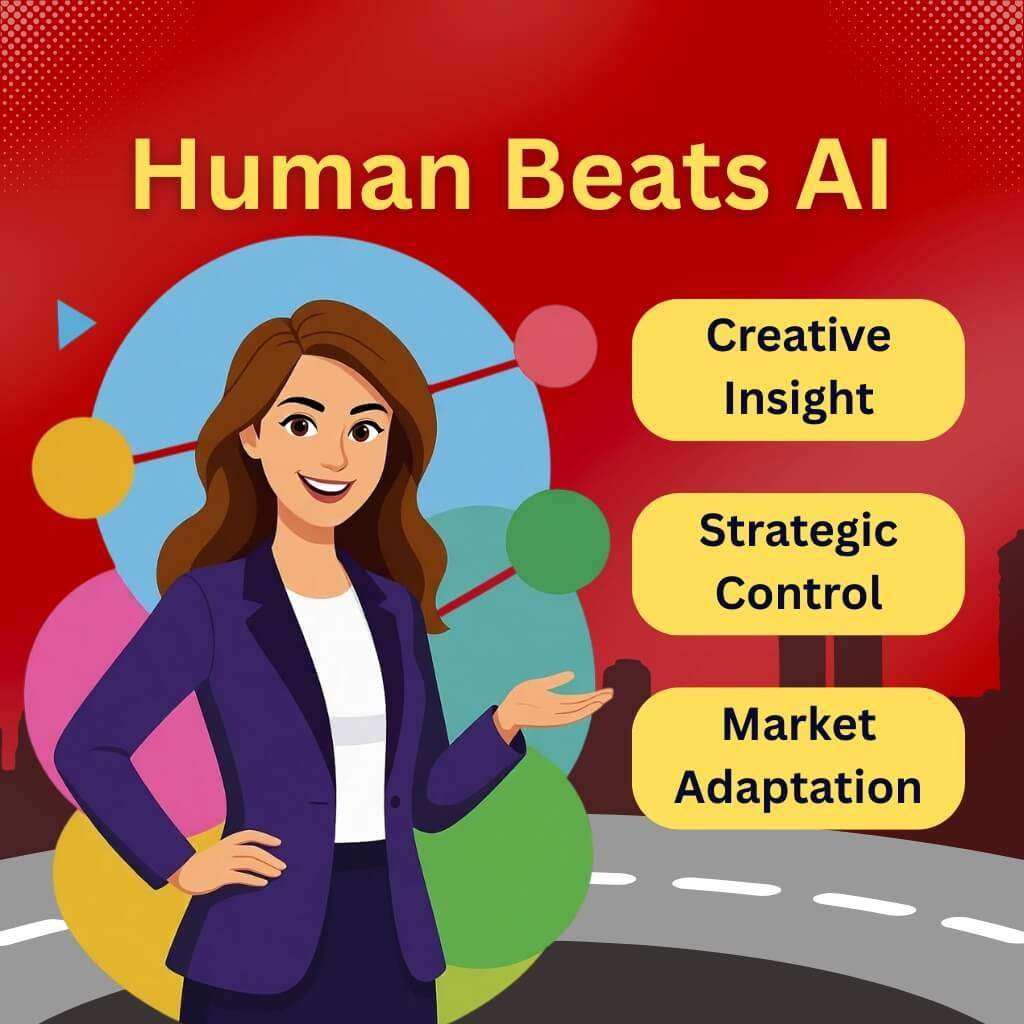
Even the most advanced PPC tools cannot replace human judgment. AI manages repetitive tasks and analyze data. but it does not understand brand voice, market trends, or sudden shifts in customer behavior.
For example, an AI system may optimize bids for past performance but cannot anticipate a competitor launching a new offer.
Of course, human strategy fixes the limits of AI PPC. Humans must guide AI with strategy, context and creative decisions.
Marketers still decide campaign goals, messaging and how to react to unexpected changes.
A hybrid approach works best: let AI handle routine tasks while humans focus on strategy and creativity.
Data Quality, Tracking and Measurement
AI decisions are only as good as the data they receive. Poor tracking or messy data can lead to wrong bids, misdirected spend and missed opportunities.
For example, if conversion tracking is set up incorrectly, AI might optimize campaigns for the wrong actions.
Check your tracking regularly. Standardize naming conventions, verify tags and ensure data flows cleanly across all platforms.
Use tools that detect anomalies early. Accurate inputs allow AI to work effectively and give better results.
Transparency & Control
Many AI tools operate like a “black box.” Marketers often cannot see why certain bids are made or which signals influenced ad placement. This can make it hard to trust results or make decisions confidently.
Choose platforms that show insights into AI decisions. Set alerts for major changes and review performance frequently. Combine AI outputs with human judgment to keep campaigns accurate with business needs.
Privacy, Regulation and Ethical Use
Privacy rules are changing fast. Third-party cookies are disappearing. The regulations like GDPR and CCPA require explicit consent for data collection. Missteps can cost fines and damage reputation.
Focus on collecting only necessary data and getting clear consent from users.
Update privacy policies, implement consent management tools and follow regulations in every region.
Can AI Replace a PPC Manager?
No. AI cannot replace human consultancy in PPC. It can automate tasks and analyze data. But it cannot create a strategy, understand context, or make creative decisions. So be a consultant to control AI.
PPC managers interpret insights, adapt campaigns and ensure results align with business goals.
Upskill your team to work with AI. Train them to read reports, adjust strategies and apply insights.
Preparing for 2026: Human + Machine Workflows
The future is hybrid. Build workflows where humans guide AI and review decisions regularly.
Train teams to understand AI outputs and interpret data meaningfully. Encourage collaboration between analysts, creatives and strategists.
This approach ensures campaigns remain flexible, ethical and effective. Companies that prepare now will outperform those that rely solely on AI.
Expert Insight
“AI can handle the heavy lifting, but humans must drive strategy and creativity. Both are essential for successful campaigns.”
— John Smith, Digital Marketing Expert
Conclusion
AI PPC management acts like a financial analyst. It directs every dollar to top projects. Ads move like products in a supply chain. They reach the right customers fast.
You lead like a CEO. AI works like an operations manager. Campaigns grow like franchises in new markets. Every click is a share in your growth. Every insight is a boardroom decision.
FAQ
Can AI PPC help detect seasonal product trends before competitors?
Yes. Some AI platforms analyze external signals like search spikes, social chatter and trending products across e-commerce sites. This allows campaigns to adapt even before traditional data shows a trend.
Will AI help manage ad fatigue across audiences?
Yes. AI can track engagement decay for specific audiences and automatically rotate ads to prevent repetition. This ensures campaigns stay engaging without human manual tracking.
Can AI predict which ad format performs best for a niche?
Yes. AI can analyze past data across multiple formats and suggest the most effective combination for a specific product or audience segment.
Can AI PPC tools suggest new niche markets automatically?
Yes. AI can identify micro-segments by clustering behavior patterns and interests that advertisers may not notice manually, helping reach untapped audiences.
How can AI adjust campaigns for regional trends without human intervention?
AI can track city or state-level performance and adjust bids, ad timing, or targeting automatically to match local demand.
Can AI estimate potential ROI for entirely new ad channels?
Yes. Predictive AI can simulate outcomes for emerging platforms (like voice apps or AR marketplaces) based on similar user behavior patterns.
Can AI detect emerging competitor strategies in PPC?
Yes. Certain AI tools monitor competitor ads and keyword activity, flagging new campaigns or shifts in approach, so advertisers can react early.
Can AI predict which audiences are likely to churn or disengage?
Yes. By analyzing engagement trends, AI can flag at-risk audiences, allowing marketers to retarget with customized campaigns before they disengage.
Can AI automatically test incentives or offers in ads?
Yes. AI can rotate promotions, discounts, or calls-to-action and measure performance quickly, highlighting which incentives convert best for each audience.
Can AI forecast ad performance during unexpected events?
Yes. Advanced AI can integrate external signals like weather, holidays, or market events to adjust campaigns instantly, reducing wasted spend during unpredictable shifts.