
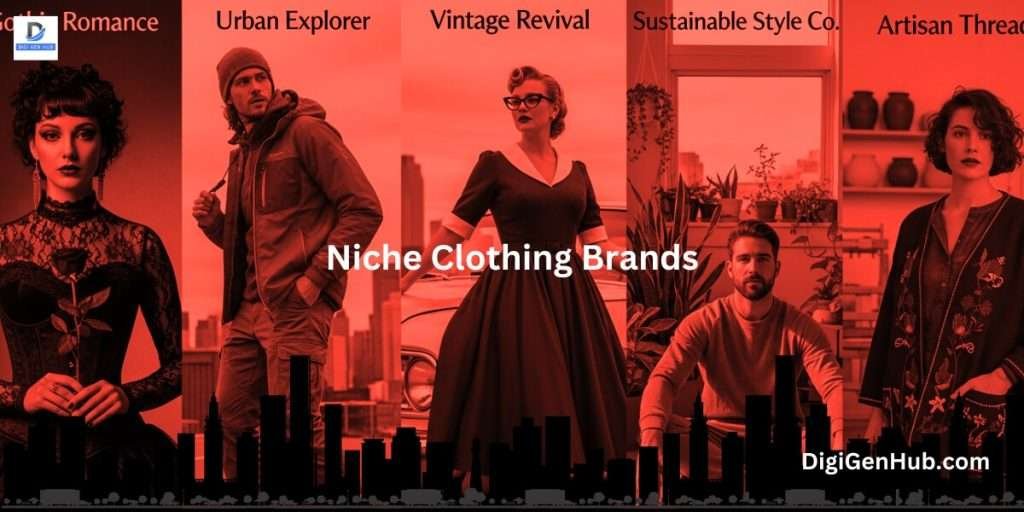

People want unique experiences, not just products. Digital micro-groups are steering what’s becoming popular. Trends like digital avatars, eco-friendly fabrics and tech-enabled clothing are opening new markets.
In this environment, niche clothing brands define who wins and who gets lost. So, pick a focused style or audience. Connect deeply. Build devoted followers.”
Yet, I worked 11 months with Luna, a client running a virtual apparel brand. She struggled to reach the right audience until I studied emerging trends, designed exclusive digital outfits and shared them through niche online communities.
In 4 months, engagement and sales grew noticeably. This shows how a clear niche can turn new ideas into satisfied results.
Still, challenges like sustainability and supply chain issues exist. Still, by staying flexible and genuine to your vision, niche fashion brands can grow with profit in a crowded market.
Let’s explain different aspects and examples of niche markets in fashion.
Niche Clothing Brands Today (and New Ones Rising for 2026)
Fashion isn’t one big crowd anymore. It’s now built on smaller, faster-growing niches. Each one speaks to a specific lifestyle, belief, or need.
These are the spaces where new brands rise and established names reinvent themselves. Let’s see the strongest niches popular now and the ones already forming for 2026.
1. Sustainable & Eco-Fashion
This niche grows faster than any other. People now check how clothes are made, not just how they look.
New focus areas include carbon-neutral fabrics, verified supply chains and traceability through digital product passports.
Reports show this market expanding at around 9.9% yearly from 2025 to 2032.
Tip: Add repair or recycling options on your site. It shows value, not just claims.
2. Functional Streetwear & Tech-Fashion
This trend mixes comfort, design and tech in one outfit. Shoppers want clothes they can wear for travel, the gym and daily life.
Recent advances include AI-assisted design tools and fabrics that regulate temperature or resist moisture.
Tip: Product videos showing movement and flexibility convince buyers better than studio shots.
3. Adaptive & Inclusive Fashion
This market finally gets the attention it deserves. Brands now make clothes that fit plus-size, disabled and older customers without sacrificing style.
Adaptive clothing in the U.S. is already a growing billion-dollar segment.
Is inclusive fashion profitable yet? Yes. Brands with real inclusion earn loyal buyers and repeat sales.
4. Cultural & Modest Fashion
Modest and cultural styles go global. Consumers want clothing that respects identity while fitting modern taste.
Demand is rising fast across Southeast Asia, the Middle East and Western diaspora communities.
Brand example: Aab Collection merges modest design with sleek silhouettes and color palettes that work for every market.
Tip: Offer cultural context on product pages. It adds depth and respect.
5. Digital Fashion & Virtual Apparel
Designers now sell garments made only for online business, social media and gaming. Analysts project this niche to reach multi-billion levels by 2026.
Brand example: The Fabricant leads the movement, creating digital-only collections for influencers and brands.
Will digital clothes replace real ones? No. They’ll live side by side. Digital clothes add revenue and cut waste, especially in marketing and prototyping.
6. Activewear & Athleisure
Activewear keeps expanding. But now splits into micro-niches like yoga, cycling, recovery wear and even apparel for wellness retreats.
Smaller sub-niches like “eco-friendly triathlon suits” or “anti-slip Pilates gear” appear daily.
Brand example: Girlfriend Collective focuses on recycled fabrics and inclusive fits.
Tip: List activities directly in product titles. It improves search and conversions.
7. Plus-Size Fashion
Plus-size is no longer a side category. It’s a core business with large spending power.
Recent data shows the global plus-size apparel market will exceed $300 billion by 2032.
Brand example: Eloquii leads by offering trend-driven styles with consistent fit.
Tip: Use size-inclusive models in every photoshoot. Authenticity sells.
8. Maternity & Kidswear
Parents want flexible and sustainable options. Maternity wear now adapts from early pregnancy to postpartum.
Kidswear focuses on customization and resale-friendly quality. Subscription boxes and swap programs keep families coming back.
Brand example: Hatch Collection offers chic, seasonless pieces that grow with each stage.
9. Work-From-Anywhere Wardrobe
The hybrid work culture reshaped what professionals wear. People want pieces that travel well, wash easily and move between the lounge and the office.
Demand stays high as flexible jobs remain common through 2026.
Brand example: Betabrand creates “dress yoga pants” and other comfort-formal hybrids.
Tip: Describe multiple use cases in each product description — “meeting-ready,” “travel-friendly,” etc.
10. Resale & Rental Fashion
The secondhand boom isn’t slowing down. Consumers now see resale as normal, not niche.
Global resale is expected to hit $350 billion by 2028, according to ThredUp’s 2025 report.
11. Vintage & Retro Collectors
Vintage fashion becomes culture, not just style. Searches for 90s and Y2K pieces jumped sharply through 2024–2025. Online thrift stores now curate drops for collectors.
Brand example: What Goes Around Comes Around curates rare designer pieces with authenticity checks.
Tip: Add storytelling to product pages, year, origin, or cultural moment.
12. Bridal & Occasion Wear
Wedding and eveningwear shift toward flexible pricing and personalization. Virtual fittings and bridal rental services grow fast today.
Brand example: BHLDN combines romantic design with digital shopping support.
Tip: Offer virtual try-on or online styling calls.
13. Bespoke & Made-to-Measure
Customization is becoming standard. On-demand tailoring with 3D body scanning allows perfect fits with less waste.
Small U.S. brands now compete with luxury houses by using local workshops.
Brand example: Indochino lets customers design and order custom suits online with quick delivery.
14. Print-on-Demand Fashion
Creators use print-on-demand to sell unique designs without stock.
Micro-brands and influencers test ideas with zero upfront cost and keep loyal followings.
Brand example: Printful supports this model globally with fulfillment centers close to customers.
Tip: Release limited drops to keep demand high.
15. Luxury & Heritage Reissues
Luxury fashion turns to history. Big houses revive archival designs to attract younger buyers.
Data from Bain and WSJ show pre-owned luxury continues to grow and reshape high-end retail.
Brand example: Gucci and Louis Vuitton now reissue classic pieces and sell authenticated pre-owned collections.
Case Study — ThredUp: How Resale Became Everyday Fashion
Company: ThredUp
What they do: ThredUp runs one of the largest digital resale networks. It handles millions of items across brands and categories.
Insight: Their recent Resale Report shows strong growth as shoppers switch from new to pre-owned.
How they lead:
AI tags each garment by condition and brand.
Partnerships with big retailers like PacSun and J.Crew drive resale adoption.
Their clean site design builds trust for used goods.
The Rise of Niche Clothing Brands and Micro-Markets

A fashion niche means a focused part of the clothing market built around a certain group of people and their needs.
It’s not about selling to everyone. It’s about serving a specific kind of buyer who shares the same values or lifestyle.
Shopify explains it simply: “A niche market is a specific group of consumers with shared characteristics and preferences that make them more inclined to buy specific products or services.”
In fashion, that could be plus-size yoga wear, gender-neutral streetwear, or eco-friendly maternity clothes. People no longer want generic outfits. They want pieces that say this is me — and that’s where niche fashion wins.
A recent review published on ResearchGate found that niche strategy in fashion depends on three things:
1 . Unique products
2 . Clear brand position
3 . Direct, simple marketing for small audiences
In short, a fashion niche is built on who you serve, what they care about and why your product fits them. The tighter that fit, the better the result.
The fashion world is motionless. Data from multiple industry studies shows that buyers want personal connection, sustainability and style that fits daily life; not one-season trends. Why are fashion niches becoming so sought-after? Let’s find out:
1. Personal style and identity
Around 71% of consumers expect brands to make their shopping experience personal.
Younger shoppers now express identity through clothing that reflects their cause, humor, or digital persona. They prefer brands that talk to their values.
2. Eco and ethical fashion
IMost shoppers expect fashion to be responsible. Over 60% of Gen Z and Millennials in the U.S. say they will pay more for products that do less harm to the planet. Source: WWIN Show
3. Lifestyle-driven choices
Work, travel and leisure now mix together. People want clothing that fits a mobile life; one outfit that moves from Zoom to airport to dinner.
That’s why hybrid fashion segments such as “work-from-anywhere” and “functional streetwear” keep rising.
4. Market gaps and opportunity
McKinsey’s State of Fashion 2025 shows slower overall growth and tighter consumer budgets. Source: McKinsey & Company
In such a market, niche brands win because they speak directly to people with clear needs.
Those customers buy less often, but more intentionally — and often stay loyal.
When readers search online, they type things like “eco maternity wear USA” or “tech streetwear for Gen Z gamers.”
They look for specific answers. That’s why articles and products built around a niche keyword rank faster and stay longer on search pages.
What’s Changing: Social platforms, AI styling and resale culture
Several shifts are fueling the rise of fashion niches also. These are:
a) Social media and micro-communities
Algorithms now push content to interest-based circles instead of the broad public.
Brands no longer chase “viral.” They build small, loyal groups — such as vintage denim collectors, adaptive fashion fans, or modest-style influencers.
These tight circles drive higher trust and better engagement.
b) AI styling and design
AI tools now help brands create custom fits and styling for smaller groups.
According to AI Multiple Research, generative AI could add about $275 billion in profit to fashion companies by 2028.
Projects like StyleTailor show how AI can build realistic virtual try-ons and suggest items that match body type, season, or taste.
AI shortens design time and makes niche products easier to launch.
c) The resale and circular market
People are buying used items not just to save money, but to find pieces with a story. Vintage, rental and upcycled fashion are expanding fast.
d) Small-batch production
Factories now accept smaller runs and on-demand orders. This lets small brands test ideas without large inventory. It makes it possible for even one-person startups to target micro-audiences profitably.
Together, these trends make niche fashion not just possible — but practical.
Why go niche instead of broad fashion?
Because “broad” is crowded. The big players dominate mass fashion, but smaller brands win by being specific. Going niche helps you:
A . Speak clearly to one type of buyer.
B . Create products that actually fit their daily use.
C . Build stronger loyalty and better word-of-mouth.
D . Compete with focus instead of fighting for volume.
A niche approach is not small thinking. It’s smart survival.
Case Study: Pop & Suki — building a niche with personal connection
Brand: Pop & Suki
Who they are: A direct-to-consumer brand launched by actress Suki Waterhouse and photographer Poppy Jamie.
Their niche: Custom accessories for women who want personal touches, monograms, charms, and mix-and-match straps. Source: Wikipedia
Why it works:
Clear audience: young women who treat fashion as self-expression.
Clear product: stylish, customizable bags that fit any outfit.
Clear marketing: social-driven campaigns focused on individuality.
How to Find and Validate Your Niche in the Fashion Industry

Finding a niche is where ideas turn into business. The fashion world moves fast; trends rise on TikTok today and sell out tomorrow.
But not every idea deserves investment. You need proof that people want what you plan to sell. Let’s learn how to spot real gaps, test them with little risk and confirm if your niche has lasting demand before you spend big.
Step 1: Research Market Gaps Using Tools
Start by uncovering what the market misses. Use tools that show what people search for, what they talk about and what’s trending now.
A . Use Google Trends to see rising search terms (for example: “eco activewear USA 2026”).
B . Check TikTok for viral fashion hashtags or micro-niches gaining buzz.
C . Explore Pinterest Predicts for what may trend in 2026 — early signals for materials, prints or lifestyles.
D . Use a tool like Trendalytics: brands use it to track what’s gaining momentum before full-scale launch.
E . Read feasibility studies in the U.S. fashion market. Example: Aviaan Accounting shows why research matters before launching in the U.S. market. Aviaan
Action tip
Make a short list of at least three gaps (for example: “plus-size outdoorsy activewear”, “techwear for hybrid remote workers”) and check how many people are already searching or posting about them.
Step 2: Identify Audience Pain-Points
Once you know the gaps, dig into the problems people in those gaps face. Their pain-points might be comfort, identity, price, or ethics.
A . Comfort: remote workers want clothes that look office-ready but feel home-ready. Confirm via search volume and reviews.
B . Identity: Someone might search “modest streetwear USA” because they want the style but also cultural fit.
C . Affordability: A niche might exist where people want a specific style but at a lower price tier.
D . Ethics: A growing group expects transparency — where the clothes come from, how they’re made.
If you solve real problems, you build connection. You can ask, “How do I know my niche idea will sell?” If you see consistent search interest, serious social posts and a lack of many good players yet — that’s a strong sign. Combine that with your own testing (see Step 3) to validate.
Step 3: Validate With Low-Cost Testing
Before you go all-in, test your idea with minimal cost.
A . Use print-on-demand services to create a small collection and see if it sells.
B . Try resale or rental models to test demand for niche products without full manufacturing costs.
C . Use digital prototypes or sample visuals to gauge interest (via social media polls or small campaigns).
D . Track key metrics: click-through rate, conversion rate, units sold per variant.
Example: Test ‘eco-maternity yoga wear’ with just five SKUs. See if you get pre-orders or wait-list sign-ups. If the response is good, it’s a strong signal to expand.”
Tip: Use AI-enabled platforms like Trendalytics (again) and also platforms such as Edited for demand forecasting. These platforms combine search, social and e-commerce data to help brands predict what’s coming.
Still, remember how “athleisure” was dominant a few years ago? It meant activewear worn outside workouts. Today the idea evolves into “wellness wear” clothing for yoga, recovery, comfort, mental-wellness rituals.
Forecasts show loungewear + performance wear continue to merge.
If you spot that trend early, you can position your brand as a pioneer rather than a follower.
Expert Voice
Danielle Burstein, Trend Forecasting Specialist:
“Fashion doesn’t start on the runway, it starts in daily life.”
This captures the timing: your niche idea needs to reflect real behaviour now, not just what looks stylish on stage.
Case Study — Rent the Runway: Validating a New Model in Fashion
Company: Rent the Runway
What they did: They tested rentals of designer dresses in dorms and offices, found repeat demand, then scaled with operations and a subscription model. Early validation came from tiny tests and user behaviour, not massive inventory upfront. Promet
Essential Tools for Niches in Fashion Industry
Fashion entrepreneurs use various tools to present their brands, connect with customers and raise efficiency. Let’s learn the most valuable resources fashion niche businesses are using to stay competitive:
E-commerce Platforms
Shopify: Perfect for launching and managing online fashion stores, Shopify presents templates and features based on fashion brands. This permits easy customization and integrated payments.
WooCommerce: This WordPress plugin helps brands transition to e-commerce with an existing blog or content site. This provides a smooth way to add a store to a WordPress site.
Social Media Management
Later: Fashion brands use Later to plan and schedule social media posts. This ensures they reach audiences optimally and develop communication to refine social strategies.
You can present the vigorous look of your brand through Facebook Reels. Short YouTube videos are a superb way to promote your fashion niche.
Hootsuite manages multiple social media platforms, making it easy for fashion brands to maintain a cohesive presence across different channels and monitor brand mentions.
Email Marketing
Klaviyo: Designed with e-commerce in mind, Klaviyo enables fashion brands to send targeted emails and SMS based on customer preferences. This achieves loyalty and repeat purchases.
Mailchimp: Fashion brands create beautiful, automated email campaigns informing customers of new collections and offers.
Design and Branding
Canva: Ideal for fashion startups, Canva lets users design eye-catching social media posts, newsletters and lookbooks without a graphic design background.
Adobe Creative Cloud: For brands needing advanced design capabilities, Adobe’s suite, including Photoshop and Illustrator, is essential for creating professional branding and product visuals.
Analytics and User Experience
Google Analytics 4: Fashion brands track website traffic to learn more about customer behavior, which products receive the most clicks and where customers drop off.
Hotjar: Offers heatmaps and session recordings. This helps fashion brands perceive which parts of their site capture attention and which areas need improvement.
Project Management
Trello: Fashion teams use Trello’s visual boards to organize tasks, from design to marketing campaigns. This ensures projects move smoothly from concept to completion.
Asana: Helps fashion brands manage daily operations and strategic projects, such as new collection launches or pop-up events.
Customer Relationship Management (CRM)
HubSpot: Provides tools for fashion brands to manage customer data. This ensures secure marketing, customer support and insights that build brand loyalty.
Salesforce: Used by more prominent fashion brands, Salesforce manages extensive customer data, marketing and sales needs in one platform.
Financial Management
QuickBooks: Fashion entrepreneurs use QuickBooks to manage finances, from tracking income and expenses to handling payroll.
Xero: This cloud-based software offers real-time insights into financial performance, which is vital for budgeting and making informed decisions on production costs.
Content Management
WordPress: Many fashion brands run their main websites on WordPress, allowing them to publish blog content and showcase their brand’s story easily.
Squarespace: With drag-and-drop functionality, Squarespace is popular among fashion brands for creating visually appealing websites without coding.
Communication and Collaboration
Slack: Used by fashion teams to keep in touch, coordinate tasks and share updates in real time.
Zoom: Essential for remote meetings with partners, suppliers, or team members for brands working with international vendors.
What’s the Best Way to Monetize Your Fashion Niche?
Make a niche pay by pairing clean product ideas with a business model that fits your audience.
Sell what they need. Pick a model that matches your cash, time and scale goals. Market where your customers already hang out.
Product & Brand Identity — tell a clear story
A . Name the single audience you serve. Keep it tight.
B . Say what problem you solve. Comfort, fit, ethics, or function.
C . Show proof on product pages: material origin, wash guide, repair options.
D . Use short, emotional lines in your About copy. One sentence for the mission. One for what you sell.
E . Use visuals that match the customer: real people, simple backgrounds, real poses.
Consumers check product pages for trust signals. Transparency lowers returns and raises repeat buys.
The EU’s Digital Product Passport rules show regulators value traceability. Brands that publish product origin and care details win trust.
Business Models to Watch (pick one or combine)
Print-on-demand (POD)
A . Low upfront cost. Good for testing niche designs.
B . Use POD for limited drops and seasonal runs.
C . Works well for creator-driven micro-brands.
Dropshipping (for tests only)
A . No inventory risk for market tests.
B . Keep shipping times and returns clear. Poor shipping kills repeat business.
Subscription boxes & curation
A . Customers pay monthly for curated items or styling.
B . Subscription market shows strong growth. Global subs reached $37.5B in 2024 and will grow through 2025–2033. IMARC Group
C . Use a low-commitment trial box to convert uncertain buyers.
Personal styling & hybrid models
A . Offer digital styling calls, capsule wardrobes, or styling memberships.
B . Combine with made-to-order for premium margins.
Made-to-order / on-demand
Reduces waste and heavy discounts. Vogue Business reports many designers now favour made-to-order for cash flow and margin reasons. This model suits higher price points and strong brand stories.
Marketing for 2025–2026 — where to spend effort
Short-form video (TikTok, Reels, Shorts)
Short clips drive discovery and sales. Marketers report high engagement and ROI from short video formats.
HubSpot and industry trackers show rising adoption in 2025. Use product demos, behind-the-scenes shots and quick fit tests. HubSpot
Niche community platforms
Use Reddit, Discord and smaller community apps. Join niche threads, answer questions and share product tests. These places convert better than broad ads for niche products.
Micro-influencers
Work with creators who have 5K–50K followers. They bring tight communities and honest reviews.
Reports show micro-influencers often give better ROI than large influencers for niche brands. Tapfiliate
Email and owned lists
Build email for first buyers. Offer early access, care tips and size guides. Owned lists reduce ad spend over time.
Product page as ad
Treat each product page like an ad. Add short testimonials, one-sentence mission, shipping promise and clear CTA.
How do small brands compete with big labels?
Own narrow search terms and niches. Rank for phrases big brands ignore.
Move quickly. Test new ideas fast with POD or small runs.
Build real relationships with small communities. Big brands can’t match focused community work.
Show proof on product pages: sourcing, quality checks, or repair options. Transparency wins trust that big brands struggle to match.
Authority Tip: Sustainability compliance and digital transparency as trust signals
Show certificates, factory photos and fiber content.
Add a one-line digital passport or QR code linking to product history. The EU DPP plans push this forward; even U.S. customers respond to clear product origins.
What to show on product pages: origin, material % (simple), care, repair policy and expected lifespan. Short lines. No jargon.
Practical checklist before launch (do these first)
1 . One-line niche statement: who + what + why.
2 . Three sample SKUs ready (POD or small batch).
3 . One short demo video per SKU (30–60 sec).
4 . One micro-influencer brief and outreach list.
5 . Product page with transparency fields and size video.
Case Study — Stitch Fix: personalisation, subscription and profit
Company: Stitch Fix
What they do: Personal styling by box, backed with data and human stylists. They blend curation, subscription income and private-label products.
Stitch Fix invests in tech to match styles to customers. In 2025, they expanded AI tools to help stylists and improve fit and recommendations.
The result: higher average order value and better retention when personalization works well.
Lessons you can use:
1 . Start with curated drops, not huge SKUs.
2 . Use simple style quizzes to collect data.
3 . Blend human judgment with automation for faster growth.
4 . Track repeat rate and lifetime value closely.
Conclusion
Thus, you have learned about the different parts of niches in fashion industry. The future of fashion is about finding balance. So, ensure stylish products that are also good for the planet. To succeed, brands must be sustainable, adaptable and honest with their customers.
FAQ
What micro-niches are growing in digital fashion for 2026?
Digital fashion is moving beyond avatars. Sub-niches include NFT clothing collections, virtual event wear and limited-edition gaming apparel. Brands monetize through in-game purchases and social media drops.
Are AI-generated designs creating new fashion niches?
Yes. AI allows rapid prototyping of pattern variations and custom prints, giving rise to small, testable sub-niches without large inventory. Designers can gauge trends before mass production.
How is circular fashion shaping new niche markets?
Niches like repairable garments, rental-only collections and upcycled streetwear are growing. Consumers prefer products designed for reuse, creating loyal micro-audiences.
What role do collaborations play in emerging fashion niches?
Limited partnerships between independent designers and tech brands or sneaker companies create micro-niches. Collaboration drops attract collectors and generate buzz for narrow audiences.
Are sensory or tech-integrated fabrics forming a new niche?
Yes. Textiles that change color, regulate temperature, or emit fragrance are carving out tech-wear micro-niches. Early adopters pay a premium for unique experiences.
Which eco-conscious niches are expected to spike in 2026?
Plant-based leathers, biodegradable sneakers and waterless denim are gaining traction. Brands that provide traceable sourcing dominate these eco-niches.
Which local and micro-culture fashion niches are gaining attention?
Regional-inspired fashion, like Pacific Northwest outdoor streetwear or NYC micro-culture skatewear, is emerging. These small communities drive online and offline loyalty.
How is social commerce shaping niche discovery?
Short-form video, live shopping and micro-community platforms let small brands test hyper-niches instantly. Sellers can track engagement and adapt quickly for 2026 trends.