Running a loyalty program sounds simple. Reward customers. Keep them coming back. But most programs quietly fail within two years.
Customers sign up, earn a few points, and never return. The business keeps the program running because switching it off feels like giving up.
The real issue is not the customer loyalty program software. Most loyalty programs are built around what the business wants more transactions, rather than what the customer values.
That gap is why 90% of companies with a loyalty program plan to revamp it within the next three years.
The programs that work in 2026 look very different from what was standard even two years ago.
What Is Customer Loyalty Program Software?
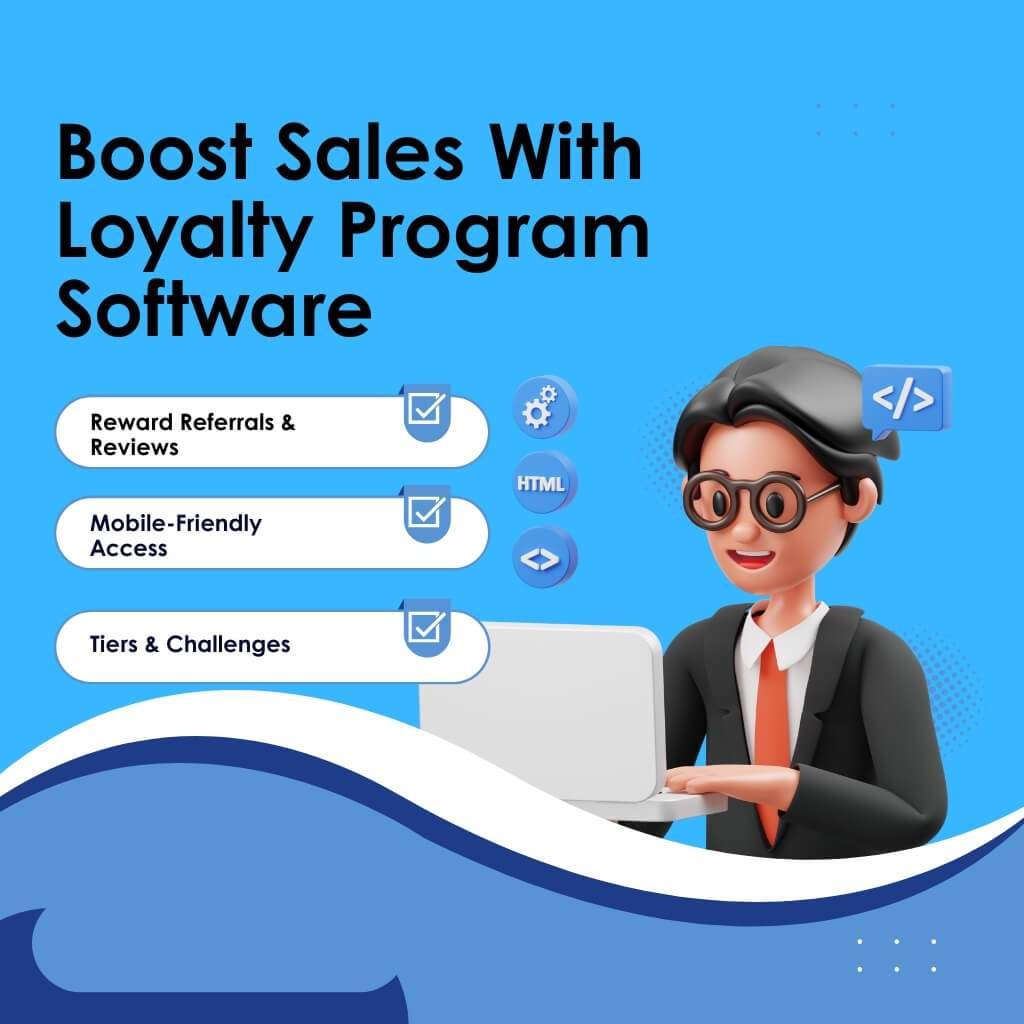
Customer loyalty program software is a tool. It helps businesses reward customers for purchases, referrals, reviews, and other actions.
It tracks behavior automatically, issues points or rewards in real time, and connects to your store, POS, CRM, and email platform.
It reduces manual effort and enables consistent, personalized loyalty experiences at scale. Prices start from free for small stores and reach $50,000 or more per year for enterprise programs.
What Has Changed About Customer Loyalty in 2026
Loyalty used to mean a stamp card or a points balance. Today, it is infrastructure. Brands that lead in 2026 treat loyalty as a core part of how they operate, not a marketing campaign they run occasionally.
Loyalty programs are expected to focus more on hyper-personalization and real-time rewards. This is moving away from traditional points-based systems that are becoming less effective.
Instant gratification through real-time rewards is becoming a baseline expectation, with 75% of businesses prioritizing this in their investment strategies. Open Loyalty
Most programs fail not because of bad execution. They fail because they are built in isolation, not woven into how customers actually move through a brand. Static points, delayed value, and zero relevance get ignored in 2026.
Only 21% of Americans strongly agree that loyalty program software makes them feel special or recognized.
Only 29% strongly agree that they receive relevant communications from loyalty programs.
Those two numbers explain why so many programs sit unused despite having thousands of members. Queue-it
The fix is not more rewards. It is more relevant and delivered at the right moment.
What Customer Loyalty Program Software Does
Customer loyalty software tracks customer activity and rewards automatically. It helps businesses understand customer behavior and improve the program.
It removes manual work, reduces mistakes, and creates a smooth experience for every customer.
Good software does five things well. It tracks who bought what and when. It triggers the right reward at the right moment.
It flags unusual activity before fraud causes damage. It connects your store, POS, email platform, and CRM. So, loyalty data does not sit in a silo. And it shows clear numbers on what is working and what is not.
What software cannot do is create loyalty where trust has already broken down. It cannot fix a poor product or a frustrating customer experience.
It is an execution tool, not a strategy replacement. Loyalty programs have moved from a nice-to-have to a strategic lever that drives continual business over time. But they only work when the strategy behind them is sound. Deloitte Insights
Why Most Loyalty Programs Still Fail
The average consumer belongs to more than 15 loyalty programs yet actively engages with only a fraction of them.
That is loyalty saturation. When every brand has a program, just having one is no longer a competitive advantage. Brandmovers
The number one challenge today is differentiation. Loyalty programs have become ubiquitous, and a good program is no longer a competitive advantage.
It is just table stakes. The real challenge in 2026 is standing out in a crowded market where sameness is the default. Open Loyalty
Three specific problems cause most programs to fail silently.
Points go unspent. 26.2% of loyalty points go unspent and 11.9% expire unspent, with an estimated $10 billion in savings lost annually in the US alone.
Customers collect points they never use, which means the program generates cost without generating loyalty. Accessdevelopment
Progress feels invisible. 81% of consumers said it is motivating to see progress toward rewards. Most programs bury this information.
Customers cannot easily see how close they are to their next reward, so they stop thinking about it entirely. Accessdevelopment
Rewards feel irrelevant. 70% of customers say they would be loyal to a brand if they received personalized offers.
82% would share personal data for a better customer experience. Generic discount coupons sent to everyone signal that the brand does not know the customer at all. Netguru
The Types of Loyalty Programs That Work in 2026
Not all loyalty program structures produce the same results. The format you choose should match how your customers actually behave, not just what looks good on paper.
Points-based programs are the most common and easiest to run. Customers earn points per purchase and redeem them for discounts or free products.
They work best for brands with frequent purchase cycles, such as coffee shops, grocery stores, and beauty retailers. The weakness is that points alone create a purely transactional relationship that competitors can easily copy.
Tiered programs add status levels on top of points. Customers move from Bronze to Silver to Gold as they spend more.
Each tier unlocks better benefits. Tiers create aspiration. Customers who are close to the next level spend more to reach it.
Adidas AdiClub gives rewards to two types of customers. Fashion fans get early access to limited sneakers. Sports fans join fitness challenges in the app. This keeps the program useful for both groups under one system. Queue-it
Paid membership programs charge a small fee in exchange for consistent perks. Amazon Prime is the most famous example.
Amazon Prime members spend an average of $1,500 per year on Amazon compared to $625 per year for non-Prime customers. The fee creates commitment. Members feel they need to use the program to get value from what they paid for. LoyaltyLion
Community-based programs build belonging rather than just rewards. Rapha Cycling Club charges a yearly fee.
Members get access to clubhouses and cycling groups around the world. People join for the community, not only for discounts.
The program connects riders who share the same passion. It feels more like a cycling community than a loyalty program. Queue-it
Value-based programs tie rewards to causes. Some brands let customers donate points to charity or earn extra rewards for eco-friendly actions.
This works particularly well with younger customers who want the brands they support to reflect their values.
Examples of Loyalty Programs That Add Results
Looking at real programs shows what separates good software use from great strategy.
Starbucks Rewards is the most studied loyalty program in the food and beverage industry. They had 34.3 million active users in the US by early 2024. That was 13% higher than the previous year.
About 41% of US sales came from Rewards members. The program works because it makes earning rewards simple and fast.
Customers can track Stars, get personal offers, order ahead, pay, and collect rewards in one app. LoyaltyLion
Sephora Beauty Insider is the benchmark for retail loyalty. It has 46 million members. It drives about 80% of the company’s yearly sales.
Most engagement comes from emotional rewards, not discounts.
Sephora focused early on experience, not just points. Beauty customers respond to perks and activities.
In 2023, the program added Beauty Insider Challenges. Members earn points by doing online and in-store tasks, not only by buying.
This shift to engagement rewards helped the program grow while others stayed the same. Rivo99minds
Sephora Birthday rewards deliver very high returns. A $5 cost leads to about $89 in average order value, or 17.8x ROI.
This shows a simple truth. Timed and emotional rewards work better than general discounts. Rivo
Nike Membership shows how a non-transactional loyalty program can build a community worth more than any points scheme.
It gives members exclusive products, personal offers, and special experiences, along with access to apps like SNKRS, Nike Run Club, and Nike Training Club for shopping, running, and training support.
Members get early access to products, birthday rewards, and tailored suggestions. Nike does not reward only purchases. It rewards real engagement. It focuses on people who run, train, and use the brand in daily life. SAP Emarsys
MoxieLash shows that small brands can run effective programs too. Members spend about 1.5 times more than non-members and buy 1.5 times more often.
The program rewards not only purchases but also social media shares and app downloads. This gives the brand more marketing reach at a low cost. LoyaltyLion
These examples share a pattern. None of them reward transactions alone. All of them reward behaviors that deepen the relationship between the customer and the brand.
The Features That Add Value
Real-time reward delivery. Customers today expect instant recognition. A reward issued three days after a purchase feels like an afterthought.
Members now expect instant value, whether a discount at checkout, points earned immediately, or quick access to perks. Access Development
Behavioral segmentation. 2026 marks the shift from demographic grouping to hyper-personalized engagement.
AI enables brands to treat every individual as a segment of one, using real-time signals such as location, purchase history, and app activity to deliver contextual offers that feel timely rather than intrusive.Trifftloyalty
Non-purchase rewards. Rewarding only transactions leaves most of the customer relationship untouched.
Rewarding reviews, referrals, social shares, and app engagement deepens the connection between purchases.
The most successful gamification examples, like McDonald’s Monopoly and Sephora’s Beauty Insider Challenges, are those built strategically and delivered in a way that is authentic to the brand. Talon.One
Omnichannel consistency. A customer who earns points online but cannot use them in-store loses trust in the program.
Omnichannel shoppers are 30% more valuable than single-channel customers. 91% of customers are more likely to engage with brands offering personalized experiences across channels. Okoone
Visible progress mechanics. A gamified loyalty platform drove 68% membership growth and a 91% retention rate for a global sports brand, underscoring the long-term stickiness of well-designed game loops.
Challenges, tier upgrades, and badge milestones give customers a clear reason to take the next action. Capillarytech
How AI Has Influenced Loyalty Software in 2026
AI is doing practical work inside loyalty platforms that was genuinely difficult two years ago.
Churn prediction. Predictive analytics uses AI to anticipate customer behaviors, forecast churn risks, and determine optimal timing for re-engagement.
This proactive approach can reduce churn rates by up to 30% and increase customer lifetime value by 50%. Netguru
Personalization. AI analyzes individual customer behaviors, preferences, and purchase patterns to create tailored rewards that resonate on a personal level.
Consumers spend up to 37% more with brands that offer personalized experiences. Starbucks’ Deep Brew AI processes customer behavior, purchase history, and local weather to issue personalized offers. That system alone generated four million extra store visits in early 2024. NetguruOkoone
Fraud detection. AI builds a behavioral profile for each member and flags anything that deviates from normal.
It watches for unusual redemption patterns, logins from new locations, and sudden referral spikes. This is far more precise than rule-based filters and generates far fewer false alarms.
Campaign automation. More than 50% of marketers already report efficiency gains and cost savings from AI implementation in loyalty programs. Teams stop spending time on manual reward delivery and focus that time on strategy. Okoone
55% of Gen Z and 53% of Millennials are more likely to join a loyalty program that uses AI. For brands targeting younger customers, AI-powered personalization is now an expectation, not a bonus. Accessdevelopment
Cost of Customer Loyalty Program Software
Small businesses usually pay $50 to $300 per month for basic loyalty tools. Mid-size brands pay $500 to $2,000 per month for automation, SMS, and customer targeting.
Large companies with CRM integrations and custom apps can pay $10,000 to $50,000 per month or more. Setup costs usually range from $500 to $10,000.
Some platforms also charge per order. A $199 plan at 500 orders per month can grow to $600 at 2,000 orders. Always check the per-order pricing before you sign up.
Various Customer Loyalty Program Software
The table below gives a clear view of the main platforms. All pricing reflects publicly available data as of May 2026. Tools without a listed price require a direct quote.
Customer Loyalty Program Software Comparison
| Software | Best For | Starting Price | Primary Strength | Main Limitation |
| Smile.io | Shopify & SMBs | Free / $49/mo | Fast launch; easy points/referrals. | Order caps on the free plan; high scaling fees. |
| Yotpo | DTC Brands | Free / $89/mo | Syncs reviews, SMS, and loyalty. | Advanced features require expensive tiers. |
| LoyaltyLion | Growth Brands | From $199/mo | Strong segmentation; AI forecasting. | Pricey; complex for very small teams. |
| Kangaroo | Online + In-store | From ~$59/mo | Unified POS/Online; branded app. | Basic analytics; North America focus. |
| Zinrelo | Mid-market ROI | From ~$350/mo | Data-heavy; proves revenue impact. | Limited design flexibility. |
| Punchh | Restaurant/Retail | From ~$500/mo | Deep POS integration for store visits. | High cost; not for single locations. |
| Antavo | Gamification | Custom | No-code editor; experiential rewards. | High budget; separate promo modules. |
| Talon.One | API-first Enterprise | Custom | Ultra-fast; unified promotion engine. | Requires developers; complex workflow. |
| Annex Cloud | CRM-integrated | From ~$50k/yr | Native Salesforce/SAP integrations. | Complex setup; high entry price. |
| Salesforce | Salesforce Users | From $175/user | Deep CRM & Commerce Cloud sync. | Only practical within Salesforce ecosystem. |
| Capillary | Global Enterprise | Custom | Massive scale; omnichannel engagement. | Enterprise only; high volume required. |
| Open Loyalty | Custom Builds | Open Source | Headless API; total creative freedom. | No UI; requires developer team. |
The starting price is rarely the real cost. Per-transaction fees, integration work, and staff time all add up. Always check how pricing scales with your actual order volume before committing to any plan.
How to Pick the Right Platform for Your Business
Start with the problem, not the feature list.
If customers sign up but never return, the issue is usually irrelevant rewards or invisible progress. Look for strong segmentation and real-time reward delivery.
If engagement is low, look for gamification challenges, tiers, badges, and non-purchase reward options that give customers reasons to interact between transactions.
If your program runs across a physical store and an online shop, the platform must sync reward data across both channels in real time. A POS integration is not optional for this use case.
If your team has no developer, avoid API-first platforms that require engineering work to configure.
No-code tools like Antavo or plug-and-play apps like Smile.io suit teams that need to move fast without technical help.
If you are already on Salesforce or deeply integrated with a specific CRM, check native compatibility first before evaluating anything else.
Loyalty data that cannot flow between systems creates a silo that reduces the value of both tools.
The Bottom Line
Customer loyalty software cannot fix a poor customer experience. If customers are unhappy with the product or service, rewards alone will not keep them loyal.
Good software simply makes it easier for happy customers to return and stay connected with the brand.
A 5% increase in customer retention can raise profits by up to 95%. Returning customers also drive a large part of yearly revenue for loyalty-focused businesses.
But these results come from programs built around real customer behavior, not from choosing the most popular software.
Start by understanding your customers’ real problems. Choose software that solves those problems.
Make rewards easy to use and simple to redeem. Focus on important numbers like repeat purchases, customer lifetime value, and program profit, not just sign-ups.
FAQ
How does loyalty software increase repeat sales?
Loyalty software increases repeat sales by sending personal offers based on customer activity.
It shows customers how close they are to earning rewards. It also rewards actions like reviews, referrals, and app use.
This keeps customers active even when they are not buying. These features help customers return more often and spend more.
What is the difference between points-based and tier-based loyalty programs?
Points programs give customers points for every action. Customers use the points for discounts or free products.
Tier programs reward customers based on total spending or engagement. Higher levels unlock better rewards and special benefits.
Tier programs often create stronger customer loyalty because customers feel valued for their long-term relationship. Most loyalty platforms support both systems.
Do loyalty programs work for restaurants and physical retail?
Yes. Punchh connects with POS systems and helps restaurants bring customers back with mobile campaigns.
Kangaroo Rewards supports both online and in-store rewards at a lower cost. The most important feature is real-time reward syncing between online and physical stores.
How long does it take to launch a loyalty program?
Smile.io can launch in less than a day. LoyaltyLion usually takes one to two weeks with setup and onboarding.
Enterprise platforms like Antavo, Annex Cloud, and Talon. One can take several weeks or months. The timeline depends on integrations and custom features.
What features matter most in enterprise loyalty software?
AI-driven personalization, real-time omnichannel sync, native CRM integration, behavioral segmentation, automated fraud detection, and data compliance features like GDPR and CCPA.
The platform also needs to handle millions of member records without performance issues as the program grows.
How do I know if my loyalty program is working?
Track repeat purchases, customer lifetime value, and redemption rate. If many people join but few use rewards, the program is not working well.
Compare spending between members and non-members over 90 days. If members spend more, the program is working. If not, it needs improvement.
Is free loyalty software reliable enough?
Free plans from Smile.io and Yotpo work well for stores under 500 orders per month. Above that, per-transaction fees and feature limits typically cost more than a paid tier. Free plans are a sensible starting point, but not a sustainable fit for growing businesses.
Can a loyalty program work without a mobile app?
Yes. Many platforms deliver rewards through email, SMS, and browser-based widgets with no dedicated app needed.
However, 60% of loyalty members prefer accessing benefits through a mobile app. If your customers skew younger, a mobile-first experience will significantly improve engagement.
What is the biggest mistake when choosing loyalty software?
Picking by popularity or price instead of fit. A platform built for a large DTC brand will not serve a restaurant chain well.
A Shopify-native tool will frustrate a multi-location retailer. The monthly starting fee is also rarely the real cost; per-transaction pricing at your actual order volume matters more than the base number.

Aliza Khatun is a Digital Marketing Professional and the founder of DigiGenHub. She has helped various businesses grow their online presence through real-world experience in marketing, branding, traffic growth, and business strategy.
Through DigiGenHub, she shows how to build and grow a business from the ground up using Website Setup, SEO, Branding, Paid Promotion, and smart digital tools.
She also highlights how AI can be used to its full potential to make content creation, automation, marketing, and business growth faster and smarter.
She believes that the right knowledge, modern technology, and the right tools can help any individual or business build a stronger online presence.