


Startups sometimes struggle with loans for small businesses. Securing capital in the market has changed. Now, the old ways of walking into a local bank with a paper business plan are largely over.
High interest rates, now hovering around a 6.75% prime rate. This has made lenders much more selective.
If your debt-to-income ratio is off or your digital cash flow looks weak, traditional “Big Banks” will likely reject you. They currently approve only about 25% of applications.
The solution lies in a hybrid approach. You must combine the stability of SBA-backed programs with the speed of AI-driven Fintech. This ensures you get the lowest possible rates without waiting months for a “yes.”
Loans for Small Businesses
My friend Sarah runs a boutique e-commerce store selling eco-friendly office supplies.
Last year, her sales exploded during the back-to-office rush in August. She had the customers, but she did not have enough cash to buy bulk inventory from her supplier.
A traditional bank told her it would take six weeks to review her application. By then, her competitors would have taken all her customers.
Sarah did not give up. She used Revenue-Based Financing. She linked her online storefront data directly to a digital lender.
They saw her consistent daily sales and approved her for $50,000 in just 24 hours. She bought the inventory, fulfilled every order, and grew her business by 40% in one month.
Why Businesses Take Loans
Many businesses use loans for:
expanding operations
purchasing equipment or inventory
managing short-term cash flow
Loans can support business growth when used with proper planning. For official details on small business lending programs, see: SBA loan programs and funding options.
The Risks You Must Understand
Loans always come with financial responsibility.
Monthly repayments affect cash flow.
Interest increases the total repayment cost.
Poor planning can create long-term pressure.
Understanding broader lending risks and credit conditions is important. Research from global economic studies explains this clearly: OECD SME Financing and Credit Conditions Report.
When a Loan Makes Sense
A loan can be helpful if:
You have a clear business plan.
Your income is stable.
The investment can generate future returns.
Banking data and lending behavior studies show that responsible borrowing improves business stability when used correctly: FDIC Small Business Lending Survey Report.
When You Should Avoid a Loan
Avoid borrowing if:
You are unsure how the funds will be used.
Your income is unstable.
You are covering ongoing losses.
In these situations, loans can increase financial pressure instead of solving problems.
How to Choose the Right Loan
Keep it simple:
Match the loan with your business goal.
Perceive repayment terms clearly.
Borrow only what you actually need.
Good financial decisions come from clarity, not urgency.
Yet, you must be conscious of the common mistakes to avoid.
Never borrow more than required. Focus on repayment planning
Calculate the total cost before choosing loans.
Types of Loans for Small Business
| Loan Type | Max Amount | March 2026 Interest Rates | Approval Speed |
| SBA 7(a) Standard | $5 Million | 9.75% – 14.75% | 30 – 60 Days |
| SBA Microloan | $50,000 | 8.00% – 13.00% | 14 – 21 Days |
| SBA 504 (Real Estate) | No Limit | 5.48% – 5.79% (Fixed) | 45 – 90 Days |
| Revenue-Based Funding | $250,000 | 10% – 99% (APR) | < 24 Hours |
| Equipment Financing | No Limit | 6.00% – 18.00% | 3 – 7 Days |
How Can You Guarantee a “Yes” for Your Loan Application?
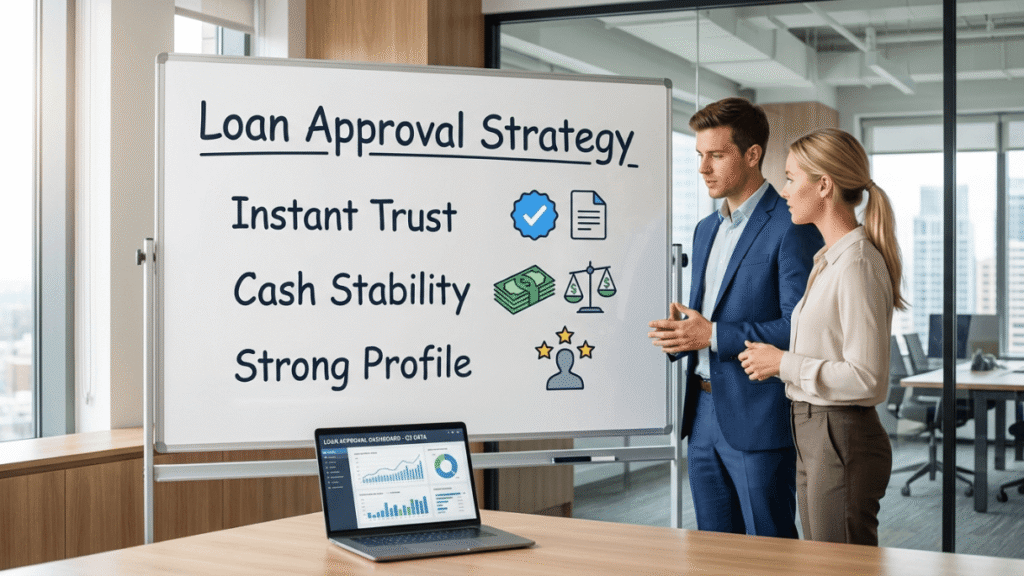
Lenders can scan your business in seconds. So, you must prepare your digital footprint perfectly to win. You can use these strategies:
1. Link Your Books for Instant Trust
Sync your accounting software to the lender’s portal. It proves your revenue is real.
Example: A shop syncs QuickBooks and gets approved in three days instead of three weeks.
2. Stop Overdrafts to Prove Stability
Lenders auto-reject accounts with “negative days.” Keep a small cash buffer at all times.
Example: A baker keeps $1,000 extra in the bank to avoid any NSF fees.
3. Verify Your NAICS Code for Lower Risk
The wrong industry code makes you look high-risk. Ensure your code matches your actual work.
Example: A consultant fixes a “high-risk broker” code and saves 2% on interest.
4. Use a Preferred (PLP) Lender for Speed
PLP banks approve loans themselves. They do not wait for the government’s signature.
Example: A founder uses a PLP bank and closes their loan in 25 days.
5. Capture Local Grants to Reduce Debt
Many U.S. cities give “Down Payment Assistance.” This money acts as your own equity.
Example: A brand in Denver gets a $5,000 city grant for their loan down payment.
6. Keep 10% Cash to Show Commitment
Lenders want to see you taking a risk, too. Cash on hand proves you are serious.
Example: A builder saves $20k before asking for a $200k loan. The bank says “Yes” immediately.
7. Fix Your Online Reviews to Protect Your Image
Underwriters check Google and Yelp. A 2-star rating can trigger a rejection.
Example: A shop owner fixes their 3.0 rating to 4.5 and wins the loan.
8. Get Key Person Insurance Early
Large loans require life insurance on the owner. Buying it early prevents closing delays.
Example: A CEO gets a policy before applying and skips the two-week wait later.
9. Demand a Variable Rate Cap
Protect yourself if interest rates rise in 2027. A “cap” limits your max payment.
Example: A gym signs a loan with a 12% cap. Their payment stays safe if rates spike.
10. Be Specific with a “Use of Funds” Plan
Vague requests get rejected. Tell the lender exactly how the money builds profit.
Example: “I need $50k for five trucks to grow revenue by 30%.”
11. Monitor Business Credit Monthly
Your business has its own score. Errors here can kill your application.
Example: A seller finds a credit error, fixes it, and their score jumps 20 points.
12. Maintain “Good Standing” LLC Status
Lenders check with the state. An “inactive” status leads to an instant “No.”
Example: A retail owner pays their $50 annual state fee to stay “Active.”
13. Apply Only When You Are Profitable
Lenders want to help winners. Never ask for money when you are desperate.
Example: A tech firm waits for its best sales month to apply and gets the lowest rate.
14. Consolidate High-Interest Debt First
Move 30% APR credit card debt into a 10% SBA loan. It saves your cash flow.
Example: A plumber saves $800 a month by consolidating old high-rate cards.
15. Hire an Expert to Avoid Rejection
A loan consultant catches mistakes before the lender sees them.
Example: A chef hires a consultant who finds a tax error. They fix it and get approved.
The Five-Phase Roadmap to Secure Your Funding
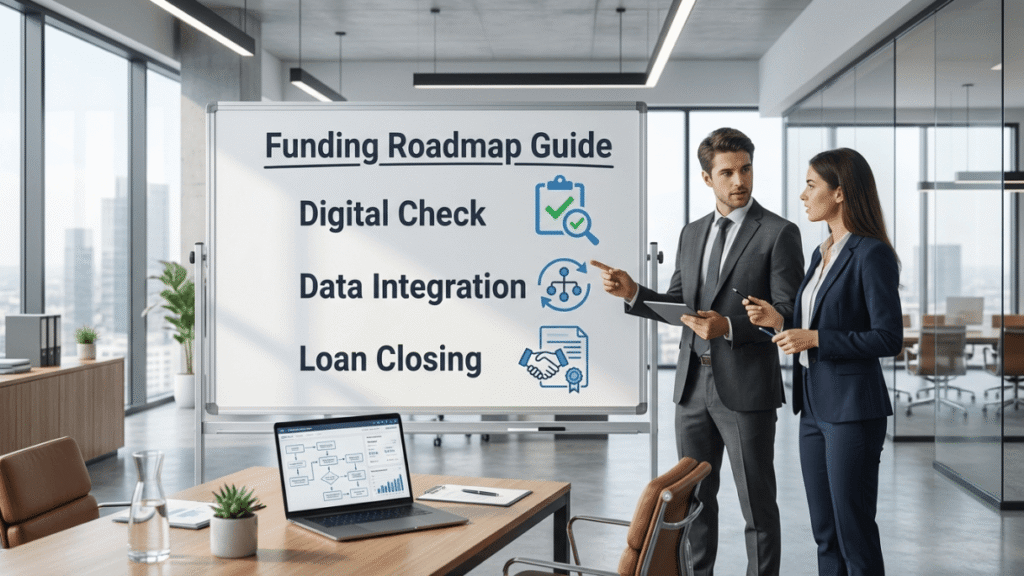
Getting a loan today requires a digital-first mindset. You must move through these specific phases to avoid rejection.
Phase 1: Pre-Qualification and Digital Health Check
First, check your basic eligibility. You must be a for-profit business located in the U.S.
Most lenders now use automated tools to scan your online presence. Ensure your business name and address match on Google, your website, and your tax filings.
Phase 2: Data Integration and Pre-Approval
Modern lenders link directly to your accounts. You will connect your business bank account and accounting software via secure platforms.
They look at your real-time cash flow. This phase determines your “Global Cash Flow” score. It is much faster than the old manual reviews.
Phase 3: Document Collection for Underwriting
Prepare your “Big Three” documents: three years of tax returns, interim financial statements (within 120 days), and your legal organizational papers.
Lenders also look for a Debt Service Coverage Ratio (DSCR) of at least 1.25. This means your profit must be 25% higher than your new loan payment.
Phase 4: Packaging and Closing
Once approved, the lender prepares the final “package.” You will need property appraisals and life insurance policies if the loan is large.
If you are a manufacturer, check for fee waivers. The SBA currently waives guarantee fees for certain industrial sectors to help them scale.
Phase 5: Accessing and Using Your Funds
Working capital is usually deposited directly into your account. If you are buying a business or paying off debt, the lender sends the money directly to the third party.
Follow your “Use of Proceeds” plan strictly to maintain a good relationship for future loans.
Navigate the “Big Three”: What is the Best Loan for a Startup?
Startups face the hardest path because they lack a long history. The SBA Microloan remains the most dependable choice.
It offers up to $50,000. These loans come from non-profit community lenders who prioritize local growth over high credit scores.
The Problem: New businesses often have no business credit.
The Solution: Community-based lenders offer lower rates and free coaching.
Example: A new bakery in Atlanta used a $40,000 microloan to buy ovens. They received three months of free accounting help as part of the deal.
Specialized Funding: Do You Need Collateral for a Business Loan?
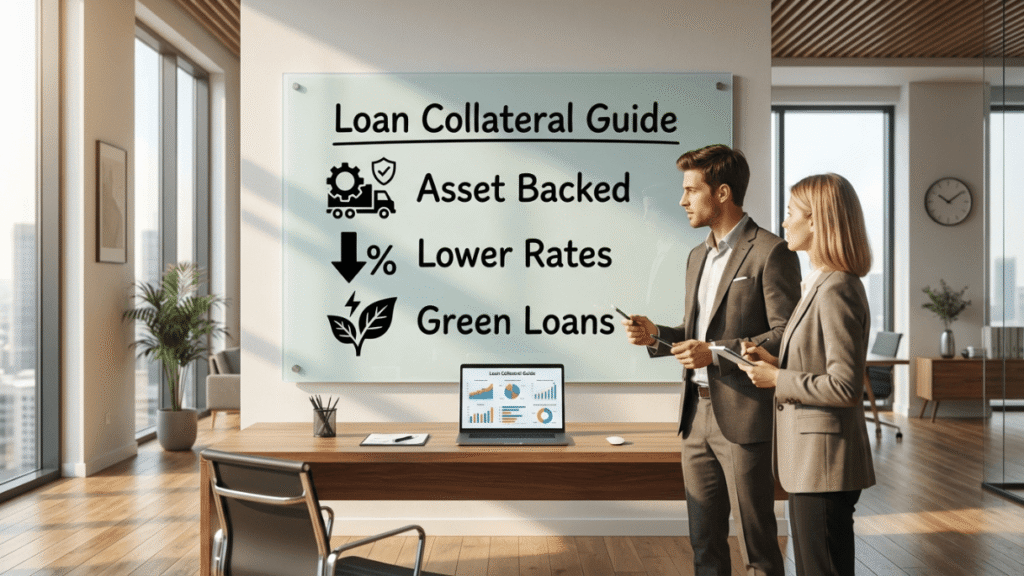
Unsecured loans are very expensive in 2026. Interest rates can exceed 30%.
The better solution is Asset-Backed Financing. Use the equipment or vehicle you are buying as security. This lowers the lender’s risk.
Logic: If the loan is “backed” by a truck or machine, the interest rate drops.
Accuracy Check: 2026 “Green Loans” offer even lower rates for electric vehicles or solar upgrades.
Example: A landscaping firm saved $500 a month by using an equipment-specific loan for their mowers instead of a general credit line.
Conclusion
A small business loan can support growth. But only when you take it responsibly. So, focus on your business needs, map the risks, and make decisions based on long-term stability rather than short-term pressure.
FAQ
Does my business’s “Social Proof” affect my loan rate?
Yes. Lenders use AI to scan your brand’s digital engagement. Indeed, The High customer sentiment and steady social growth act as a secondary credit score.
What are “Climate-Linked” interest rates for small firms?
These are specialized loans where your rate drops as you meet sustainability goals.
Reducing waste or using eco-friendly packaging can trigger an automatic interest discount.
Do lenders analyze my business’s AI efficiency?
Indirectly, yes. Lenders look for high profit margins in your tech stack. Businesses using AI for inventory or service are seen as lower risk and more scalable.
How does “Embedded Banking” change how I borrow?
You no longer need to visit a bank’s website. Your sales software now offers loans directly in your dashboard. You can accept funds with one click without leaving your app.
Are “Community Equity” loans different from standard debt?
Yes. Some US programs now offer “Revenue-Share” deals. You pay a small percentage of your actual sales. This protects your cash flow during slow months.
Can I get a loan if I only accept digital or mobile payments?
Yes, but you must use a bridge service. These tools turn your digital history into a verifiable record. A clear digital ledger is now vital for approval.
Is “Crowd-Lending” a safe alternative to SBA programs?
Crowd-lending lets many small investors fund your business through one portal. It is often faster than a bank but may have higher fees.
What is a “Dynamic Credit Line”?
This is a flexible loan that grows as your sales increase. You do not have to re-apply every year. The system raises your limit in real-time to match your needs.
Do US lenders care about my “Cybersecurity Rating” now?
Lenders see data breaches as a major financial threat. Businesses with secure payment systems often get better loan terms. High security proves you can protect your revenue.
Can I get a loan for a “Remote-Only” business with no office?
Yes. A physical shop is no longer required. Lenders now value your “Digital Real Estate” like website authority and recurring online subscriptions.