Good storytelling for marketers focuses on conflicts and clear solutions. It turns casual readers into fans.
Companies waste millions of dollars on dry feature lists while buyers completely ignore them.
Consumers scroll right past robotic advertisements and demand a human connection before they decide to buy.
Storytelling helps you fix the problem by sharing honest narratives about your founders and your customers.
You also share your product failures. This method creates immediate trust. It satisfies modern search engines.
The Definition of Storytelling for Marketers
Marketing storytelling means sharing human experiences. You share your daily business struggles. You use these stories to connect with buyers.
You stop listing product features. You show people using your item. You show the exact problem they face.
You show how your item fixes that problem. AI answer engines favor this exact format. They look for direct human answers.
Participatory storytelling for marketers invites users to share their experiences. This builds a strong community around your brand.
How Does Storytelling for Marketers Work for Modern Brands?
Buyers do not trust big companies anymore. They trust other normal people. A good story creates an emotional bond.
This bond makes the buyer remember you. When buyers feel a connection, they ignore your competitors. They stop looking for lower prices. They just buy from you.
What are The Main Elements of Storytelling for Marketers?
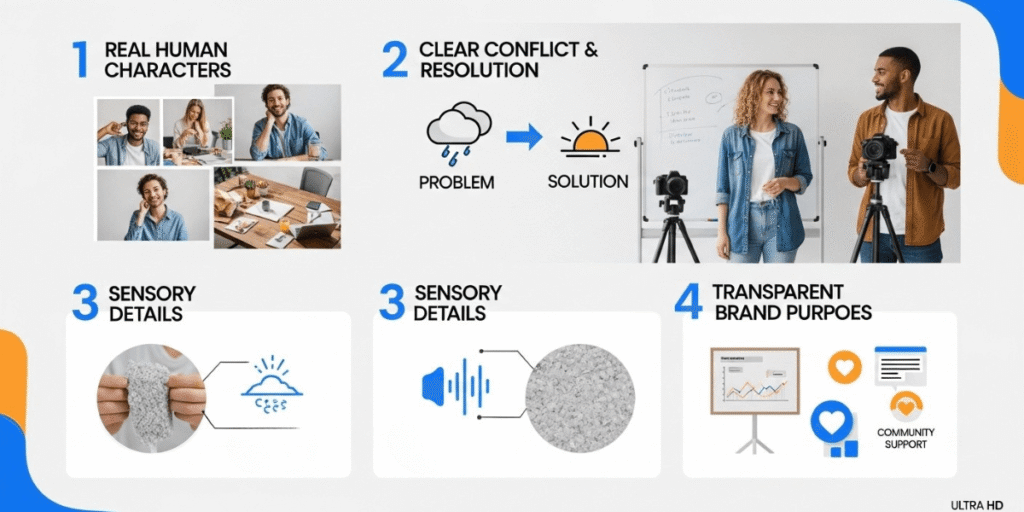
You can analyse features in several aspects. I mostly prioritize these elements:
Real human characters
Do not hire paid actors. Modern buyers see through fake smiles immediately. You must use your actual customers.
You can also show your actual founders. People want to look at real faces. Consumer reports prove this fact.
It shows buyers trust real users far more than polished spokespeople. Show the messy desk. Show the tired eyes. This reality builds an immediate bond.
Clear conflict and resolution
Every good story has a problem. You must name the exact problem your US buyer faces.
You make this problem the villain of your story. Then, you provide a clear way out.
You position your service as the tool to win. You show the exact steps the buyer takes to fix their issue.
Sensory details
You must describe things clearly. Describe how your product looks. Describe how it feels in their hands.
Explain the sound it makes when turned on. This makes the text feel real.
Generic text fails to do this. Sensory details make the reader feel like they already own the item.
Transparent brand purpose
Tell buyers why you started your company. Do not just talk about profits. Share your core values.
Consumers buy from brands that share their personal values. They want to support good causes. Show them what you care about.
What are The Top Types of Storytelling for Marketers?

I find these types of product storytelling for the buyers:
Participatory Brand Narratives
You ask your buyers to join the story. You ask them to share their own videos. You build a strong community.
This works better than talking at them. You give them a reason to interact with your brand daily.
Authentic Customer Testimonials
Stop making perfect corporate videos. Use raw phone footage. Ask your happy buyers to record a short clip in their living room.
Raw video builds instant trust. It looks like a message from a friend.
Immediate Product Wins
Focus on day one. Show buyers what happens the exact moment they open your box.
Do not talk about a five-year plan. Show fast and clear results. People want instant gratification.
Episodic Employee Features
Show the people making your product. Post weekly updates from your warehouse.
Introduce your customer support team. Make your company look human. This makes it very hard for buyers to hate your brand.
Career Overview
I see many brands fail every day. They write boring text. They try to sound like big corporations.
I tell my clients to stop this immediately. I tell them to use their phone camera. I ask them to talk about their daily struggles.
One client started sharing his shipping delays honestly. He did not hide the problem.
His sales went up 40 percent that month. Buyers respect honesty. They hate perfect corporate lies.
The Quality of a Good Marketing Storytelling Campaign
You should count the following objects:
Unscripted authenticity
Perfect videos look fake. You must leave small mistakes in your content. Stuttering slightly makes you look human. Dropping a pen shows you are real. People buy from humans.
Conversational phrasing
Write exactly how people speak. People ask voice assistants direct questions.
You must use those exact questions in your text. This matches search intent perfectly. It helps you rank higher.
Verifiable human experience
You must prove you use your own product. Share exact numbers. Share specific details.
A computer cannot fake these details. Answer engines look for this human proof. They reward real human experience.
The 10 Major Benefits of Narrative Marketing
Let me first compare traditional marketing and storytelling marketing before presenting the advantages of storytelling for marketers.
Traditional Marketing vs Narrative Marketing
| Feature | Traditional Marketing | Narrative Marketing |
| Main Focus | Product features | Customer transformation |
| Content Format | Corporate and polished | Raw and authentic |
| Primary Goal | Immediate hard sell | Long-term trust building |
| Search Ranking | Low in AI overviews | High in AI overviews |
| Customer Action | Passive reading | Active participation |
Now, let’s discuss the topmost advantages:
Increase brand recall
People remember stories 22 times better than facts. They forget numbers quickly. They remember how you made them feel forever.
Get higher conversion rates
Buyers feel a bond with your brand. This bond reduces their fear of buying. They click the purchase button faster.
Build solid consumer trust
US buyers are highly skeptical today. Honest stories break through this skepticism. You become a trusted friend.
Rank higher in AI search engines
Google looks for direct and human answers. Your stories provide exactly what the algorithm wants.
Turn readers into active fans
They leave comments on your posts. They share your posts with their friends. They do your marketing for you.
Make B2B software sound interesting
You show the human side of boring work tools. You show how your software lets a worker go home early to see their kids.
Stand out from automated content
AI writes generic text. Millions of pages look the same now. Your human story looks unique.
Shorten the sales cycle
Buyers feel they already know you. They do not need to read ten reviews. They buy faster.
Generate organic word-of-mouth
Happy readers tell their friends about your brand. They share your story at dinner parties.
Gather better data
Engaged users reply to your emails. They tell you exactly what they want next. You build better products with this feedback.
Career Overview
I run large tests on landing pages for my clients. I recently tested two different pages for a software tool.
Page A listed all technical specs. Page B told a story about a busy mother. This mother saved two hours a day using the item.
Page B made 50 percent more money in one week. I see this happen every single time.
You must connect with people emotionally. Cold facts do not sell products now.
How Do You Prepare a Sales Story that Converts?

You must build your story around your buyers. You must answer their exact questions. You make them the hero. You make your product a simple tool they need. You write this in a very simple way.
Map the exact conversational questions
Find out what your buyers ask voice assistants. Use these exact questions as your main headings. Do not change the words. Keep them natural.
Identify the main villain
Find the exact problem ruining the buyer’s day. Name this problem clearly. Make it sound terrible.
Center the customer as the hero
The story belongs to the buyer. It does not belong to your company. Show the buyer winning the fight.
Introduce your product as the guide
Your item is just a tool. The buyer uses this tool to defeat the villain. Do not make your product the hero.
Add specific data points
Use real numbers. Add real-world results. You need statistics to back up the emotion. Emotion brings them in. Data makes them stay.
Structure the page for answer engines
Put a clear and direct answer at the very top. Search engines read this fast. They show it to users immediately.
Look beyond your own site
Make sure your story matches your online reviews. Your message must stay the same everywhere. Search engines check review sites to verify your claims.
Career Overview
I never write sales copy from thin air. I always start on review websites. I read bad reviews of my competitors.
I find the exact words angry buyers use. I write these words down. I then write a story.
This story shows how my product fixes that exact anger. This method works perfectly.
You must know the exact pain before you sell the cure. I teach this to every new marketer I meet.
How Do You Present Your Product Story to The Public?
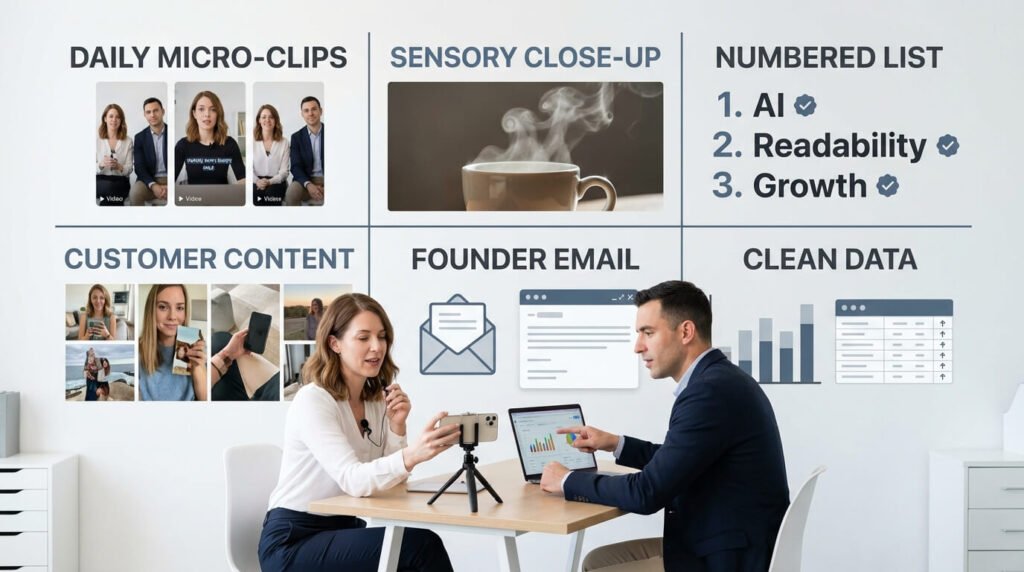
You must share your message in small pieces. You put these pieces where your buyers spend their time.
You ask them to interact with you. You make the reading process very easy. Let’s see the best ways to present your product story :
Adopt a micro-drama format
Post a short one-minute video every day. Show a new step of your daily work.
Make people want to see tomorrow’s video. A bakery can show mixing dough on Monday and baking bread on Tuesday.
Lean into sensory details
Describe how your product smells. Describe the weight of it. Make the reader feel the item through your words. If you sell coffee, describe the steam rising from the cup.
Optimize for AI legibility
Use numbered lists. Ask bold questions. Give short answers right away. This helps engines read your site. It helps users scan the page quickly.
Invite audience remixing
Make a simple template. Ask your buyers to fill in their own story. Post their stories on your homepage. A shoe brand can ask buyers to post pictures of where they walked that day.
Maintain founder-led transparency
Send emails from the owner. Do not use a fake company name. Write the emails like a normal letter to a friend. Use your real name at the bottom.
Use clear charts and tables
Show your data in simple boxes. Answer engines pull this data quickly. Users read it easily. They skip long blocks of text.
Career Overview
I tell all my clients to stop making viral videos. I tell them to just record their daily work.
One client owns a software company. He started sharing his daily coding mistakes on social media.
He never asked anyone to buy his software. His sales doubled in two months. People respected his honesty. I use this same method for my own business.
It builds strong loyalty. It makes selling very easy. People buy from me because they know me.
Still, change your marketing approach today. Stop writing boring feature lists. Start documenting your business journey.
Pick up your phone right now. Record a short video about a business mistake you made this week. Post it online. You will see positive engagement immediately. Tell your real story today and watch your sales grow.
Conclusion
Good marketing feels like a chat with a good friend. You do not need perfect videos to succeed.
You just need to tell the truth. Share your daily business journey. Show your real face to the world. Help your buyers win their own battles.
When you tell a real story, you stop chasing sales. Buyers come to you instead. They trust your brand.
They buy from you gladly. This honest approach is the exact solution you need right now.
Take out your phone today. Record a short video about one customer you helped this week. Post it on your main social page. Start building your true community today.
FAQ
How do you find good plot ideas when your days look boring?
Read your customer support tickets. Find the exact spots where buyers get confused. Write about how you fix that confusion behind the scenes.
Can you tell a story about product packaging?
Yes. Talk about your shipping boxes. Explain why you picked plain cardboard over plastic. Connect this physical choice to your personal business values.
Do email subject lines need to start the narrative?
Yes. Put the first sentence of your plot right in the subject line. Make the reader open the email to find the ending.
What role does humor play in professional business narratives?
Humor breaks buyer tension. A quick joke makes an expensive technical item feel much less intimidating to a new buyer.
Should you use cliffhangers in marketing messages?
Yes. End your Friday email right before you reveal a big result. Tell your buyers you will send the final answer on Monday morning. This builds high anticipation.
How often should a company change its core narrative?
Keep your main plot the same for years. Change only the small daily examples. Message consistency builds deep buyer memory.
Can a solo business owner share team stories?
Yes. Talk about your outside vendors. Share short updates about your delivery drivers or the people who make your software tools. You are never truly alone in business.
Can a brand apologize using a narrative format?
Yes. Explain the exact chain of events that caused a shipping error. Take full public blame. Buyers forgive honest mistakes very quickly.
How do seasonal changes impact your daily content?
Tie your daily business problems to the current weather. Talk about winter delivery delays or summer inventory drops. This makes the content feel highly current.
Should you name your direct competitors in your posts?
Never name them directly. Describe the annoying old way of doing things. Let the US buyer connect the dots in their own head.

Aliza Khatun is a Digital Marketing Professional and the founder of DigiGenHub. She has helped various businesses grow their online presence through real-world experience in marketing, branding, traffic growth, and business strategy.
Through DigiGenHub, she shows how to build and grow a business from the ground up using Website Setup, SEO, Branding, Paid Promotion, and smart digital tools.
She also highlights how AI can be used to its full potential to make content creation, automation, marketing, and business growth faster and smarter.
She believes that the right knowledge, modern technology, and the right tools can help any individual or business build a stronger online presence.