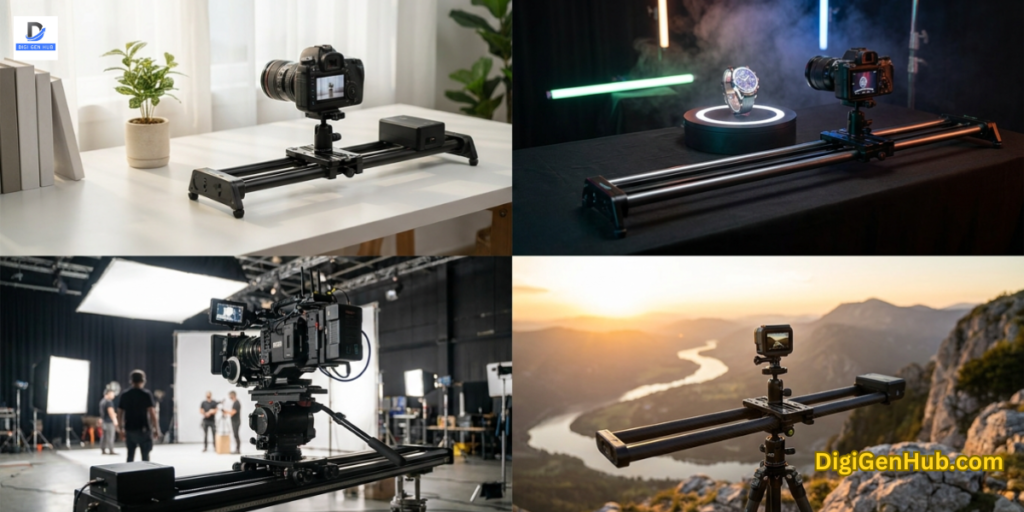
You can have the best lighting and the most expensive cinema camera in the world, but if your movement is jerky, your footage looks amateur. That is the harsh truth of video production.
I remember the days of trying to slide a manual rig with a rubber band to avoid shakes. It never worked perfectly.
The micro-jitters always showed up in post-production. Today, a motorized camera slider is a requirement for anyone doing product b-roll, interviews, or time-lapses.
They provide the one thing human hands cannot: perfect, repeatable consistency.
Whether you’re shooting TikTok verticals on an iPhone 17 or producing high-end commercials with a Sony A7 series, the need is the same.
You must capture smooth, controlled, repeatable motion. The right motion-control system delivers it instantly.
It elevates your footage. It strengthens your brand. And it gives your business a clear growthline opportunity.
What Is a Motorized Camera Slider?
A motorized camera slider is a robotic rail system that automatically moves your camera.
It utilizes a precision motor to smoothly slide your gear from point A to point B. Unlike manual rails, it eliminates all human shakes and jitters.
You control the speed, direction and loops using a smartphone app or wireless remote.
This tool is the secret to capturing cinematic “parallax” shots and perfect time-lapses.
It guarantees professional, repeatable movement that hand-pushed sliders simply cannot match.
Top 6 Motorized Camera Sliders (Filmmaker Tested)
| Product Name | Best For | Max Payload (Horiz.) | Material | My Rating |
| NEEWER ER1 Series | Best Value Overall | 11 lbs (5kg) | Carbon Fiber | 4.8/5 |
| GVM GT-J80D | Interviews/Studio | 11 lbs (5kg) | Aluminum | 4.6/5 |
| Edelkrone SliderPLUS v5 | Travel Pros | 22 lbs (10kg) | CNC Aluminum | 4.9/5 |
| Moza Slypod Pro | Vertical/Creative | 7.7 lbs (3.5kg) | Carbon Fiber | 4.7/5 |
| Edelkrone SliderONE v2 | Macro/Tabletop | 20 lbs (9kg) | Aluminum | 4.7/5 |
1. NEEWER ER1 Carbon Fiber Motorized Slider
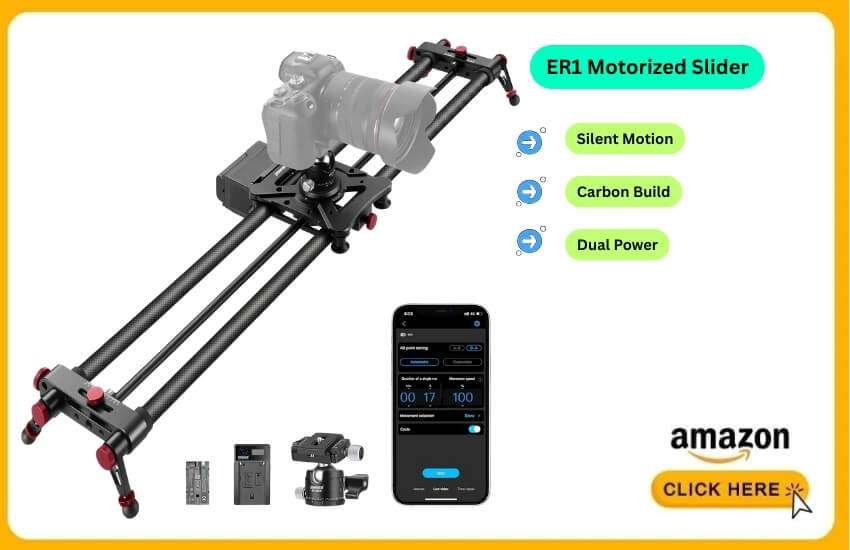
This is the “No-Brainer” Choice for 90% of Creators.
If you are a solo creator or running a small YouTube channel, this is where you start.
Neewer was once known for its “cheap” gear, but over the last three years, it has completely overhauled its quality control.
The ER1 is the result—a slider that feels premium but costs half the price of the big brands.
I keep the 31-inch version of this permanently set up on a C-stand in my home studio. The carbon fiber rails are surprisingly rigid.
I recently used this for a tech review channel where we needed a slow parallax shot around a laptop.
The motor was quiet enough that I didn’t even have to run noise reduction on the voiceover track.
The app connects quickly (using the Bluetooth 5.0 standard) and setting points A and B takes approximately 15 seconds.
Main Features
Silent Stepper Motor: Essential for interviews where the mic is close to the camera.
Carbon Fiber Build: Weighs significantly less than older aluminum models, making it easy to strap to a backpack.
Dual Power: Runs on standard NP-F batteries (which you probably already own) or a power bank via USB-C.
Pros & Cons
Pros:
Incredible value for the price.
Ultra-lightweight due to carbon fiber.
Comes with a decent carrying case.
App supports time-lapse and stop-motion modes.
Cons:
The “pan” bar in the center is manual, not motorized (you have to buy a separate head for 3-axis motion).
The remote control feels a bit plasticky compared to the slider itself.
Who is this for?
YouTubers, Wedding Videographers and Content Creators who need cinematic movement without breaking the bank.
2. GVM Motorized Camera Slider (GT-J80D)
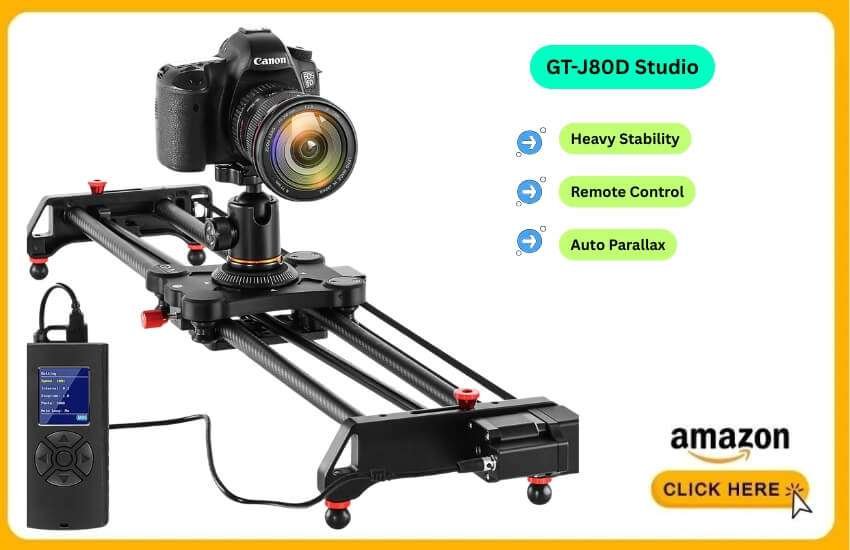
This is “The Studio Workhorse”.
GVM (Great Video Maker) builds gear that is meant to take a beating. While the Neewer is light and agile, the GVM GT-J80D feels like a tank.
It features an aluminum alloy construction that is heavier. But the added weight provides stability when using heavier cinema cameras.
I used the 48-inch version of this slider for a corporate documentary last month. We were shooting with a Canon C70, which is a heavy rig.
The GVM handled the weight without any “bowing” in the middle of the rails (a common issue with long plastic sliders).
My assessment is that the standout feature here is the parallax bar. It features a mechanical rod at its center.
It automatically pans your camera and keeps the subject centered in the frame. The slider moves left or right while the camera stays centered.
It is purely mechanical, so there’s no coding, no apps and no crashes. It just works.
Main Features
Auto-Parallax: The mechanical rod adjusts the camera angle automatically during the slide.
Remote Controller: Includes a physical remote with a screen. This enables you to use it without needing your phone.
120-Degree Panoramic: Can be set to pan outward for wide landscape reveals.
Pros & Cons
Pros:
Extremely stable for heavier cameras.
Mechanical parallax is a reliable and easy-to-set-up measurement method.
Remote control included (saves battery on your phone).
Cons:
It is heavy. You do not want to hike up a mountain with this.
The motor is slightly louder than the Neewer at max speed.
Who is this for?
Studio owners and interview shooters who don’t frequently move locations and require rock-solid reliability.
3. Edelkrone SliderPLUS v5 PRO Long
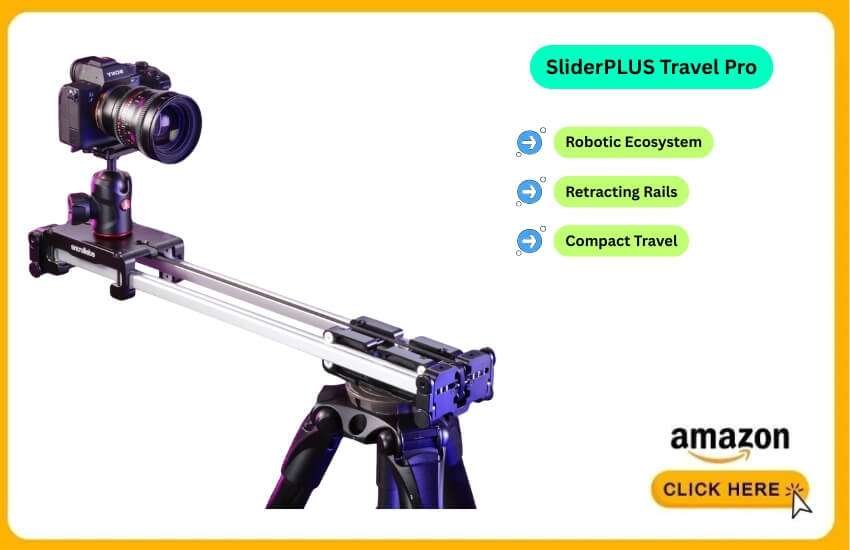
This one is superb as “The Professional’s Travel Companion”.
Edelkrone is the “Apple” of the camera grip world. Their gear is expensive, beautiful and innovative. The SliderPLUS solves a physics problem: How do you get a long slide from a short rail?
My analysis is that the first time you see this move, it appears to be magic. As the camera moves to the right, the rails actually move to the left.
This gives you double the travel distance compared to the size of the slider. I take it on flights because it fits in a standard carry-on bag.
Yet still provides the slide length of gear twice its size. But be warned. The rails move.
So you can’t place it on the ground easily without the separate StandONE legs. It is made to stay on a tripod.
Main Features
Retracting Rails: The slider stays out of your shot, even when using wide-angle lenses.
Magnetic Belt Clips: No tools required to change belts; they just snap in.
Ecosystem: Pairs wirelessly with the “HeadPLUS” for fully robotic pan/tilt/slide motion (sold separately).
Pros & Cons
Pros:
Best-in-class compactness to travel ratio.
Silky smooth motion (the bearings are a testament to engineering perfection).
The app ecosystem is powerful for VFX and complex keyframing.
Cons:
Very expensive compared to competitors.
Requires a very sturdy tripod because the weight shifts dramatically during the slide.
Who is this for?
Travel filmmakers, documentary pros and solo shooters who need high-end results and have a higher budget.
4. Moza Slypod Pro
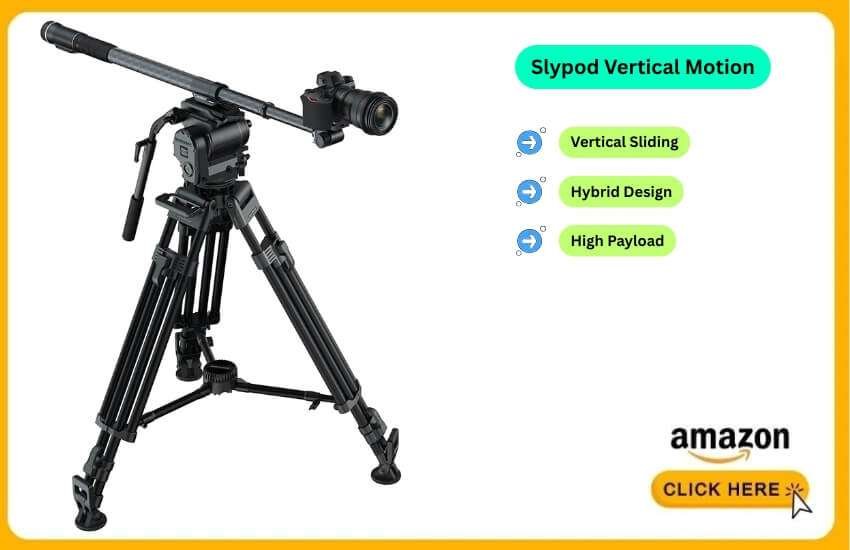
This is called The Innovative Hybrid (Best for Vertical Video). This is not a traditional slider.
It is a motorized monopod. Instead of sliding on rails, it telescopes to extend a shaft. This design makes it the most versatile tool on this list for today’s vertical video trends.
I bought the Slypod specifically for food videography (overhead shots). You can mount it vertically.
And it will smoothly push the camera down toward a plate of food. Traditional sliders cannot do this against a gravity well.
It also functions as a “probe” lens mover. This allows the camera to pass through car windows or small gaps where a wide rail system wouldn’t fit.
The “jib” shot (lifting the camera from the ground up to eye level) is effortless with this.
Main Features
3-in-1 Tool: Slider, Monopod and Jib arm.
Vertical Payload: Can lift 13lbs (6kg) vertically against gravity, which is insane power.
Weather Proofing: The design is sealed better than rail sliders, making it safer for outdoor/dusty shoots.
Pros & Cons
Pros:
The only tool that does effective vertical sliding for Reels/TikTok.
Fits in a backpack water bottle holder.
High payload for vertical lifts.
Cons:
It is louder than rail sliders (whirring sound).
Shorter travel distance compared to a long rail.
Who is this for?
Creative directors, food videographers and social media agencies focusing on vertical content.
5. Edelkrone SliderONE v2
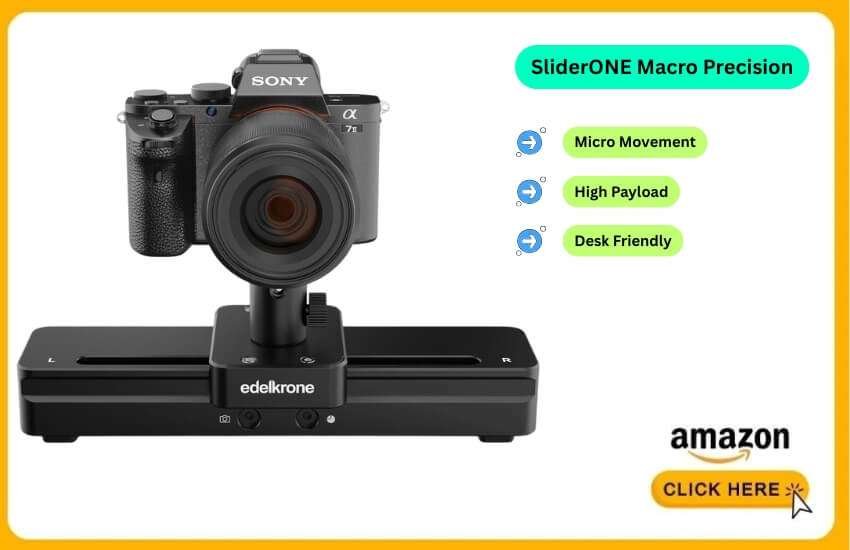
This one is popular as “The Macro King”.
If the Rhino ROV is for phones, the SliderONE v2 is for professional cameras—but for macro distances. It is about the size of a sub sandwich but can carry a 20lb camera rig.
I use this exclusively for product photography. When shooting jewelry or watches, you only need 6 inches of movement to make the product shimmer.
A 4-foot slider is too big for this. The SliderONE fits on my desk, moves with microscopic precision and allows me to get those “luxury” glints on metal surfaces.
It pairs with the Edelkrone app for stop-motion, which I use for unboxing animations.
Primary Features
Macro Precision: Can move in increments smaller than a millimeter.
High Payload: 20lbs capacity means you can mount a pro camera and a heavy macro lens.
Backpack Ready: Takes up almost no space.
Pros & Cons
Pros:
Strongest motor for its size.
Perfect for tight spaces and desktops.
Silent operation.
Cons:
Very short travel distance (approx 8 inches).
Requires the Edelkrone battery (LP-E6 type), sold separately.
Who is this for?
Product photographers and stop-motion artists.
Why Buy a Motorized Slider over a Manual One?
Manual sliders rely on your hand’s steadiness. Even with a “flywheel,” human error introduces micro-shakes that ruin professional shots.
A motorized camera slider ensures consistent speed. It allows for hands-free interviews.
This enables you to be both the interviewer and operator. Again, it facilitates time-lapse photography, which is not possible with a manual rail.
Does the motor noise ruin audio?
Most “stepper motors” (like in the Neewer ER1 and Edelkrone) are roughly 30-40 decibels, which is whisper-quiet.
If you are using a shotgun mic or lavalier mic on your subject, the motor noise will not be picked up.
However, avoid placing the microphone directly on top of the camera body, which is mounted to the slider.
Can you use these for vertical video (TikTok/Reels)?
Yes, but with limits. Standard rail sliders (Neewer/GVM) can be mounted vertically on a tripod. However, the motor must overcome the effects of gravity.
This drastically reduces the payload capacity (usually by 50%). For vertical shots, the Moza Slypod Pro is the superior tool. Its gear system is designed specifically for lifting.
What is “Parallax” and why do you need it?
Parallax is when the camera slides left, but pans right to keep the subject centered.
This creates a wrap-around effect that separates the subject from the background, making the video look 3D and cinematic.
Sliders, such as the GVM GT-J80D, feature a mechanical bar that enables automatic operation.
How long of a slider do you need?
24-30 inches: Best for interviews and talking heads. It’s easy to transport and mount on a single tripod.
40-48 inches: Best for car commercials, landscape reveals and dramatic establishing shots. Requires two tripods for support.
What to Look For in Getting a Motorized Camera Slider
Before you click “buy,” check these three critical specs to ensure the slider fits your workflow.
1. Payload vs. Incline Payload
Manufacturers will list a “Max Payload” (e.g., 11 lbs). This usually applies only when the slider is flat on a flat surface, such as a table.
If you tilt the slider even 30 degrees for a creative angle, that capacity drops significantly. If you shoot with a heavy lens (such as a Sigma Art 18-35mm), aim for a slider with at least twice the payload rating of your camera rig.
2. App Connectivity (Bluetooth vs. 2.4G)
Older sliders used unreliable remotes. The 2025 standard is Bluetooth App control. Look for apps that support Keyframing (setting multiple points for complex moves). Read the recent app store reviews for the specific slider—hardware is useless if the software crashes.
3. Power Source
NP-F Batteries: The industry standard (Sony style). They are cheap and swap easily. (Best for Pros).
Internal Battery: Convenient, but if it dies, your shoot is over until it recharges. (Best for Hobbyists).
Which One Should You Take?
If you want the best all-rounder that balances price, weight and features, get the NEEWER ER1.
It is authentic, reliable and uses carbon fiber, which saves your back on long shoot days. It does 95% of what the expensive brands do for a fraction of the cost.
If you are a professional in need of compact gear for travel, the Edelkrone SliderPLUS is an engineering marvel that is worth the investment.
For mobile creators and vertical video, the Moza Slypod Pro is the most innovative tool on the market right now.
Conclusion
Ultimately, the right slider makes your work easier. Pick the one that fits your style, set it up and let the motion bring your shots to life.
FAQ
Can I mount a gimbal on top of the slider?
Yes. This creates “4-Axis” motion (slide plus pan/tilt). However, it gets very heavy.
Most carbon fiber sliders are not designed to handle this weight. You need a heavy-duty aluminum slider for this setup.
Why does my footage jerk at the very start?
You need to adjust “Ramping” or “Ease-In.” This is a setting in the app. It tells the motor to accelerate slowly instead of starting instantly. Always add a 10% ramp for smoother starts.
Can I push the slider by hand if the battery dies?
No. Never force the carriage by hand while the motor is attached. You will strip the internal gears or stretch the belt. Remove the motor unit first if you must use it manually.
Can I mount the slider upside down?
Yes. This is great for low-angle floor shots. You can suspend the slider between two chairs or tripods.
It lets the lens hang inches off the ground without the tripod legs blocking the view.
Why do I see the rails in my wide-angle shot?
Your lens is too wide (usually 14mm or 16mm). The camera sees the end of the track.
To fix this, add a small “riser” or ball head. This lifts the camera up and out of view of the rails.
Should I use WD-40 to make it smoother?
Absolutely not. WD-40 attracts dust and dirt. This turns into a gritty paste that ruins bearings.
Clean the rails only with a dry microfiber cloth. If sticky, use a drop of rubbing alcohol.
Why is the motor stuttering when using a power bank?
Your power bank is too weak. Old phone chargers (5V/1A) do not supply enough current.
You must use a power bank with PD (Power Delivery) output. The motor needs consistent high voltage to run smoothly.
Is a motorized slider fast enough for sports?
No. Sliders are built for precision, not speed. Even at 100% speed, they move at a walking pace.
They cannot track running athletes or race cars. Use a handheld gimbal for fast action.
Should I use a Ball Head or a Fluid Head on the slider?
Use a Fluid Head. It allows you to adjust the camera angle smoothly as you slide.
A Ball Head locks tight and is hard to adjust mid-shot without shaking the whole rig.
How do I keep focus on a moving subject?
Use your camera’s “Face Tracking” or “Continuous AF” mode. Manual focusing is almost impossible while the camera is sliding away from you.
If your camera has poor autofocus, consider stopping down to f/8 to maintain focus.

Aliza Khatun is a Digital Marketing Professional and the founder of DigiGenHub. She has helped various businesses grow their online presence through real-world experience in marketing, branding, traffic growth, and business strategy.
Through DigiGenHub, she shows how to build and grow a business from the ground up using Website Setup, SEO, Branding, Paid Promotion, and smart digital tools.
She also highlights how AI can be used to its full potential to make content creation, automation, marketing, and business growth faster and smarter.
She believes that the right knowledge, modern technology, and the right tools can help any individual or business build a stronger online presence.