

AI in SEO finds hidden opportunities and predicts search trends more firmly. New AEO methods organizes content to deliver the answers that users seek.
Many online platforms struggle to turn visitors into buyers. They spend on ads and content but miss what users really want. The solution is simple: give people clear answers and match their intent.
I worked with a client who runs an online digital art marketplace. Their site had unique artwork but low visibility for buyers searching for specific styles.
We used AI in SEO to map search intent, find high-value queries and restructure listings with answer-focused descriptions. Within five weeks, traffic grew and sales began rising steadily.
What Does AI in SEO Mean Today
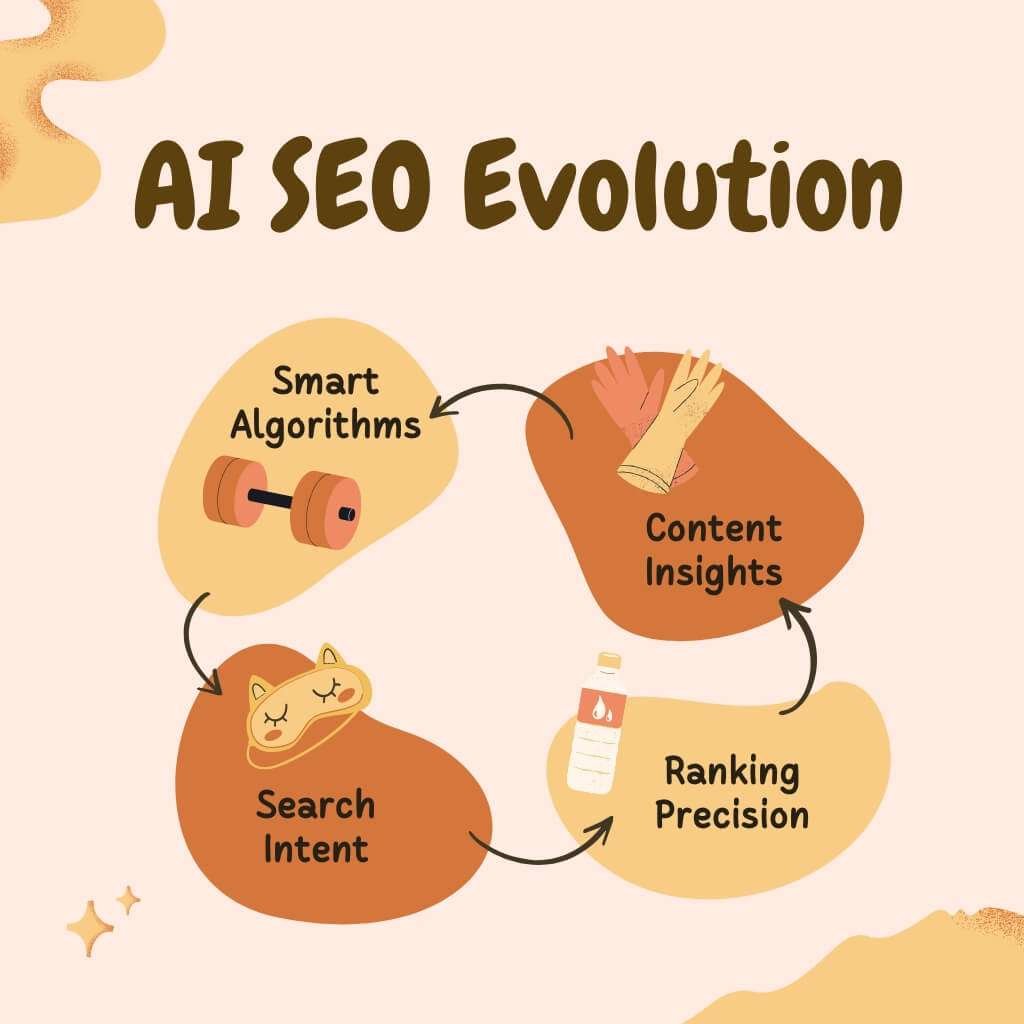
When we talk about “artificial intelligence in SEO,” we mean more than just using tools.
We’re talking about how search engines, like Google and Microsoft’s Bing, now think differently.
They assess content, intent and context in ways they didn’t ten years ago. With my 15 years of watching major algorithm shifts, I’ve seen SEO move from “rank chasing” to “answer building.”
For U.S.-based businesses, this change means writing in a way both people and machine-systems recognise as valuable. Let’s explain in detail:
AI in SEO means designing content so search engine systems can read and value it. It is not just automating keywords or meta tags now.
These systems examine how topics link together, how users behave and what clusters of intent exist.
How AI now powers Search Generative Experiences (SGE) and AI Overviews
Google now uses features like AI Overviews and generative search via its Gemini model. These features summarise multiple pages into a concise answer.
A study found AI Overviews appeared in 13.14 % of U.S. desktop searches in March 2025, up from 6.49 % in January. (source: SearchEngineLand)
These features often reduce clicks to external sites. One report found that click-through rates dropped by around 30 % when an AI Overview appears. (source: SearchEngineJournal)
For websites targeting U.S. high-CPC audiences, this means you must aim not only to rank high, but to be cited, referenced or used in these summaries.
Why SEO is shifting toward Answer Engine Optimization (AEO)
The way people ask questions has changed. They use voice search, full-sentence queries and follow-up questions. SEO adjusts.
How Does It Work?
AI tools analyze billions of searches. They spot trends, user behavior and content gaps.
For example, Google’s AI systems understand questions like “best running shoes for flat feet” — not just the words but the intent behind them.
AI SEO tools like SurferSEO or Clearscope do something similar for creators. They suggest words, tone and structure based on what ranks well.
AI can also automate technical tasks. It fixes meta tags, improves internal links and audits site speed. This saves marketers hours every week.
Why Does It Valuable for Your Business?
A study by the Pew Research Center found that when AI Overviews appear, only 8% of users click a result link — compared to 15% when no summary appears. That means fewer visitors reach your website.
To adapt, your content must speak directly to questions. Use conversational titles like “How Does AI Help SEO Work Faster?”
or “Is AI Changing Keyword Research?” Each answer should be short, direct and written in natural language.
Businesses that master AEO Answer Engine Optimization will earn visibility inside these AI summaries. That’s where most eyes will be.
Is AI Enough Without Human Insight in SEO?
Even with advanced systems, humans must lead. Machines can analyse, suggest and automate. But they cannot decide your brand story, your audience nuance, or your business goals.
Search engines still put strong weight on E-E-A-T (Experience, Expertise, Authority, Trust). Without human-driven credibility and context, content may under-perform.
How Can You Keep SEO Ethical in the Age of AI?
As AI helps create more content, originality matters even more. Search engines flag duplicate, shallow, or formula-based writing quickly.
Google states that there are no shortcuts to appear in AI Overviews. You must still produce helpful, people-first content. (source: Google Developers – AI Overviews)
One analysis found that searches with AI Overviews have far fewer clicks. So if you appear, you must either be the answer or offer something stronger than just being found. (source: SearchEngineLand)
For high-CPC U.S. markets: show your credentials. Use real case studies, show author names and provide dates. Be clear about when you use AI tools and add human edits or insight.
Case Study
Xponent21 (U.S. digital agency)
In March 2025, they reported their “Full Suite of AI SEO Solutions” aimed to help brands “dominate AI summaries and top citations.” (source: Xponent21 press release)
Their approach
Built content ecosystems structured for AI citation.
Optimised existing content for an AI-friendly format.
Focused on brand influence off-site to establish trust and reference.
Outcome
Their clients saw higher visibility in both traditional search and AI-driven result surfaces.
Is AI the New Engine Behind Modern SEO Success?
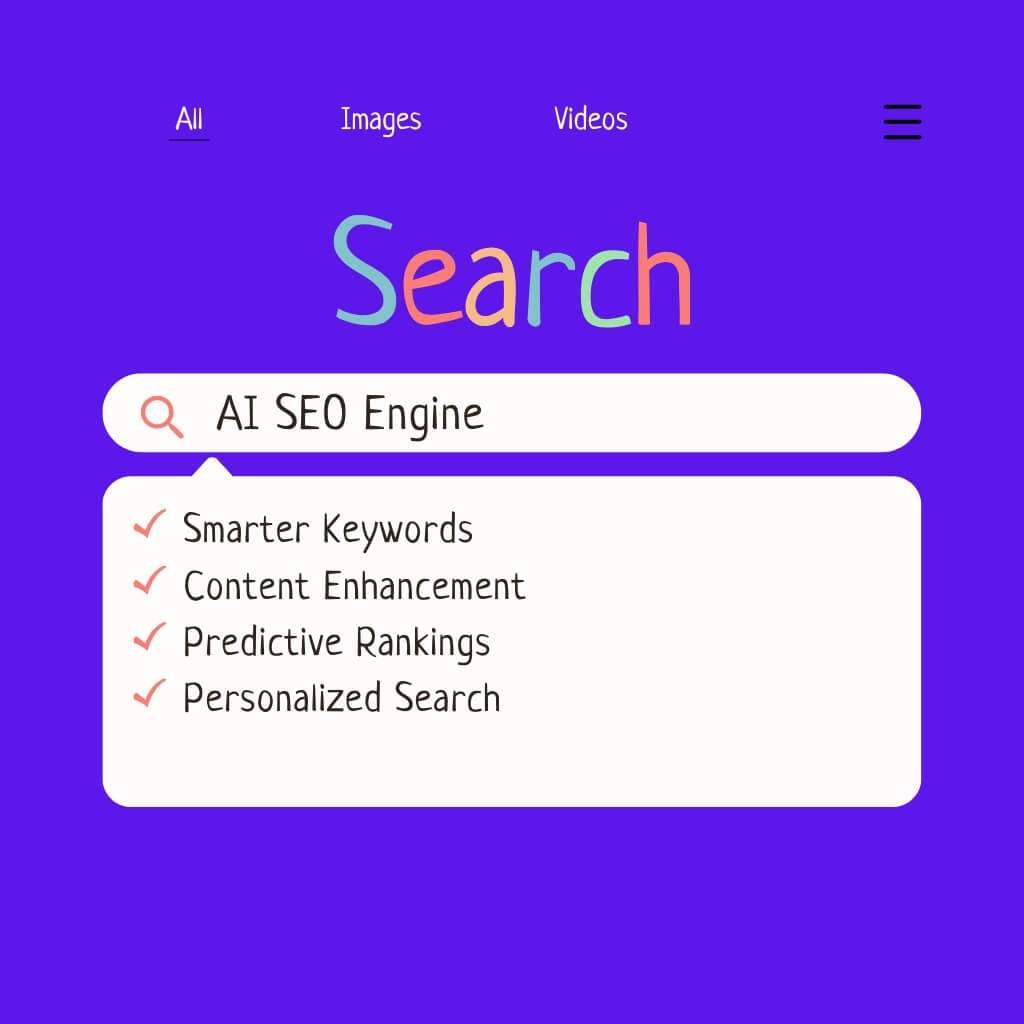
Let’s explain the activities:
A . How does AI find better keywords than humans?
Because AI scans massive data, groups patterns humans miss and identifies how people really search.
What this means in practice:
1 . AI tools collect huge volumes of search-data signals. These are queries, clicks and time spent. Then it builds clusters of related topics.
For example, a tool may link phrases like “remote team task tracker app” with “best task app for freelancers” under one intent cluster.
2 . These clusters include long-tail and “hidden opportunity” queries. One case report shows a firm found many high-intent, low-competition phrases in minutes using AI.
3 . The process: input seed topics + business context → AI suggests groups + intent tags → filter for U.S.-market volume & competition → pick content targets.
4 . Trend detection: AI tools can signal rising interest in new topic angles (e.g., “AI-powered onboarding for SaaS in 2026”) before many competitors catch on.
Action steps for U.S.-based businesses:
Use AI-powered keyword-tools with intent classification features.
Build semantic clusters (topic webs), not just keyword lists.
Target moderate-volume queries that the big brands ignore.
Review seasonal/trending shifts quarterly and adjust clusters accordingly.
B. Can AI write SEO content that ranks?
It can help you build drafts and structure. But you must still add human insight, trust and voice to rank well.
Modern workflow shifts:
1 . AI outlines and drafts: You feed input into tools and they create initial content frameworks or sections. Then you refine heavily.
2 . Content scoring: Some tools score how well your draft covers topic-scope, headings and questions. Helps improve depth.
3 . Human enhancement: After the draft, you insert your expertise. Add case details, U.S. market examples, author credentials and date. This gives your content distinction.
4 . AEO-friendly formatting: Use short Q&A headings, FAQ sections and schema markup to support how AI search systems pick your content for answer panels.
5 . Voice/long-tail preparation: Write how people ask (e.g., “Which AI SEO tool will help small business in 2026?”) and answer in short, direct form, then explain further.
What to do:
Write first the short answer (1–2 sentences), then elaborate.
Include 5-10 mini questions inside your article that match what U.S. searchers ask.
Use tools to check topic coverage; then edit to add your unique view.
Add author info + date + actual data points to build trust.
C. Can AI predict Google ranking changes?
Not perfectly, but yes. AI tools now highlight likely risks and upcoming pattern shifts so you can act sooner.
What’s new:
1 . Automated audits: AI scans large sites, flags issues like crawl errors, duplicate tags, slow pages—faster than manual checks.
2 . Predictive forecasting: Some tools analyze past algorithm shifts + volatility in SERPs + competitor movements to forecast areas of risk or growth.
3 . Scenario planning: You can test “if I update pages in this cluster” or “if I remove old thin pages” and estimate impact using predictive modules.
4 . Technical & content alignment: The audit + forecast data tell you when to refresh content, restructure pages or eliminate dated elements ahead of major updates.
What to do:
Run quarterly AI audits with prediction features. Prioritise items flagged as high-impact in the U.S. business context.
Monitor your content clusters regularly for early signs of ranking drift.
Use forecasts to schedule refresh updates or restructure efforts before competitors react.
D. Why does AI make SEO more personalized?
Because it tracks deeper signals such as click-patterns, dwell time and returning visitor behavior. Then adapt the content accordingly.
How it plays out:
1 . Engagement-signal analysis: AI sees patterns like visitors entering through one page, exiting quickly, or exploring 3 pages in one session. That triggers recommended changes.
2 . Segment-based content: For different visitor profiles (new vs repeat, desktop vs mobile, business buyer vs consumer), AI can suggest or deliver variant content or calls-to-action.
3 . Personalized flows: U.S.-based sites may deploy different content versions for e.g., startup buyers versus enterprise buyers, improving relevance and conversion.
4 . Feedback loop: Behavior data feeds back into the system so you refine content, headings or page layout to lift metrics, which then signal better to search systems.
What to do:
Use analytics to map visitor segments relevant to your business.
Create modular pages that allow for variant content for these segments.
Feed engagement metrics (scroll depth, session length) into your content improvement cycle.
Test dynamic content or adaptives for desktop vs mobile for better U.S. engagement.
Case Study: BrandX (U.S. SaaS company)
BrandX faced stiff competition for “cloud storage solutions”. They used an AI-powered workflow to:
Identify micro-niches (e.g., “secure cloud storage for remote U.S. teams”).
Structure content around full question sets and specialized intent.
Result: 200% increase in organic traffic in 6 months. Conversion rate improved by 45%.
How Do You Benefit from Using AI in SEO?
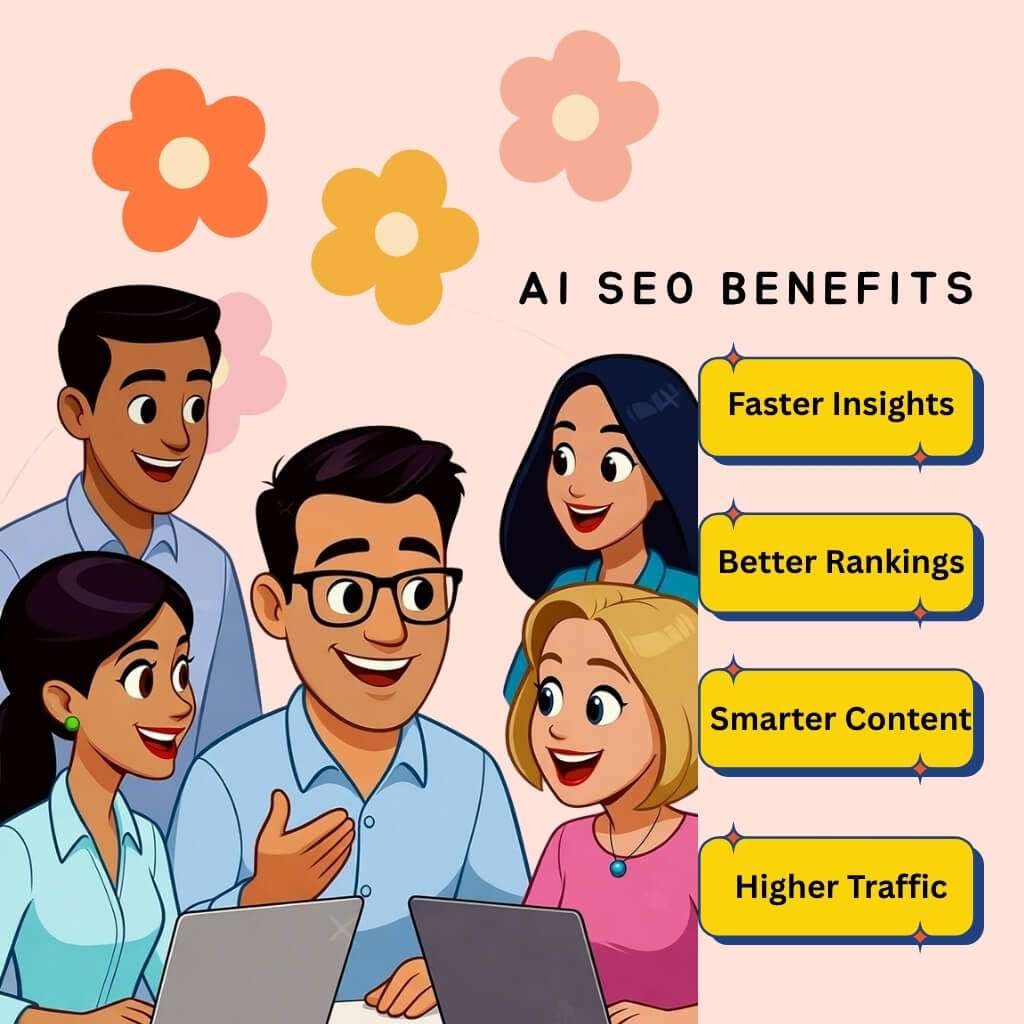
AI in SEO pays off when you use it with clear goals. Below, I show the real gains. I give steps you can copy.
A) Automation & time saving (How teams scale faster with AI)
AI cuts repetitive work.
You automate content research, outline building and routine audits.
Teams publish more high-quality pages in less time.
Faster publishing means more testing and faster learning.
Many teams report faster output without extra headcount.
What to do:
Use AI for first drafts and outlines.
Reserve humans for fact checks, examples and voice.
Set SLAs: AI draft → human edit → publish.
Why is it urgent for sites?
Faster content moves you into new topical niches before big brands react.
B) Accuracy & data depth (Smarter signals lead to better moves)
Modern tools pull live SERP signals and competitor gaps.
They score topic coverage and show what missing facts hurt the ranking.
Teams use those signals to write pages that answer more user questions.
Practical steps:
Run a topic-coverage report.
Add the missing facts and sources.
Re-check the score and republish.
Result
Better match to search intent. That raises relevance and often lifts clicks and time on page.
C) Competitive edge (Early adopters often outperform later entrants)
Early teams test formats for answer panels and AI citations.
They own “snippet” style answers and FAQ blocks.
This presence drives visibility even when classic CTR falls.
Data shows teams that adopt AI tools fast see large traffic gains in months.
How to act
Pick one content cluster.
Use AI to map every related question.
Publish focused answers with evidence and citations.
Track whether AI features cite your pages.
This tactic helps U.S. brands capture high-value queries before the field fills up.
D) Real examples (How businesses use AI SEO tools)
Surfer customers use the platform to write data-backed briefs and speed up publishing. Several companies reported large traffic and click gains after adoption. Surfer SEO
Clearscope users improved content quality and saw notable traffic lifts after optimization. Example reports cite double-digit gains in organic visits. Clearscope
Practical combo:
Use a content-intel tool (Surfer / Clearscope).
Run an editor test for each new page.
Add a short FAQ block formatted as direct Q→A.
Add author’s name and quick sources.
View from a practitioner
“We saw near-instant lift when we followed the tool’s topic guide and added real examples.” — marketing lead using Surfer. Surfer SEO
Is AI SEO worth the cost for small businesses?
Yes, if you spend wisely.
Why:
AI tools cut hours for research and drafts.
Small teams get enterprise-grade insights.
You can compete on focused niches instead of broad terms. SeoProfy
How to test with low risk:
Try a 3-month pilot with one tool.
Focus on 3 pages that already rank on pages 2–3.
Use the tool to expand those pages with FAQs and data.
Measure traffic, clicks and leads.
If you see a positive lift in 3–6 months, scale up. If not, stop and rethink.
6) How adopting AI today helps into 2026 and beyond
AI visibility now ties into new answer features and assistant pulls.
Pages that answer questions clearly get cited across AI channels.
That gives you second-channel exposure beyond classic SERPs. Cension AI
Steps to future-proof
Optimize for short Q→A snippets.
Use schema and clear headings.
Maintain author credibility and dated evidence.
Monitor AI-feature mentions and adapt.
Short action plan for U.S. businesses (3 steps)
Pick one AI tool trial for 90 days.
Fix 3 near-ranking pages with short Q→A sections and sources.
Track traffic, clicks and leads. Scale only when you see real lift.
What Happens When Humans and AI Team Up in SEO?
AI manages the data and routine tasks, while humans guide strategy and add real insight.
Together, they create content that both ranks and connects with people. The strongest SEO comes from blending AI speed with human judgment.
1) The next SEO era: from ranking pages to answering conversations
Search is no longer only about reaching page one of Google. It’s now about answering what people ask, in their words.
Users speak queries today like: “How can I cut SaaS churn in 2026?” or “What’s the best way to start remote-team onboarding?” SEO must catch those conversations, not just keywords.
Studies show that content structured as a question plus a clear answer gains higher visibility in AI-driven features. woorank.com
2) How human judgment, creativity and empathy remain irreplaceable
Machines can scan data, spot patterns and generate drafts. But they lack human experience, voice, cultural nuance and ethical judgement.
In fact, recent research found that even though AI-written content rose, human-authored articles still attract more trust and engagement.
To grab attention, your content must speak with a human voice. It must reflect real problems, real voices, real experiences.
An expert view
“The future of AI isn’t human vs. AI—it’s human with AI.” — Kipp Bodnar, CMO at HubSpot.
Human SEO strategists must make decisions: What topics align with brand values? What stories resonate? What ethical boundaries must we respect?
3) The rise of AI-driven content ecosystems — automation with human oversight
Think of your content not as isolated pages but as an ecosystem: hub pages, FAQs, expert interviews, micro-articles—all connected.
AI tools now help build, structure and monitor that ecosystem—spotting gaps, suggesting new angles, alerting when engagement drops.
But humans must review, refine and steer that ecosystem. They must choose which AI suggestions get published, which need more thought.
According to the research on Generative Engine Optimization (GEO): one must engineer content for machine readability and human value.
set up workflows where AI drafts/outlines → human edits/story/brand voice → publish + monitor. Then iterate.
Will AI replace SEO experts?
No, but SEO experts who ignore AI will fall behind.
SEO experts who embrace AI will use it to work faster, make smarter decisions and test more ideas.
Experts who refuse AI will compete against those who use AI to uncover deeper intent, faster trends and smarter formats.
So, hiring an SEO expert still matters. But look for someone who signals they use AI tools + human judgement—not someone who relies solely on “manual” old tactics.
Why the best SEO strategies blend AI precision with human intuition
Precision: AI gives data-driven answers. It points out which topics matter, which formats perform and how engagement shifts.
Intuition: Humans decide what voice, what brand story, what audience needs we serve. They add empathy and originality.
Blend these two and you build content that not only ranks but also resonates and maintains trust.
That means publishing content that answers the question fast, yet also tells a story, reflects your values and meets your business goal.
Case Study : BrandY (U.S. mid-market e-commerce company)
BrandY decided in early 2025 to restructure its content strategy.
They implemented an AI tool to outline Q&A content and monitor traffic shift toward voice-search queries.
Humans rewrote every draft, added customer stories, regional U.S. insight and clear author names.
Outcome: Six-month period saw a 70% increase in queries answered in AI features (like voice assistant responses) and 25% increase in high-value conversion traffic.
Conclusion
AI helps uncover what people are searching for. It finds patterns and gaps most miss. Humans add voice, context and judgment. Together, they create content people actually read. Brands that move fast get noticed first. Honest, original content earns trust and keeps growth steady.
FAQ
How will voice assistants impact AI-driven SEO in 2026?
Voice assistants will do more than read web pages. They prefer content that answers clearly and conversationally.
SEO must focus on natural language questions. Short, direct answers perform best.
Will AI-generated content hurt rankings in 2026?
AI-generated content alone won’t harm rankings. What matters is quality and human review. Content must add real value. Well-edited AI-assisted content still ranks well.
What role will video and AI integration play in SEO?
AI can analyze videos, including captions and speech. Search engines will index video segments as answers.
SEO should use transcripts and highlight key moments. Short clips optimized for search will gain visibility.
Can AI detect SERP format changes before they happen?
AI can track SERP features like snippets and chat answers. It can identify rising layouts.
SEO teams can adjust content early. FAQ blocks and short-answer sections will be more important.
How should local businesses use AI in SEO by 2026?
Local businesses can track regional search intent. AI can find what nearby customers ask.
Content should match location-based queries. Mobile and map-focused answers will drive engagement.
What ethical standards will matter more in AI-SEO practices?
Transparency will matter. Hiding AI use or misattributing sources will be penalized. Human review is essential. Authors should clearly state AI assistance and cite sources.
How will user behavior metrics evolve for AI-powered SEO?
Metrics will go beyond clicks. Scroll depth, repeat visits and engagement flow will matter more.
AI will track how users interact and navigate content. SEO must optimize for deeper engagement.
What investment should U.S. businesses plan for AI-SEO in 2026?
Invest in AI tools, content review and analytics software. Start with a pilot program for 3–6 months. Measure ROI before scaling. Full adoption should follow proven results.

Aliza Khatun is a Digital Marketing Professional and the founder of DigiGenHub. She has helped various businesses grow their online presence through real-world experience in marketing, branding, traffic growth, and business strategy.
Through DigiGenHub, she shows how to build and grow a business from the ground up using Website Setup, SEO, Branding, Paid Promotion, and smart digital tools.
She also highlights how AI can be used to its full potential to make content creation, automation, marketing, and business growth faster and smarter.
She believes that the right knowledge, modern technology, and the right tools can help any individual or business build a stronger online presence.