Every reply changes how buyers see your brand. They are sharp. They can spot a sales script fast.
What they want is a conversation that feels real, not a pitch that feels practiced. But many sales teams fail because they ask questions that don’t reveal real needs.
I worked with an e-commerce brand that sold digital design assets. Their team offered discounts, but buyers needed clarity.
Yet, when we used open-ended questions to ask customers in sales, the results changed.
Buyers shared obstacles, tight deadlines, client revisions and design roadblocks.
The team turned these into simple solutions that fit. Conversations felt genuine and Sales improved.
So, learn to talk with buyers in a way that feels natural, engaging and effective.
Why are Open-Ended Questions to Ask Customers in Sales Important

Open-ended sales questions make the difference between sellers who connect and those who just talk. Let’s explain:
From Pitches to Conversations
A decade ago, sales calls sounded the same — polished lines, feature lists and a closing hook. It worked when buyers had little access to data. Now they do their own homework.
Around 68% of B2B buyers finish most of their research before meeting a sales rep.
That shift changed everything.
People no longer wait for you to explain what they already read online.
They want to share their goals and get advice that fits their world.
Sellers who keep asking and listening sell more than those who just “pitch.”
The winning approach now is conversation-led selling. You ask first, listen next and then offer something useful.
AI Made Buyers Less Patient with Fake Conversations
AI runs many sales tasks now, from data sorting to outreach. A recent report shows AI-driven sales enablement jumped from 39% in 2024 to 81% in 2025. That means most teams use automation for at least half their work.
But buyers notice. They can tell when a message or call sounds machine-made.
In a Salesforce interview, several reps said they use AI for prep work but keep human contact at the heart of every call.
Buyers want more than perfect timing or polished templates. They want sellers who listen and react like a person.
How Human Talk Wins Over Scripts
AI can handle tasks. Empathy sells. Real salespeople ask, pause and care about what’s being said.
When you show real curiosity, people trust you faster.
Here’s what happens when empathy drives the talk:
Buyers open up about real problems, not surface details.
The talk feels like advice, not a push.
The buyer’s story leads the sale — not your feature sheet.
As Julie Thomas, CEO of ValueSelling Institute, said:
“The most successful reps ask relevant, targeted questions and then listen—often much more than they talk. That’s how you uncover what drives the buyer.”
What Counts as an Open-Ended Question
Open-ended questions invite a story, not a yes or no. They start with what, how, or why. They let customers share what matters most.
Good examples include:
“What results matter most to your team this quarter?”
“How would you describe the problem you’re solving?”
“Why has fixing this taken longer than expected?”
These questions show you care about their process, not just your pitch.
Closed questions stop the talk. Open ones start it.
As explained by Retently, open questions help reveal emotions, decision habits and real priorities (Retently).
What Makes People Open Up During a Sales Talk?
People talk when they feel respected, not cornered. They open up when your tone sounds curious, not rehearsed.
They share more when you’ve done your homework. When your question shows you actually looked at their company — not just your CRM — people speak freely.
Small cues matter too. A natural pause, a warm tone, or a quick “tell me more about that” helps them open up.
Case Study: Solar Service Firm and the Power of Open Questions
Kixie, a sales enablement platform, worked with a U.S.-based solar service company in early 2025. The firm replaced scripted calls with open-ended discovery questions like:
“What’s your current process for managing outbound calls and where is it breaking down?”
After three months, appointment no-shows dropped by 50% and monthly revenue went up by around $30,000.
The mix of AI dialers and human questioning helped them book more qualified conversations and fewer dead leads.
Set Up Calls That Build Trust: Ask, Don’t Assume
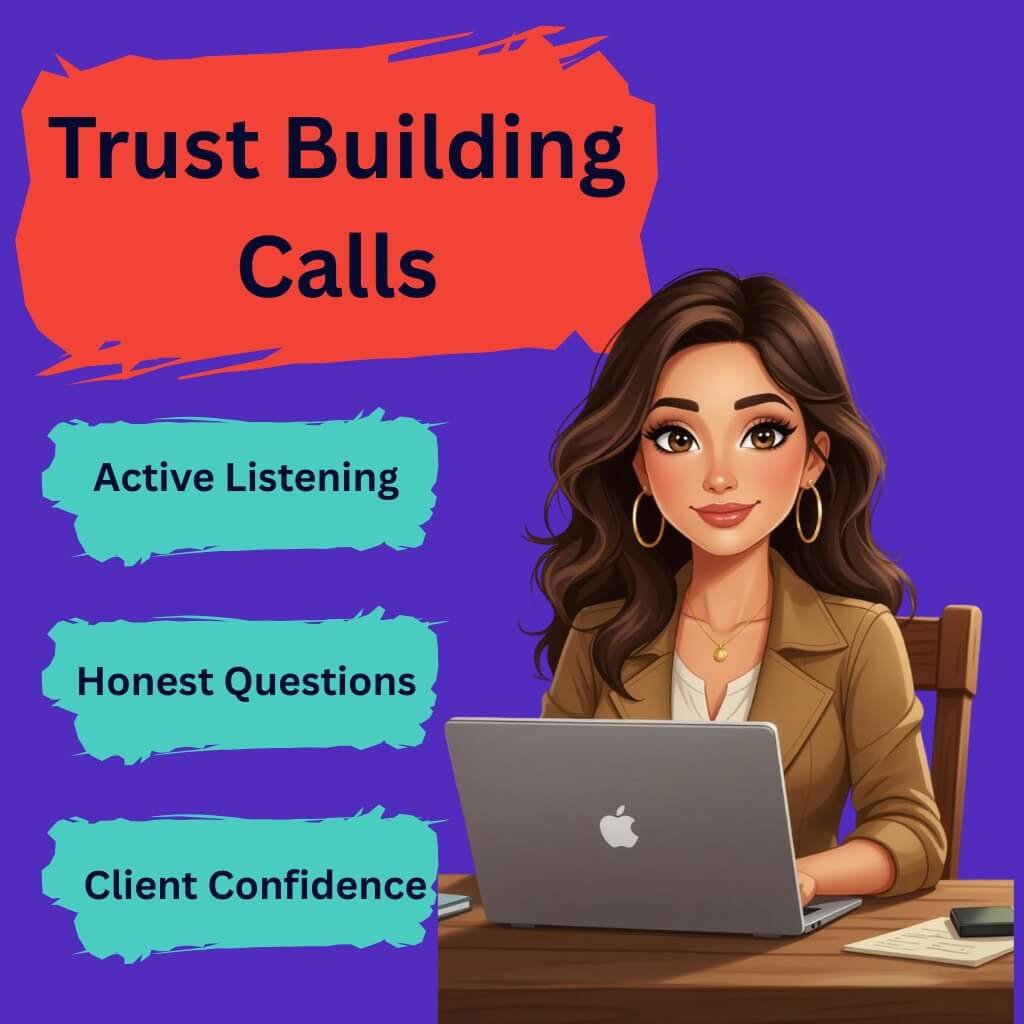
In sales today, you must stop guessing. Your job is to discover. Let’s discuss how reps prepare their questions before the first call:
A. Mindset Shift: Stop Assuming Needs, Start Discovering Them
Many sellers still walk into calls assuming they already know the buyer’s needs. That path leads to wasted time and shallow outcomes.
1 . Buyers today do their homework. They don’t need a seller who reads off a checklist.
2 . When you begin with discovery, you signal respect for their voice.
3 . Asking rather than telling helps you uncover details others miss.
By shifting to an ask-first mindset, you show you’re there to listen. That builds trust and highlights the buyer’s agenda, not yours.
B. Three Modern Sales Psychology Triggers
When you ask well, you tap into deeper buyer motivations. Here are three triggers you should use:
1 . Curiosity
Studies show curiosity drives engagement. For example, a review of 122 consumer-behaviour papers found curiosity affects how people explore and buy.
In a call, you can trigger it with open questions like: “What surprised you when your team looked at this issue?”
2 . Validation
People want confirmation that their views matter. When you reflect their language, they feel seen and heard.
A question like “You mentioned this is slowing the team down — would you say that ties to your annual goal?” gives validation.
3 . Autonomy
Buyers want to feel they have chosen. According to recent research, when buyers sense they control decisions, they engage more.
You support autonomy by asking: “How would your ideal solution let you decide differently next quarter?”
Together, those triggers help your questions do more than collect info—they build connection.
C. Map Goals and Priorities
Let’s judge specific questions that show you’re thinking ahead. Use them in discovery:
What are your top priorities for Q4 today?
What result matters most for your team this year?
You’re not asking “What’s your challenge?” — you’re asking “What matters?” That makes the talk forward-looking.
Beyond questions, you should research before the call. Use your CRM and external data to:
A . Identify recent changes at the prospect’s company (e.g., leadership change).
B . See what tech they’re using or new initiatives they launched.
C . Find the language they use in recent posts or releases—then use their words in your questions.
For example, if LinkedIn shows they recently hired a VP of Growth, you might ask: “I saw your new VP of Growth joined. How is the team’s agenda shifting under that leadership?”This shows you came prepared.
Research shows that reps who spend even 5-10 minutes on pre-call insight qualify leads better. One method improved qualification accuracy by 43%.
How do intelligent reps prepare their questions before the first call?
They use data, context and the buyer’s world. They review:
A . What the company just announced.
B . What the person’s role is.
C . What projects seem urgent?
Then they craft 2-3 targeted questions—not generic ones. They plan but stay open. That way, the conversation adapts, not scripts.
Case Study: Pre-Call Research Makes the Difference
A U.S. tech-services firm used a structured pre-call routine with its sales team. They required reps to scan recent funding, executive moves and tech stack data before the first call. Over six months, they saw:
A . 29% higher call-to-meeting rate.
B . Deals are qualified faster.
The firm credits this to preparation, not just script changes.
Source: “Sales Call Planning: How To Prepare for Calls That Close” (OpenPhone blog)
From Pain Points to Value: The Questions That Sell
In today’s markets, buyers often feel the issue before they see the solution. They first respond emotionally, then justify logically. Let’s learn:
A. The Modern Buyer Expectation, Emotional First, Logical Second
Many sellers assume business decisions start with facts and data. Research shows the opposite.
For example, cuts from Adience show B2B decision-makers are heavily influenced by emotions like trust, frustration, or pride.
Another study from iCrossing found buyers who engage emotionally show up to twice the loyalty and retention compared to buyers making purely rational decisions.
What this means for sales:
1 . The buyer often feels “we need change” before they can articulate which solution fits.
2 . Your role: help the buyer move from feeling the problem to explaining it, then validate it with logic (costs, impact).
3 . If you skip the emotional layer, you risk offering a solution that seems logical but lacks resonance.
B. “Problem → Cost → Consequence → Solution” Framework
To structure your questioning and conversation, you can use this four-step path:
1 . Problem — Identify what’s broken or under-performing. Example question: “What’s slowing down your process right now?”
2 . Cost — Quantify what the problem is costing (time, money, reputation). Example question: “How much time or revenue does this issue affect?”
3 . Consequence — Explore what happens if the problem persists. Example question: “What would change if this problem disappeared next month?”
4 . Solution — Position how you help fix the issue, with metrics and outcomes.
Experts in value-based selling note that executives don’t buy a product; they buy a business result, such as cost reduction or revenue gain.
And a recent pre-print shows that vendors who quantify customer pains give buyers stronger grounds to invest.
Sales tip: Don’t jump to a solution too early. Let the buyer articulate A → B → C and then you step in with D.
C. Uncover Pain Points and Challenges
Use questions that help the buyer reveal deeper issues. Some strong ones:
“What’s slowing down your process right now?”
“What have you already tried that didn’t work?”
These two questions do the heavy lifting. The first shows you care about the present. The second shows you respect their experience and lessons learned.
Why are they vital:
They uncover both symptoms and root causes.
They invite the buyer to talk about their experience, not just your solution.
They build trust quickly.
Example (B2B/SaaS)
“Your team is moving to a subscription-model this quarter. What’s slowing that shift right now?”
“What automation did you try last year? What results came and what didn’t?”
This approach helps you map actual pain rather than your assumptions about pain.
D. Quantify Impact and Value
After you’ve uncovered pain, shift to value-based questions. For example:
“How much time or revenue does this issue affect?”
“What would change if this problem disappeared next month?”
Why do these matter:
They turn abstract problems into measurable impact.
They help the buyer visualize the cost of inaction and the benefit of action.
They prepare the ground for your solution to look grounded, not just hopeful.
Data backup:
A recent Sandler blog recommends asking these quantifying questions to spur dialogue and help buyers calculate their own metrics.
Value-based selling research also emphasises measurable outcomes rather than feature lists.
Example (SaaS)
“What does it cost your team if manual approvals take two days instead of two hours each week?”
“If your churn rate drops by 2% this quarter, what does that look like in dollars for you?”
When buyers map numbers, they feel the pressure to solve the problem—and your solution enters as a logical next step.
How to Listen Actively & Mirror Customer Language
Active listening isn’t just “nod and repeat.” It changes how you respond and how you build trust.
Steps:
1 . Listen without interruption. When the buyer finishes a thought, pause for 1–2 seconds.
2 . Use mirror phrases. Example: Buyer says, “Our approvals bottleneck slows us down.” You respond: “When you say ‘approvals bottleneck’, what kind of delays do you see?”
3 . Reflect back their language. That shows you heard them exactly—not your own version of what they said.
4 . Clarify and dig deeper. Example: “You mentioned you’ve tried X and it didn’t work—what was missing in X?”
5 . Confirm with a summary. Example: “So the issue is your manual process adds roughly 15 hours per week and keeps your team from launching new features. Did I get that right?”
With remote teams, global stakeholders and longer buying cycles, mirroring language helps buyers feel seen, even when you connect digitally. The latest B2B buyer research emphasises empathy and human-to-human contact.
Examples from B2B and SaaS (Future-Focused for 2026)
B2B Example
A logistics firm found shipments delayed because their customs-clearance process hadn’t been updated.
Question: “What’s slowing down your process right now?”
Answer triggered: “Customs checks.” Then we asked: “What does each delay cost you?” That led to the solution of automation and faster clearance.
SaaS Example
A SaaS company had high onboarding churn. Sales asked: “What have you already tried that didn’t work?”
The answer: “One-on-one training.” They quantified: “How much time does each training session cost?”
That led to designing self-service modules which reduced time by 40%.
These stories show how the path goes: pain → impact → solution.
Expert View
“When a buyer describes the problem in their own words and attaches a number to it, they become their own champion for change.” — Mark Hunter, sales strategist and author
Case Study: Turning Pain into Value in a SaaS Deal
A U.S.-based enterprise SaaS vendor helped a finance department where invoice disputes caused 20% of monthly payments to be late.
They asked: “How much does late payment affect your cash flow?”
The client discovered late payments cost six figures annually.
By implementing the SaaS solution, they cut disputes by 75%, accelerating cash flow and improving forecasts.
The vendor then framed the solution as: problem (disputes) → cost (cash flow loss) → consequence (forecast risk) → solution (automation) with measurable outcomes.
How to Guide Decisions Without Pressure
Today’s buyers often move through long, complex purchase cycles. Let’s explain that the benefits of decision-stage questions to extend buying cycles:
A. Why are Decision-Stage Questions Necessary in Longer Buying Cycles
In 2025 and heading into 2026, the average B2B buying cycle stretches significantly.
For example, one dataset shows the typical B2B purchase spans around 11.5 months and large or complex deals stretch even past that.
These longer cycles mean deals don’t close overnight. They involve multiple stakeholders, multiple sessions and more stops along the way.
To keep momentum, sellers must ask questions that help map the decision path instead of pushing prematurely.
Good decision-stage questions help you:
1 . Identify who is involved and when decisions happen.
2 . Align your solution with the buyer’s timeline and process.
3 . Prevent surprises that stall progress later.
If you skip these questions, you risk losing the deal even if your solution fits, simply because you didn’t follow their process.
B. Explore the Decision-Making Process
Here are some strong questions to ask when you reach the decision stage:
1 . Who else will be involved in deciding this?
2 . What matters most to your team when choosing a solution?
3 . When do you plan to evaluate new vendors?
Why is each beneficial:
1 . Asking “Who else will be involved…” reveals hidden influencers or committees. The number of stakeholders often doubled or tripled in recent years.
2 . “What matters most…” shifts focus to criteria (not just your product). This helps you tailor your discussion to the buyer’s priorities.
3 . “When do you plan to evaluate…” gives you clarity on timing. Sellers who understand timing can slot themselves into the right moment rather than forcing early.
How to use these effectively:
Map out the buyer’s internal process: who needs to review, sign off, budget, legal, etc.
Align your follow-up schedule with those stages. If the evaluation starts in November for a January budget, you adjust accordingly.
Use this information to set mutual next steps with clear checkpoints.
C. How Top Reps Use Timing & Empathy Instead of Pushy Tactics
Top-performing sales reps avoid hard closes early in elongated cycles. They do three things well: listen, align and pace.
1 . They listen deeply to signals about timing, budget and stakeholder readiness.
2 . They align their value with what matters to the buyer—cost savings, operation change, growth—not just features.
3 . They pace their outreach to match the buyer’s journey, not theirs.
This approach builds trust and avoids the “we’re too early” or “we’re too late” trap. Buyers feel looked after rather than pressured.
D. Trend: AI-Assisted Follow-Ups with Human Tone
Technology continues to reshape how we stay engaged during long buying cycles. Reports show that sales teams using AI in their follow-ups saw up to 83% higher revenue through better timing and personalization.
But the tech alone is not enough. Buyers still value human tone and genuine interaction.
For example, Salesforce CEO Marc Benioff recently stated that “AI doesn’t have a soul” and human connection remains critical.
How to blend tech + human:
1 . Use AI tools to remind you of follow-up timing, draft personalized messages and alert you to stakeholder changes.
2 . Before sending, read the message and adjust so it sounds like you wrote it—not a template.
3 . Reference something specific from your earlier conversation to show you listened.
4 . Never replace the human follow-up with pure automation. Use tech for support, not replacement.
E. Quick Actionable Checklist: 3 Do’s and Don’ts of Asking Open-Ended Sales Questions
Do’s:
1 . Do ask about who will decide and when the evaluation happens.
2 . Do ask about what matters most to the buyer’s team (not just what your product offers).
3 . Do use follow-up technology to support your message—but always add a human note.
Don’ts:
1 . Don’t assume one stakeholder decides all—ask explicitly about other influencers.
2 . Don’t push your product too early before the buyer has explained their criteria.
3 . Don’t rely solely on automated messages—always review and personalize.
Yet, ask questions that guide without pressure. Use empathy, timing and the right tech support. Keep learning, keep adapting your tone and let your next conversation feel natural and honest.
Future-Focused Open-Ended Questions to Ask Customers in Sales
Buyers have seen AI pitches, automated outreach, and templated demos. What they want is a conversation that feels personal, strategic, and forward-looking.
Use these 50 modern, open-ended questions to understand their world, besides the other 36 questions in the previous sections.
These will uncover needs and create authentic, high-converting sales conversations.
A . Uncover Buyer Hopes and Challenges
1 . “What are your top goals for this quarter, and how do they differ from last year?”
2 . “What challenges have been hardest to overcome in reaching those goals?”
3 . “How has your market or audience changed recently?”
4 . “What’s driving your current focus area or initiative?”
5 . “What obstacles are slowing your team down the most right now?”
6 . “How do you define success for your team this year?”
7 . “What would a successful outcome look like for you after solving this challenge?”
8 . “How are customer expectations influencing your next business move?”
9 . “What keeps your team from scaling faster?”
10 . “How have your priorities shifted in the past six months?”
B . Adapt to AI, Automation & Digital Tools
1 . “How is AI changing the way your team approaches sales or service?”
2 . “Which tasks would you most like to automate this year?”
3 . “Where do you see the biggest gap between automation and human connection?”
4 . “How comfortable is your team with using AI-driven insights?”
5 . “What kind of data do you wish you had before making key business decisions?”
6 . “What does a balanced AI + human approach look like for your sales process?”
7 . “Have you noticed changes in customer behavior since using more automation?”
8 . “What technology investments have delivered the strongest ROI recently?”
9 . “What still feels manual or inefficient in your current workflow?”
10 . “How do you make sure automation enhances, not replaces, customer relationships?”
C . Search out Pain Points & Root Causes
1 . “What process or task drains the most time or resources each week?”
2 . “What’s one recurring issue that hasn’t been fully solved yet?”
3 . “What do your customers complain about most often?”
4 . “What’s preventing your team from hitting your KPIs consistently?”
5 . “What happens when this challenge goes unresolved for too long?”
6 . “How has this issue affected your revenue, morale, or productivity?”
7 . “What have you already tried to fix this, and how did it go?”
8 . “What lessons did your team learn from previous attempts to solve this?”
9 . “How do you currently prioritize which problems to fix first?”
10 . “If you could remove one bottleneck today, what would it be?”
D . Explore Buyer Motivation & Decision Triggers
1 . “What matters most when choosing a solution — cost, time, or outcome?”
2 . “How do you decide which vendor best fits your needs?”
3 . “Who else in your organization plays a key role in decisions like this?”
4 . “What risks do you want to avoid when selecting a new solution?”
5 . “What convinced you to take a closer look at this challenge now?”
6 . “How soon do you hope to see results once you make a change?”
7 . “What internal milestones or deadlines affect this decision?”
8 . “What’s your evaluation process when comparing multiple options?”
9 . “What does an ideal partnership with a vendor look like to you?”
10 . “What would make this solution a definite yes for your team?”
E . Uncover Value & ROI Expectations
1 . “How do you measure success or ROI for new tools or services?”
2 . “What metrics matter most to your leadership when approving budgets?”
3 . “How much time or money does this problem currently cost your business?”
4 . “If you could improve one key metric by 20%, which would it be?”
5 . “What financial or performance goals are you targeting this quarter?”
6 . “How would solving this problem impact your overall customer experience?”
7 . “What outcomes would justify this investment for you?”
8 . “What kind of proof or results would make you feel confident moving forward?”
9 . “How do you typically report value to stakeholders after a project launch?”
10 . “What would success look like 90 days after implementing a solution?”
Conclusion
Using open-ended questions to ask customers in sales turns conversations into strategy assets. Listen like an investor, guide choices like a CEO mapping growth and let relationships compound like revenue streams. Small insights today build big results tomorrow.
FAQ
How can open-ended questions reveal customer content preferences?
Ask “What type of content helps you make purchasing decisions?” to discover whether buyers prefer videos, blogs, webinars, or case studies. This insight allows you to create content that truly engages your audience.
How do open-ended questions show customer urgency?
Questions like “What timeline are you working with to solve this issue?” help determine how soon the customer needs a solution. These guides follow-up priorities and sales pacing.
Can these questions identify potential customer advocates?
Yes. Asking “What would make you recommend our product to a colleague?” uncovers what factors inspire loyalty and advocacy, which helps strengthen long-term customer relationships.
How do open-ended questions help map the customer journey?
Asking “Can you describe the steps you take when evaluating new solutions?” reveals each stage of the buyer’s decision process. This helps align your sales approach with their journey.
How can these questions improve customer segmentation?
Questions like “What challenges are you currently facing in your industry?” allow you to segment customers by specific pain points, enabling targeted and personalized outreach.
How do open-ended questions clarify customer expectations?
Ask “What are your expectations from a solution like ours?” to understand exactly what buyers need. This ensures your product or service matches their requirements.
Can these questions strengthen long-term relationships?
Yes. Asking “How do you envision our product fitting into your long-term strategy?” shows commitment to the customer’s future goals and builds trust over time.
How do open-ended questions reveal decision-making criteria?
Questions like “What factors are most important to you when choosing a vendor?” uncover the criteria customers use to select solutions. This allows you to highlight the right strengths.
How do these questions support cross-functional collaboration?
Ask “Who else in your organization is involved in the decision-making process?” to identify additional stakeholders. This ensures all relevant voices are considered in the purchase decision.
How can open-ended questions improve sales forecasting?
By asking “What are your projected needs for the upcoming quarter?”, you gain insights into future demand, which helps refine sales forecasts and plan inventory or resources efficiently.

Aliza Khatun is a Digital Marketing Professional and the founder of DigiGenHub. She has helped various businesses grow their online presence through real-world experience in marketing, branding, traffic growth, and business strategy.
Through DigiGenHub, she shows how to build and grow a business from the ground up using Website Setup, SEO, Branding, Paid Promotion, and smart digital tools.
She also highlights how AI can be used to its full potential to make content creation, automation, marketing, and business growth faster and smarter.
She believes that the right knowledge, modern technology, and the right tools can help any individual or business build a stronger online presence.