Each click, login and vendor link shapes the future of a brand. In this climate, digital risk management sits at the center of growth, trust and compliance.
Still, threats feel sharper. AI scams drain millions in hours. SaaS and hidden apps create blind spots. Vendors widen exposure.
At the same time, rules harden. The AI Act, new GDPR rules and expanding U.S. state laws demand quick action. One weak point can hit sales, trust and law together.
Whatever, a healthcare portal I supported faced heavy phishing and SaaS misuse. Patient trust collapsed.
We mapped risks and mistakes, fixed access and checked vendors. Within a month, losses fell and trust grew back.
So, the way forward is clear. Map risks. Rank by impact. Train staff. Control SaaS. Use Zero Trust, EASM and SIEM to close gaps.
Keep proof for regulators ready. Show leaders numbers that tie to money and service, not jargon.
Digital Risk Management
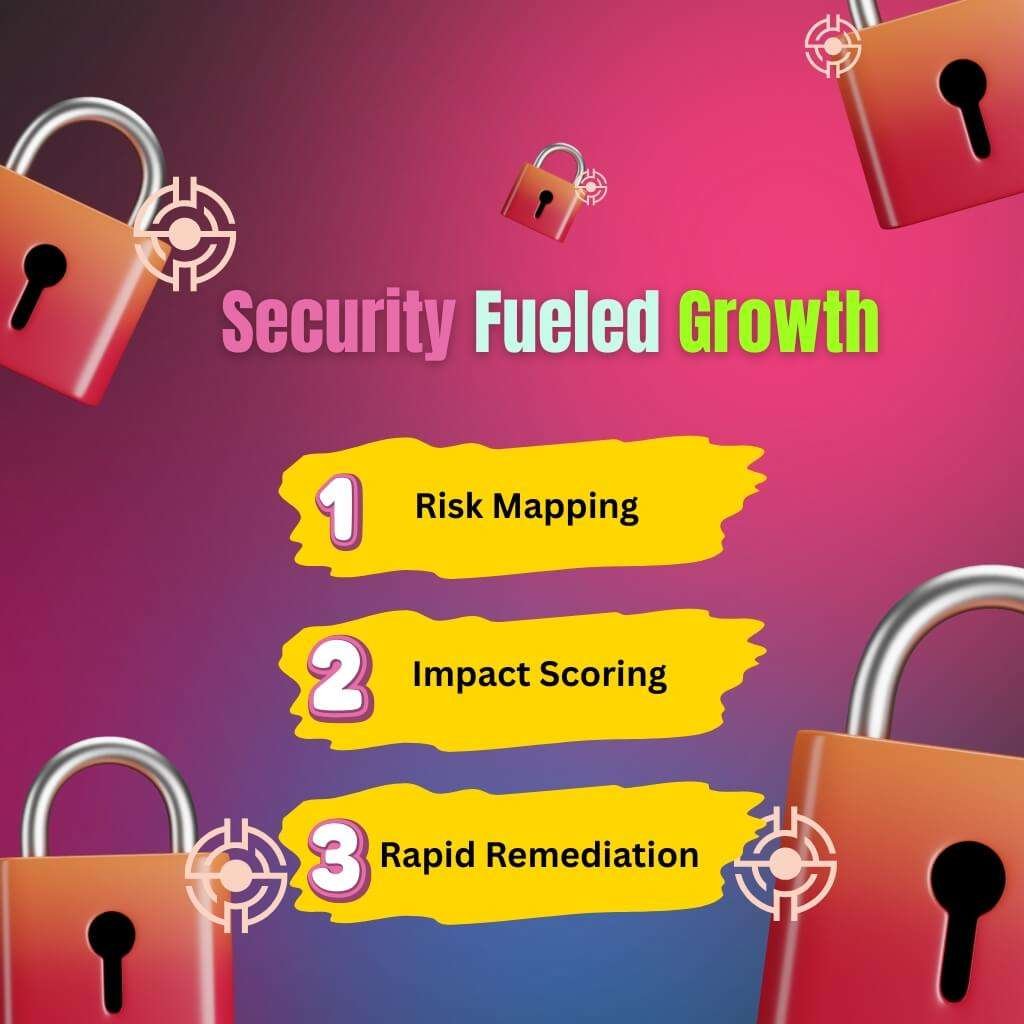
DRM ties security to growth. It maps every digital move, measures the business hit and fixes weak points fast.
DRM covers AI, data, people, apps, vendors and law. Boards now ask for it. Regulators track it. Customers judge it.
The firms that ship DRM well keep revenue, win trust and move quickly than rivals.
What does DRM signify for businesses today?
DRM is a business program that finds digital risks, ranks them by money and trust impact.
The accurate management reduces them with clear owners, playbooks and tools. It connects cyber work to goals like revenue, uptime and compliance.
Scope you must include now:
1 . AI use and misuse.
2 . Identity and access for humans and non-human identities.
3 . Data flows across SaaS, cloud and endpoints.
4 . Third parties and fourth parties.
5 . Laws across regions.
Why it’s not optional
The average breach cost sits at $4.4M this year. IBM also found 97% of firms with an AI-linked incident lacked proper AI access controls. Most lacked AI governance. You must fold AI control into DRM now. IBM
How to apply today
Create one risk register for tech and AI. Add likelihood, business impact and owner.
Track non-human identities (service accounts, API keys). Use phishing-resistant auth. Cut stale secrets.
Add AI runtime controls to catch prompts and data leaks. Gartner says only 23% use them today. That gap creates quick wins.
How Does DRM Differ from Old-School Cybersecurity?
Cybersecurity once meant firewalls and locked servers. That worked when data lived inside one office. But today is different.
Data moves across cloud apps, AI tools and countless vendors. One weak login or unsafe tool can break trust in hours.
DRM not only defends systems. It protects money, customer trust and business growth. Let’s see why DRM is vital.
Old-School Cybersecurity vs. Digital Risk Management
| Aspect | Old-School Cybersecurity | Digital Risk Management (DRM) |
| Focus | Protects systems and networks | Protects business outcomes (revenue, trust, compliance) |
| Scope | IT-driven, tech stack only | Covers data, AI, cloud, vendors and people |
| Measurement | Counts alerts and blocked attacks | Shows money saved, downtime avoided, compliance met |
| Ownership | Led by IT only | Shared by legal, product, supply chain and business units |
| Approach | Tool-driven, reacts to threats | Risk-driven, acts early with prevention |
| Reporting | Technical words for specialists | Plain terms, boards and leaders follow |
Why has DRM climbed to the board agenda?
The SEC now requires public companies in the U.S. to disclose material cyber incidents within four business days.
Firms must also describe risk oversight in the 10-K. Boards have to prove they monitor this area. SEC
NIS2 raises duties for more sectors across the EU. Member states had to put it into law. Firms now face tighter controls and fines.
Trust pressure rises. Deepfake frauds and AI issues hit brand value fast. Some firms now appoint a Chief Trust Officer to bring ethics, AI, privacy and comms under one roof. Boards want that signal.
Board pack (one slide)
Top 5 risks by money at stake.
Regulatory exposure by region.
Time to detect and time to contain the trend.
Vendor tier list with gaps and fix dates.
Incident drills were one this quarter and lessons.
In what ways can DRM secure growth, trust and resilience at once?
Fewer outages → more sales. Faster detection and containment dropped breach costs this year.
Clear vendor rules → faster deals. Third-party control and AI clauses cut legal ping-pong and speed onboarding.
Transparent AI use → stronger loyalty. Customers reward firms that explain model use, data sources and safety steps. Analysts also report budget wins when security leaders show clear protection levels and value. IT Pro
Better compliance → fewer headlines. You meet SEC, AI Act and NIS2 duties and avoid forced disclosures that hurt share price. SEC
Do this now
Publish an AI use standard: data boundaries, model approval, red-teaming and logging.
Add deepfake payment checks: mandatory call-back on any new payee or bank change.
Track critical vendors weekly. Add drift alerts on access and data use.
Drill incident playbooks each quarter. Keep runs short. Fix gaps the same week.
Expert voice
“Ungoverned AI raises breach odds and cost. Close the access gaps. Connect AI security with governance.”IBM
The Shifting Frame of Digital Risk
A single slip can break uptime, trust and rules together. The fixes keep your business alright. Let’s discuss:
What fresh types of digital threats hit companies this year?
Automated probes. Fortinet tracked 36,000 scans each second. Attacks rose 16.7% over the past year. They aim at RDP, SIP, IoT and OT ports. No firm is invisible.
Credential trade. Logs from infostealers grew 500%. Over 1.7B records now circulate in dark markets. Stolen data fuels brute-force and stuffing runs.
Exploit-first entry. Verizon DBIR listed 22,052 incidents and 12,195 breaches. Human missteps drove 60%. Ransomware hit ~28% with a median payout of $115K.
Action now
Enforce phishing-resistant MFA for all users and service accounts.
Block reused passwords at login using breach data checks.
Run attack surface scans weekly. Patch fast.
How do AI-driven scams raise the stakes?
Deepfake fraud. Fake voice and video scams caused losses above $200M this year. Staff fail to spot high-grade fakes most of the time.
Action now
Demand call-back checks for every new payee or bank change.
Drill staff with voice and video challenge exercises.
Add code words for high-value approvals.
Use deepfake detection in payment and customer flows.
Track and log AI use in outreach and service.
Why do IoT, SaaS and shadow IT open cracks?
Unmanaged devices. Forescout shows routers now make up 50%+ of riskiest gear. Medical IoT risk climbs, too. Each device is an easy entry.
SaaS sprawl. CSA and Torii report that unsanctioned SaaS and shadow AI keep rising. Many apps request excess scopes. Few have owners. Tokens stay alive far too long.
Action now
Keep a live list of devices. Block unknown MACs. Patch edge routers first.
Discover SaaS with SSO logs, CASB, or network scans. Assign owners.
Review OAuth grants. Remove idle tokens every 30 days.
How do partners and suppliers add more risk?
Third-party incidents grow. Reports show that about 30% of breaches now involve vendors. CISOs also confirm that supplier-linked events rise year by year.
OAuth chain attacks. Recently, the Salesloft-Drift OAuth breach spread across 700+ orgs via stolen tokens. Your own stack can be clean while an app link exposes data.
Action now
Rate vendors before and after onboarding. Monitor them year-round.
Demand MFA, device rules and geo checks for partner access.
Add contract terms for breach notice, SBOM and token hygiene.
Map fourth parties for critical data flows.
How do these risks hit ops, trust and law together?
Operations. Jaguar Land Rover paused builds and sales systems after a Sept 2025 attack. Recovery took days. Suppliers felt it too.
Trust. Harrods warned customers after a vendor breach exposed contact info. Even without card loss, brand trust dipped.
Law. Bigger breach counts force more notices. DBIR’s record sample shows a higher ransomware share, meaning regulators see more reports.
Action now
Set max downtime goals per service. Drill failover monthly.
Use plain customer comms within one hour of an incident.
Track notice clocks per region. Keep proofs ready.
Expert view
“Cybercriminals are accelerating their efforts, using AI and automation to operate at unprecedented speed and scale. The traditional security playbook is no longer enough.” Derek Manky, Fortinet FortiGuard Labs, recent report.
Build a Future-Ready Digital Risk Management Strategy
Start with a clear map. Rank by money at risk. Close gaps in identity, data, SaaS and vendors. Measure progress in business terms. Keep it running every quarter.
Where should businesses start when mapping digital risks?
Use one page. Put assets, data, users, vendors and laws on the same sheet. Show owners and links. Keep it live.
Adopt CSF 2.0 “Govern”. It adds top-level risk oversight and roles. It also comes with quick-start guides. Use them to kick off in days, not months. NIST
Add AI to the map. Tie each thing to a business service and a control. Use the NIST AI RMF and the Generative AI Profile for actions.
See what attackers see. Run external attack surface management (EASM) to find unknown domains, orphan apps and open ports. Track fixes weekly. Security Boulevard
Starter checklist
Asset list with owners. Data flows marked. Vendors grouped by tier.
Crown-jewel services are named.
One risk register for tech + AI + vendors.
EASM turned on with weekly reviews.
How can teams rank threats by impact and likelihood?
Score with business math. Use DBIR signals. Set higher scores for exposed vendors and unpatched edge gear. Let’s explain:
Weight identity attacks. Credential abuse sits at ~22% of initial access. Put higher scores on weak MFA, stale tokens and broad admin rights.
Include exploitability. Prioritize internet-facing bugs and easy phish routes (malicious URLs now outpace file lures). IT Pro
Scoring model (simple)
Likelihood 1–5 (phishable? exposed? unpatched?).
Impact 1–5 (revenue at risk, downtime, fines).
Yet, pick the top 10 by product and top 10 by shared tech each quarter. Show the cost avoided after fixes. Verizon
Why are employee awareness and shadow IT oversight important?
Attackers aim at people first. New data shows URL-based lures in the billions, plus QR and SMS runs. Staff fall for clean-looking links more than for files.
Training still helps the business manager to make the right decision. Recent studies report large drops in click rates after 12 months of focused drills. Use short, monthly reps. Tie them to real cases. Security Today
Shadow SaaS grows. Many apps run with extra scopes and no owner. CSA’s survey shows rising SaaS risk and rising budgets to meet it. Put one owner per app. Review tokens often.
Do this now
Phishing-resistant MFA for all users and service accounts.
One-click report phishing in email, chat and SMS portals.
30-day OAuth token expiry. Review scopes quarterly.
Publish an approved AI tools list and data rules. Microsoft Learn
Which frameworks and tools give the strongest safety?
Frameworks (use together):
NIST CSF 2.0 for the program. Start with Govern, then Identify→Protect→Detect→Respond→Recover. NIST
Tooling (pick what maps to risk):
1 . EASM to find unknown internet assets.
2 . SSPM for SaaS configs and scopes. CIEM for cloud rights. DSPM for data sprawl. ITDR for identity attacks.
3 . SIEM/XDR + SOAR for detection and playbooks. (Use vendor-agnostic rules. Measure dwell time and response.
How can a DRM plan stay alive long-term?
Make it part of the business rhythm.
Quarterly risk sprints. Top 10 risks in. Owners assigned. Fixes done.
Board scorecard. Show outages avoided, fines avoided and vendor grades. Use the same layout each quarter.
Exercise cadence. Run one incident drill each month: phish-to-pay, vendor token theft, or SaaS misconfig.
Supplier loop. Monitor vendors year-round. Rotate scopes. Require MFA and device rules in contracts.
Signals you can track
A . MTTD/MTTR by service.
B . % of users on phishing-resistant MFA.
C . of unknown assets found by EASM.
D . of SaaS apps with owners and a 30-day token policy.
E . % of crown-jewel paths covered by Zero Trust rules.
Expert view
“The findings point to a clear to-do list. Patch faster on the edge. Kill credential abuse. Watch your partners.” — Chris Novak, Verizon Business. Verizon
Digital Risk Management as a Driver of Compliance and Trust
DRM helps you meet the rules and win trust at the same time. You can see the following steps:
How do new rules shape DRM?
A . Europe
AI Act. Bans and duties phase in through 2025–2027. Top fines reach €35M or 7% of global revenue. High-risk AI needs risk controls, logs and human oversight. Plan now. European Parliament
GDPR procedural reform. The EU set new enforcement rules to speed up big cross-border cases. Expect tighter timelines and clearer steps between DPAs. European Commission
Data Act. Users get stronger data access and sharing rights. Cloud vendors must cut switching barriers and unfair terms. This hits contracts and exit plans. Digital Strategy
DSA enforcement. Platforms face audits and large fines for unsafe design and illegal content handling. The Commission is active this month. Treat this as a live risk item. European Commission
B . United States
State privacy laws. By the end of this year, 20+ states will have laws in force. New states include Delaware, New Jersey, Maryland, Minnesota, Nebraska, New Hampshire, Iowa and Tennessee. Track scope, notices and sensitive data rules per state. Coblentz Law
California CPPA. The regulator targets dark patterns, data minimization and contract gaps. It also issued an enforcement advisory with examples. Adjust your flows now.
FTC actions. Security lapses and deceptive UX draw major orders and fines. See the GoDaddy case and new orders this year. Federal Trade Commission
What to change in your DRM
Add AI, DSA, Data Act and state privacy into one register.
Map law → control → owner → evidence for each rule.
Set exit plans for cloud and data-sharing under the Data Act.
Keep a regulatory clock for notice windows and audit asks.
Why does compliance tie straight to brand reputation now?
Fines hurt, but public orders hurt more. They shape headlines, search results and app-store notes.
Dark patterns and poor notices cause churn. California regulators say effect matters more than intent. Fix the design, not just the policy. California Privacy Protection Agency
Big actions now include UX mandates (clear choice, easy cancel, proof of consent). That means legal and product must work as one. AP News
Action now
Run a choice UX review: symmetry, plain words, one-click “No”, simple cancel.
Publish a short trust page: data use, AI use, vendor rules, contacts.
Track brand queries after incidents and reply fast with facts.
How does DRM increase customer confidence?
Say what you do. Show controls, audits and service levels.
Prove consent. Honor opt-out signals. Cut the data you do not need. California enforcers look for this.
Mark AI touchpoints in the product. Offer a non-AI path where it makes sense.
Review vendor access and publish the standard you require.
Metrics you can share
A . % of users covered by opt-out signals.
B . Time to honor a request.
C . % of third parties with MFA + device checks in place.
D . Independent audits passed this year.
What are the hard lessons from recent failures?
Deceptive UX draws large penalties. The Prime case shows regulators will price bad design, not only bad data use. Fix flows before campaigns. AP News
Slow cross-border cases will speed up. The new GDPR procedure aims to move big files faster. Prepare for tighter asks and short reply windows. European Commission
Cloud exit plans matter. The Data Act forces switching support. Keep playbooks and clauses ready. Test exports twice a year. Digital Strategy
Do this now
Add UX compliance checks to every growth test.
Store evidence packs (screens, logs, DPAs, DPIAs) for audits.
Drill regulator Q&A with legal, product and comms together.
How can DRM turn strict rules into an edge?
Use rules to raise the bar for vendors. Demand MFA, device checks, SBOM and token hygiene. Track it.
Sell trust. Add “privacy by design” and “DSA-ready” notes to B2B decks with evidence links.
Create a well-planned cost structure to reduce expenses. A clean data map and fewer scopes reduce storage, breach risk and response time.
Move faster. Pre-approved UX patterns let teams ship without legal ping-pong.
The Future of Digital Risk Management and Business Confidence
AI will predict more. Vendors will show more. DRM will unite security, governance and trust. Leaders can act now and stay ahead. Let’s discuss the following steps:
How will AI and predictive analytics help in forecasting threats?
Faster signal. AI models rank risky assets, users and vendors before a hit lands. Teams then patch the right items first.
Sharper intel. New surveys show AI-driven attacks rise fast. Gartner reports 29% faced attacks on AI apps in the last year and 62% saw deepfakes. It urges pre-emptive methods, not only detect-and-respond.
Budget shift. Gartner says pre-emptive security will take 50% of security spend by 2030 (from <5% in 2024). Expect more predictive intel and automated defense. Help Net Security
What to do now
Add predictive scoring to risk reviews.
Feed SIEM/XDR with exploit signals and attack-path data.
Track dwell time from M-Trends and aim lower each quarter. MySecurity Marketplace
What role will transparency tools play in managing vendor risks?
SBOM goes mainstream. CISA and 19 partners released a shared SBOM vision. This sets a common ground for what vendors must share.
VEX clarifies impact. VEX tells you if a listed CVE actually affects a product in your stack. Use it with SBOM to stop panic patching.
Open source health. Use OpenSSF Scorecard to judge package hygiene before you adopt it. Many vendors now expose scores.
What to do now
Ask vendors for SBOM + VEX in the contract.
Require MFA, token hygiene and device checks on partner access.
Track Scorecard for critical repos you use.
Why Does DRM Now Blend Cybersecurity, Governance and Digital Trust?
AI governance matters. Firms adopt ISO/IEC 42001 to run AI with controls, audits and roles. It pairs well with NIST AI RMF and privacy laws.
Exposure, not episodes. Gartner promotes CTEM to manage exposures in cycles, not one-off incidents. This links risk to business impact.
Public proof wins. Users and regulators expect evidence: audits, SLAs, SBOMs and clear consent flows. Those assets now live inside DRM, not just legal.
How Should Leaders Prepare for Tomorrow’s Risks?
Adopt CTEM. Run the five stages each quarter: scope → discover → prioritize → validate → mobilize. Publish the top 10 fixes by service.
Stand up AI governance. Map ISO/IEC 42001 controls to your AI use. Keep logs for prompts, data, approvals and drift.
Buy for transparency. Make SBOM, VEX and Scorecard part of vendor selection. Track them like uptime.
Measure what boards want. Show money at risk avoided, dwell time trend, % vendors with SBOM+MFA and % users on phishing-resistant MFA. Tie wins to revenue and trust.
How can businesses make DRM future-proof in a constant digital change?
Design for swap-outs. Use contracts that let you change tools without breaking controls. Keep data maps and exit plans fresh.
Automate evidence. Store SBOMs, VEX files, control logs and UX proofs in one evidence pack per service. Update after each sprint.
Short loops. Review AI use, vendor scopes and risky paths monthly. Feed findings into the CTEM cycle.
Conclusion
Digital risk management is the audit that never sleeps. It is the boardroom agenda that protects every deal. Like strong equity, it compounds trust. Like clean cash flow, it keeps the brand steady. In the market of risk, DRM is the asset that never depreciates.
FAQ
What is the link between DRM and brand loyalty?
Customers stay loyal when they trust a brand’s data practices. DRM shows transparency in how a business handles risks, which strengthens long-term loyalty.
Can small businesses apply DRM without large budgets?
Yes. Start with simple steps like enforcing MFA, monitoring SaaS apps and setting vendor rules. Low-cost tools and clear policies give small firms a strong start.
How does DRM affect investor confidence?
Investors trust companies that protect data and avoid regulatory fines. A visible DRM program signals maturity, lowering perceived risk and supporting higher valuations.
Why do marketing teams need to know about DRM?
Marketing campaigns often handle personal data and customer behavior insights. Involving marketers in DRM ensures campaigns build trust instead of exposing risk.
How does DRM shape merger or acquisition decisions?
During M&A, buyers check the target’s digital risk posture. Weak DRM can lower deal value, while strong DRM can increase attractiveness and shorten due diligence.
Can DRM influence search engine rankings or online visibility?
Yes. Search engines reward secure sites with better rankings. DRM reduces breaches, improves site uptime and ensures compliance, all of which impact visibility.
How often should a company refresh its DRM plan?
Most companies update their DRM plan every quarter. Fast-moving firms add monthly reviews to reflect new vendors, SaaS apps and regulatory changes.
Does DRM include monitoring social media risks?
Yes. DRM extends to brand reputation online. Monitoring fake profiles, phishing links and impersonation on social channels helps protect customer trust.
What role does DRM play in handling influencer or partner campaigns?
Influencers and partners often access brand platforms or data. DRM sets clear access rules, contract terms and monitoring, ensuring campaigns do not create hidden risks.
How do global companies align DRM with cross-border data rules?
They create a single DRM framework and map local rules (GDPR, U.S. state laws, APAC privacy acts) under it. This avoids gaps and keeps compliance consistent worldwide.

Aliza Khatun is a Digital Marketing Professional and the founder of DigiGenHub. She has helped various businesses grow their online presence through real-world experience in marketing, branding, traffic growth, and business strategy.
Through DigiGenHub, she shows how to build and grow a business from the ground up using Website Setup, SEO, Branding, Paid Promotion, and smart digital tools.
She also highlights how AI can be used to its full potential to make content creation, automation, marketing, and business growth faster and smarter.
She believes that the right knowledge, modern technology, and the right tools can help any individual or business build a stronger online presence.