
Nearly two-thirds of consignors pick shops with clear rules and simple portals. The race is hard, but the chance is big. So, how to start consignment shop online?
It means building that system from day one. A clear setup stops early mistakes and it also gives you control.
Still, separate money so books stay clean. Write contracts so disputes do not appear. Collect items that sell fast, because dead stock eats cash.
Build a site that feels safe and add steady marketing so people come back. Ads bring clicks, but service keeps them for the long run.
I saw this with a client in electronics resale. They sold used laptops and cameras. The site looked weak.
Payouts ran late. Buyers doubted listings. We set new intake rules, fixed payouts and added clean photos.
In three months, sales rose and consignors stayed. You must proceed with accurate planning, setup, sourcing, storefront and growth.
How to Start Consignment Shop Online
Starting an online consignment shop can feel like a maze. You think about legal steps, tech tools, consignors and shipping.
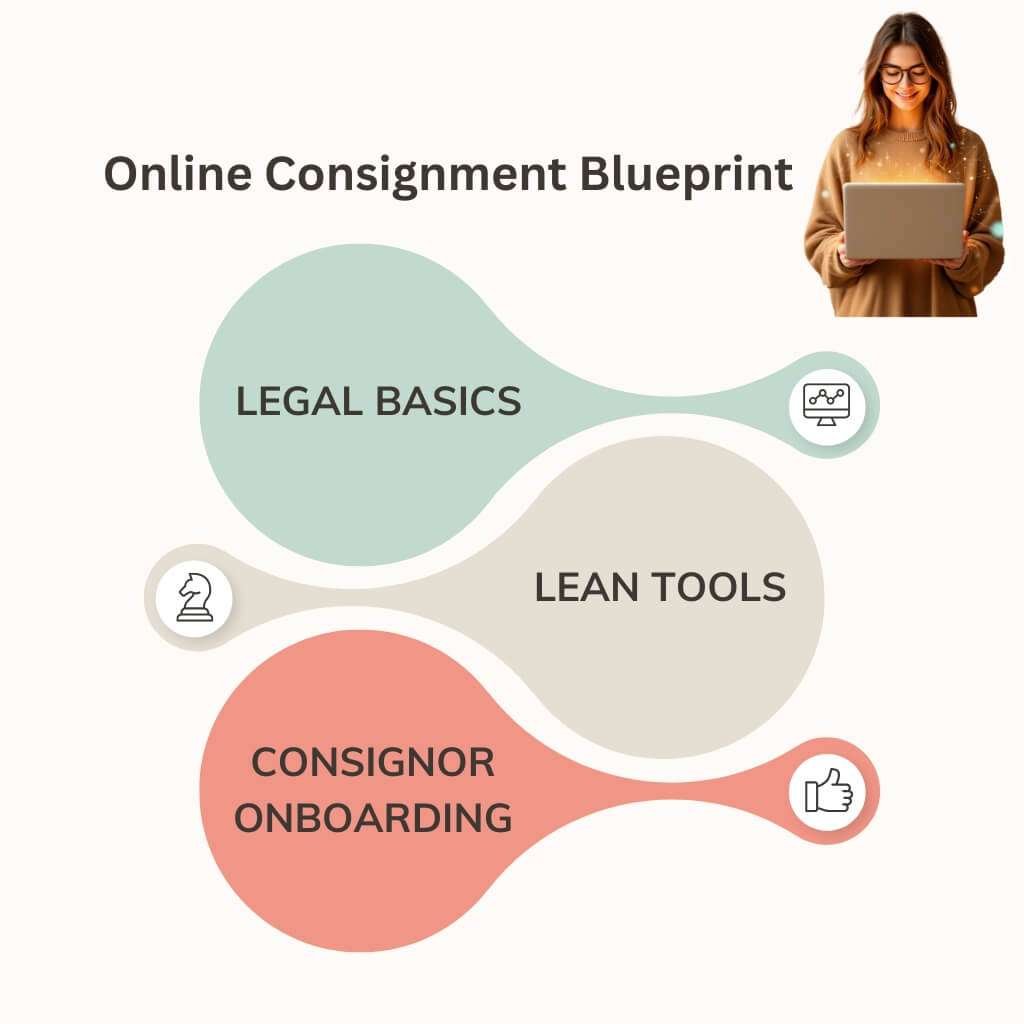
Each part looks heavy on its own. Many first-time owners get stuck because they don’t see the full path. So, let’s introduce the easy steps at a bird’s eye view:
Action Plan for Opening an Online Consignment Store
| Phase | What to Do |
| Validate & Plan | Pick a niche (fashion, sneakers, kids’ wear, furniture). |
| Legal Setup | Register as LLC, sole prop, or company. Get tax IDs and permits. |
| Platform & Tools | Choose Shopify or WooCommerce for your site. Install consignment software. |
| Source Inventory | Find consignors online or locally. Accept only items that fit your niche. |
| Price & List | Study sales on resale sites. Set a fair commission split (often 40–60%). |
| Shipping & Ops | Pick carriers by size/zone. USPS raised rates Jan 2025 (+3.2% Priority Mail, +3.9% Ground). |
| Launch & Market | Soft launch to a small group. Fix issues. Use TikTok/Instagram for reach. |
| Measure & Adjust | Track sell-through, margin and consignor retention. |
Craft a Solid Consignment Business Framework
Choose the business structure that fits your scale and risk. Separate all finances from day one.
Write contracts that cover money, risk and returns. Budget for legal, banking and software costs. Match your niche to your preference and skills.
This framework builds the foundation for a safe and profitable consignment shop.
How do you pick the right business model?
If you want a fast setup, you can start as a sole proprietorship.
If you have a partner, you can form a partnership. Use LLP if you want liability protection. Use LP if one partner manages and others invest.
If you plan to handle high-value items or scale fast, set up an LLC.
Yet, to get a total idea, you can enter our management category, where you find everything about this. (Types of Business Structure in Entrepreneurship)
Why is separating personal and business finances critical from the start?
A business account keeps sales and expenses clean. You see your profit clearly.
It lowers audit risk and makes taxes simple.
The IRS warns that mixing accounts creates errors and penalties.
What should you include in contracts with consignors to avoid disputes?
Write clear agreements for every consignor. Include:
1 . Item details with photos and condition.
2 . Commission rate and service fees.
3 . Pricing rules and markdown schedules.
4 . Exact payout method and timing.
5 . Who covers loss, theft, or counterfeit items?
6 . Return terms for buyers.
7 . Rules for unsold goods (return, donate, or dispose).
8 . Legal jurisdiction if disputes happen.
Cost considerations
Legal setup: $100–$1,000 depending on your state and filing method.
Business licenses and permits: required by most cities and states.
Banking and accounting tools: $20–$50/month for cloud bookkeeping or invoicing.
Authentication fees: extra if you sell luxury goods.
Get the exact types of consignment businesses by skill level
Creative skills → Fashion, jewelry, handmade crafts. You use photos, styling and storytelling to make items sell.
Analytical skills → Luxury watches, tech gadgets, collectibles. You study market data, grade items and set fair but profitable prices.
Organizational skills → Furniture, home goods. You manage pickups, storage and bulky shipping efficiently.
Digital/marketing skills → Niche categories like sneakers or vintage. You ride hype cycles, use short videos and promote drops on social media.
Modish Inventory Sourcing & Quality Control
Inventory decides if your shop lives or stalls. You need consignors you can trust and items that move fast. Good storage, clear intake rules and strong photos protect both sales and reputation.
Where can you find reliable consignors and steady inventory?
You cannot run a shop without a steady supply, so your first step is to reach the right people.
Start with warm networks because past buyers, stylists and boutique owners already trust you.
Then move to online groups such as Facebook, Nextdoor and niche subreddits since they attract people with items to sell.
Also, connect with estate sale managers and professional organizers because they handle bulk goods and can send you recurring stock.
At the same time, add a “Become a Consignor” page to your website so strangers know how to join.
Finally, test your intake by cross-listing items on Poshmark, Depop, Vinted, or eBay, since each marketplace brings a different buyer group.
How do you decide which items to accept and which to reject?
Not every item should enter your store, so you must set clear intake rules.
Accept pieces that have sold quickly in your niche during the last 90 days, because fast sell-through protects cash flow.
For premium goods, check serials, receipts and build quality, since authenticity is the main trust factor for buyers.
Reject items with odor, stains, or damage, because these create returns and bad reviews.
Also, be aware that some brands are restricted on major marketplaces, so never take what you cannot legally list.
To save time, demand photos before approval so you can filter weak items early.
And remember, buyers judge with their eyes first, so professional images directly raise sales.
Should you mix your own stock with consignment items?
Yes, but only when it adds value. Mixing works if you add owned stock for basics or accessories because these items raise the average cart value.
However, always track owned and consigned stock separately, so consignor money never mixes with your own.
For example, use separate SKUs and payout ledgers for each source of inventory.
Instead of buying too early, test demand with consignor items first, then add owned units later to fill proven gaps.
How much space do you really need for storage?
Space depends on what you sell, so calculate by item size and days-to-sell.
If you sell fashion or small goods, a home room with racks and bins is enough.
However, bulky items such as furniture need dedicated bays and wide aisles.
Therefore, if your home setup cannot handle volume, upgrade to a 5×10 or 10×10 unit.
U.S. rates average $55–$170 for 5×5–5×10 units, while 10×10 units run $150–$250+ this year.
Larger or climate-controlled spaces cost more, so choose only what matches your sell-through speed.
Cost considerations
Every step adds cost, so plan it now:
Storage: Home is free, small unit costs $50–$150/month and warehouses start at $500+.
Photography & prep: A starter kit costs $100–$500 and good visuals cut returns because buyers trust what they see.
Staff or helpers: Pay $15–$20/hour for intake, steaming, photography, or listings, so you can scale without burnout.
Authentication: Charge fees only for high-risk goods. And state this clearly in consignor terms, because hidden fees break trust.
Skill match: If you have design/photography skills, product presentation becomes your edge
If you know design or photography, use it, because presentation sells.
Take clean shots with consistent light and neutral backdrops, so your catalog looks uniform.
Add detail shots of stitching, tags, or logos, because small details prove authenticity.
Also, use scale context (model photos or in-room shots), since buyers want to picture the item in real use.
Recent UX studies confirm that strong images increase confidence and reduce returns, so this is your low-cost advantage.
Case study: Vestiaire Collective
Vestiaire Collective runs one of the largest global consignment marketplaces.
Sellers ship items to a hub and experts first authenticate them.
Then, a quality control team checks the condition and measurements. If anything changes from the listing, buyers receive a full Quality Control Report.
This year, they employ over 140 specialists across hubs worldwide, so trust stays high at scale.
This two-step system—authentication first, QC second—is what smaller shops can copy to protect their reputation.
Build Your Digital Storefront for Trust and Scale
Your store must look clear, feel safe and run fast. Pick the right platform. Add the right software. Set prices that move stock and protect margin. Show trust at first glance. Then remove doubt at checkout.
Which platform is better for consignment?
Shopify works well if you want an all-in-one setup and app store speed. Plans start near $29/month (Basic, billed annually).
You also pay card fees. Third-party gateways add extra fees on some plans. Shopify+1
WooCommerce fits if you want control and lower fixed costs over time. You pay for hosting, themes and extensions.
WooCommerce notes that the total cost depends on your stack; hosting partners range from entry to enterprise tiers. WooCommerce+1
Niche marketplaces (eBay, Poshmark, Vinted, Depop) give instant traffic. You pay higher selling fees and follow their rules.
Use them to test demand while you build your site.
Pick this way:
You want speed and less setup work → Shopify.
You want deep control and to tune costs → WooCommerce.
You need demand data before a full build → Marketplaces to start, then your site.
What features should consignment software have?
You need software that handles consignment workflows. Look for:
Consignor portal (items, status, payouts).
Payouts (bulk ACH, schedule control, reports).
Inventory & barcode for one-off SKUs.
Split rules for commission and fees.
Reports (item aging, sell-through, consignor statements).
eCommerce sync if you sell on your site and marketplaces.
Tools like SimpleConsign document bulk payouts, consignor access and reports.
Ricochet publishes one price tier and includes consignor/vendor portals and POS.
ConsignCloud lists POS, consignor management, inventory and pricing suggestions; public listings show pricing starting near the low hundreds per month.
Do you need it on day one?
If you will manage more than a handful of consignors, yes. Manual sheets cause payout errors and disputes.
Use software once you cross 50–100 active SKUs or more than 10 consignors. (Vendor docs and 2025 buyer guides show payouts and portals as the main value.)
How do you set fair prices while still making a profit?
Price from comps on your target channels. Adjust for condition and size.
Use a markdown schedule (for example, 10–15% every 14–21 days) until the item sells.
Bake in platform fees, payment fees and shipping so the margin stays intact.
If you sell on your site, estimate card processing at about 2.9% + $0.30 on Stripe in the U.S. (custom rates vary by volume).
PayPal business rates are similar but vary by method and region. Always check the current fee page.
For luxury goods, use a valuation aid and require proof (receipts, serials). Instant price tools (like Rebag’s Clair) help sellers decide and set expectations. You can observe this flow for intake transparency.
What makes a digital shop look trustworthy to first-time visitors?
Show clear policies on returns, shipping and authenticity above the fold or one click away. Use HTTPS, full contact details and real reviews.
Use high-quality images, specs, clarity on defects and predictable navigation.
During checkout, display recognized payment icons and short security copy.
If you sell cross-border, add duty/tax clarity and localized payments to avoid drop-offs.
Quick trust checklist:
Policy and contact links are visible on every page.
Product pages with multiple angles and zoom.
Returns and authenticity pages that state steps and time windows.
Known payment methods and seals near the pay button.
Expert datapoint (UX)
Baymard’s recent product-page benchmarking shows only ~49% of leading sites reach “decent” or “good” product page UX.
Many lose sales on basics like image quality, specs and policy clarity. Fixing these gaps pays fast. Baymard Institute
Case study (trust + pricing clarity): Rebag
What they show: an instant pricing tool called Clair that recognizes bags and provides resale values, so sellers see a fair offer in minutes. That sets expectations, reduces haggling and improves intake quality.
Why it is essential to you: Publish clear pricing logic and intake steps on your site. Add a simple estimator for common brands or categories. Explain how you price and how markdowns work. This lowers friction and increases completed consignments.
Company site: https://www.rebag.com (Clair pages and reports detail the method and brands covered). Rebag+1
Marketing & Growth in a Competitive Online Market Beginning
Getting sales is not just about ads. You need consignors to send stock and buyers to trust your shop. Pick the right channels, focus on service and grow only when numbers back it.
How do you attract consignors and buyers when you’re just starting out?
Start with direct outreach. Ask stylists, boutique owners and past customers because they often hold unsold goods.
List a “Become a Consignor” page on your site so strangers can join easily.
For buyers, run small tests on platforms like Poshmark or eBay while you set up your own shop.
Offer first consignors a better commission rate for 60–90 days, so they feel rewarded for early trust.
Buyers join when they see unique finds, not generic stock. Curate items tightly and refresh often.
What marketing channels work best for online consignment shops?
Instagram and TikTok drive visual traffic because fashion, vintage and collectibles need strong images.
Pinterest works for furniture and home goods, as it leads to higher-intent traffic.
Email campaigns keep both buyers and consignors active. Use low-cost tools like MailerLite or Brevo ($10–$50/month).
SEO content builds long-term demand. Post guides on resale trends, brand care tips and style stories.
LinkedIn helps with B2B consignors—boutiques, liquidation firms, or estate planners.
Combine channels: show items on TikTok, retarget on Instagram and close sales with email.
Why does customer service matter more than ads in long-term growth?
Ads bring clicks, but service brings trust.
If consignors get late payouts, they leave. If buyers get poor packaging or wrong info, they never return.
Good service lowers churn, which cuts marketing costs. Offer fast replies, clear return windows and simple payout terms. Collect reviews and publish them, because social proof replaces heavy ad spend.
When is the right time to expand into new categories or scale globally?
Expand only when three signals align:
Sell-through is steady (e.g., 70% of intake sells within 60 days).
Consignor pipeline stays full without extra ad spend.
Profit covers new staff and shipping costs.
For global scale, check shipping rates and customs rules first. UPS and FedEx raised fees recently and USPS holiday surcharges run from October 2025 to January 2026.
Start global with small, high-value goods (luxury, sneakers, watches). These ship more easily and absorb fees better than bulky stock.
Cost considerations
Social ads: $100–$500/month for early testing.
Email tools: $10–$50/month.
Influencer partnerships: commission-based or flat fee per post. Users believe influencers advice than ads.
Scaling: staff at $15–$25/hour; shipping integrations at $50–$200/month. These costs rise as sales rise, so always track ad spend vs. net margin.
Skill match
Strong writing → Use email flows and product descriptions to convert readers.
Video/storytelling → TikTok and Instagram Reels to spark discovery.
Networking → LinkedIn and B2B groups to source consignors.
Play to your strengths first. Hire for gaps later.
Expert quote
“In resale, growth now depends less on discount ads and more on repeat consignors and loyal buyers. That comes only from service and clear policies.” — James Reinhart, CEO of ThredUp, 2025 Resale Report.
Why Consignment Shop Works Online Today
It is a business where owners give you items to sell. You list them online, handle payments and ship.
After each sale, you keep a set fee or percentage and pay the owner the rest. To make an online shop stronger, many owners appoint an online business coach.
Still, this model fits many niches—fashion, sneakers, furniture, electronics and collectibles. Online platforms and software replace physical racks and storage.
Why do buyers and sellers choose consignment?
Buyers: They get quality goods at lower prices. They see items verified and curated. They shop secondhand because it saves money and reduces waste.
Sellers (consignors): They avoid the stress of listing, shipping and dealing with buyers. They get access to wider audiences and professional presentations.
Operators (you): You don’t carry big upfront inventory costs. You reduce risk by selling on commission.
Trends making it profitable now:
Rising prices for new products push shoppers toward resale.
AI search and image recognition improve item discovery.
Authentication and buyer protections increase trust.
Social platforms like TikTok and Instagram fuel resale trends.
Cost note: digital vs. physical
Running online saves you rent and in-store staff. But digital costs are real:
E-commerce platforms: Shopify ($29–$299/month), WooCommerce ($20–$50/month).
Consignment software: $30–$150/month for tracking consignors, payouts and inventory.
Marketing: $100–$500/month for ads, plus $10–$50 for email tools.
Shipping: USPS raised rates Jan 19, 2025 (Priority Mail +3.2%, Ground Advantage +3.9%) . UPS and FedEx also updated their fees in January 2025. Holiday surcharges apply Oct 2025–Jan 2026.
These digital costs replace rent and utilities. You must plan for them to protect margins.
Conclusion
Every market rewards those who act with clarity. Consignment online is no longer side work—it is a real company model. The winners will be those who adapt fast, show proof and keep trust visible. If you move now, you do not just follow demand. You set the standard others copy.
FAQ
Do I need a resale or seller’s permit for an online consignment shop?
Yes, many states in the U.S. require a resale permit for collecting and reporting sales tax. Always check your state’s revenue department.
Can I sell internationally from day one?
You can, but customs duties and return shipping often make it complex. Most shops test their process locally first, then expand abroad with lightweight or high-value goods.
How do I handle counterfeit risks in categories like sneakers or luxury electronics?
Use third-party authentication partners or charge consignors an authentication fee. This protects your reputation and reduces disputes.
Should I register my shop as a trademark?
If you plan to build a long-term brand, yes. Trademarking your shop name and logo protects you from copycats and builds trust with consignors.
Can I run a consignment shop fully on mobile?
Yes, many owners now manage listings, payouts and chats on mobile apps. However, inventory intake and accounting are still easier to track on desktop software.
How do I handle seasonal spikes in consignment?
Plan special intake windows before holidays or school seasons. Many shops see higher consignor interest during spring cleaning and year-end.
Do online consignment shops need professional photography for every item?
Not always. For low-value items, clean DIY photos are enough. For high-value items, professional shots add credibility and reduce buyer hesitation.
Can I donate unsold consignment items to charity?
Yes, but you must state this in the contract. Some shops partner with charities to move unsold stock, which also gives consignors a tax-deductible option.
How do shipping zones affect online consignment sales?
Shipping rates vary by distance. Many shops set regional limits or higher shipping fees for far zones to keep profit margins stable.
Can consignment be combined with subscription models?
Yes, some shops now offer subscription boxes with curated consignment goods. This creates steady demand and keeps consignors happy with regular exposure.

Aliza Khatun is a Digital Marketing Professional and the founder of DigiGenHub. She has helped various businesses grow their online presence through real-world experience in marketing, branding, traffic growth, and business strategy.
Through DigiGenHub, she shows how to build and grow a business from the ground up using Website Setup, SEO, Branding, Paid Promotion, and smart digital tools.
She also highlights how AI can be used to its full potential to make content creation, automation, marketing, and business growth faster and smarter.
She believes that the right knowledge, modern technology, and the right tools can help any individual or business build a stronger online presence.