
Ads keep getting more expensive. Social media changes fast and posts disappear in hours. Many businesses feel stuck. That’s why more people now ask: how to start a newsletter business that gives steady growth and real income.
Yet, email is different. It stays personal. It still brings a high return of about 36 dollars for every 1 dollar spent.
I saw this with a client who owned a handmade skincare shop online.
She depended only on ads, but costs went up and sales went down.
We built her a simple newsletter with weekly skincare tips and early product offers.
In just three months, 21% of her sales came from her email list.
She finally had control instead of relying only on ads.
How to Start a Newsletter Business
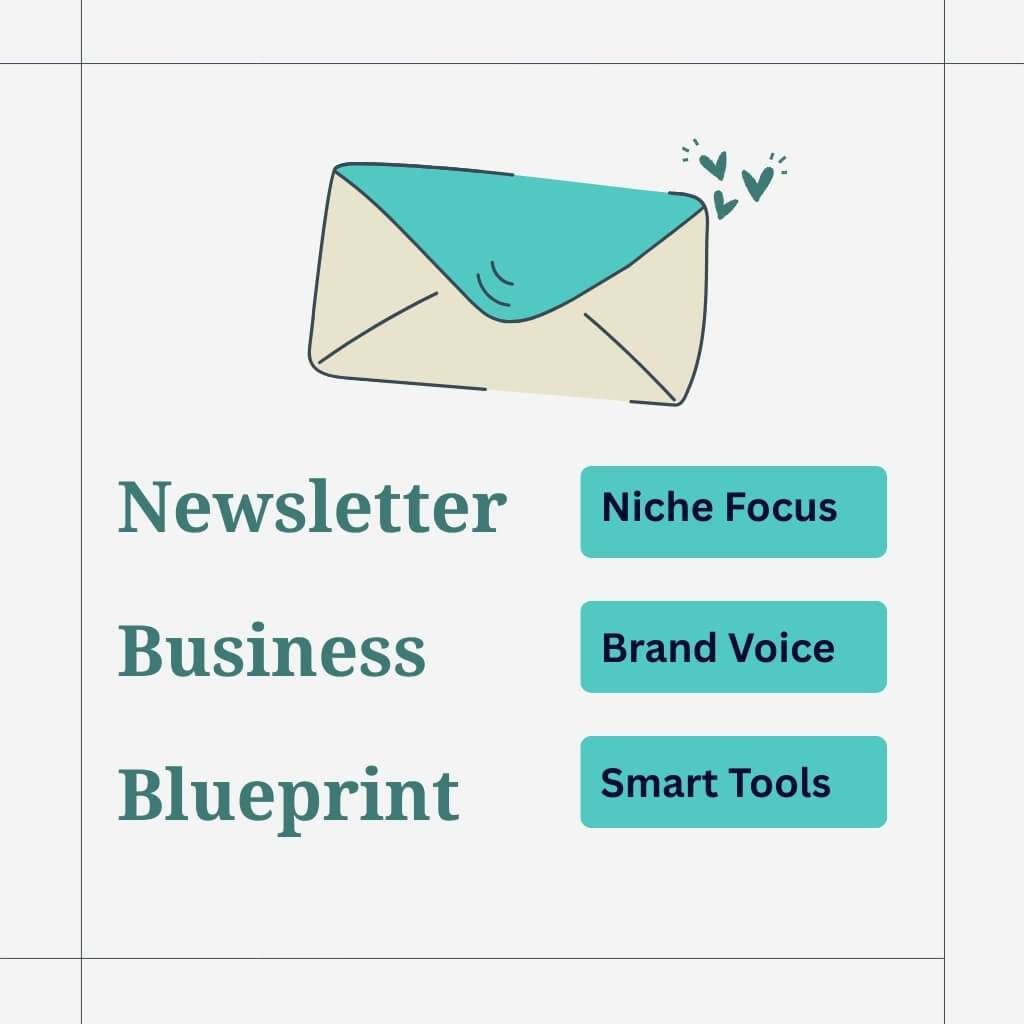
Pick a niche you love, craft a strong brand voice, and use just the tools you need to begin.
The way forward is simple. Choose a niche that people care about and you enjoy. Build a clear brand voice that stands out in the inbox. Use only the tools you need at first.
Grow through SEO, guest swaps and referrals instead of chasing social media trends.
Treat readers as a community, not just numbers. Then earn through ads, affiliates, paid content, or digital products.
Even if you only read this intro, you already see most of the path. The rest of this guide shows each step in detail, so you can move from idea to income with confidence.
How Do You Pick a Niche That Works?
Write about what you love. But test if others care. You need proof outside your head
Do this today
Check Google Trends for your core topic. Look for a steady 12–24-month line or a clear rise. Use “Trending Now” to see live spikes and to compare angles. Export the chart. Save it. blog.google
Read Reddit threads in your topic. Note pain points that repeat. Sort by “Top” for the last year. (You will turn these into issue ideas.)
Scan sponsor marketplaces and “what’s selling” posts to see if brands pay for this topic.
Still, trend data shows interest. Forums show problems. Sponsor data shows money. That mix keeps you honest.
Market demand without interest will burn you out
Chasing volume alone hurts. You need durable energy. Pick a topic you can write about every week for a year.
Use a simple litmus test
A . Could you write 50 issue ideas in 60 minutes?
B . Could you explain your topic to a 12-year-old?
C . Could you stay curious when the trend cools?
If you say “no” twice, pick a different angle inside the same space. You protect your stamina. You protect your readers.
Mix the two: your interest + reader demand + clear income path
Choosing a niche means deciding if your newsletter grows or stalls. Passion alone won’t pay bills. Market demand without interest will drain you.
The right niche sits at the center of three things: your curiosity, audience demand and a clear way to make money. Let’s see how to find that balance and test it fast.
Use a 3-point fit. Score each from 1–5. Add them up.
Interest (you): skills, access, curiosity.
Demand (them): Trends line, forum heat, search interest.
Income path (market): ads, affiliates, paid tier, services.
A 12–15 score says go.
A 9–11 score says test a sub-niche first.
Under 9 says park it.
Set early money paths
1 . If sponsors fit, note likely CPMs in your space from sponsor networks’ public ranges.
2 . If affiliates fit, list two programs with transparent rates and fast payouts.
3 . If paid fits, outline one perk readers will pay for monthly.
Test your idea. Look at search data, forums and existing newsletters
Run a quick, clean validation in one week.
Step 1 — Search signals (don’t overtrust single numbers)
Compare two search tools plus Google Trends. Pros call search volume “imprecise” by nature. Treat it as a direction, not truth. Ahrefs says, “There’s NO SUCH THING as an accurate search volume.” Use ranges, not absolutes. Ahrefs+1
Step 2 — Audience heat
Pull the top 25 Reddit threads for your niche. Group repeated pains.
Turn the biggest pains into 10 issue headlines.
Draft one sample issue. Share it with 10 target readers. Ask two things: “What helped?” “What was fluff?”
Step 3 — Market scan
List the top 10 newsletters in your topic. Note their cadence, sections and offer.
Mark overlap. Aim to fill a gap, not clone.
Step 4 — Micro-landing + email waitlist
Write a one-page promise with a weekly send day.
Add two sample blurbs.
Drive 100–200 visits from a niche subreddit post, one guest tweet/thread, or a related Discord.
Aim for 15–25% signup on cold traffic. If you miss it, adjust the promise or angle and retry.
Spot gaps: where can you offer something readers can’t get elsewhere?
Avoid crowded lanes. Find precise angles where money and pain meet.
How to find a gap
Format gap: no one sends a 3-minute daily “what to do now” note in this niche.
Segment gap: many serve pros; few serve newcomers, Or serve UK readers in a US-heavy topic.
Data gap: many opine; few show numbers or comparisons.
Timing gap: everyone ships Friday; you ship Monday before work.
Use outside signals to sanity-check saturation. Example: Vogue Business reports fashion on Substack feels crowded.
Creators now prize quality and engaged audiences over raw size. That tells you to pick a tighter angle inside fashion if you go there. Vogue Business
Also, watch the publisher’s moves. The Verge added new editorial newsletters and daily digests in July 2025 to deepen direct ties with readers.
Big outlets do this when they see clear demand. It hints at viable spaces around tech sub-topics and daily habit loops. The Verge
Fast scoring worksheet (copy this)
1 . Topic: ________
2 . Your edge (1–5): ________
3 . Demand signals (1–5): Trends line + forum heat + sponsor appetite. ________
4 . Income clarity (1–5): ads/affiliate/paid fit within 90 days. ________
5 . Total: ________ (12–15 go, 9–11 refine, <9 park)
Tie-breakers:
Can you name one sentence promise?
Can you name one clear reader outcome each week?
Can you name one sponsor type that would pay to reach these readers?
Craft a Brand That People Notice in Their Inboxes
Your brand is the first thing readers notice in their inbox. It’s not just a name or a logo. It’s how you sound, what you promise and how consistent you stay. A clear brand builds trust before a reader even opens your email.
Your name and style are significant. Keep it simple but memorable.
Your brand name is your identity. Avoid long, confusing names. Pick a name that hints at what you deliver.
Style includes your visuals (logo, color, layout) and how you write. Use a consistent palette. Use 1–2 fonts max. Don’t change styles wildly.
When readers see your email, they should think, “That’s from X.” That familiarity builds trust.
Voice counts more than fancy design
A pretty email with a bland voice fails. Voice connects.
Decide your tone:
A . Friendly & casual
B . Informal & witty
C . Direct & serious
D . Narrative & story-driven
Write like you talk (but better). Drop fluff. Use “you” and “I/we. Be consistent in every issue. Your voice is your signature.
State your promise clearly: “This newsletter gives ___ to ___.”
Readers must know what they’ll get. One sentence can set that expectation.
Examples:
A . “This newsletter gives daily growth tips to indie founders.”
B . “This newsletter gives smart tech news to busy professionals.”
C . “This newsletter gives bite-size health hacks to new parents.”
That promise guides every issue. It also helps you stay focused.
Even small details matter: sender name, subject lines, tone
These bits shape trust. They’re powerful.
Sender name
Pick a consistent “from” name. Use your name, brand name, or a combo. Don’t switch among many.
Subject lines
Your subject line is your headline.
It wins or loses. Subject lines with 30–50 characters perform better in many niches. ([Forge 2025 study] Use curiosity, relevance, or clarity. Avoid spammy terms. Test two options (A/B).
Tone in email body
Mirrors your voice. Should match subject line style. Should avoid sudden shifts in mood.
Preview text
This is the snippet readers see next to the subject. Use it to support the subject, not repeat it.
Recent insights & proof
A branding agency argues that authenticity in voice matters more than visual polish for engagement. (Burkholder Agency, 2025) Burkholder Agency
EmailToolTester (2025) lists originality, consistency, brevity and testing as top practices for subject lines. EmailTooltester.com
Set Up the Tools Without Drowning in Options
There are dozens of platforms, apps and features shouting for your attention. You don’t need them all. You just need the basics to start sending, growing and tracking
Pick an email platform that matches your goals
You don’t need all the features day one. Focus on what lets you send reliably, manage your list and scale when ready.
Checklist for your ideal first tool:
Good deliverability (emails land in the inbox, not spam).
Basic automation (welcome emails, drip).
Easy sign-up form and landing page.
Reasonable pricing for your audience size.
Clean UI (you don’t want tool friction).
Top picks:
MailerLite – balances ease + automation for small to mid lists. MailerStack+1
Beehiiv – built with monetization and list growth in mind. beehiiv.com
ConvertKit – creator-friendly, good mix of features + simplicity. Think Clarify – Explore The New You
Pick one. Use it. Swap later if needed.
Use what gets you going fast. Add more tools later.
You don’t need everything at once. Get basic tools working. Then layer more.
Start with:
List storage & email sends.
Signup page & popups.
Welcome sequence.
Basic analytics (opens, clicks, unsubscribes).
Later, you can add:
A/B testing.
Deep segmentation.
Advanced automation workflows.
Heat maps, behavior triggers.
This way, you avoid paralysis by options.
Build a simple sign-up page. Answer one thing: Why should I subscribe?
Your signup page is the first conversion moment.
It needs these elements:
1 . Headline + promise — what readers get.
2 . Short benefits bullets — 3–5 things they gain.
3 . Social proof or teaser — “Trusted by 3,000 readers,” or “Sample issue inside.”
4 . Clear call to action — “Get the newsletter.”
5 . Minimal form fields — name + email is enough early on.
Still, pages that load fast and strip distractions convert better. Use a bare bones, mobile-first layout.
Drive traffic from forums, Twitter threads and guest posts. Test versions (A/B) of the headline or benefits. Use the one that gets higher opt-in.
Automate basics: welcome emails, simple segments, basic tracking
Automation saves you time. Get small systems running from day one.
Welcome email
Send immediately after signup.
Thank them.
Remind them of what they’ll get and when.
Ask a soft question to get replies (for connection).
Simple segments
E.g., “clicked link A” vs. “didn’t click.”
Tag new subs vs older ones.
Use segments to send relevant content later.
Basic tracking
Open rate, click rate, unsubscribe rate.
Trends matter more than isolated numbers.
Track weekly and monthly to spot shifts early.
Also, watch deliverability. Authenticate your domain (SPF, DKIM) to prove you’re not spam. Good platforms help with that.
Expert Quote
From a newsletter founder:
“I built my first list with just a sign-up form and welcome email. The fancy tools came after I proved there was demand.” — a creator in 2025 (anonymous via newsletter growth forum)
How Do You Grow Without Living on Social Media?
Social media looks tempting, but it’s not enough to grow a newsletter.
Algorithms shift. Posts vanish fast.
To build steady growth, you need channels that keep working even when social media slows down.
Likes and shares help, but they’re not enough
Social posts fade fast. Platforms change rules. You can’t build a real business on that alone.
You need growth channels you control. Channels that keep pulling new readers week after week.
Better routes: SEO, guest spots, newsletter swaps, referral systems
SEO (search traffic)
Write evergreen content tied to your newsletter themes. Optimize that content. Link from articles to your newsletter signup. Over time, search sends visitors.
Many medium-sized newsletter creators report 30–50% of new subs come from this after 12 months.
Guest spots
Write for blogs, media sites, or newsletters in your niche.At the bottom, link to your email. You tap into their audience. This method works especially when the host allows a link or author bio in your newsletter.
Newsletter swaps & partnerships
Swap newsletter plugs with creators in adjacent niches. They mention you; you mention them. Pick partners with a similar subscriber size and audience interest. This is one of the fastest organic growth hacks.
Referral systems
Offer your readers reasons to refer.
Examples:
“Give 3 friends a link; get a bonus issue.”
“Referral leaderboard — top 5 monthly get a reward.”
“Give 20 referrals, get a free month of premium content.”
When done well, referrals drive 20%+ of new subs in some newsletters.
Turn your content into a magnet. Let it pull in new people week by week
Don’t just promote your signup. Promote your content itself. Give parts of your newsletter as public articles, blog posts, or social threads. Use those to funnel people into your list.
Example:
Publish a free “greatest hits” post.
Link readers to “subscribe for more like this.”
Turn long editions into several mini blog posts.
This method gives you multiple entry points. It builds SEO strength.
It keeps your brand visible beyond email.
Paid ads can help later, but only if your base is solid
Ads amplify what works. Don’t throw money at untested hooks.
Use ads once you know:
What promise gets clicks?
What headline gets opt-ins?
What referral incentive works?
Launch one small campaign. Monitor cost per subscriber (CPS). If CPS is under your lifetime value (LTV), invest more. If not, refine your creative or promise.
Many top newsletter creators report that paid acquisition is 2–3× more expensive than organic routes early on. Use it for scaling, not initial growth.
Keep readers active. A dead list is worse than a small list
A large list that doesn’t read gives no value. Deliver value every time. Remind people you’re alive.
Tactics:
Polls and feedback requests to re-engage cold readers.
“We miss you” campaigns to those who haven’t opened in 4–8 weeks.
Segment off inactive folks to avoid hurting deliverability.
Of course, engaged readers share, react, reply and stay.
Expert View
“Social media gives attention. But real growth comes from content people search for and share.” — creator in 2025 at a newsletter summit
Turn Subscribers Into a Real Community
A newsletter grows when readers feel part of it.
Not just silent subscribers, but active voices.
Community makes them stay longer, engage deeper and share faster.
Readers stay when they feel seen
People don’t stick around to be a number. They stay when you show you hear them. When you offer space for their voice.
Make your newsletter reactive, not just broadcast. Let it be a two-way street.
Ask for feedback. Run short polls. Feature reader stories
Feedback & polls
Drop one simple question: “What’s your top problem this week?”
Let readers submit answers.
Use that to craft your next issue.
Feature stories
Pick one reader every issue.
Share their experience or challenge.
Let them tell part of the content.
These moves turn your newsletter into a living thing, with voices inside it.
Create a sense of belonging. Make readers feel like insiders, not just numbers
Use insider language. Speak as if they belong.
Examples:
“Hey Fam, here’s what we’re doing next.”
“Only for you — this bonus link.”
“Readers, you asked — here’s answer.”
Yet, keep early access or behind-the-scenes shares. Invite them to private groups, chat rooms, or “first look” content.
When people think “I’m part of it,” they stay, they reply, they bring others.
Even a few hundred true fans can spread the word faster than ads
You don’t need millions. You need loyal ones. Those fans reply, share and comment. They bring others. They become ambassadors.
A small group of 500 who love your newsletter can drive 10× growth over time. Many newsletters cite referral engines as their growth engine.
Expert View
“When a reader feels like a teammate—not a spectator—they stay for years, not weeks.” — creator at a 2025 newsletter meetup
Case study: CurationsLA’s community model
CurationsLA is a hyperlocal newsletter in Los Angeles. They call contributors “Curators.” Readers submit local stories, restaurant openings and events. Their inbox is filled with neighbor voices, not just one author. That gives belonging, trust and a built-in growth engine. Website: la.curations.cc Wikipedia
How Do You Turn Readers Into Income?
A newsletter can’t live on attention alone. At some point, readers must turn into income. Ads are one option, but not the only one. The smartest newsletters layer revenue streams so they stay steady even when one dries up.
Ads and sponsors are only one path
Ads work when you have steady opens. Price on opens × CPM.
Most publishers charge $15–$30 CPM for a main placement. Niche lists can charge more.
Add second slots or category ads when demand rises.
Sell packages (monthly or quarterly) to smooth cash flow.
Track ad CTR and reply rate to prove value.
Quick math (example):
45,000 opens × $25 CPM ≈ $1,125 per send. Two sends/week ≈ $9,000/month.
You can add affiliate links, paid tiers, or digital products
Affiliates. Use merchants with clear rates and fast payouts. Amazon varies by category: many sit between 1%–10%. Pick categories that fit your readers. Amazon Associates
Watch click-to-purchase and AOV. Improve link placement. Test one offer at a time.
Paid tiers/memberships.
Make paid readers feel closer. Offer extras: deep dives, office hours, tools.
Platforms keep growing here.
Patreon says creators have received $10B+ in lifetime payments and run 25M+ paid memberships. That shows real demand for recurring access. Axios
Ghost 6.0 also reported that publishers have earned $100M+ through its platform. It now adds analytics to find what paid members value most. The Verge
Digital products.
Sell guides, templates, or small courses. Tie each product to a problem your readers ask about. Price simply. Offer a refund window.
Use a launch → feedback → evergreen cycle.
Don’t rush. Sell too soon and readers leave. Wait too long and you miss chances
Time for the first offer. Use engagement signals, not list size alone.
Green lights to sell:
8–12 weeks of steady opens and clicks.
Replies on the same pain point.
Readers are asking for “more” of a topic.
Look at what fits: courses, private groups, coaching, or even physical goods
Match the offer to the reader’s outcome. Pick one format. Ship it. Then add more.
Courses/workshops: short, practical, fixed dates.
Private groups: gated forum or Discord; weekly prompts; AMAs.
Coaching/consults: limited slots; clear scope.
Physical goods: books, prints, kits; presell to gauge demand.
Price on value delivered, not hours spent. Set a simple guarantee. Collect 2–3 proof notes (testimonials) before scaling.
The goal: mix income streams so you’re never stuck on one source
Don’t rely on one line. Build a stack:
1 . Ads/Sponsors for recurring cash.
2 . Affiliates for incremental dollars on buyers.
3 . Paid tier for recurring revenue and stronger ties.
4 . Products/services for margin and authority.
Review the mix every quarter. Shift weight toward what pays with the least churn.
Benchmarks you can use today
CPM: $15–$30 per 1,000 opens for main placements; higher for tight niches.
Affiliate rates: many Amazon categories sit 1%–10%; some categories pay more elsewhere. Amazon Associates
Email revenue metrics: e-commerce teams track Revenue per Recipient (RPR); Klaviyo publishes live industry RPR and placed-order rates for 2025. Use these to sanity-check your own numbers. Klaviyo
Paid growth sanity check: measure payback period and ROAS before scaling ads to acquire subs. growmynewsletter.com
Practical pricing steps (copy this)
Set a rate card: Hero slot CPM, secondary slot CPM, add-ons (dedicated send, job slot). Start with the mid-market CPM and adjust every 90 days.
Publish a media kit: audience, opens, CTR, examples.
Track a simple LTV: sponsor revenue + affiliate + paid over 6–12 months per subscriber.
Use small tests for products: presell 20 seats, deliver, refine, then reopen.
Expert Quote
“One of the most effective ways to retain paying subscribers is a monthly, behind-the-scenes note that shows your work and plan.” — Dan Oshinsky, Inbox Collective (Aug 6, 2025). inboxcollective.com
Why it matters: paid readers stay when they feel close to the work. This fits paid tiers, private groups and high-touch courses.
Why a Newsletter Business Is Profitable Right Now
Social media reach changes without warning.
One week, you go viral. Next week, your posts will reach no one.
Ad costs keep rising on Meta, TikTok and X. Small players can’t keep up.
A newsletter cuts through that noise. You send directly to inboxes, not through an algorithm. Readers see your name again and again. That repeated exposure builds loyalty.
A newsletter means you own your audience
If Facebook, Instagram, or TikTok shut you down, you lose everything. With a newsletter, you own the list. You can move it to any platform. You can contact subscribers whenever you want.
This ownership is why large media firms value email so highly.
Morning Brew started with two students sending daily business news.
Today it reaches over 4 million readers and earns tens of millions yearly 【Axios, 2025】. Its list is not rented. It is an asset.
When you control the list, you can:
A . Sell ad slots.
B . Push your own products.
C . Launch a paid tier.
D . Expand into podcasts or events.
Email gives better trust and better results than ads
Ads interrupt people. Newsletters deliver content people ask for.
That permission makes a huge difference.
Litmus notes: “Email marketing continues to be unmatched when it comes to the ROI it drives”. This trust is why readers spend more time on emails than on random ads.
For solo creators, small shops and big brands — a list is an asset
A solo creator with 20,000 subs can charge $500–$1,000 per ad slot.
A niche B2B newsletter with 5,000 subs can earn even more because the audience is valuable.
A local store can sell to past buyers without paying for new ads.
A bigger brand can run experiments on its list before rolling out global campaigns.
Sponsorships pay well. Industry reports put CPMs at $15–$30 per 1,000 opens.
That means even a small list can earn real money.
Paid newsletters also work. Substack has over 5 million paying subscriptions as of 2025 【Substack Blog, 2025】.
People will pay monthly if the content saves time, teaches skills, or entertains them.
Simple earning estimate:
Scenario A — Sponsorship only
1 . List size: 50,000
2 . Opens: 50,000 × 37% = 18,500
3 . One sponsor slot at $25 CPM = $462 per send
4 . Two sends/week = ~$4,000/month
Scenario B — Sponsorship + Affiliates
1 . List size: 150,000
2 . Opens: 55,500
3 . One sponsor slot = $1,388 per send
4 . Clicks: 150,000 × 37% × 1.36% = 754
5 . If 3% buy $80 items → $1,807 sales
6 . 10% commission = $181 per send
7 . Blend = $1,569 per send → ~$12,500/month (2 sends/week)
These numbers are real, based on 2025 ad CPMs and affiliate data.
What Makes a Newsletter a Real Business?
Sending a few emails is not the same as running a business. Anyone can hit “send” once a week. A business must deliver predictably. It must bring value and income.
If you send random bits, people lose trust. You won’t build momentum. A business invests in consistency, systems and growth. You can’t treat it like a side hobby and expect long-term results.
A true newsletter business has structure
Structure means rules, schedules, formats and roles.
Editorial calendar: you plan topics, send dates and themes.
Standard template + layout: readers learn what to expect.
Roles & processes: writing, editing, design, analytics. Even if you’re alone.
Performance tracking: open rates, click rates, churn, revenue per reader.
Indeed, structure also means you can scale. You avoid chaos. You retain quality. Many top newsletters use fixed “sections” (e.g., tip, tool, story).
That cuts friction and sets reader expectations. Good newsletters mirror magazines: they have formula + flexibility.
It needs a voice, a promise and a way to grow
These three are your business pillars.
Voice
Your tone must feel human. It must reflect you or the brand you represent. Are you funny? Serious? Analytical? Pick your style and stick with it. Readers come back when they feel you in their inbox.
Promise
What will you deliver and when? A promise could be “Weekly growth tips for indie builders.” Or “Daily market summaries before work.” The promise sets the reader’s expectation. Break it often and people unsubscribe.
Way to grow
You must know how new readers come in. You must know how to retain them. That includes referral, SEO, partnerships, paid ads, or guest swaps.
Design growth loops:
A . “Forward to a friend” links
B . Incentives for referrals
C . Collaborations with other newsletters
Your growth system must be built early.
Ask yourself early: Is this just a hobby, or do you want to build something that pays?
This question changes everything. If you treat it as a hobby:
1 . You’ll delay building monetization.
2 . You’ll ignore structure.
3 . You’ll hesitate to charge.
If you decide it’s a business:
1 . You’ll define revenue models early.
2 . You’ll track metrics.
3 . You’ll aim for profitability, not just size.
Decide on your goal early. Write a short mission like: “My newsletter helps beginner founders find their first customers.” When you launch, you measure against that.
Case study: The Ankler
The Ankler (hollywood / entertainment newsletter) is a real business.
They moved from a one-man newsletter to a wider media company.
In 2025, they expanded into trade media for the creator economy.
They make money through subscriptions, branded content and events.
Their newsletter is central — it builds their authority and drives new revenue lines. Wikipedia
Conclusion
A newsletter is not just content. It is equity you build, cash flow you control and goodwill you compound. Each subscriber is not a number but an investor in your future market.
FAQ
Do I need a personal brand or a company name for my newsletter?
Both work. A personal brand feels human and relatable. A company name adds authority. Choose based on how your readers connect best.
How often should a new newsletter be published?
Consistency beats volume. Start weekly. If readers respond well, increase frequency. Keep a rhythm you can maintain long term.
Why is mobile optimization critical for newsletters?
Over 60% of emails are opened on phones. If your design doesn’t fit mobile, readers exit before reading.
Should I launch a paid newsletter from day one?
No. Start free to build trust. Add a paid tier once readers show loyalty and ask for deeper content.
What legal steps protect my newsletter business?
Follow CAN-SPAM and GDPR. Always gain consent, show a clear privacy note and include an easy unsubscribe link.
Which analytics matter most for beginners?
Focus on opens, clicks and unsubscribes. These three numbers show if people read, act, or leave. Don’t drown in extra data early.
Can I run a newsletter without a website?
Yes. Platforms like Substack or Beehiiv let you collect emails and send them directly. A website adds credibility, but isn’t required at launch.
Do podcasts or YouTube collaborations help newsletter growth?
Yes. Guest spots or cross-mentions bring your content to new audiences. Many subscribe after hearing a trusted host recommend their email.
Do seasonal or event-based newsletters perform well?
Yes. Time-sensitive content creates urgency. Holiday offers, yearly insights, or event recaps often earn higher open rates than routine editions.
How is a newsletter different from a blog?
A blog waits for visits. A newsletter is delivered directly to inboxes. It avoids algorithm changes and keeps audience contact in your hands.

Aliza Khatun is a Digital Marketing Professional and the founder of DigiGenHub. She has helped various businesses grow their online presence through real-world experience in marketing, branding, traffic growth, and business strategy.
Through DigiGenHub, she shows how to build and grow a business from the ground up using Website Setup, SEO, Branding, Paid Promotion, and smart digital tools.
She also highlights how AI can be used to its full potential to make content creation, automation, marketing, and business growth faster and smarter.
She believes that the right knowledge, modern technology, and the right tools can help any individual or business build a stronger online presence.