
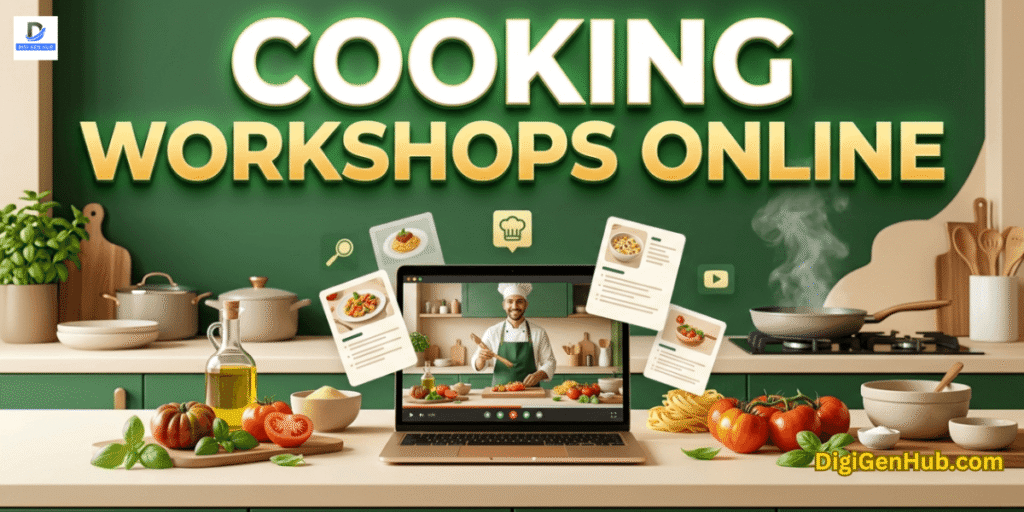
People want simple skills that improve daily life. Cooking is one of them. At the same time, many want to earn from home without a big setup.
Cooking workshops online bring these two needs together. It creates the chance for one person to teach and for many people to learn from anywhere.
Online classes offer huge convenience and flexibility. This lets home cooks create more. Plus, new tech, like AI and live video, sparks learning.
Cooking has become more than a daily task. It is now a skill people actively try to improve.
People love cooking online. It’s super easy, fitting busy lives. Many want guided help, not random videos.
Unlike old classes, online ones bring a personal pace and global reach. This is why the online cooking workshop model offers live learning, results, and a way to earn from home.
What Cooking Workshops Online Look Like
An online cooking workshop is usually a live session where people cook along with an instructor.
It often runs for about 60 to 120 minutes. Before the session, participants receive a recipe and a shopping list. This helps them prepare everything in advance.
During the workshop, the instructor shows each step clearly. Participants follow along in their own kitchens.
They can ask questions, fix mistakes, and adjust in real time. By the end, they complete the dish themselves.
Example:
A session on “Fresh Homemade Pasta” starts with dough preparation. This session moves to shaping and ends with cooking and plating. Everyone finishes with the same result, but with their own hands.
The shift from physical stovetops to digital screens is a permanent transformation of how the world eats, learns, and earns.
The online cooking workshops market has transitioned from simple video calls to a sophisticated, immersive experience.
This bridges the gap between global expertise and local home kitchens. This opportunity explores the architecture of a modern virtual culinary business.
Different Formats People Prefer
Not everyone learns the same way. That’s why online cooking workshops now come in different formats.
Some are fully live and interactive. These are best for people who want guidance step by step.
Some are recorded and can be watched anytime. These are good for flexible schedules.
Some offer small group sessions. Others provide one-on-one coaching for deeper learning. This distinction enables you to serve different types of learners.
What People Expect from a Good Workshop
People now expect more than just instructions. They want a smooth and helpful experience.
They look for:
Clear step-by-step teaching.
Time to ask questions.
Simple ingredients that they can find easily.
A finished result they can feel proud of.
If your workshop delivers these, people stay satisfied and come back again.
Popular Learning Areas
Workshops work best when they focus on a clear outcome.
Examples:
Quick weeknight dinners for busy schedules.
Baking basics like cookies, cakes, or bread.
Healthy meal prep for fitness goals.
Cultural dishes like Italian pasta or Asian stir-fry.
Special diets such as vegan or gluten-free cooking.
Each topic solves a specific need. That’s why people choose them.
Free vs Paid Workshops
There are both free and paid options in this space.
Free workshops are often used to build trust. They give basic guidance and attract beginners.
Paid workshops offer deeper value. They include live help, structured steps, and better results.
Many instructors use a mix. They offer free sessions to attract people, then sell advanced workshops for income.
Benefits of Developing Cooking Workshops Online Careers?
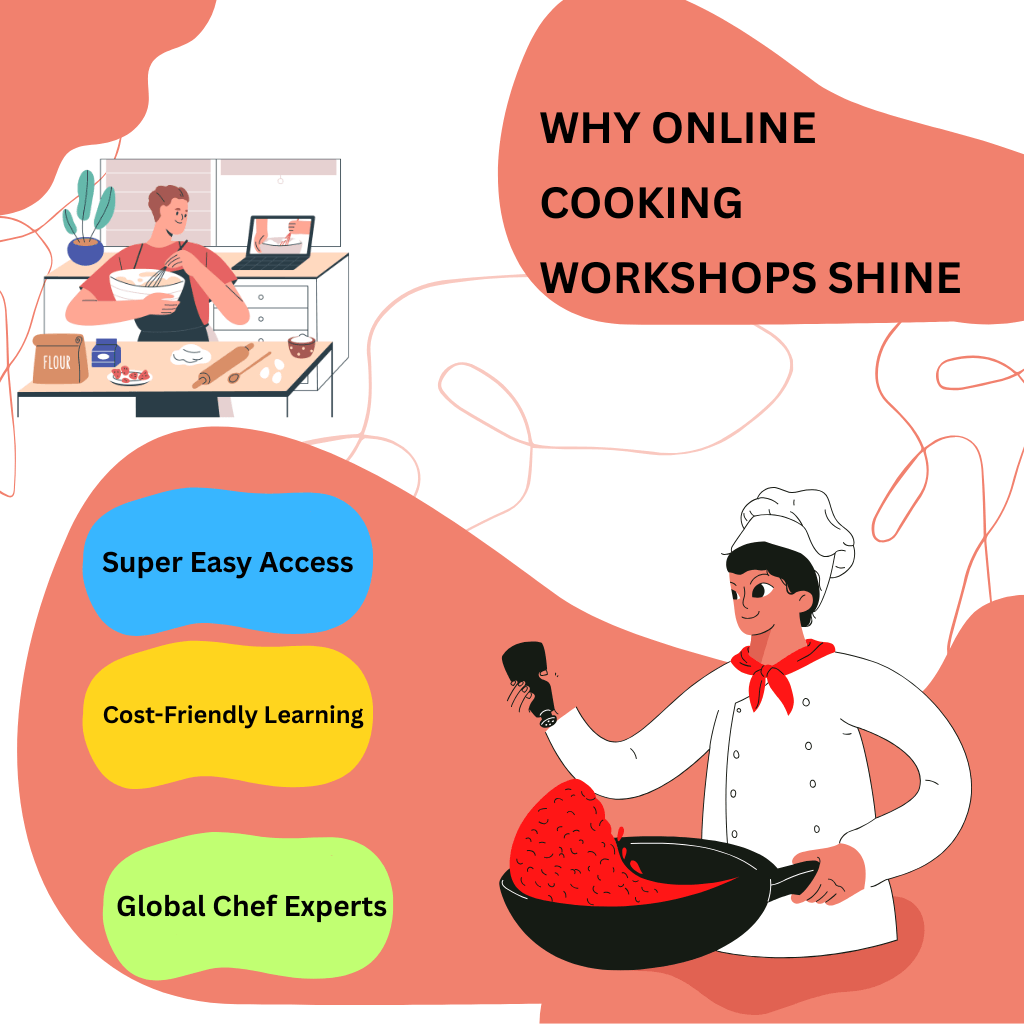
People want easy and personal learning. Imagine a busy parent. They can’t do a fixed class. But they can join a quick live session. Or watch a video later. This flexibility is a big draw. The following things connect the people:
Super Easy
No travel. No parking. No rushing. Cook from your kitchen. This removes big problems with old classes. It’s like a five-star chef came to your house.
Cost-Friendly
A physical class might be $150-$300. An online one could be $30-$70. Or even part of a monthly plan.
Global Experts, Anywhere
Learn from top chefs worldwide. Distance doesn’t matter. It’s like bringing a famous chef into your home.
Comfort & Privacy
Many new cooks feel shy in a classroom. But your kitchen is a safe place. You can make mistakes. You learn at your own speed. It’s like practicing music in your room before a show.
Custom Learning
New smart tools can fit classes to you. They learn your skill level. They find recipes for your diet. This makes learning super fast.
Strategic Niche Selection: Why Generalist is the New Invisible
The market is too crowded for broad topics. To gain Google AdSense approval and win search authority, you must Niche Down into specific cultural or dietary territories. Of course, your niche must satisfy high-intent queries.
The Rise of Regenerative and Zero-Waste Cooking
Sustainability has moved from a buzzword to a Mainstream Requirement. Modern consumers want workshops that teach Regenerative Cooking.
They use every part of an ingredient to minimize waste. This shift is driven by global awareness of the food system.
The International Food Policy Research Institute: Global Food Trends provides critical insights on ingredient scarcity and the necessity of sustainable sourcing.
A course titled The Whole Vegetable: Zero-Waste Italian Roots addresses both a cultural interest and these urgent global economic concerns.
Neuro-Design and Culinary Wellness
There is a growing demand for Food as Medicine workshops. Cooking for gut health, anti-inflammatory diets, and even Neuro-Cooking are examples.
These niches attract a high-paying demographic that views cooking as a pillar of their healthcare routine.
The Tech Stack: Build the Invisible Mentor
To stay ahead of the curve, your digital setup must move beyond a basic webcam. The Invisible Mentor concept uses technology to enhance the cooking process.
Multi-Angle High-Definition Streaming
A minimum of two camera angles is now standard. One for the chef’s face and one dedicated to Bird’s Eye View of the cutting board.
Haptic and Thermal Feedback
Emerging AI tools can now analyze the steam and color density of a student’s dish via their camera.
This technology has led researchers to explore the digital frontier. MIT Technology Review: The Future of Haptic Learning details how digital touch is fundamentally changing skill-based education. Now it is possible to teach physical crafts remotely.
How Much Can You Earn from Online Cooking Workshops
For people who love food, the internet is a big kitchen. You can earn money sharing your cooking skills. Teach online classes. Or sell your recipes.
The web helps food lovers turn their passion into income. But you must learn skills in social media marketing. Also, need to spend on Facebook advertising.
Let’s have a quick look at monthly earnings in online cooking:
Monthly Earnings Possibilities: Online Cooking & Food Careers
| Business Type | How You Get Paid | Typical Monthly Pay (Roughly) |
| Online Cook Teacher | A . Live Lessons (per student)B . Pre-recorded Courses C . Private Group Cooking(sales | A . $100 – $20,000+B . $50 – $8,000+C . $0 – $6,000+ |
| Food Blogger/Creator | Ads, Links, Sponsored Posts | $100 – $20,000+ |
| Online Recipe Maker | Jobs for food brands, magazines | $500 – $5,000+ per job |
| Online Food Photographer | Shooting food for brands, others | $500 – $8,000+ |
| Online Food Seller | Selling food products online | $5,000 – $70,000+ (Sales) |
| New Culinary Grad (Online) | Working in pro kitchens/hotels | $2,600 – $3,900+ (Paycheck) |
| Online Chef Instructor (School) | Teaching at online cooking schools | $4,500 – $6,500+ (Paycheck) |
Virtual Cooking: How Does It Work?
Virtual cooking isn’t future talk. It works smoothly. It brings professional cooking to your home. Imagine your kitchen as a live studio. Connected to chefs worldwide.
What Do You Need To Join A Virtual Kitchen From Home?
Getting into a virtual kitchen is simple. You don’t need fancy gear. It’s like a digital party invite—just show up!
Good Internet: This is your main link. Strong Wi-Fi means clear video and sound. It’s the path for tasty knowledge.
A Device: Laptop, tablet, or phone. A bigger screen helps see details. But any streaming device works.
A Camera: Most devices have one. If the chef needs to see you, this is your eye.
A Microphone: Built-in ones are fine. Clear sound helps the chef hear your questions.
Your Kitchen: This is your stage. Keep it clean. Have room to cook.
Food & Tools: The class sends a list. Get these ready before class. Your basic pots, pans, and knives. It’s like having your tool kit ready.
What Tech, Tools, Or Setup Is Required For Virtual Cooking?
It’s about doing the following stuffs:
Video Chat Software: Zoom (www.zoom.us) or Google Meet (meet.google.com) are common. They let you see and hear the chef. Ask questions.
Good Light: Natural light is best. Or bright kitchen lights help. Clearer view means easier to follow. It’s like a spotlight on your cooking.
Adjustable Camera: Many use a second device or stand. Point the camera at your cutting board. The chef sees your technique. They can help you. It’s like giving the chef X-ray vision.
Ready Space: Before class, measure food. Get bowls ready. Clear your counter. This makes cooking smooth. It’s like setting up paints before you draw.
Smart Kitchen Tools (Optional): Not needed, but growing. Smart ovens or scales. They can link with some classes. Imagine your oven heating to the chef’s exact temperature! This trend is new but growing.
How Do Interactive Food Workshops Keep Learners Engaged?
Engagement is the secret sauce. It turns a simple video into a fun cooking party.
Live Q&A: Ask questions live. Type or speak to the chef. Get instant answers. It’s like a private coach.
Cook-Along: The chef cooks. You cook with them. They show a step, you do it. This keeps you busy and focused.
Small Groups: Some classes use smaller video rooms. Groups work together. Get more help from an assistant chef.
Show Your Dish: Students often hold food to the camera. The chef gives tips or praise. This makes learning real.
Polls & Quizzes: Quick questions keep brains active. They check what you learned.
Community Forums: Many classes have online groups. Share photos. Get tips. Build a food-loving tribe. It’s a constant stream of cooking ideas.
Fun Challenges: Some add games or points. Earn badges for new skills. It adds a playful side.
Digital Cookery Trends: What’s Hot Now?
Digital cookery is full of new ideas and smart tech now. The aim is to make cooking easier, smarter, and more fun.
What Are The Top Trends In Online Cookery Classes?
Online cooking always has new things! Here are the freshest trends:
Personalized Learning
Classes are super tailored. A course might change based on your skill. Or suggest recipes for your diet. AI helps this happen. It’s like having a private chef who knows exactly what you need. (Source: www.rapidevelopers.com).
Very Specific Classes
People want very exact skills. Think classes just for sourdough bread. Or making fresh pasta. The more focused, the better.
Culture Focus
It’s more than recipes. It’s about stories. Classes explore cultures. They share traditions and the history behind food. It’s like a small trip to a new country through its food.
Green Cooking
People care about the planet. Courses teach how to use all food parts. They show how to cut waste. This is big for eco-friendly cooks. (Source: (placement-international.com).
Health Focus: More classes teach healthy eating. They cover plant-based meals, gut health, and energy-boosting foods. Food as medicine is a growing idea.
How Are Creators Monetizing Cooking Content Online?
Online cooking creators find many ways to earn money. It’s a creative business, like making a new recipe.
Selling Classes
Selling access to live or recorded workshops is the main way. For single classes or bundles.
Memberships
Offer monthly or yearly access to many courses. This gives steady income. Member Kitchens (www.memberkitchens.com ) helps creators with this.
Digital Products
Sell e-cookbooks, meal plans, or printable recipes. Create once, sell many times.(Source:(rashatimes.com/).
Affiliate Sales
Suggest kitchen tools or foods. Creators earn a small fee if people buy through their links. Common for food blogs like Pinch of Yum.
Brand Deals
Brands pay creators to show their products. In a video, post, or recipe. Being real is key. (Source: www.miracamp.com).
Ad Money
Popular YouTube channels or blogs earn from ads. Based on views.
Coaching
Some chefs teach one-on-one. Or help with menus. This is higher-priced and personal.
Merch
Sell branded aprons or spices. Builds loyal fans.
The digital cookery world full of new ideas. It’s making learning to cook easier, more personal, and more exciting.
What’s The Average Cost Of A High-Quality Live Session?
The price for a good live class changes. Depends on the chef, class size, and what you cook. Like ticket prices for a show – bigger star, more exclusive, costs more.
Average Range: A good live class for one person can be $70 to $150+.
Private Lessons: One-on-one with a top chef costs more. Often $231 to $722 on average. (Source: www.thumbtack.com/p/cooking-classes-cost)). This is for very personal coaching.
Group Classes: Cost per person is often lower. Some are around $39-$49 per person (e.g., on Cozymeal). Harder dishes like sushi could be $100 per person.
What Makes Price Change:
Chef’s Fame: Famous chefs cost more.
Class Length: Longer classes cost more.
Ingredients: Classes with expensive food cost more.
Kit Included: If ingredients are sent to you, the price goes up.
What Are The Most-Loved Features In Today’s Food Workshops?
Certain things make online cooking classes shine. These are the “secret flavors” that keep people coming back.
Live Chat: Asking questions and getting instant answers from a chef is a big deal. It’s like having a private coach. This real-time help makes a difference.
(Source: it.amazingtalker.com/courses/cooking) notes direct interaction as a plus).
Recipes to Keep: People love having the recipes. PDFs or online access let them cook again later.
Clear Steps: Easy-to-follow directions, especially with good video, get praise. Users want simple steps. Think of it as a perfect map for your meal.
Shopping Lists: Getting lists of what to buy and how to get ready ahead of time saves stress.
Fun & Community: Users enjoy the shared time. Chatting with others creates a lively space. It feels like cooking with friends.
Flexible Access: Even live classes often have recordings. This means you can watch again later.
What Common Issues Do Users Face And How Are They Solved?
Even in good kitchens, problems pop up. Online workshops face a few bumps. But providers find smart ways to fix them.
1 . Issue: Tech Problems (Bad Wi-Fi, Poor Sound/Video):
Problem: Video freezing, blurry screens, bad sound. It’s like cooking with a broken oven.
Fix: Providers give clear tech tips before class. They suggest strong Wi-Fi. Many offer tech help during classes.
2 . Issue: Finding Ingredients:
Problem: Special ingredients are hard to find. Or people forget to buy things.
Fix: Classes send shopping lists early. They suggest easy swaps. Some even send ingredient kits to your door.
3 . Issue: Feeling Alone/Not Enough Hands-On:
Problem: Users miss being in a physical class. Cooking alone can feel lonely.
Fix: Live chat helps a lot. Chefs give personal tips. Small group breakouts are used. Online groups connect people. Multiple cameras show details better.
4 . Issue: Class Speed (Too Fast/Slow):
Problem: Some feel rushed. Others get bored if it’s too slow.
Fix: Many classes are now for certain skill levels (beginner, expert). They mix live sessions with recorded parts. This helps all learning speeds.
5 . Issue: Not Enough Personal Help in Big Groups:
Problem: In very large classes, chefs can’t see everyone.
Fix: New tech like AI helps give feedback. More assistant chefs are used in big classes. Or students send photos later for review.
User feedback is a strong tool. It helps online cooking workshops keep growing. It makes sure they stay fun, work well, and truly help every home chef.
How to Pick the Best Course Based on Your Needs?
First, know what you want. Are you a kitchen beginner or aiming for culinary gold? This helps narrow your choices.
1 . Your Skill Level:
Newbie? Look for “basics” or “beginner” classes. They teach simple knife skills and easy recipes.
Got Skills? Search for “intermediate” or specific foods (like “Authentic Thai Curry”).
Pro or Aspiring? Look for masterclasses from famous chefs or certified programs. (www.ipassio.com/online-cooking-classes lists classes for all levels, even aspiring chefs).
2 . What You Want to Cook:
Specific Dish? Search for “sourdough bread workshop” or “pasta from scratch.”
Cuisine? Look for “Italian cooking” or “Japanese ramen.”
Dietary Needs? Filter for “vegan,” “keto,” or “gluten-free.”
3 . Your Learning Style:
Hands-on, Live Help? Choose live interactive classes.
Learn at Your Pace? Recorded courses are best.
4 . Your Kitchen Setup:
Minimalist? Look for classes using basic tools. Avoid those needing special gear.
5 . Your Goal:
Fun & Hobby? Short, cheap workshops are great.
Career Boost? Consider longer, accredited online culinary schools.
What to Consider When Comparing Cooking Workshops Online?
Comparing workshops is like weighing fresh produce. You check quality and value.
Instructor: Who teaches? Are they a pro chef? Do they have good reviews? Their skill shapes your learning.
Class Plan: Is it live or recorded? How many sessions? How long? Is there homework?
Interaction: Can you ask questions? Get feedback? Some classes offer more direct help.
Reviews: What do past students say? Look for comments on clarity and learning.
Materials: Do you get recipes to keep? Ingredient lists? Prep guides? These extras help a lot.
Community: Is there a group where students chat? This adds fun and learning.
Tech Needs: Is your internet fast enough? Do you need special software? Make sure your setup works.
How to Balance Price, Schedule, Skill Level, and Live Access?
This is where you play chef-strategist. Mix these parts to find your perfect fit.
1 . Price First:
Low Budget? Start with free trials or cheap recorded classes on Udemy. or Skillshare.
More to Spend? Consider higher-end live classes or subscriptions like MasterClass or YesChef (yeschef.me).
Career Goal? Full online schools are the priciest but give a full education.
2 . Schedule Next:
Busy? Look for recorded classes. Watch any time. Or live classes with flexible hours.
Like Routine? Fixed live times might work best. Gives you a set time to cook.
3 . Match Skill Level:
Don’t try molecular cooking if you can’t chop well. Start where you’re comfortable. Build skills step-by-step.
Read the class info carefully. Check the skill level.
4 . Live or Recorded:
Want Interaction? Pick live sessions. Cost more but give instant help.
Want Flexibility? Recorded classes are cheaper. Learn at your own pace.
Best of Both? Some places offer both. Recorded courses with live Q&A. This is often a great mix.
Conclusion
Summing up, these digital kitchens welcome everyone, from new cooks to pros. About 65% of students want online elements to stay. This shows online learning is here for good.
FAQ
How Are Recipe Workshops Different From Regular Cooking Videos?
Think of it: a cooking video is like watching a movie. A recipe workshop is acting in the play!
Talk Back: In a workshop, ask questions right away. The chef sees your progress. Get instant help. A video just plays.
Hands-On: You actually cook during the workshop. This builds muscle memory. You learn by doing. Videos are more for watching first.
Guided Steps: Workshops break down hard recipes. The chef explains why steps are key. You truly understand the dish. Videos might just show the “how.”
Group Feel: You often cook with others. Chat, share tips, celebrate. It’s a shared time. A video is usually solo.
Is there a market for private digital dining events?
Yes, there is strong demand. Many companies now use private online cooking events for team building.
Employees join from different locations and cook the same meal together. It helps improve the connection between teams.
Because it offers both experience and skill, these events often get high fees. They are treated as premium group experiences.
What is the circular economy in digital cooking workshops?
It means keeping learners engaged inside your system. For example, students complete a workshop and earn credits.
They can use those credits for discounts on future classes or cooking tools. This encourages them to stay connected.
It also supports a more sustainable learning and buying cycle.
How can a website be ready for AI-driven search?
Keep answers clear and direct. Use simple questions as headings. Follow each question with short, useful answers.
Avoid long or complex writing. Make sure information is easy to understand in a few seconds. This helps search systems quickly identify your content as useful and reliable.

Aliza Khatun is a Digital Marketing Professional and the founder of DigiGenHub. She has helped various businesses grow their online presence through real-world experience in marketing, branding, traffic growth, and business strategy.
Through DigiGenHub, she shows how to build and grow a business from the ground up using Website Setup, SEO, Branding, Paid Promotion, and smart digital tools.
She also highlights how AI can be used to its full potential to make content creation, automation, marketing, and business growth faster and smarter.
She believes that the right knowledge, modern technology, and the right tools can help any individual or business build a stronger online presence.