
SEO marketing for small business has become the backbone to rule the digital realm. Consumers increasingly turn to search engines for answers.
So, being visible online isn’t just a luxury; it’s a necessity. Indeed, if you’re not optimizing your website for search, you’re missing out on numerous opportunities to establish a connection with your ideal audience. SEO has become a part and parcel of all of the online industrial markets.
Why SEO Marketing for Small Business Matters Most
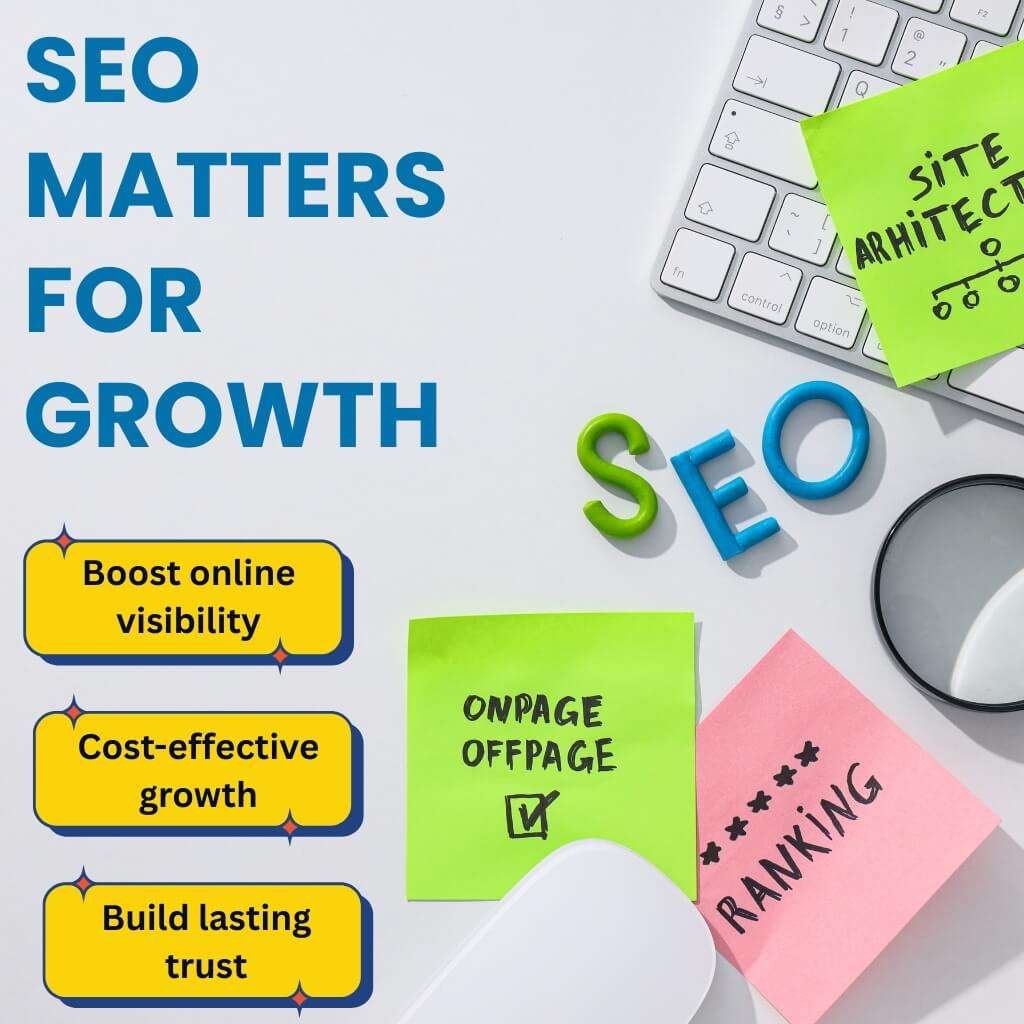
SEO contributes most to putting your business out there (crowded virtual market). So, you’re strategically positioning yourself where people are already looking. It’s one of the most notable, reliable, cost-efficient, time-saving and effective marketing tools for your business expansion. Let’s explain its impact on internet business:
1. Visibility Equals Credibility
Think about it, when you Google something, how often do you go past the first page? Hardly ever, right? The same goes for your business.
If you’re not showing up on that first page, it’s like having a shop with no sign on a busy street. People might walk right by without ever noticing you.
Still, when your business ranks higher, it’s like saying, “Hey, we’re legit!” You’re immediately more trusted.
SEO is like building your online reputation without having to tell everyone you’re great. It’s the digital version of word-of-mouth. People trust what they see first.
Yet, 53% of all website traffic comes from organic search. This signifies more eyes on your business.
With a good SEO strategy, you’re not just throwing your business out there hoping it sticks. You’re making it visible to those who are actually looking for what you offer.
So, the more visible you are, the more trusted you become. And in today’s digital world, trust is everything.
2. Cost-Effective Marketing
SEO is like getting free advertising that keeps paying off. You don’t need to keep pouring money into ads, praying for clicks. It’s like buying a machine that runs 24/7, bringing in customers nonstop. And the best part? The cost is way less than those flashy, expensive ads.
Let’s explain it. SEO isn’t about one-time spending. It’s like planting a tree that grows year after year. The money you put into it is minimal compared to the return you get.
Indeed, inbound leads from SEO cost 61% less than outbound leads. This benefit makes it one of the smartest investments you can make.
Imagine you’re spending thousands on ads, but with SEO, it’s like getting that same visibility for a fraction of the cost. Plus, once your website ranks, it’s a steady flow. No extra effort, no ongoing cost, just organic results.
3. 24/7 Marketing
SEO works while you sleep. It doesn’t clock out. Once you’ve nailed your SEO, it’s like you’ve built a round-the-clock sales team that never needs a break.
If your website is optimized, it’s like you’re open all the time, ready to serve customers no matter the hour.
They search, they click and they land on your site. No extra cost, no extra effort. Just a steady stream of visitors, even while you’re on vacation.
Yet, let’s see the recent presentation on SEO opens for your business:
1. AI-Powered Search
Google’s AI advancements, like RankBrain and MUM, have transformed search algorithms to prioritize user intent and context. Small businesses must adapt by creating content that addresses specific user queries and provides value.
2. Voice Search Optimization
The voice-activated devices have risen. So you must optimize for voice search. This involves focusing on natural language and long-tail keywords that match conversational queries.
3. Mobile-First Indexing
Mobile usage continues to dominate. So it’s urgent to ensure your website is mobile-friendly. Google now predominantly uses the mobile version of the content for indexing and ranking.
Google SEO for Small Business
Google SEO helps you get discovered, attract more visitors and grow your customer base. Let’s learn what it is:
What Is Google SEO?
Google SEO is about optimizing your website. This helps it rank higher on Google and reach more people. It includes keyword research, quality content creation, mobile optimization and local SEO. This process helps businesses show up when users search for relevant products or services.
What are the Essential Google SEO Tools
1. Google Search Console is a free tool to monitor your website’s performance on Google Search. It shows search results, identifies issues and helps optimize pages.
2. Google Analytics tracks and reports website traffic. It provides insights into user behavior and helps improve SEO strategies.
3. Google My Business manages your business profile on Google Search and Maps. It improves local SEO by displaying business info and customer reviews.
Affordable Small Business SEO
By strategically utilizing available resources and making informed decisions, you can effectively manage your SEO efforts within budget constraints. Let’s explain:
How to Optimize SEO on a Budget
1 . Cost-Effective SEO Practices
Focus on the following objects to enhance their online presence with zero cost investment:
A . On-Page Optimization
B . Content Creation
C . Mobile Optimization
D. Local SEO
These foundational practices can significantly improve search engine rankings and user experience.
Use Free Tools
Still, several free tools are available to assist with SEO efforts. These are Google Analytics, Google Search Console, or Ubersuggest.
These tools offer valuable insights without incurring additional costs.
DIY SEO Tactics
Implement simple SEO strategies to yield positive results:
A . Keyword Optimization
B . Internal Linking
C . Image Optimization
D . Regular Content Updates
This discernment can enhance SEO without requiring significant financial investment.
2 . Outsourcing vs. In-House SEO
Deciding between outsourcing SEO tasks and handling them in-house depends on several factors:
Outsourcing: Hiring professionals can bring expertise and save time, but may involve higher costs.
In-House: Managing SEO internally allows for greater control and cost savings but requires dedicated resources and expertise.
Yet, many small businesses find a hybrid approach, combining both methods, to be effective. Let’s see the SEO cost structure:
SEO Expense Overview
| Service Type | Monthly Cost | Typical Services Included |
| Automated Local SEO | $300 – $500 | Directory listings, basic citation management |
| Basic SEO Packages | $500 – $1,000 | On-page SEO, keyword optimization, basic reporting |
| Mid-Tier SEO Packages | $1,000 – $2,500 | Content creation, link building and technical SEO audits |
| Comprehensive SEO | $2,500 – $5,000+ | Full SEO service including content marketing, social media management, advanced analytics and competitor analysis |
Additional SEO Service Costs:
Hourly SEO Services: $100 – $300 per hour.
SEO Audits: $500 – $7,500 depending on depth.
SEO Content Creation: $0.15 – $0.50 per word.
These costs vary based on your market’s competitiveness and the complexity of your SEO needs.
How to Make SEO Work for Your Business
You have to perceive the basics of SEO first:
1. Keyword Research
Use tools like Google Keyword Planner and Ubersuggest to identify relevant keywords. Focus on long-tail keywords with low competition to improve ranking chances.
2. On-Page SEO
Optimize page titles, meta descriptions, headers and URL structures. Ensure content is high-quality, relevant and includes targeted keywords. Maintain mobile responsiveness and fast loading speeds.
3. Off-Page SEO
Maintain a consistent brand presence across various platforms through quality backlinks.
4. Content Quality
Create valuable, informative content that addresses customer pain points. Regularly update content to keep it fresh and relevant.
Actionable Steps for Small Business Owners
Step 1: Implement On-Page SEO
Start by optimizing your website’s on-page elements. Use tools like Google Search Console to identify and fix issues.
Step 2: Conduct Keyword Research
Use Google Keyword Planner to find keywords relevant to your business. Incorporate these into your content naturally.
Step 3: Create High-Quality Content
Develop content that answers common customer questions and provides solutions. Use Google Analytics to track user engagement and adjust content accordingly.
Step 4: Build Backlinks
Share your content on social media to increase visibility and attract backlinks.
Step 5: Monitor Performance
Use tools like Google Analytics and Google Search Console to track traffic, bounce rates and keyword rankings. Adjust strategies based on performance data.
Measure SEO Performance
You must monitor SEO performance using updated metrics:
Organic Traffic: Monitor the number of visitors arriving via search engines.
Keyword Rankings: Track the positions of targeted keywords in search results.
Bunce Rate: Measure the percentage of visitors who leave after viewing only one page.
Conversion Rate: Calculate the percentage of visitors who complete desired actions, like making a purchase.
Core Web Vitals: Assess page loading performance, interactivity and visual stability. Semrush
Benefits of SEO for Small Businesses
SEO helps small businesses get noticed online. It drives more local traffic to your site. Higher rankings build trust with customers. SEO is cost-effective and lasts longer than ads. It helps you compete with bigger brands. Let’s explain the core benefits:
Increased Visibility and Brand Awareness
SEO improves your website’s ranking. This makes it easier for people to find your business. More visibility leads to more brand awareness. Your business becomes familiar to more future customers.
Higher ROI
SEO offers long-term benefits with an upfront investment. This leads to sustainable sales and higher returns. SEO is one of the most cost-effective marketing strategies.
Build Credibility and Trust
People trust organic search results more than paid ads. When your site ranks naturally, it builds trust. SEO creates an image of authority in your niche. As trust grows, so does your customer loyalty.
Competitive Advantage
SEO makes your business easier to find when consumers are searching. By focusing on SEO, your business can dominate local searches and increase your market share. You become the go-to in your industry.
Better User Experience
Optimizing site speed, mobile-friendliness and navigation improves user satisfaction. A better experience leads to lower bounce rates and higher conversions.
Sustain Results
SEO provides lasting results. Once you rank well, you don’t have to pay continuously for traffic. It’s an investment that grows over time. Organic traffic keeps flowing. This creates a stable and predictable growth cycle.
Targeted Traffic
SEO brings in qualified leads. It helps you target people actively searching for your product or service. By optimizing for specific keywords, you reach customers who are already interested. This increases conversion rates.
SEO Success Story: Velvet Touch Massage Therapy
Business: Velvet Touch Massage Therapy
Location: Etobicoke, Canada
Website: rmttreatment.ca
Timeframe: 7 weeks
Overview:
Velvet Touch partnered with Seotwix to boost their online presence. They focused on local SEO for Etobicoke and Toronto.
In just 7 weeks, Velvet Touch secured first-page rankings for keywords like “RMT Etobicoke.” This led to more inquiries and appointments. SEO delivered fast, impactful results. For full details, read the case study here: seotwix.com.
What is Local SEO?
Local SEO is the practice of optimizing your online presence to attract more business from relevant local searches. This includes searches with geographic qualifiers like city names or terms such as “near me.”
Why Local SEO Matters
High Intent Searches: 46% of Google searches have local intent.
Mobile Dominance: 80% of local mobile searches lead to conversions.
Consumer Behavior: 97% of consumers learn more about a local company online than anywhere else.
Components of Local SEO
Google Business Profile (GBP): Claim and optimize your GBP to appear in local search results and Google Maps.
Local Citations: Ensure your business is listed consistently across online directories.
Localized Content: Create content that speaks to local events, news, or activities.
Mobile Optimization: Ensure your website is mobile-friendly, as many local searches are conducted on smartphones.
Online Reviews: Encourage satisfied customers to leave positive reviews, enhancing credibility.
How Does Local SEO Increase Profit?
By focusing on local SEO, you can enhance your online presence, attract more local customers and drive business growth. en.wikipedia.org
You can attract people ready to buy by targeting location-specific keywords. In turn, this leads to higher profits with minimal investment. Let’s explain:
Let’s explain how local SEO helps to grow business and increase profit:
Attract Local Customers
Local SEO helps your business appear in local search results. When people search for services near them, your business shows up. This increases foot traffic and calls.
Still, 80% of U.S. consumers search online for local businesses weekly. 76% of people who search for something nearby on their smartphones visit a business within a day. 28% of local searches result in a purchase within 24 hours.
Build a Loyal Community
Local SEO fosters long-term relationships. By creating personalized, location-specific content, you engage with local clients. This builds trust and loyalty.
Community SEO: Integrating SEO with community engagement improves rankings and fosters loyalty. LinkedIn
Raise Profits with Local SEO
Local SEO drives conversions. Appearing in local searches and Google Maps leads to more visits and purchases. This increases profits.
88% of consumers who conduct a local search on their smartphone visit or call a store within a day. SEO delivers a 681% ROI in the construction industry.
40% of local SEO campaigns achieve a 500% or better ROI. LocaliQ
The average ROI for a high-quality SEO campaign is 748%, with small businesses reporting returns of 400% or more. DesignRush
What are the Three Pillars of Local SEO?
Local SEO revolves around three foundational pillars: On-Page SEO, Local Content and Backlinks & Citations. These elements are crucial for enhancing your business’s visibility in local search results.
1. On-Page SEO
On-Page SEO involves optimizing your website’s content and structure to align with local search intent. Key practices include:
Title Tags & Meta Descriptions: Incorporate local keywords to improve relevance.
NAP Consistency: Ensure your Name, Address and Phone number are consistent across all pages.
Schema Markup: Implement LocalBusiness schema to provide search engines with detailed business information.
Mobile Optimization: Design your website to be mobile-friendly, as a significant portion of local searches occur on mobile devices.
2. Local Content
Create content unified to your local audience. This establishes your business as a community authority. Effective approaches include:
Blog Posts: Write about local events, news, or community activities.
Service Area Pages: Develop pages targeting specific neighborhoods or regions you serve.
Customer Testimonials: Feature reviews from local customers to build trust.
Such content not only engages local customers but also signals to search engines your active presence in the community Local Falcon.
3. Backlinks & Citations
Backlinks from reputable local sources and consistent citations enhance your business’s authority. Major activities are:
Local Directories: List your business in directories like Yelp, Yellow Pages and local chambers of commerce.
Consistent NAP: Maintain uniform Name, Address and Phone number information across all platforms.
Quality Backlinks: Earn links from local news outlets, blogs and community websites.
These efforts contribute to your business’s prominence in local search results.
What is Organic SEO?
Organic SEO involves optimizing your website to rank higher in search engine results pages (SERPs) through unpaid methods. This focuses on improving your site’s content, structure and authority to earn higher rankings naturally.
Notable Lesson for Organic SEO
1. Content Marketing
It’s vital to create high-quality, relevant content. Focus on addressing user intent and providing value. Content should be comprehensive, well-researched and updated regularly to maintain relevance. CrawlerNews.com
2. Link Building
This signals trustworthiness to search engines which I have already explained.
3. Technical SEO
Ensure your website is technically sound. This includes optimizing site speed, mobile responsiveness, secure connections (HTTPS) and a clean URL structure. Technical SEO also involves using structured data. This helps search engines perceive your content better.
Organic Search vs Paid Search
In this part, I’ll compare Organic and Paid Search.
Organic Search (SEO)
SEO involves optimizing your website to rank higher in search engine results without direct payment.
Pros:
Cost-Effective in the Long Run: After initial investment, organic traffic is free.
Sustained Traffic: High rankings can maintain visibility over time. Forbes
Credibility: Users often trust organic results more than ads.
Cons:
Time-Consuming: Achieving high rankings can take months.
Requires Expertise: Effective SEO needs knowledge and continuous effort.
Statistics:
49% of marketers find organic search provides the best ROI.
The average click-through rate for the #1 organic result is 27.6%.
Paid Search (PPC)
PPC involves paying for ads to appear in search engine results.
Pros:
Immediate Results: Ads can drive traffic as soon as campaigns launch.
Targeted Reach: Allows precise targeting based on demographics and behavior.
Scalability: Easily adjust budgets to scale campaigns.
Cons:
Ongoing Costs: Requires continuous investment to maintain visibility.
Click Fraud Risk: Potential for competitors to click on ads, wasting budget.
Statistics:
Paid search ads have an average click-through rate of 1.63%.
PPC returns $2 for every $1 spent, resulting in a 200% ROI.
When to Use Each
Use SEO for enduring visibility and credibility.
Use PPC for immediate traffic, promotions, or testing keywords.
Is It Leading AI Visibility Products with Strong SEO?
AI doesn’t just automate—it learns. It figures out what people are searching for and adjusts your strategy. This means more clicks, more traffic and more customers.
AI-driven SEO is your compass in a busy digital world. It leads you to the right keywords and content. Plus, it’s cost-effective, so even small businesses can compete with bigger ones.
In a constantly changing SEO zone, AI helps you stay on top and be found by more people. Let’s see the recent AI tools for SEO:
1. ContentShake AI
Origin: Developed by Semrush, a U.S.-based SEO company.
Benefits: Generates SEO-optimized content using Semrush’s SEO data, aiding in creating high-ranking articles.
Pricing: Starts at $60/month.
User Rating: Highly rated for content quality and SEO integration.
2. SurferSEO
Origin: Based in Poland, focusing on AI-driven SEO solutions.
Benefits: Analyzes top-ranking pages to provide optimization recommendations, enhancing content performance.
Pricing: Plans start at $99/month.
User Rating: Praised for its comprehensive SEO analysis tools.
3. Semrush Copilot
Origin: Semrush, a leading SEO platform from the U.S.
Benefits: Offers personalized SEO recommendations, streamlining optimization processes.
Pricing: Included in Semrush subscription.
User Rating: Valued for its integration with Semrush’s comprehensive tools.
4. Peec AI
Origin: Founded in Berlin, Germany, in January 2025.
Benefits: Monitors visibility across AI search platforms like ChatGPT and Perplexity, optimizing content for AI-driven search results.
Pricing: Pricing details available upon request.
User Rating: Emerging tool gaining attention in the AI SEO space.
Main Points
AI Integration: AI tools like ContentShake AI and SurferSEO provide data-driven insights, enhancing content quality and SEO performance.
Local SEO Advantage: Optimizing content for AI-driven search platforms can improve visibility in local search results.
Cost-Effectiveness: While some tools require a subscription, the ROI from increased traffic and sales can justify the investment.
Conclusion
SEO makes your business visible online. It builds trust and brings in visitors 24/7. Local SEO targets nearby customers. It takes time but gives lasting results. Keep it fresh and your business will grow. Simple, effective, powerful.
FAQ
Which tool is best for backlinks?
For backlink building, Semrush is great for all-in-one SEO, Ahrefs offers detailed analysis, SE Ranking is budget-friendly, Majestic focuses on link quality and Moz helps with domain authority. Prices start at $49/month. Choose based on your needs.

Aliza Khatun is a Digital Marketing Professional and the founder of DigiGenHub. She has helped various businesses grow their online presence through real-world experience in marketing, branding, traffic growth, and business strategy.
Through DigiGenHub, she shows how to build and grow a business from the ground up using Website Setup, SEO, Branding, Paid Promotion, and smart digital tools.
She also highlights how AI can be used to its full potential to make content creation, automation, marketing, and business growth faster and smarter.
She believes that the right knowledge, modern technology, and the right tools can help any individual or business build a stronger online presence.